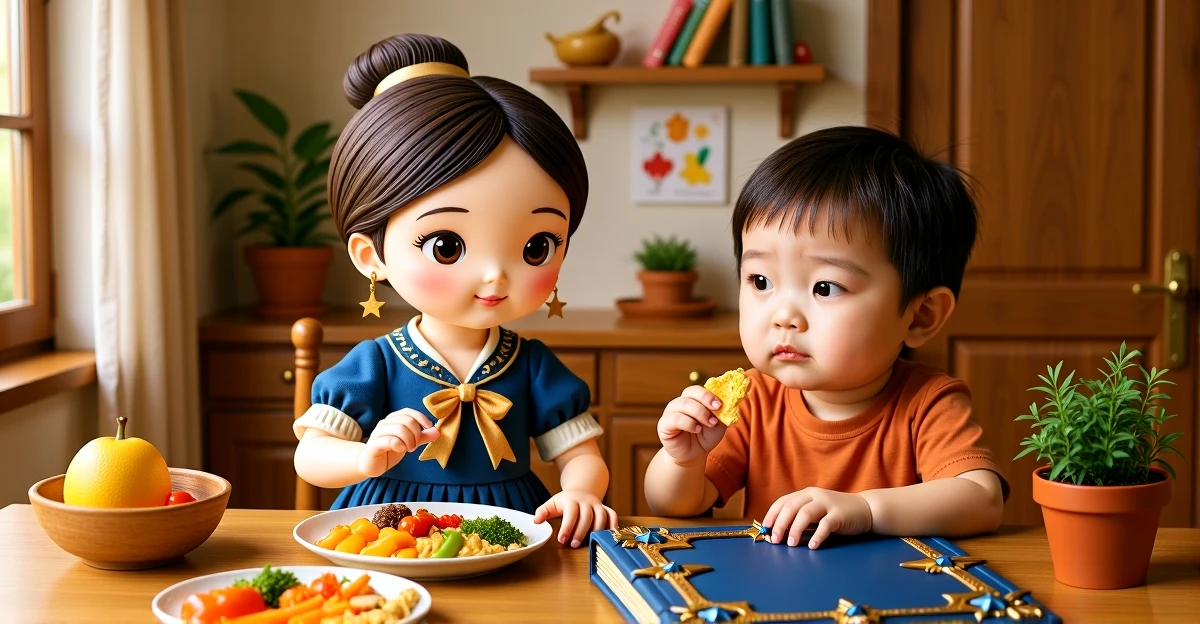

Your beautiful four or five year old sits at the dinner table, arms crossed, looking at that new vegetable like it's from another planet. "I don't like it," they announce, even though they've never tried it. Or maybe it's the new swimming class you signed them up for, the one you KNOW they'd love if they just gave it a chance. But they refuse. They want the same foods, the same activities, the same everything. And you're starting to wonder if your child will ever be adventurous, ever be flexible, ever be willing to try something new.
Here's what I want you to know right from the start, wonderful parent: You are not alone in this. And your child is not being difficult, stubborn, or overly picky. What you're witnessing is actually a completely normal, healthy, and even protective phase of development. The Magic Book taught me something beautiful about this, and I can't wait to share it with you.
In this post, we're going to explore exactly why children at ages four and five resist new experiences, what the research tells us about this developmental phase, and most importantly, gentle strategies that actually work to help your child build courage and flexibility. Plus, I'll share a story from The Book of Inara that brings these concepts to life in the most magical way.
Understanding Food Neophobia and Exploration Anxiety
Let me introduce you to a term that might change everything for you: food neophobia. It sounds serious, but it's actually just the scientific name for something SO common in young children. Food neophobia is the fear or reluctance to try new foods, and research shows it peaks during the preschool years, right when your child is four or five years old.
But here's what's truly fascinating. This isn't just about food. The same pattern shows up with new activities, new places, new people, and new experiences of all kinds. Your child's brain is in a developmental phase where it's learning to balance two really important things: safety and exploration.
And right now? Safety is winning. And that's actually wonderful.
Why This Cautiousness Is Actually Protective
Think about it from an evolutionary perspective. Thousands of years ago, children who were cautious about new foods were more likely to survive. Their little brains were saying, "I know this berry is safe because I've eaten it before. I'm not sure about that new one, so I'm going to be careful." That cautiousness kept them alive.
Your child's brain is doing the SAME thing today. When they look at that new food or hear about that new activity, their brain is prioritizing safety. It's saying, "I know what I like. I know what feels comfortable. This new thing is unknown, and unknown feels risky."
This isn't defiance. This isn't stubbornness. This is your child's beautiful, protective brain doing exactly what it's designed to do at this age.
What Research Tells Us About Cognitive Flexibility
Now let me share something else the Magic Book showed me, something that comes straight from developmental neuroscience research. There's a skill called cognitive flexibility, which is basically the ability to adapt to new situations, try new things, and shift between different ways of thinking.
And here's the key insight: cognitive flexibility is actively developing in four and five year olds, but it's just beginning. The biggest growth in this skill happens later, between ages seven and nine.
"Cognitive flexibility skills begin to develop in early childhood with a sharp increase in abilities between ages 7 and 9. Ages 4-5 represent an early foundational period where children are just beginning to develop flexibility skills."
— Developmental Cognitive Neuroscience Research
What does this mean for you? It means your child is in the early foundational period. They're learning, but they're not there yet. The resistance you're seeing isn't a character flaw or a parenting failure. It's a developmental stage. And like all stages, this one is temporary.
The Science Behind the Resistance
Research from the Raising Children Network, a wonderful expert organization, emphasizes that at four to five years, children are exploring and learning to express emotions, and that anxiety about new experiences is a normal part of development. They're not trying to make your life difficult. They're showing you exactly where they are developmentally.
Frontiers in Nutrition research demonstrates something else that's SO important: patience and repeated gentle exposure without pressure leads to better outcomes when supporting children through food neophobia and exploration anxiety. Not forcing. Not bribing. Not making it a battle. Gentle exposure.
And here's the beautiful part. Studies show that children whose parents respond with patience rather than frustration develop better flexibility skills and show increased willingness to explore over time. Your response to this phase is actually shaping your child's future relationship with new experiences.
Gentle Strategies That Actually Work
So what DO you do when your child refuses to try that new food or activity? Here are research-backed strategies that honor where your child is developmentally while gently building their courage and flexibility.
Strategy 1: Gentle Exposure Without Pressure
This is the foundation of everything. With new foods, it might mean putting that new vegetable on their plate with absolutely no expectation that they'll eat it. Just let them see it. Smell it. Touch it if they want to. Research shows that children sometimes need to see a new food ten to fifteen times before they're willing to try it.
Ten to fifteen times! So if your child has said no to broccoli three times, you're not even halfway there yet. Keep offering it gently, without pressure, and trust the process.
With new activities, gentle exposure might mean talking about the activity beforehand. Visiting the place if you can. Reading books about it. Letting them watch other children do it first. Giving them time to warm up. Some children are what we call "slow to warm up," and that's a beautiful temperament trait. They're thoughtful and careful. They need time to observe before they participate.
Strategy 2: Validate Their Feelings
When your child says, "I don't want to try that," resist the urge to say, "Just try it!" or "You'll like it if you try it!" Instead, validate their feelings first.
You can say something like: "I understand. New things can feel scary sometimes. That's okay. You don't have to try it right now."
That simple validation helps them feel safe. And when they feel safe, they're more likely to eventually take that brave step forward.
Strategy 3: Model Enthusiasm Without Pressure
Children learn SO much by watching us. You can model trying new things with enthusiasm and curiosity. With new foods, you might say, "I'm going to try this new food. I wonder what it tastes like!" And then you try it and share your experience. "I like the crunch! It's a little bit sweet!"
But here's the key: you don't make them try it. You're just showing them that trying new things can be fun and safe. You're being their guide, not their enforcer.
Strategy 4: Make It Playful
Play is the language of childhood. With new foods, you can turn exploration into a game. "Can you tell me what color this is? Can you smell it? What does it remind you of? Does it feel smooth or bumpy?"
With new activities, you can practice at home first. If they're nervous about swimming lessons, you can pretend to swim on the living room floor. You can read books about swimming. You can make it familiar before it's real.
Strategy 5: Celebrate the Small Steps
This is SO important. Every tiny step forward deserves celebration. If your child touches a new food, that's worth celebrating. If they watch other children doing a new activity for five minutes, that's progress. If they ask a question about something new, that's courage.
These small steps are building blocks. They're creating neural pathways in your child's brain that say, "New things can be safe. I can be brave. I can try."
Strategy 6: Be Patient With Yourself Too
I know this can be frustrating. I know you might worry that your child will never try new things, or that they're missing out, or that other children seem so much braver. But here's what the research shows: your patience is actually teaching them that it's safe to try new things. Your calm presence is their foundation.
Give yourself grace. You're doing beautifully.
Stories That Can Help
In The Book of Inara, we have a beautiful story that brings these concepts to life in the most magical way. Let me tell you about it:
The Cathedral of Gentle Echoes
Perfect for: Ages 4-5
What makes it special: This story follows Kenji and Maeva as they discover a peaceful cathedral where they want to make music. But they're nervous. They're afraid of making mistakes. And when they do start playing, they DO make mistakes. Lots of them. But here's the magical part: those mistakes, those imperfect attempts, create the most beautiful harmonies in the cathedral. The echoes of their errors blend together into something wonderful.
Key lesson: Every attempt, even the ones that feel wrong or scary, is actually a step toward creating something beautiful. Trying new things, even with mistakes, leads to growth and joy.
How it helps with this challenge: This story provides a perfect metaphor for your child's journey with new foods and activities. Just like Kenji and Maeva's music, trying new things might feel strange or uncomfortable at first, but each try helps them discover something wonderful about themselves. After reading this story together, you can remind your child that just like the music in the cathedral, their brave attempts at new experiences are creating something beautiful too.
You're Doing Beautifully
Let me leave you with this, wonderful parent. Your child is not broken. They're not overly picky or impossibly stubborn. They're showing you exactly where they are in their beautiful developmental journey. Their brain is learning to balance safety and exploration, and right now, safety feels more important. And that's healthy. That's normal. That's exactly what should be happening at ages four and five.
Your job isn't to force them to be different. Your job is to be their safe base, their gentle guide, their patient supporter as they slowly, gradually, in their own time, build the courage and flexibility to try new things.
Keep offering those new experiences with patience and love. Keep validating their feelings. Keep celebrating the small steps. Keep modeling enthusiasm without pressure. And trust that this phase will pass. Your child will emerge with courage and flexibility that you helped them build, one gentle moment at a time.
The Magic Book and I are always here for you, cheering you on, believing in you and your beautiful child. You're doing such important work. Keep going.
With love and starlight,
Inara
Related Articles
- Building Physical Confidence in Young Children: Gentle Movement Strategies for Ages 4-5
- Building Confidence in Young Performers: A Gentle Guide for Ages 4-5
- Understanding Why Unexpected Changes Feel So Big to Your Child (And How to Help)
- Building Physical Confidence in Young Children: A Gentle Guide for Ages 4-5
- When Plans Change: Helping Your Child Handle Disappointment and Build Flexibility
Show transcript
Hello, wonderful parent! It's me, Inara, and I am so happy you're here today. You know, the Magic Book and I have been noticing something that so many parents are experiencing right now. Your little one, your beautiful four or five year old, seems to refuse anything new. New foods, new activities, new experiences. And I want you to know something really important right from the start. You are not alone in this, and your child is not being difficult. What you're seeing is actually a completely normal, healthy part of their development.
Let me tell you what the Magic Book taught me about this. When your child says no to trying new foods or activities, their brain is actually doing something really WONDERFUL. It's protecting them. You see, at ages four and five, children are in this fascinating developmental phase where their brains are learning to balance two very important things. Safety and exploration. And right now, for your child, safety is winning. And that's okay!
Research shows us that what we call food neophobia, which is the fear of new foods, actually peaks during the preschool years. This isn't pickiness, my friend. This is biology. Your child's brain is wired to be cautious about new things, especially foods, because thousands of years ago, that cautiousness kept children safe. Their little brains are saying, I know this food is safe. I'm not sure about that new one yet. And the same pattern happens with new activities and experiences.
Here's something else the Magic Book showed me that I find absolutely beautiful. Cognitive flexibility, which is the ability to adapt to new situations and try new things, is actively developing in four and five year olds. But here's the key. It's just beginning. The biggest growth in cognitive flexibility happens later, between ages seven and nine. So right now, your child is in the early foundational period. They're learning, but they're not there yet. And that means this phase is temporary. It will pass.
The Raising Children Network, which is a wonderful expert organization, emphasizes that at four to five years, children are exploring and learning to express emotions, and that anxiety about new experiences is a normal part of development. Developmental neuroscience research confirms that cognitive flexibility skills begin to develop in early childhood, with ages four to five representing an early foundational period where children are just beginning to develop these skills.
So what does this mean for you, wonderful parent? It means that when your child refuses to try that new vegetable, or says no to that new activity, they're not being stubborn or difficult. They're showing you exactly where they are developmentally. And your response to this moment matters so much.
The research is really clear on this. Patience and repeated gentle exposure without pressure leads to the best outcomes. Not forcing. Not bribing. Not making it a battle. Gentle exposure. Let me explain what that looks like.
With new foods, it might mean putting that new vegetable on their plate without any expectation that they'll eat it. Just letting them see it, smell it, touch it if they want to. Research shows that children sometimes need to see a new food ten to fifteen times before they're willing to try it. Ten to fifteen times! So if your child has said no to broccoli three times, you're not even halfway there yet. Keep offering it gently, without pressure, and trust the process.
With new activities, it might mean talking about the activity beforehand. Visiting the place if you can. Reading books about it. Letting them watch other children do it first. Giving them time to warm up. Some children are what we call slow to warm up, and that's a beautiful temperament trait. It means they're thoughtful and careful. They need time to observe before they participate. And that's not a flaw, my friend. That's just who they are.
The Magic Book taught me something else that I think will help you. Every attempt your child makes, even the tiny ones, even the ones that don't look like success to us, are actually steps forward. Let me tell you about a story we have in The Book of Inara called The Cathedral of Gentle Echoes. In this story, Kenji and Maeva discover a peaceful cathedral where they want to make music. But they're nervous. They're afraid of making mistakes. And when they do start playing, they DO make mistakes. Lots of them.
But here's the magical part. Those mistakes, those imperfect attempts, create the most beautiful harmonies in the cathedral. The echoes of their errors blend together into something wonderful. And Kenji and Maeva learn that every attempt, even the ones that feel wrong or scary, is actually a step toward creating something beautiful.
This is exactly what's happening with your child and new experiences. Every time they look at that new food, even if they don't taste it. Every time they watch other children doing that new activity, even if they don't join in. Every tiny step is creating something. They're building courage. They're developing flexibility. They're learning to trust themselves and trust you.
So here's what I want you to try, wonderful parent. First, validate their feelings. When your child says, I don't want to try that, you can say, I understand. New things can feel scary sometimes. That's okay. You don't have to try it right now. Just that simple validation helps them feel safe.
Second, model enthusiasm without pressure. You can say things like, I'm going to try this new food. I wonder what it tastes like! And then you try it, and you share your experience. I like the crunch! It's a little bit sweet! But you don't make them try it. You're just showing them that trying new things can be fun and safe.
Third, make it playful. With new foods, you can play games. Can you tell me what color this is? Can you smell it? What does it remind you of? With new activities, you can practice at home first. If they're nervous about swimming lessons, you can pretend to swim on the living room floor. You can read books about swimming. You can make it familiar before it's real.
Fourth, celebrate the small steps. If your child touches a new food, that's worth celebrating. If they watch other children doing a new activity for five minutes, that's progress. Every tiny step forward is building their courage and flexibility.
And fifth, be patient with yourself too. I know this can be frustrating. I know you might worry that your child will never try new things, or that they're missing out, or that other children seem so much braver. But here's what the research shows. Children whose parents respond with patience rather than frustration develop better flexibility skills and show increased willingness to explore over time. Your patience is actually teaching them that it's safe to try new things. Your calm presence is their foundation.
The scientific consensus is so clear on this, my friend. This developmental phase requires understanding and gentle support. This is not defiance. This is normal, healthy development that deserves compassionate guidance. Your child is learning courage and trust, and you are their guide.
After you finish watching this, I really encourage you to check out The Cathedral of Gentle Echoes in The Book of Inara. You can read it together with your child, and afterward, you can talk about how Kenji and Maeva felt nervous about trying something new, just like your child might feel. You can remind them that just like the music in the cathedral, trying new things, even when it feels uncomfortable at first, can lead to something wonderful.
You're doing such a beautiful job, wonderful parent. Your child is lucky to have someone who cares enough to learn about their development, who wants to support them gently, who sees them as a whole person and not just a problem to fix. Keep offering those new experiences with patience and love. Keep validating their feelings. Keep celebrating the small steps. And trust that this phase will pass, and your child will emerge with courage and flexibility that you helped them build.
The Magic Book and I are always here for you. Until our next time together, with love and starlight, Inara.