The cookie broke in half. The favorite cup is in the dishwasher. The red shirt is in the laundry. And suddenly, your three-year-old is melting down like the world is ending. You're exhausted, walking on eggshells, never knowing what small thing might trigger the next wave of tears and frustration.
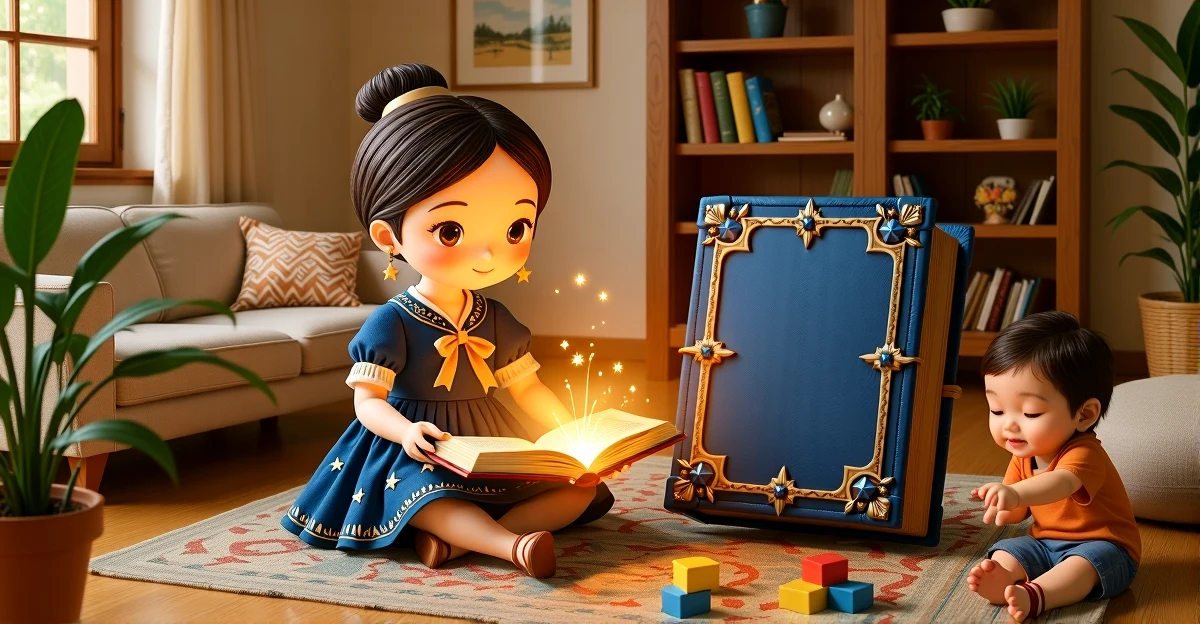
Dear parent, I see you. The Magic Book and I want you to take a deep breath with me right now, because I have some WONDERFUL news to share with you. What you're experiencing is not only completely normal, it's actually a sign that your child's brain is developing exactly as it should.
In this guide, we'll explore why disappointment is SO hard for young children, what the research tells us about emotional development, and three gentle strategies that actually work. Plus, I'll share a magical story that helps children understand that disappointment is part of discovering treasure.
Why Disappointment Feels Like the End of the World
When your child struggles with disappointment, their brain is in the middle of one of the most important learning phases of their entire life. They're developing something called emotional intelligence, and this is a critical time.
Research from experts like Dr. Shauna Tominey at the Yale Center for Emotional Intelligence shows us that children are learning five essential skills right now:
- Recognizing emotions in themselves and others
- Understanding what causes those emotions
- Labeling emotions accurately with words
- Expressing emotions in ways that work for different situations
- Regulating those big feelings
Here's the thing that changes EVERYTHING: these skills take YEARS to develop. Your child's prefrontal cortex, the part of the brain that helps with emotional regulation and flexibility, is still growing. It won't be fully developed until they're in their mid-twenties!
So when your little one melts down because their sandwich was cut into squares instead of triangles, they're not being dramatic or manipulative. Their brain literally doesn't have the capacity yet to handle that disappointment smoothly. They're not giving you a hard time—they're having a hard time.
What Research Says About Disappointment and Development
The Magic Book showed me something beautiful about this. Research from the National Institutes of Health tells us that preschool-age children have natural limits to their tolerance for waiting and disappointment. At forty-eight months of age, children can distract themselves, but those distractions have limits. Understanding these developmental expectations helps us respond with patience instead of frustration.
"Children with higher emotional intelligence are better able to pay attention, are more engaged in school, have more positive relationships, and are more empathic."
— Dr. Shauna Tominey, Yale Center for Emotional Intelligence
And here's what makes this even more WONDERFUL. The Zero to Three organization, which is one of the most respected child development organizations in the world, emphasizes something SO important: there is a big difference between spoiling and soothing when children experience disappointment.
Setting limits actually helps children learn how to deal with disappointment and frustration in healthy ways. When you validate your child's feelings while maintaining appropriate boundaries, you're teaching them emotional regulation skills that will serve them for their entire life.
The Beautiful Truth About Big Feelings
When parents respond to disappointment with empathy and validation while maintaining appropriate boundaries, children develop healthier coping strategies over time. They learn that all feelings are acceptable, and they develop constructive ways to express and manage disappointment. This foundation supports lifelong emotional health and resilience.
Your child isn't struggling with disappointment because you've done something wrong. They're struggling because they're three or four years old, and their brain is still learning these incredibly complex skills. Every time you respond with patience and empathy, you're literally helping their brain build the neural pathways for emotional regulation.
Three Gentle Strategies That Build Resilience
So what does this look like in practice? Let me share three gentle strategies that the Magic Book and I have seen work beautifully.
1. Validate Before You Redirect
When your child is upset that they can't have another cookie, get down to their level and say something like: "I can see you're really disappointed. You wanted another cookie, and it's hard when we can't have what we want."
Just that simple acknowledgment helps their nervous system start to calm down. You're showing them that their feelings matter, that they're not alone in this big feeling. This isn't spoiling—this is soothing. You're teaching them that emotions are valid while still maintaining the boundary.
2. Help Them Name the Feeling
You might say: "This feeling is called disappointment. It's that sad, frustrated feeling we get when something doesn't go the way we hoped. Sometimes our bodies feel tight or our eyes want to cry when we're disappointed."
The more words they have for their emotions, the better they can manage them. This is what experts call labeling emotions accurately, and it's one of those five essential emotional intelligence skills. When children can name what they're feeling, they gain power over it.
3. Model Flexibility and Resilience Yourself
When you make a mistake or something doesn't go your way, talk about it out loud. You might say: "Oh, I was hoping to make spaghetti for dinner, but we're out of pasta. I feel disappointed! But you know what? We can have spaghetti tomorrow, and tonight we'll try something different. This might even be an adventure!"
When children see us handling our own disappointments with grace, they learn that flexibility is possible. Educational researchers stress that modeling flexibility and resilience is essential, as children learn by watching how adults handle their own disappointments.
Creating Family Rituals Around Disappointment
After you practice these strategies, you might create your own family ritual around disappointment. Maybe you have a special phrase like "That's okay, we can try again" or a gentle hand squeeze that means "I'm here with you in this hard moment." These small rituals help children feel safe when they're experiencing big feelings.
Stories That Can Help
In The Book of Inara, we have beautiful stories that bring these concepts to life for your child. Let me share one that's PERFECT for teaching about disappointment and resilience:
Captain Giggles and the Treasure of Trying Again
Perfect for: Ages 2-4
What makes it special: This story directly addresses learning from disappointment and trying again. Captain Giggles teaches that treasure chests only open when you make mistakes and try again, perfectly modeling how disappointment can become discovery. The magical element makes the lesson gentle and engaging for young children.
Key lesson: When Anya and Noah discover that every wobble and mistake actually helps them unlock the treasure, children learn that disappointment and setbacks are part of the journey to success. Instead of seeing disappointment as failure, they learn to see it as part of the journey.
How to use it: After reading this story with your child, you can talk about times when things didn't work out the first time, and how trying again helped you both learn and grow. You might create a special phrase like "That's okay, we can try again, just like Captain Giggles taught us."
When you read this story together, you're not just entertaining your child—you're giving them a framework for understanding their own experiences. The story becomes a shared language you can reference when disappointment strikes in real life.
Explore Captain Giggles and More Stories in The Book of Inara
You're Doing Beautifully
I want you to remember something really important. When your child melts down over small disappointments, take a deep breath and remember that their brain is practicing resilience. This is normal. This is healthy. This is exactly what three and four year olds are supposed to be doing.
Validate their feelings. Help them name the emotion. Model the flexibility you want to see. Read stories like Captain Giggles and the Treasure of Trying Again that show them disappointment is part of learning. And most importantly, be gentle with yourself.
On those days when you don't respond perfectly, when you lose your patience or feel frustrated yourself, that's okay too. You're human, and you're learning right alongside your child. The Magic Book reminds me that parenting isn't about perfection. It's about connection, repair, and trying again. Just like Captain Giggles teaches.
You're doing beautifully, even on the hard days. The Magic Book and I are always here for you, cheering you on. You're giving your child such a precious gift—the foundation for lifelong emotional health and resilience.
With love and starlight,
Inara
Related Articles
- Why Your Child Melts Down at Gentle Correction (And How to Help): Understanding Sensitivity in Ages 3-4
- Why Your Child Melts Down During Transitions (And What Actually Helps)
- When Your Child Melts Down Over Imperfection: Understanding Perfectionism in Ages 3-4
- When Plans Change: Helping Your Child Handle Disappointment and Build Flexibility
- Understanding Why Your Child Negotiates Every Boundary (And What Actually Works)
Show transcript
Hello, wonderful parent! It's me, Inara, and I am so happy you're here today. You know, the Magic Book and I have been noticing something that so many parents are experiencing right now. Your little one seems to fall apart when things don't go exactly their way. Maybe the cookie broke in half, or their favorite cup is in the dishwasher, or they wanted to wear the red shirt but it's in the laundry. And suddenly, it's like the world is ending.
I see you. I see how exhausting this can be. You're trying your best, and sometimes it feels like you're walking on eggshells, never knowing what small thing might trigger the next meltdown. You might even be wondering, is this normal? Am I doing something wrong? And I want you to take a deep breath with me right now, because I have some WONDERFUL news to share with you.
What you're experiencing is not only normal, it's actually a sign that your child's brain is doing exactly what it's supposed to be doing. Let me explain what the Magic Book taught me about this.
When your three or four year old struggles with disappointment, their brain is in the middle of one of the most important learning phases of their entire life. They're developing something called emotional intelligence, and research from experts like Dr. Shauna Tominey at the Yale Center for Emotional Intelligence shows us that this is a critical time. Your child is learning five essential skills right now. They're learning to recognize their emotions, to understand what causes them, to label them with words, to express them in ways that work for different situations, and to regulate those big feelings.
Now here's the thing. These skills take YEARS to develop. Your child's prefrontal cortex, the part of the brain that helps with emotional regulation and flexibility, is still growing. It won't be fully developed until they're in their mid-twenties! So when your little one melts down because their sandwich was cut into squares instead of triangles, they're not being dramatic or manipulative. Their brain literally doesn't have the capacity yet to handle that disappointment smoothly.
The Magic Book showed me something beautiful about this. Research from the National Institutes of Health tells us that preschool age children have natural limits to their tolerance for waiting and disappointment. At forty-eight months of age, children can distract themselves, but those distractions have limits. Understanding these developmental expectations helps us respond with patience instead of frustration.
And here's what makes this even more WONDERFUL. The Zero to Three organization, which is one of the most respected child development organizations in the world, emphasizes something so important. There is a big difference between spoiling and soothing when children experience disappointment. Setting limits actually helps children learn how to deal with disappointment and frustration in healthy ways. When you validate your child's feelings while maintaining appropriate boundaries, you're teaching them emotional regulation skills that will serve them for their entire life.
So what does this look like in practice? Let me share three gentle strategies that the Magic Book and I have seen work beautifully.
First, validate before you redirect. When your child is upset that they can't have another cookie, get down to their level and say something like, I can see you're really disappointed. You wanted another cookie, and it's hard when we can't have what we want. Just that simple acknowledgment helps their nervous system start to calm down. You're showing them that their feelings matter, that they're not alone in this big feeling.
Second, help them name the feeling. You might say, this feeling is called disappointment. It's that sad, frustrated feeling we get when something doesn't go the way we hoped. Sometimes our bodies feel tight or our eyes want to cry when we're disappointed. The more words they have for their emotions, the better they can manage them. This is what experts call labeling emotions accurately, and it's one of those five essential emotional intelligence skills.
Third, model flexibility and resilience yourself. When you make a mistake or something doesn't go your way, talk about it out loud. You might say, oh, I was hoping to make spaghetti for dinner, but we're out of pasta. I feel disappointed! But you know what? We can have spaghetti tomorrow, and tonight we'll try something different. This might even be an adventure! When children see us handling our own disappointments with grace, they learn that flexibility is possible.
Now, the Magic Book and I have a story that shows this so beautifully. It's called Captain Giggles and the Treasure of Trying Again. In this story, Anya and Noah explore a magical sunken pirate ship where they meet a friendly ghost named Captain Giggles. And here's what makes this story so SPECIAL. Captain Giggles teaches them that the treasure chests only open when you make mistakes and try again. Every wobble, every stumble, every moment of disappointment actually helps them discover the treasure.
Can you imagine how powerful that is for a young child? Instead of seeing disappointment as failure, they learn to see it as part of the journey. They learn that trying again is where the magic happens. When you read this story with your child, you can talk about times when things didn't work out the first time, and how trying again helped you both learn and grow.
After you read the story together, you might create your own family ritual around disappointment. Maybe you have a special phrase like, that's okay, we can try again, just like Captain Giggles taught us. Or maybe you have a gentle hand squeeze that means, I'm here with you in this hard moment. These small rituals help children feel safe when they're experiencing big feelings.
The research is so clear on this. When parents respond to disappointment with empathy and validation while maintaining appropriate boundaries, children develop healthier coping strategies over time. They learn that all feelings are acceptable, and they develop constructive ways to express and manage disappointment. This foundation supports lifelong emotional health and resilience.
I want you to remember something really important. Your child isn't struggling with disappointment because you've done something wrong. They're struggling because they're three or four years old, and their brain is still learning these incredibly complex skills. Every time you respond with patience and empathy, you're literally helping their brain build the neural pathways for emotional regulation.
And on those days when you don't respond perfectly, when you lose your patience or feel frustrated yourself, that's okay too. You're human, and you're learning right alongside your child. The Magic Book reminds me that parenting isn't about perfection. It's about connection, repair, and trying again. Just like Captain Giggles teaches.
So here's what I want you to take away from our time together today. When your child melts down over small disappointments, take a deep breath and remember that their brain is practicing resilience. Validate their feelings, help them name the emotion, and model the flexibility you want to see. Read stories like Captain Giggles and the Treasure of Trying Again that show them disappointment is part of learning. And most importantly, be gentle with yourself. You're doing beautifully, even on the hard days.
The Magic Book and I are always here for you, cheering you on. You can find Captain Giggles and the Treasure of Trying Again, along with so many other helpful stories, in The Book of Inara app. These stories are designed with love to help children navigate big feelings and build emotional intelligence.
Thank you for being here with me today, wonderful parent. Thank you for caring so deeply about your child's emotional well-being. You're giving them such a precious gift. With love and starlight, Inara.