Your kindergartner just asked you if you had phones when you were little. Or maybe they are fascinated by old photographs of grandma as a young woman. Perhaps they want to hear the same story about when you were five years old, over and over again. And you are wondering, is my child ready to understand history? Should I be teaching them about the past?
Here is the beautiful truth: Your child is not just ready. They are in the most MAGICAL developmental window for building historical perspective and cultural wisdom. Their brain is actively developing the exact cognitive abilities needed for understanding time, change, and how we are all connected across generations and cultures.
In this guide, we will explore what research tells us about how young children develop historical thinking, why ages 5-6 are so special for this kind of learning, and gentle, joyful ways you can nurture your child's growing understanding of the past and appreciation for cultural diversity. Plus, I will share a beautiful story from The Book of Inara that brings these concepts to life in a way that makes perfect sense to kindergarten-age minds.
The Surprising Truth About Young Children and Historical Thinking
For a long time, people believed that young children could not understand history or the concept of time. Educators thought you had to wait until children were much older, perhaps eight or nine, before introducing historical concepts. The thinking was that young children lived entirely in the present moment and lacked the cognitive capacity for temporal awareness.
But recent research has completely transformed our understanding. Dr. Kyriaki Fardi, a researcher at the University of the Aegean who studies how young children learn about history, made a remarkable discovery. She found that children from age five or earlier have the ability to place events from the past in chronological order, to notice changes that happen due to the passage of time, and to understand and create narratives about the past.
Historical time consciousness is a learning process that can start from early childhood, not dependent on special developmental abilities.
— Dr. Kyriaki Fardi, University of the Aegean
This is SO important for parents to understand. Your five or six year old is not too young for historical thinking. In fact, their brain is developing exactly the right capabilities at exactly the right time!
What Is Happening in Your Child's Brain Right Now
When your kindergartner asks about the past, something beautiful is happening in their developing brain. They are building what researchers call event scripts. These are mental frameworks that help children organize experiences and understand cause-and-effect relationships across time periods.
Temporal Awareness: Understanding the Flow of Time
Your child is learning that time moves forward. That you were once a child, just like them. That grandma was once young. That the world looked different before they were born. This understanding, called temporal awareness, is the foundation of historical perspective.
When your child asks you to tell them about when you were little, they are not just being cute. They are actively building their understanding of how time flows, how people grow and change, and how they fit into a long family story that stretches back through generations.
Perspective-Taking: Understanding Different Viewpoints
Research shows that children ages 5-6 demonstrate significantly more perspective-taking ability than younger children. They can understand that people in different times and places had different experiences, different ways of living, and different viewpoints. This cognitive leap is essential for both historical understanding and cultural wisdom.
Louise Derman-Sparks and Julie Olsen Edwards, leading experts in early childhood anti-bias education, emphasize something powerful about this developmental stage:
Differences do not create bias. Children learn prejudice from prejudice, not from learning about human diversity.
— Louise Derman-Sparks & Julie Olsen Edwards, Pacific Oaks College
This means that when you share stories about how people live in different cultures, or how your family celebrated traditions, or how people dressed and ate and played in different times and places, you are not confusing your child. You are enriching their understanding of the beautiful tapestry of human experience!
Why Ages 5-6 Are the Perfect Window
Several developmental factors come together at ages 5-6 to create an optimal window for building historical perspective and cultural wisdom:
- Language Development: Your child now has the vocabulary to talk about past, present, and future. They can use words like "before," "after," "long ago," and "when I grow up."
- Memory Capacity: Their working memory has expanded enough to hold sequences of events and understand how one thing leads to another across time.
- Narrative Understanding: They can follow stories with beginning, middle, and end. They understand that characters change and grow. They can predict what might happen next based on what happened before.
- Empathy Development: They are developing the ability to imagine how other people feel, which is essential for understanding people from different times and cultures.
- Natural Curiosity: This is the age of endless questions! Your child WANTS to know about the past, about how things work, about why things are the way they are.
All of these developmental achievements work together to create a beautiful readiness for historical and cultural learning. Your child is not just capable of this kind of thinking. They are actively seeking it!
Gentle Ways to Nurture Historical Perspective
So how do you support your child's developing historical understanding? The good news is that it does not require flashcards or formal lessons. It happens naturally through connection, conversation, and storytelling.
1. Share Family Stories
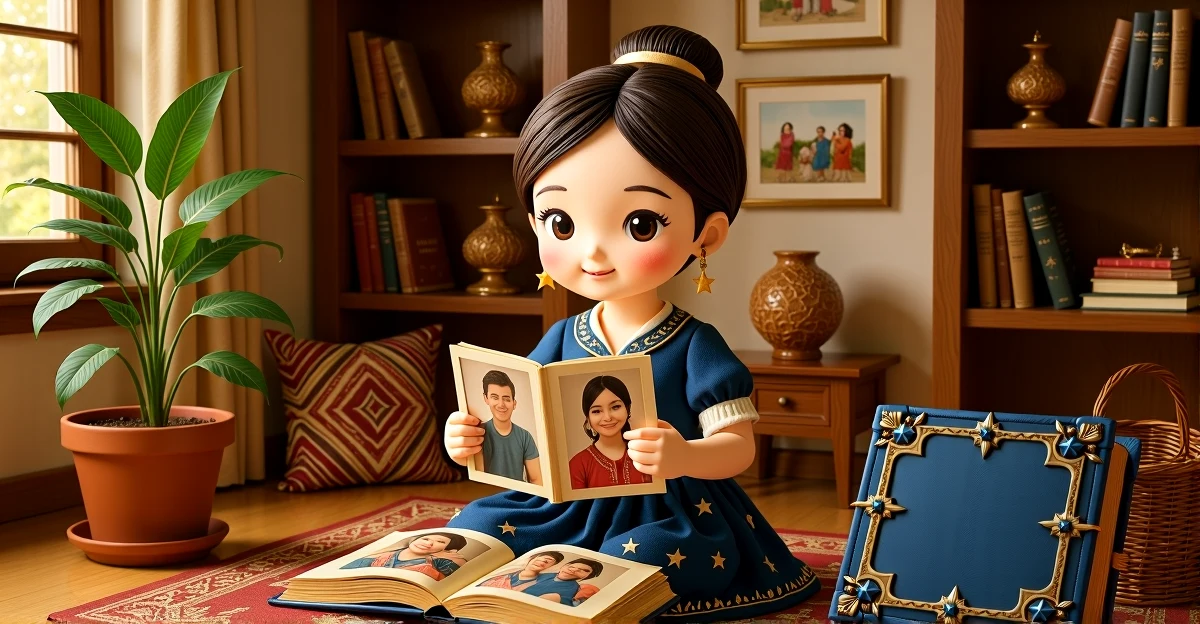
Your child LOVES hearing about when you were little. Share specific memories. Tell them about your favorite toy, your first day of school, how you celebrated birthdays. Show them old photographs. Let them see that you were once five years old too!
These family stories build your child's understanding that time moves forward, that people grow and change, and that they are part of a long family narrative. You might say something like, "Your great-grandmother came to this country when she was young, and she was brave, just like you are brave when you try new things!"
2. Explore How Things Have Changed
When you are reading a book set in the past, or watching a show, pause and notice together. "Look, in this story, they do not have cars yet! They are riding in a horse and buggy!" Or, "See how the children are wearing different clothes than you wear?"
This gentle noticing helps your child understand that the world changes over time. It builds their awareness that people in the past lived differently, but they were still real people with feelings, dreams, and daily lives.
3. Celebrate Cultural Diversity
Try foods from different cultures. Read stories about children from around the world. Visit cultural festivals or museums. And here is the key: frame it with curiosity and warmth, not as strange or exotic, but as different ways people meet the same human needs.
"We all eat, but we eat different foods! We all celebrate, but we celebrate in different ways!" This approach builds cultural wisdom and appreciation for diversity without creating an "us versus them" mentality.
4. Create a Family Timeline
Make a simple visual timeline with your child. Put their baby photo at one end, their current photo in the middle, and draw what they might look like when they are grown up at the other end. Add photos of you at different ages, grandparents, and other family members.
This concrete visual representation helps children understand the abstract concept of time passing and generations connecting.
5. Use the Magic of Storytelling
Stories are one of the most powerful tools for building historical perspective and cultural wisdom. When children hear stories about people from different times and places, they develop empathy, understanding, and a sense of connection across human experience.
A Story That Brings Historical Perspective to Life
In The Book of Inara, we have a story that is absolutely perfect for this developmental moment. It is called The Mushroom Memory Keepers, and it beautifully illustrates how past, present, and future connect in ways that make sense to kindergarten-age minds.
The Mushroom Memory Keepers
Perfect for: Ages 6-7 (also wonderful for advanced 5-year-olds)
What makes it special: In this magical story, two friends named Theo and Miles discover a grove of glowing mushrooms. Each mushroom holds memories of small acts of kindness that grew into world-changing movements throughout history. Guided by Grandfather Aristotle and Ranger Tia, they learn that they are part of a long chain of people who have worked to make the world better.
Why it works for historical perspective: This story does something remarkable. It shows children that history is not just about faraway people in dusty books. It is about real children, just like them, who made choices and took actions that mattered. It connects past, present, and future in a tangible way.
Key lesson: When Theo and Miles touch the glowing mushrooms and hear the whispered stories of children throughout history, your child learns that time is a river, and we are all flowing in it together. They learn that the choices people made long ago affect us today. And they learn that their own choices and actions will ripple forward into the future.
After reading together: You can explore your own family history. Talk about how your grandparents' and great-grandparents' choices and actions connect to your child's life today. Create that beautiful sense of temporal continuity and cultural heritage.
You Are Nurturing Wisdom That Will Last a Lifetime
When you share family stories with your kindergartner, when you explore old photographs together, when you read stories like The Mushroom Memory Keepers that connect past, present, and future, you are doing something truly special.
You are not just teaching facts about history. You are nurturing your child's beautiful, developing brain. You are building their capacity for empathy, perspective-taking, and understanding the rich tapestry of human experience across time and culture.
Your child's questions about the past are not random curiosity. They are signs of remarkable cognitive development happening right now. Ages 5-6 are not too young for historical thinking. They are exactly the right age!
So celebrate those questions. Share your stories. Explore how the world has changed. Read stories that connect generations. Visit museums and cultural centers. Try new foods and learn about different traditions.
You are helping your child develop wisdom that will serve them for their entire life. You are showing them that they are part of something bigger than themselves, a long human story that stretches back through time and forward into the future.
The Magic Book and I are here to support you on this beautiful journey.
With love and starlight,
Inara
Related Articles
- When Screen Time Ends in Meltdowns: Understanding Your Child's Brain and What Actually Helps (Ages 5-6)
- When Your Child Feels Invisible: Understanding Social Isolation and the Gentle Path to Friendship
- Nurturing Leadership Skills in Young Children: A Gentle Parenting Guide for Ages 5-6
- Teaching Financial Wisdom to Your 5-6 Year Old: A Gentle Guide to Money and Economics
- Supporting Your Child's Social Awareness Development: A Gentle Guide
Show transcript
Hello, my wonderful friend! It's me, Inara, and I am SO happy you're here today!
You know, the Magic Book and I have been noticing something beautiful happening with children around ages five and six. Parents are asking us, how can I help my child understand history? How do I introduce cultural wisdom? And I want to tell you something WONDERFUL. Your child's brain is in the most magical window right now for exactly this kind of learning!
If you have a kindergartner or a child around five or six years old, you might have noticed them asking questions like, when you were little, did you have phones? Or, how did people live a long time ago? Or maybe they're fascinated by old photographs, or they want to hear stories about when grandma was young. My friend, this isn't random curiosity. This is their beautiful brain developing something called historical perspective, and it's absolutely remarkable!
Let me share what the Magic Book has taught me, along with some fascinating research that will help you understand just how special this developmental moment is.
First, here's the truth that might surprise you. For a long time, people thought young children couldn't understand history or time. They thought you had to wait until children were much older to introduce these concepts. But recent research has shown us something completely different! Children as young as five can place events in chronological order. They can notice how things change over time. They can create narratives about the past. Their brains are absolutely ready for historical thinking!
Dr. Kyriaki Fardi, a researcher who studies how young children learn about history, discovered something beautiful. She found that children from age five or earlier have the ability to place events from the past in chronological order, to notice changes that happen due to the passage of time, and to understand and create narratives about the past. Isn't that AMAZING?
And here's what makes this even more special. Historical thinking isn't about memorizing dates or facts. It's about understanding that time flows, that people lived differently in the past, and that we're all connected across generations. Your five or six year old is developing what researchers call event scripts. These are mental frameworks that help them organize experiences and understand cause and effect relationships across time.
When your child asks you to tell them about when you were little, they're not just being cute. They're building temporal awareness. They're learning that you were once a child, just like them. That grandma was once young. That the world looked different before they were born. This is the foundation of historical perspective!
Now, let me tell you about cultural wisdom, because this goes hand in hand with historical understanding. Research from experts in early childhood education shows us that children ages five and six are also in a beautiful window for developing empathy and perspective taking. They can appreciate both the similarities and differences among people without developing bias, as long as we guide them with warmth and respect.
Louise Derman-Sparks and Julie Olsen Edwards, who are leading experts in helping children understand diversity, emphasize something powerful. They say, differences do not create bias. Children learn prejudice from prejudice, not from learning about human diversity. So when you share stories about how people live in different cultures, or how your family celebrated traditions, or how people dressed and ate and played in different times and places, you're not confusing your child. You're enriching their understanding of the beautiful tapestry of human experience!
So how do you nurture this? How do you support your child's developing historical perspective and cultural wisdom? Let me share some gentle, joyful approaches.
First, tell family stories. Your child LOVES hearing about when you were little. Share specific memories. Tell them about your favorite toy, your first day of school, how you celebrated birthdays. Show them old photographs. Let them see that you were once five years old too! This builds their understanding that time moves forward, that people grow and change, and that they're part of a long family story.
Second, explore how things have changed. When you're reading a book set in the past, or watching a show, pause and notice together. Look, in this story, they don't have cars yet! They're riding in a horse and buggy! Or, see how the children are wearing different clothes than you wear? This gentle noticing helps your child understand that the world changes over time.
Third, celebrate cultural diversity through stories and experiences. Try foods from different cultures. Read stories about children from around the world. Visit cultural festivals or museums. And here's the key, frame it with curiosity and warmth, not as strange or exotic, but as different ways people meet the same human needs. We all eat, but we eat different foods! We all celebrate, but we celebrate in different ways! This builds cultural wisdom.
Fourth, use the magic of storytelling. And this is where I'm so excited to share something with you! The Magic Book has a story called The Mushroom Memory Keepers, and it's absolutely perfect for this developmental moment.
In this story, two friends named Theo and Miles discover a magical mushroom grove where each mushroom holds memories of small acts of kindness that grew into world-changing movements throughout history. Guided by Grandfather Aristotle and Ranger Tia, they learn that they are part of a long chain of people who have worked to make the world better.
What makes this story so powerful for building historical perspective? It shows children that history isn't just about faraway people in dusty books. It's about real children, just like them, who made choices and took actions that mattered. It connects past, present, and future in a way that makes sense to a five or six year old brain.
When Theo and Miles touch the glowing mushrooms and hear the whispered stories of children throughout history, your child learns something beautiful. They learn that time is a river, and we're all flowing in it together. They learn that the choices people made long ago affect us today. And they learn that their own choices and actions will ripple forward into the future.
After you read this story together, you can explore your own family history. You can talk about how your grandparents' and great-grandparents' choices and actions connect to your child's life today. You can create that beautiful sense of temporal continuity and cultural heritage.
You might say something like, your great-grandmother came to this country when she was young, and she was brave, just like you're brave when you try new things! Or, your grandfather loved to build things with his hands, and look, you love building too! That love of creating has been passed down through our family!
This is how historical perspective becomes real and meaningful. Not through memorizing dates, but through understanding connection across time.
Now, I want to address something important. Some parents worry, is my child too young for this? Should I wait? And my friend, the research is so clear on this. Ages five and six are not too young. In fact, this is the PERFECT time! Your child's brain is developing the exact cognitive abilities needed for historical thinking. Their natural curiosity about the past is a sign that they're ready.
You're not teaching them to be historians. You're nurturing their natural capacity for understanding time, change, and cultural connections. You're helping them see that they're part of something bigger than themselves, a long human story that stretches back through time and forward into the future.
And here's what's so beautiful about this. When children develop historical perspective and cultural wisdom, they also develop empathy. They learn that people in the past had feelings, dreams, and challenges, just like we do. They learn that people in different cultures have different ways of living, but we all share the same human needs and emotions. This builds compassion, understanding, and a sense of global citizenship.
So my wonderful friend, if your five or six year old is asking questions about the past, celebrate that curiosity! Share your family stories. Explore how the world has changed. Read stories like The Mushroom Memory Keepers that connect past, present, and future. Visit museums and cultural centers. Try new foods and learn about different traditions.
You're not just teaching facts. You're nurturing your child's beautiful, developing brain. You're building their capacity for empathy, perspective taking, and understanding the rich tapestry of human experience across time and culture.
The Magic Book and I are here to support you on this journey. You're doing something truly special, helping your child develop wisdom that will serve them for their entire life.
With love and starlight, Inara.