
Your six-year-old looks up from their homework with tears in their eyes. "I'm just not good at math," they say, and your heart sinks a little. Or maybe your seven-year-old watches a friend excel at soccer and declares, "She's the athletic one. I could never do that." In these moments, you can hear them closing doors on possibility, deciding that who they are right now is who they'll always be.
If you've experienced moments like these, you're not alone. Many parents of six and seven-year-olds notice their children starting to form fixed beliefs about themselves and others. And it makes sense to feel concerned, because you know the truth that they don't yet understand: with practice, patience, and support, people can learn, grow, and change in remarkable ways.
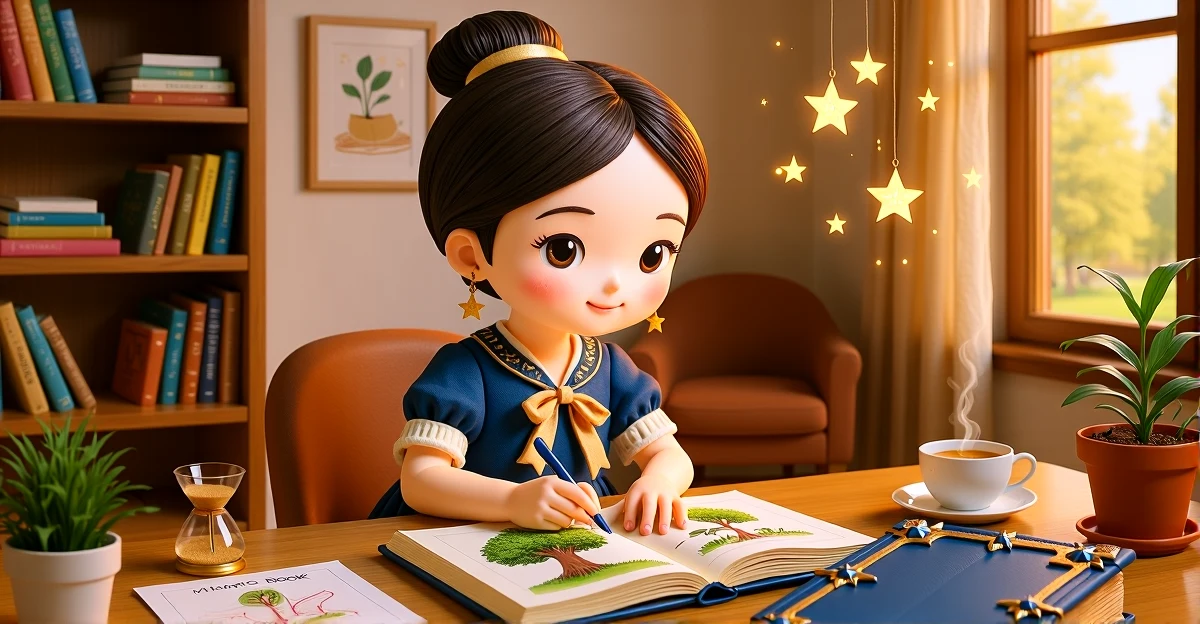
Here's the beautiful news. Ages six and seven represent a magical window when children's brains are developmentally ready to understand one of life's most important truths - that people aren't fixed, that we all have the power to improve and grow. And when children internalize this understanding early, it shapes how they see themselves and others for their entire lives. Let me share what the Magic Book and modern research both tell us about nurturing this powerful belief in your child.
Why Ages 6-7 Are Perfect for Learning About Growth and Change
Something wonderful is happening in your child's brain right now. At ages six and seven, children are developing the cognitive capacity to understand abstract concepts in ways they couldn't before. They're beginning to think about thinking. They're starting to understand that feelings change, that situations evolve, that today doesn't determine forever.
Research from child development experts tells us that six and seven-year-olds are developing the ability to understand and express complex emotions. They're beginning to grasp that feelings shift over time and in different situations. And this understanding creates the perfect foundation for learning that people themselves can grow and change.
Think about it this way. When your child learns that sad feelings don't last forever, they're also learning that struggling with reading doesn't mean they'll always struggle. When they understand that angry moments pass, they're also understanding that making mistakes doesn't define who they are. It all connects beautifully.
The Magic Book has been whispering this wisdom for thousands of years, and now modern neuroscience confirms it. Your child's brain is literally growing and changing every single day. New neural connections form with every experience, every practice session, every attempt. And when children understand this, when they can visualize their brain growing stronger with effort, it transforms how they approach challenges.
What Research Says About Growth Mindset
Dr. Carol Dweck at Stanford University has spent decades studying what she calls growth mindset, and her research reveals something that will change how you think about your child's learning. Children who believe that abilities can be developed through effort show greater motivation to learn and higher achievement than those who believe abilities are fixed.
Children who believe that abilities can be developed show greater motivation to learn and higher achievement than those who believe abilities are fixed.
— Dr. Carol Dweck, Stanford University
But here's what makes this even more powerful. Growth mindset isn't just about academic achievement. The National Association for the Education of Young Children emphasizes that children with higher emotional intelligence, children who understand that feelings shift and change, are better able to pay attention, more engaged in school, and have more positive relationships.
When children develop emotional intelligence, they learn to recognize that feelings can change. And this understanding helps them grasp that people themselves can grow and improve. They see that being frustrated with a puzzle today doesn't mean they'll always be frustrated. They understand that feeling shy at a new school doesn't mean they'll never make friends.
The research is clear. Children benefit most from concrete examples and storytelling that demonstrate transformation and growth. They need to see change happening, to witness improvement, to understand that effort leads to progress. And that's exactly what we can give them.
Simple Language Shifts That Make a Difference
The beautiful truth is that teaching growth mindset doesn't require elaborate programs or expensive materials. It starts with the words we use every single day. Small shifts in language can open up enormous possibilities in your child's mind.
The Power of "Yet"
When your child says, "I can't do this," try adding one small word: "yet." I can't do this YET. That tiny word opens up the future. It says, you're still learning, and that's exactly right. It transforms a closed door into an open pathway.
Praise the Process, Not the Person
Instead of saying "You're so smart," try "I noticed how hard you worked on that" or "I love how you tried a different strategy when the first one didn't work." This helps children see that growth comes from what they DO, not from some fixed quality they either have or don't have.
Here are more language shifts that nurture growth mindset:
- Instead of "You're a natural at this," try "Your practice is really paying off!"
- Instead of "This is too hard for you," try "This is challenging right now. What could we try?"
- Instead of "You're the artistic one," try "You've been developing your drawing skills beautifully."
- Instead of "Some people are just good at math," try "Math skills grow with practice, just like muscles."
- Instead of "You failed," try "You learned what doesn't work. That's progress!"
Model Your Own Growth
Share your own learning journey with your child. Tell them about things you're still learning. Let them see you make mistakes and try again. Say things like, "I'm still learning how to cook this recipe" or "I made a mistake, and now I know what to try differently next time."
When children see the adults they love still learning and growing, it normalizes the entire process. They understand that learning isn't something that stops when you become a grown-up. It's a lifelong adventure.
Practical Strategies for Nurturing Growth Mindset
Beyond language shifts, there are SO many beautiful ways to help your child embrace the truth of growth and change. Here are strategies that really work:
Point Out Growth Everywhere
Help your child notice growth and change in the world around them. "Look at how much better you've gotten at tying your shoes! Remember when that was hard?" "Look at how the plant grew from a tiny seed." "Look at how your baby cousin is learning to walk, one wobbly step at a time." These concrete examples help abstract concepts become real.
Create Growth Experiments
Choose something your child wants to get better at. Maybe it's riding a bike, or drawing, or reading, or being patient with a younger sibling. Make a plan together. Practice a little bit each day. Notice the small improvements. Celebrate the effort, not just the outcome.
You could even create a simple chart together where your child can track their practice. Not to create pressure, but to help them SEE their own growth over time. "Look, you practiced every day this week! Your brain is growing stronger!"
Reframe Struggle as Information
When your child struggles, and they will because that's part of learning, help them see the struggle as valuable information rather than failure. "Oh, this is hard right now. That means your brain is growing! What could we try next?" This transforms difficulty from something bad into something meaningful.
Tell Stories of Transformation
Share real stories from your own life about times you improved at something through practice. Times you failed and tried again. Times you thought you couldn't do something and then discovered you could. Children learn SO much from these personal narratives.
And of course, read stories together that demonstrate growth and change. Look for books and tales where characters learn, improve, overcome challenges, and discover their own capacity for growth.
Stories That Can Help
In The Book of Inara, we have beautiful stories that bring these concepts to life for your child. Let me share one that's perfect for this age:
The Vision Keepers of Clarity Lane
Perfect for: Ages 6-7
What makes it special: Lucas and Ella discover that an eye doctor office holds magical memories of everyone who learned to see clearly. When they help a scared child, they witness how caring actions create ripples of positive change. This story beautifully demonstrates that people have the power to grow, improve, and make a real difference in the world.
Key lesson: Your efforts matter. Your kindness creates change. You have the power to help others and to grow yourself.
After reading together: Ask your child, "How did Lucas and Ella help? What changed because of their kindness? Have you ever helped someone and seen things get better? What are you getting better at with practice?"
You're Doing Beautifully
Teaching your child that people can change and grow is such important work. You're not just teaching them a concept. You're giving them a lens through which to see their entire life. You're helping them understand that they're not stuck, that change is possible, that effort matters, that growth is real.
And remember, you're teaching this not just with your words but with your presence. When you respond to your child's challenges with patience instead of frustration, you're showing them that people can regulate their emotions and choose their responses. When you apologize after you've made a mistake, you're showing them that growth includes acknowledging when we need to do better. When you celebrate your own small victories, you're modeling that improvement matters at every age.
The Magic Book and I are always here, cheering you on, celebrating every small step forward, yours and your child's. Because we're all still learning, all still growing, all still becoming. And that's not just okay, it's beautiful.
With love and starlight, Inara
Related Articles
- How to Nurture Your Child's Empathy and World-Changing Impact (Ages 6-7)
- Nurturing Your Child Innovation Mindset: A Gentle Guide for Ages 6-7
- When Your Child Makes Insensitive Comments: A Gentle Guide to Teaching Cultural Awareness
- Nurturing Purpose and Meaning in Young Children: A Gentle Guide for Parents
- Understanding Personal Growth and Change: A Guide for Parents of 5-6 Year Olds
Show transcript
Hello, my wonderful friend! It's me, Inara, and I am SO happy you're here today!
You know, the Magic Book and I have been noticing something beautiful happening in homes with six and seven-year-olds. Parents are asking such thoughtful questions about how to help their children understand that people can change and grow and improve over time. And if you're wondering about this too, I want you to know, you're asking exactly the right question at exactly the right time.
Because here's something WONDERFUL. Your child is at a magical age where their brain is ready to understand one of life's most important truths. That people aren't fixed. That we all have the power to learn, to grow, to change, to become better versions of ourselves. And when children understand this early, it shapes how they see themselves and others for their entire lives.
So let's talk about this together, shall we? Grab a cozy cup of tea, settle in, and let me share what the Magic Book and the research both tell us about helping children embrace the beautiful truth of growth and change.
First, let me validate something you might be experiencing. Maybe your child has said things like, I'm just not good at math, or She's the smart one, or I can't do that. And when you hear those words, your heart might sink a little, because you can hear them closing a door on possibility. You can hear them deciding that who they are right now is who they'll always be.
And that's hard to hear, isn't it? Because you know the truth. You know that with practice and patience and support, they can learn almost anything. You know that the person they are today is just the beginning of who they'll become.
So how do we help them see that too?
Well, the Magic Book has been whispering wisdom about this for thousands of years, and now modern research is catching up and saying the same thing. Dr. Carol Dweck at Stanford University has spent decades studying what she calls growth mindset, and her research reveals something beautiful. Children who believe that abilities can be developed show greater motivation to learn and higher achievement than those who believe abilities are fixed.
Think about that for a moment. When children understand that their brain grows and changes through effort and practice, they develop greater resilience. They persist when things are hard. They see challenges as opportunities instead of threats.
And here's what makes this even more wonderful. Ages six and seven are the PERFECT time to teach this. Your child's brain is developing the capacity to understand abstract concepts. They're starting to think about thinking. They're beginning to understand that feelings change, that situations evolve, that today doesn't determine forever.
The research from the National Association for the Education of Young Children tells us that children with higher emotional intelligence, children who understand that feelings shift and change, are better able to understand that people themselves can grow and improve. It all connects, you see. When children learn that sad feelings don't last forever, they're also learning that struggling with reading doesn't mean they'll always struggle. When they understand that angry moments pass, they're also understanding that making mistakes doesn't define who they are.
So how do we teach this in ways that really sink in?
The Magic Book suggests we start with our own words. The language we use every single day shapes how children see themselves and the world. When your child says, I can't do this, try adding one small word. Yet. I can't do this yet. That tiny word opens up the future. It says, you're still learning, and that's exactly right.
When you praise your child, focus on their effort and strategies instead of calling them smart or talented. Instead of saying, You're so smart, try, I noticed how hard you worked on that, or I love how you tried a different strategy when the first one didn't work. This helps them see that growth comes from what they DO, not from some fixed quality they either have or don't have.
Share your own learning journey with them. Tell them about things you're still learning. Let them see you make mistakes and try again. Say things like, I'm still learning how to cook this recipe, or I made a mistake, and now I know what to try differently next time. When children see the adults they love still learning and growing, it normalizes the entire process.
And here's something the Magic Book loves. Tell stories. Real stories from your own life about times you improved at something through practice. Times you failed and tried again. Times you thought you couldn't do something and then discovered you could. Children learn so much from these personal narratives.
You can also point out growth and change in the world around you. Look at how much better you've gotten at tying your shoes! Remember when that was hard? Look at how the plant grew from a tiny seed. Look at how your baby cousin is learning to walk, one wobbly step at a time. These concrete examples help abstract concepts become real.
And of course, stories can help SO much with this. The Magic Book and I have a story about Lucas and Ella called The Vision Keepers of Clarity Lane. In this story, Lucas and Ella discover that caring actions create ripples of positive change. They help a scared child, and they witness how their kindness makes a real difference. It's such a beautiful way for children to see that people have the power to grow, to improve, to make positive changes in the world.
After you read this story together, you can talk about it. Ask your child, How did Lucas and Ella help? What changed because of their kindness? Have you ever helped someone and seen things get better? These conversations help children connect the story to their own lives and understand their own power to create positive change.
You can also create little experiments in growth together. Choose something your child wants to get better at. Maybe it's riding a bike, or drawing, or reading, or being patient with a younger sibling. Make a plan together. Practice a little bit each day. Notice the small improvements. Celebrate the effort, not just the outcome.
And when your child struggles, and they will, because that's part of learning, help them see the struggle as information, not as failure. Oh, this is hard right now. That means your brain is growing! What could we try next? This reframes difficulty from something bad into something valuable.
The research tells us that children benefit most from concrete examples and storytelling that demonstrate transformation and growth. So look for these examples everywhere. In books you read together. In shows you watch. In the people around you. Point out when characters or real people learn and change and improve.
And remember, my wonderful friend, you're teaching this not just with your words but with your presence. When you respond to your child's challenges with patience instead of frustration, you're showing them that people can regulate their emotions and choose their responses. When you apologize after you've made a mistake, you're showing them that growth includes acknowledging when we need to do better. When you celebrate your own small victories, you're modeling that improvement matters at every age.
This is such important work you're doing. You're not just teaching your child a concept. You're giving them a lens through which to see their entire life. You're helping them understand that they're not stuck, that change is possible, that effort matters, that growth is real.
And that understanding, that belief in the possibility of change, it's one of the greatest gifts you can give.
The Magic Book and I are always here, cheering you on, celebrating every small step forward, yours and your child's. Because we're all still learning, all still growing, all still becoming.
Find The Vision Keepers of Clarity Lane and so many other stories in The Book of Inara app. Let the stories be gentle helpers on this beautiful journey of growth.
Until our next adventure together, my wonderful friend. You're doing beautifully.
With love and starlight, Inara.