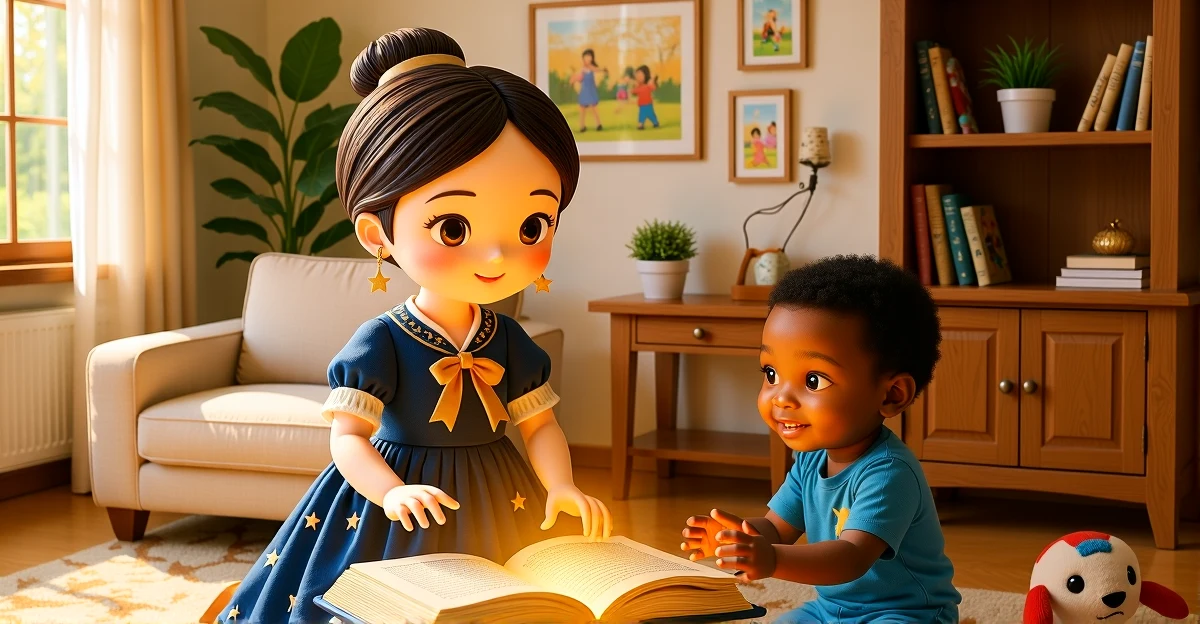

Your six or seven year old just asked you why someone at the park looked sad. They noticed when their friend felt left out. They wanted to help when they saw someone struggling. And your heart swelled with pride because you are raising a child who CARES.
If you are wondering how to nurture this beautiful quality, how to help your child develop deep empathy and compassionate leadership, I want you to know something wonderful. You are asking this question at exactly the right time. Because ages six and seven represent a golden window for empathy development, a critical period when your child's brain is building the neural pathways that will shape how they understand and care for others throughout their entire life.
Let me share what the Magic Book and the latest research have taught me about this remarkable developmental stage, and how you can nurture profound empathy and compassionate leadership in your child.
Why Ages 6-7 Are the Golden Window for Empathy
Here's something truly fascinating. Research from Harvard Graduate School of Education and peer-reviewed neuroscience studies show us that ages six and seven are not just another developmental stage. This is a CRITICAL period for empathy formation.
Your child's brain is going through remarkable changes right now. Brain imaging studies reveal that six and seven year olds are developing distinct empathy-related neural patterns. Their brains are literally growing new connections that help them understand other people's perspectives. This is the age when children begin to grasp something profound: that other people's thoughts and feelings might be different from their own.
Can you imagine how significant that realization is? Your child is learning to see beyond what is visible, to understand that everyone carries invisible feelings and worries. This cognitive leap is the foundation of genuine empathy.
What the Research Shows
Studies from the National Library of Medicine demonstrate that empathy at this age directly correlates with prosocial helping behaviors. That means children who develop empathy now do not just feel for others, they ACT on those feelings. They become the kind of people who notice when someone needs help and choose to offer it.
And here's what I find most beautiful. Research from Harvard's Making Caring Common project shows that children who develop strong empathy skills at this age display:
- Higher academic achievement and better classroom engagement
- Improved communication abilities and social competence
- Significantly reduced bullying behaviors and aggression
- More positive relationships with peers and adults
- Foundation for compassionate leadership later in life
The empathy your child develops now becomes the foundation for how they lead, how they love, and how they contribute to making the world a kinder place.
Understanding Empathy Development at This Age
So what does empathy development actually look like in a six or seven year old? You might be seeing signs already, and I want you to recognize them for the beautiful brain development they represent.
Your child might be asking more questions about how others feel. They might show concern when a friend gets hurt or looks sad. They might try to comfort someone who is upset, even if they are not sure exactly what to do. These are not just sweet moments. These are evidence of profound neural growth happening right now.
At this age, children are developing what researchers call perspective-taking abilities. They are learning to step into someone else's experience, to imagine what life feels like for another person. This is incredibly complex cognitive work, and your child is doing it naturally as their brain matures.
The Making Caring Common project at Harvard Graduate School of Education emphasizes that there is more to developing empathy than simply asking students to walk in someone else's shoes. Structured, evidence-based approaches are essential for building genuine empathy in elementary school children.
— Harvard Graduate School of Education, Making Caring Common
This tells us something important. Empathy development does not happen automatically. It needs nurturing. It needs modeling. It needs practice. And that's where you come in, wonderful parent.
Five Evidence-Based Strategies to Nurture Empathy
The research is clear about what works. Here are five powerful strategies you can use to nurture profound empathy and compassionate leadership in your six or seven year old.
1. Model Empathy in Your Everyday Interactions
Your child is watching how you respond to others. When you show kindness to the grocery store clerk, when you acknowledge someone's feelings, when you help a neighbor, your child is learning that caring for others matters. The Magic Book reminds us that children learn more from what we DO than what we SAY.
This does not mean you have to be perfect. It means being intentional about showing empathy in small, everyday moments. When you see someone struggling with heavy bags, you might say out loud, That looks heavy. I wonder if they need help. Then you offer assistance. Your child sees the whole process: noticing, caring, acting.
2. Help Your Child Name and Understand Emotions
Building emotional vocabulary is crucial for empathy development. When you see someone who looks sad, you might say, I notice that person looks sad. I wonder if they are having a hard day. This teaches your child to pay attention to emotional cues and to care about how others feel.
You can do this with characters in books, people you see in public, and of course with your child's own emotions. The more words they have for feelings, the better they can understand and respond to emotions in others.
3. Create Opportunities for Perspective-Taking
Ask questions that help your child practice stepping into someone else's experience. How do you think your friend felt when that happened? What do you think made them happy? Why do you think they look worried?
These questions are not tests. They are invitations to practice empathy. And here's what's magical: every time your child considers someone else's perspective, they are strengthening those neural pathways for empathy. They are literally building their compassionate leadership capacity.
4. Validate Their Caring Impulses
When your child shows concern for someone, acknowledge it. You noticed your friend was sad. That shows you have a caring heart. This reinforces that empathy is valued and important. It tells your child that their compassionate instincts are something to be proud of.
Neuroscience research shows that environmental factors and parental modeling play crucial roles in shaping empathy-related neural pathways. When you validate your child's empathy, you are literally supporting their brain development.
5. Use Stories as Gentle Teachers
Stories are incredibly powerful tools for building empathy because they let children experience life through different characters' eyes. They learn to care about characters, to understand their struggles, to celebrate their growth. This is empathy practice in its most engaging form.
When you read stories together and talk about how characters feel, why they make certain choices, and what they learn, you are giving your child safe opportunities to develop perspective-taking skills. You are teaching them that everyone has a story, everyone has feelings, and everyone deserves compassion.
A Story That Teaches Profound Empathy
In The Book of Inara, we have a story that beautifully teaches the kind of profound empathy and compassionate action we have been talking about. Let me tell you about it.
The Room Where Hearts Speak Softly
Perfect for: Ages 6-7
What makes it special: This story follows Theo and Miles as they discover something profound: that adults have invisible worries too, and that small acts of kindness can help heal hearts. It teaches children to see beyond what is visible and to practice compassionate action.
Key lesson: When Theo and Miles learn that everyone carries invisible feelings and worries, they understand that empathy means noticing what others might be experiencing and choosing to help. This is compassionate leadership in action.
How to use this story: After reading, talk with your child about how everyone has invisible feelings. Ask them to think of small acts of kindness they could do to help others feel better. This conversation builds their compassionate leadership skills in a natural, meaningful way.
Stories like this one do not just entertain. They shape how children understand the world and their role in it. They teach that caring for others is not just nice, it is essential. They show that even small acts of kindness can make a real difference.
Explore The Room Where Hearts Speak Softly in The Book of Inara
Building Compassionate Leadership for Life
Here's what the research tells us about the long-term impact of empathy development at this age. The National Library of Medicine's research on empathy-induced prosocial behavior confirms that empathy development between ages six and seven directly predicts later social competence and leadership qualities.
Think about what that means. The empathy your child is developing right now is not just about being kind today. It is about who they will become. It is about the leader they will be, the friend they will be, the partner they will be, the parent they might become.
Compassionate leadership is not about being in charge. It is about caring enough to notice when someone needs help and having the courage to offer it. It is about understanding that everyone has struggles we cannot see and choosing to respond with kindness anyway. It is about making the world a little bit better because you are in it.
And you are teaching your child all of this right now, in the everyday moments of your life together.
You Are Doing Beautifully
I want you to know something important. You do not have to be perfect at this. Your child does not need you to have all the answers. What they need is to see you trying, to see you caring, to see you modeling empathy even when it is hard.
Every time you acknowledge someone's feelings, every time you show kindness to a stranger, every time you help your child understand another person's perspective, you are building those neural pathways. You are nurturing the profound empathy and compassionate leadership that will serve them throughout their entire life.
The experts at Harvard emphasize that building empathy requires structured approaches, meaningful practice, and genuine opportunities to understand diverse perspectives. And you are providing all of that through your daily interactions, your conversations, and the stories you share.
So keep going, wonderful parent. Keep modeling kindness. Keep having those conversations about feelings. Keep reading stories that open your child's heart to understanding others. You are doing something truly beautiful. You are raising a compassionate leader, someone who will make the world a kinder place.
The Magic Book and I are always here to support you on this journey. And remember, every small moment of empathy you nurture today is building the foundation for a lifetime of compassionate leadership.
With love and starlight, Inara
Related Articles
- How to Nurture Your Child's Empathy and World-Changing Impact (Ages 6-7)
- Nurturing Your Child Innovation Mindset: A Gentle Guide for Ages 6-7
- When Your Child Makes Insensitive Comments: A Gentle Guide to Teaching Cultural Awareness
- When Your Child Expresses Thoughts of Self-Harm: Getting Help Now
- Nurturing Purpose and Meaning in Young Children: A Gentle Guide for Parents
Show transcript
Hello, wonderful parent! It's me, Inara, and I am so happy you're here today. You know, the Magic Book and I have been noticing something truly beautiful. More and more parents are asking how to help their children develop deep empathy and compassionate leadership, and I want you to know, this question alone shows how thoughtful and caring you are.
If you're wondering how to nurture these profound qualities in your six or seven year old, you're in exactly the right place. Because here's something WONDERFUL that the research shows us. Ages six and seven represent a golden window for empathy development. Your child's brain is going through remarkable changes right now, building the neural pathways that will shape how they understand and care for others throughout their entire life.
Let me share what the Magic Book and the latest research have taught me about this magical developmental stage.
First, I want you to know that your child is already showing you signs of this empathy growth. Have you noticed them asking more questions about how others feel? Maybe they've started to recognize when someone looks sad, or they've shown concern for a friend who got hurt. These aren't just sweet moments, they're evidence of profound brain development happening right now.
Research from Harvard Graduate School of Education shows us something remarkable. Children who develop strong empathy skills at this age display higher academic achievement, better communication abilities, and significantly reduced bullying behaviors. But here's what I find most beautiful. The empathy your child develops now becomes the foundation for compassionate leadership later. They're learning to see beyond what's visible, to understand that everyone carries invisible feelings and worries.
The neuroscience is truly fascinating. Brain imaging studies show that six and seven year olds are developing distinct empathy related neural patterns. Their brains are literally growing new connections that help them understand other people's perspectives. This is the age when children begin to grasp that other people's thoughts and feelings might be different from their own. Can you imagine how profound that realization is?
But here's what the Magic Book wants you to understand. This empathy development doesn't happen automatically. It needs nurturing. It needs modeling. It needs practice. And that's where you come in, wonderful parent.
So how do we nurture profound empathy and compassionate leadership? Let me share some evidence based strategies that the research supports.
First, model empathy in your everyday interactions. Your child is watching how you respond to others. When you show kindness to the grocery store clerk, when you acknowledge someone's feelings, when you help a neighbor, your child is learning that caring for others matters. The Magic Book reminds us that children learn more from what we do than what we say.
Second, help your child name and understand emotions. When you see someone who looks sad, you might say, I notice that person looks sad. I wonder if they're having a hard day. This teaches your child to pay attention to emotional cues and to care about how others feel. You're building their emotional vocabulary and their awareness.
Third, create opportunities for perspective taking. Ask questions like, How do you think your friend felt when that happened? or What do you think made them happy? These questions help your child practice stepping into someone else's experience. This is the foundation of empathy, the ability to imagine what life feels like for another person.
Fourth, validate their caring impulses. When your child shows concern for someone, acknowledge it. You noticed your friend was sad. That shows you have a caring heart. This reinforces that empathy is valued and important.
And fifth, use stories as gentle teachers. Stories are incredibly powerful tools for building empathy because they let children experience life through different characters' eyes. They learn to care about characters, to understand their struggles, to celebrate their growth.
And this brings me to something truly special. In The Book of Inara, we have a story called The Room Where Hearts Speak Softly. This story is about Theo and Miles, two wonderful friends who discover something profound. They learn that adults have invisible worries too, and that small acts of kindness can help heal hearts.
What I love about this story is how it teaches children to see beyond what's visible. Theo and Miles learn that everyone, even grown ups, carries feelings and worries that others can't see. And they discover that compassionate action, those small acts of kindness, can make a real difference in someone's life.
After you read this story with your child, you might have a beautiful conversation. You could talk about how everyone carries invisible feelings. You could ask your child to think of small acts of kindness they could do to help others feel better. This is compassionate leadership in action, noticing when someone needs help and choosing to act with kindness.
The research tells us that children who develop empathy at this age show measurable increases in prosocial helping behaviors. That means they don't just feel empathy, they act on it. They become the kind of people who notice when someone needs help and choose to offer it. They become compassionate leaders.
And here's something the Magic Book wants you to remember. You don't have to be perfect at this. Your child doesn't need you to have all the answers. What they need is to see you trying, to see you caring, to see you modeling empathy even when it's hard.
Every time you acknowledge someone's feelings, every time you show kindness to a stranger, every time you help your child understand another person's perspective, you're building those neural pathways. You're nurturing the profound empathy and compassionate leadership that will serve them throughout their entire life.
The experts at Harvard emphasize that building empathy requires more than just asking children to walk in someone else's shoes. It requires structured approaches, meaningful practice, and genuine opportunities to understand diverse perspectives. And you're providing all of that through your daily interactions, your conversations, and the stories you share.
So keep going, wonderful parent. Keep modeling kindness. Keep having those conversations about feelings. Keep reading stories that open your child's heart to understanding others. You're doing something truly beautiful. You're raising a compassionate leader, someone who will make the world a kinder place.
The Magic Book and I are always here to support you on this journey. And remember, every small moment of empathy you nurture today is building the foundation for a lifetime of compassionate leadership.
With love and starlight, Inara. Sweet dreams, my wonderful friend.