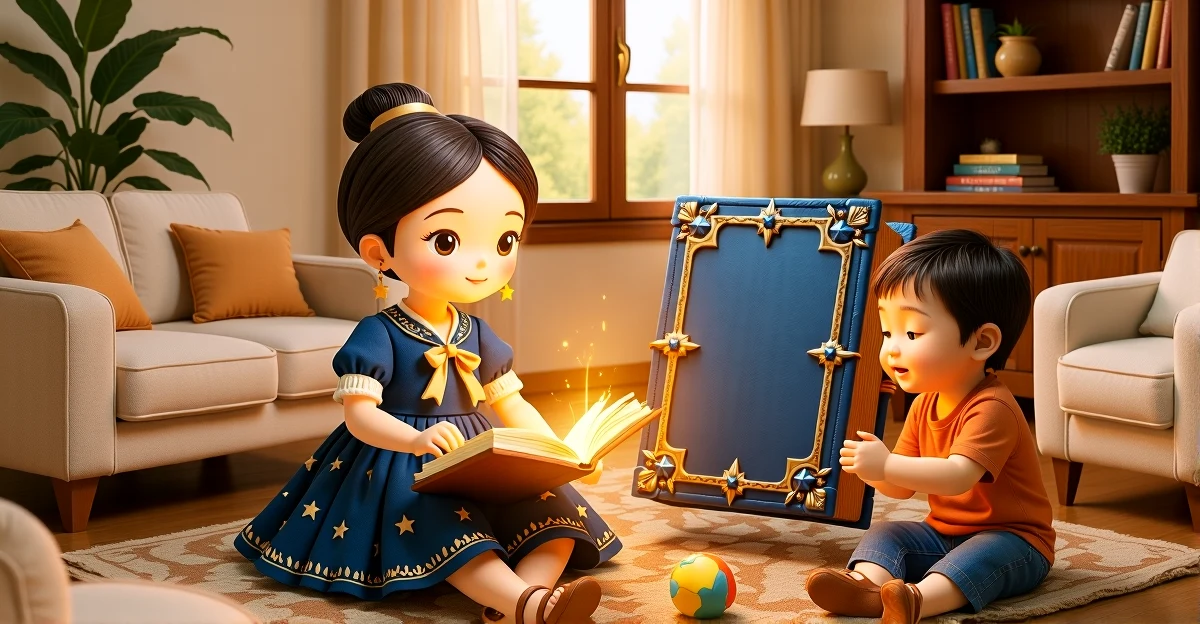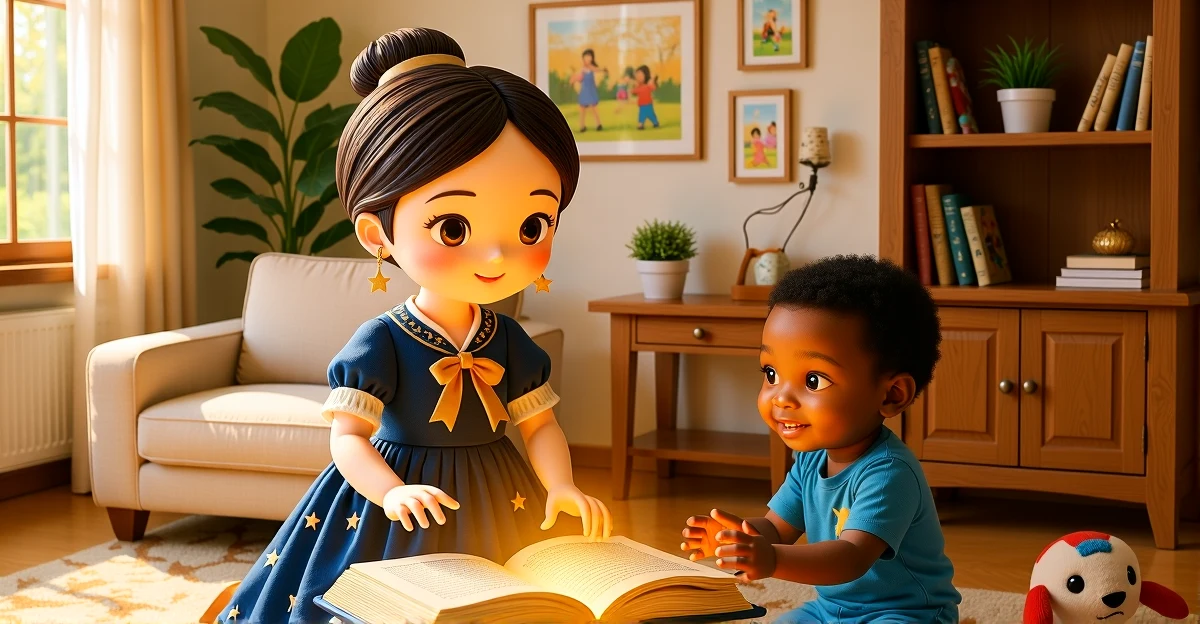

You know that moment when your child notices another child crying and asks, "Why is she sad?" Or when they bring their favorite stuffed animal to comfort a friend who's upset? Those moments, wonderful parent, those are moments of empathy blooming like starflowers in your child's heart. And they're absolutely BEAUTIFUL.
If you're here because you want to understand how your 4 or 5-year-old develops empathy, or because you're wondering how to nurture this precious capacity to care about others, I want you to know something. You're already doing something wonderful. The fact that you care about raising a child who cares deeply about others tells me everything I need to know about the kind of parent you are.
Today, the Magic Book and I want to share something truly special with you. We're going to explore the beautiful science of how empathy develops in young children, what research tells us about these magical years between 4 and 5, and most importantly, the gentle ways you can nurture this capacity in your child's heart. And yes, we'll share some stories that bring these concepts to life in the most magical way.
Understanding Empathy: Two Beautiful Parts Working Together
Here's something the Magic Book taught me that I absolutely love. Empathy isn't just one thing. It's actually two beautiful capacities working together like moonbeams and stardust.
The first part is what researchers call affective empathy. This is when your child actually FEELS what someone else is feeling. When they see another child crying and their own eyes start to well up with tears, that's affective empathy. Their heart is connecting with the other child's heart, experiencing those feelings right alongside them.
The second part is cognitive empathy. This is when your child UNDERSTANDS what someone else is feeling, even if they're not feeling it themselves. When your child says, "I think she's sad because she misses her mommy," that's cognitive empathy. Their mind is helping them see another person's perspective, to walk in their shoes.
Both of these beautiful capacities are growing in your child right now, like little seeds of starlight taking root in their heart. And here's what's SO important to understand: they're both learned skills. They develop through practice, through observation, and most importantly, through experiencing empathy themselves from YOU.
Why Ages 4-5 Are Magical for Empathy Development
Research shows us something truly special about the ages your child is at right now. Between 4 and 5, children are in what scientists call a critical developmental window for empathy and compassion.
Dr. Chiara Bulgarelli's research at Birkbeck, University of London, shows us that this age is particularly important because children are transitioning from heavily scaffolded interactions with caregivers into more independent peer relationships. They're moving from a world where you helped them navigate every social interaction, into a world where they're starting to connect with other children on their own.
And here's what makes this transition so beautiful. As children start to interact more with peers, they naturally become more curious about what others are feeling. They start to wonder: Why is my friend upset? What does it feel like to be left out? How can I help someone who's sad?
The research is clear on this: parent and teacher scaffolding is absolutely paramount for empathy development during these preschool years. What does that mean? It means that when YOU show empathy to your child, when you get down on their level and say, "I can see you're feeling frustrated right now, that must be so hard," you're teaching them what empathy looks and feels like.
How Children Learn Empathy: The Power of Experiencing It First
Here's something that might surprise you, and it's one of the most important things the Magic Book has ever taught me. Empathy isn't something children are just born with, fully formed. It's something they LEARN, just like learning a language or learning to ride a bicycle.
The Harvard Graduate School of Education's Making Caring Common Project explains it beautifully:
Empathy begins with the capacity to take another perspective, to walk in another's shoes. But it is not just that capacity. Empathy includes valuing other perspectives and people. It's about perspective-taking and compassion.
— Making Caring Common Project, Harvard Graduate School of Education
And here's the beautiful truth: children learn empathy through both watching parents model empathy AND experiencing empathy from them. When children experience being truly seen and understood by the people they love most, something magical happens. They develop secure attachments with you. They feel safe. And from that safe place, they become curious about OTHER people's feelings.
Think about it this way. When your child falls and scrapes their knee, and you rush over, get down on their level, acknowledge their pain, and comfort them with genuine care, you're not just making them feel better in that moment. You're teaching them what it looks like to care about someone who's hurting. You're showing them that feelings matter, that pain deserves compassion, that caring for others is important.
The National Association for the Education of Young Children reminds us that young children develop and learn in the context of relationships. Those trusting, caring connections you're building with your child right now are the foundation for everything, including their ability to care about others.
Gentle Ways to Nurture Empathy in Your Child
Now let me share some beautiful, practical ways you can nurture this growing empathy in your child's heart. These aren't complicated strategies or rigid rules. They're gentle practices that fit naturally into your daily life together.
Model Empathy in Your Daily Life
Your child is watching you, learning from you, every single day. When you show kindness to the person at the grocery store, when you express concern about a neighbor who's going through a hard time, when you talk about how someone else might be feeling, your child is absorbing all of that like a little sponge soaking up starlight.
You don't have to be perfect. You just have to be genuine. Let your child see you caring about others. Let them hear you say things like, "I wonder how grandma is feeling today. Let's call her and check in." Or "That person looks like they're having a hard day. Let's hold the door for them."
Make Caring About Others a Family Priority
Research shows that when parents prioritize caring for others as highly as their child's happiness, children internalize these values more deeply. Let your child hear you say that being kind is just as important as being happy. When you talk with teachers or other caregivers, ask not just about your child's skills or achievements, but about whether they're being a caring friend to others.
Give Lots of Opportunities to Practice
Empathy, like any skill, grows with practice. When there's a conflict with a sibling or a friend, help your child think about how the other person might be feeling. Ask questions like:
- "How do you think your sister felt when that happened?"
- "What do you think we could do to help her feel better?"
- "If you were in their shoes, how would you feel?"
- "I notice your friend looks sad. What do you think might be wrong?"
These questions aren't about making your child feel guilty. They're about gently guiding them to consider other perspectives, to practice that beautiful skill of perspective-taking.
Validate All Feelings, Including Difficult Ones
When you validate your child's feelings, even the difficult ones, you're teaching them that all feelings are valid and deserve compassion. When you say, "I can see you're really angry right now. It's okay to feel angry. Let's talk about what happened," you're showing them how to respond to strong emotions with empathy rather than judgment.
This becomes the template for how they'll respond to others' emotions. If their feelings are met with understanding, they'll learn to meet others' feelings with understanding too.
Expand Their Circle of Concern
The Harvard research emphasizes the importance of expanding children's circle of concern beyond their immediate family. Help them empathize with diverse people facing different challenges. Talk about children in other parts of the world. Read books about different cultures and experiences. Help them understand that people everywhere have feelings, dreams, and challenges just like they do.
Stories That Bring Empathy to Life
Here's something the Magic Book showed me that I absolutely LOVE. Stories are one of the most powerful ways to help children develop empathy. When children hear stories about characters facing challenges, feeling big emotions, learning to care about others, something magical happens in their hearts. They start to understand that other people have feelings just like they do. They start to care.
In The Book of Inara, we have a story that I think you and your child will absolutely love for teaching empathy:
The Magic Carpet
Perfect for: Ages 4-5
What makes it special: This story beautifully demonstrates how kindness and helping others creates something magical and meaningful. A humble weaver creates a magical carpet with love and uses it to help others. And here's the beautiful part: the magic in the carpet grows STRONGER with each act of kindness. Isn't that wonderful?
Key lesson: When your child hears this story, they'll see that caring for others isn't just a nice thing to do—it's something that makes our own lives richer and more magical. Empathy and compassion aren't just good deeds; they're powers that grow within us when we practice them.
After reading together: Talk about times when your child helped someone. Ask, "How do you think the person you helped felt? How did helping them make YOU feel?" This builds that beautiful connection between caring actions and positive feelings.
Discover The Magic Carpet and More Stories in The Book of Inara
You're Nurturing Something Beautiful
The empathy your child is learning now, at 4 and 5, is going to shape the kind of person they become, the kind of friend they'll be, the kind of adult they'll grow into. This developmental phase offers tremendous potential for building lifelong capacities for understanding and caring deeply about others' feelings and experiences.
So when you see your child notice that another child is sad, when you see them offer a toy to a friend who's upset, when you see them ask why someone is crying, celebrate those moments. Those are moments of empathy blooming in their heart.
And on the days when your child seems to struggle with empathy, when they take a toy without thinking about how their friend feels, or when they don't seem to notice someone else's distress, remember this: They're learning. Empathy is a skill that grows with practice, with guidance, with time. Your patient teaching, your gentle reminders, your modeling of compassion—all of that is working, even when you can't see it yet.
The Magic Book and I, we believe in your child. We believe in their capacity for kindness, for compassion, for deep and beautiful empathy. And we believe in YOU, wonderful parent. You're doing such important work, nurturing this precious capacity in your child's heart.
Keep modeling empathy. Keep talking about feelings. Keep reading stories that show kindness and caring. Keep giving your child opportunities to practice understanding others. And most of all, keep showing your child that they are deeply understood and cared for by you. Because that's where empathy begins—in the safe, loving connection between you and your child.
With love and starlight,
Inara and the Magic Book
Related Articles
- Understanding Your Child's Difficulty with Character Emotions in Stories (Ages 4-5)
- When Your Child Plays Too Rough: Teaching Boundaries with Empathy (Ages 4-5)
- Understanding Your Child's Developing Empathy: A Guide to Perspective-Taking in 4-5 Year Olds
- How Children Ages 4-5 Develop Advanced Empathy and Perspective-Taking
- When Your Child Struggles to Celebrate Others (What's Really Happening)
Show transcript
Hello, wonderful parent! It's me, Inara, and I am SO happy you're here today. You know, the Magic Book and I have been thinking about something truly beautiful, something that makes my stardust heart shimmer with joy. We've been thinking about empathy, about compassion, and about how your precious 4 or 5-year-old is learning one of the most IMPORTANT skills they'll ever have: the ability to understand and care deeply about others' feelings.
And I want you to know something right from the start. If you're here because you're wondering how to help your child develop empathy, you're already doing something WONDERFUL. The fact that you care about this, that you want to nurture this beautiful capacity in your child, that tells me everything I need to know about the kind of parent you are.
Now, let me share something the Magic Book taught me. Ages 4 and 5 are absolutely magical years for empathy development. Your child's heart and mind are opening up in the most extraordinary ways right now. They're transitioning from those early years when they needed so much support from you, into this new phase where they're starting to connect with other children, to notice feelings, to wonder what it's like to be someone else.
And here's what research shows us, and what the Magic Book has whispered to me across thousands of years. Empathy has two beautiful parts. There's the part where we actually FEEL what someone else is feeling, where our hearts connect with theirs. And there's the part where we UNDERSTAND what someone else is feeling, where our minds help us see their perspective. Both of these are growing in your child right now, like little seeds of starlight taking root in their heart.
The Harvard Graduate School of Education, through their Making Caring Common Project, explains it so beautifully. They say that empathy begins with the capacity to take another perspective, to walk in another's shoes. But it's not just that capacity. Empathy includes valuing other perspectives and people. It's about perspective-taking AND compassion, working together like moonbeams and stardust.
And here's something that might surprise you. Empathy isn't something children are just born with, fully formed. It's something they LEARN, just like learning a language or learning to ride a bicycle. It requires practice, and guidance, and most importantly, it requires experiencing empathy themselves, from YOU.
Dr. Chiara Bulgarelli's research at the University of London shows us that parent and teacher scaffolding is absolutely paramount for empathy development during these preschool years. What does that mean? It means that when YOU show empathy to your child, when you get down on their level and say, I can see you're feeling frustrated right now, that must be so hard, you're teaching them what empathy looks and feels like.
When children experience being truly seen and understood by the people they love most, something magical happens. They develop secure attachments with you. They feel safe. And from that safe place, they become curious about OTHER people's feelings. They start to wonder, how does my friend feel when I take their toy? How does grandma feel when I give her a hug?
The National Association for the Education of Young Children reminds us that young children develop and learn in the context of relationships. Those trusting, caring connections you're building with your child right now, they're the foundation for everything. They're the foundation for your child's ability to care about others.
Now, let me share some beautiful ways you can nurture this growing empathy in your child. First, model empathy in your daily life. Your child is watching you, learning from you, every single day. When you show kindness to the person at the grocery store, when you express concern about a neighbor who's going through a hard time, when you talk about how someone else might be feeling, your child is absorbing all of that like a little sponge soaking up starlight.
Second, make caring about others a priority in your family. Let your child hear you say that being kind is just as important as being happy. When you talk with teachers or other caregivers, ask not just about your child's skills or achievements, but about whether they're being a caring friend to others.
Third, give your child lots of opportunities to practice empathy. When there's a conflict with a sibling or a friend, help your child think about how the other person might be feeling. Ask questions like, how do you think your sister felt when that happened? What do you think we could do to help her feel better?
And here's something the Magic Book showed me that I absolutely LOVE. Stories are one of the most powerful ways to help children develop empathy. When children hear stories about characters facing challenges, feeling big emotions, learning to care about others, something magical happens in their hearts. They start to understand that other people have feelings just like they do. They start to care.
There's a story in our library called The Magic Carpet that I think you and your child will love. It's about a humble weaver who creates a magical carpet with love and uses it to help others. And here's the beautiful part, the magic in the carpet grows STRONGER with each act of kindness. Isn't that wonderful?
When your child hears this story, they'll see that caring for others isn't just a nice thing to do, it's something that makes our own lives richer and more magical. After you read it together, you can talk about times when your child helped someone. You can ask, how do you think the person you helped felt? How did helping them make YOU feel? This builds that beautiful connection between caring actions and positive feelings.
The research is so clear on this. When parents prioritize caring for others as highly as their child's happiness, children internalize these values more deeply. When children are given regular opportunities to consider how others feel, supported by patient coaching from trusted adults like you, perspective-taking skills emerge naturally.
And I want you to know something else. This developmental phase your child is in right now, it offers tremendous potential for building lifelong capacities for understanding and caring deeply about others' feelings and experiences. The empathy your child is learning now, at 4 and 5, it's going to shape the kind of person they become, the kind of friend they'll be, the kind of adult they'll grow into.
So when you see your child notice that another child is sad, when you see them offer a toy to a friend who's upset, when you see them ask why someone is crying, celebrate those moments. Those are moments of empathy blooming like starflowers in their heart.
And on the days when your child seems to struggle with empathy, when they take a toy without thinking about how their friend feels, or when they don't seem to notice someone else's distress, remember this. They're learning. Empathy is a skill that grows with practice, with guidance, with time. Your patient teaching, your gentle reminders, your modeling of compassion, all of that is working, even when you can't see it yet.
The Magic Book and I, we believe in your child. We believe in their capacity for kindness, for compassion, for deep and beautiful empathy. And we believe in YOU, wonderful parent. You're doing such important work, nurturing this precious capacity in your child's heart.
So keep modeling empathy. Keep talking about feelings. Keep reading stories that show kindness and caring. Keep giving your child opportunities to practice understanding others. And most of all, keep showing your child that they are deeply understood and cared for by you. Because that's where empathy begins, in the safe, loving connection between you and your child.
Thank you so much for being here today, for caring about raising a child who cares about others. The world needs more empathy, more compassion, more kindness. And you're helping to create that, one gentle conversation, one caring moment, one story at a time.
The Magic Book and I are always here for you. Until our next adventure together, with love and starlight, Inara.