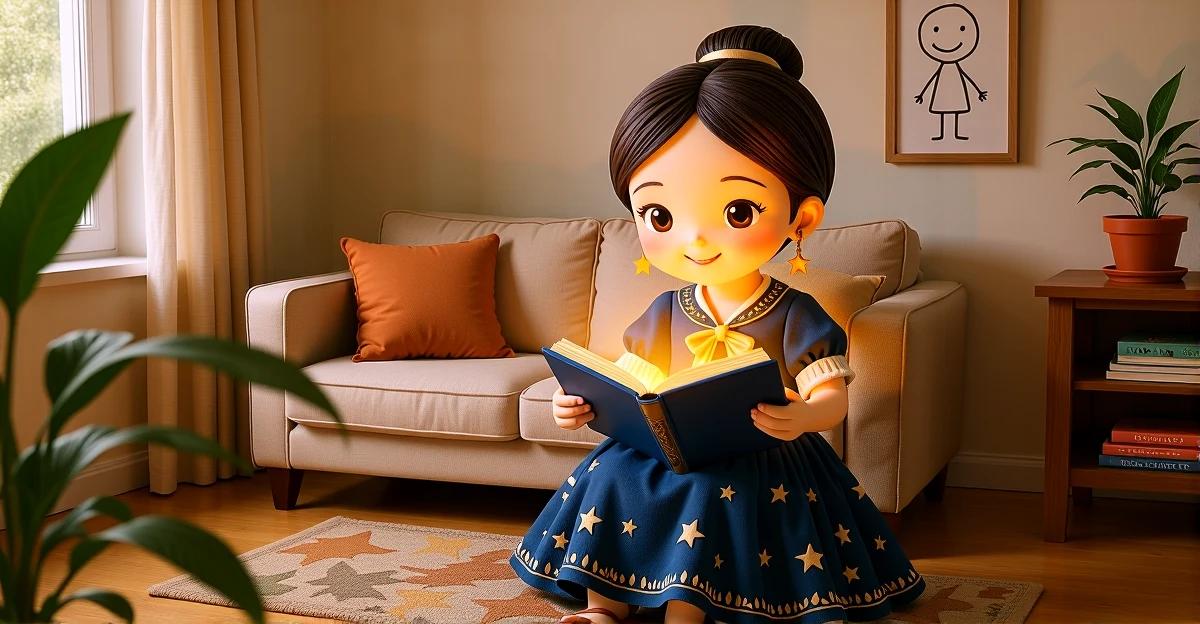

Hello, wonderful parent! It's me, Inara, and I want to share something beautiful with you today. If your little one hesitates before jumping into a new physical challenge, if they say "I can't" before even trying that climbing wall, or if they hang back while other children race to the playground equipment, I want you to know something SO important: you are not alone in this journey, and that hesitation? It's not a problem to fix. It's actually your child's brain being incredibly smart.
The Magic Book and I have been exploring this topic deeply, and what we've discovered is truly wonderful. Ages four to five represent a critical window for developing physical confidence and motor skills in young children. This is the PERFECT time to support your child's growing abilities in ways that feel joyful, safe, and empowering.
In this guide, we'll explore why hesitation is actually healthy development, what research tells us about building physical confidence, and gentle strategies you can use starting tonight. Plus, I'll share a story from The Book of Inara that captures this journey beautifully.
Why Your Child's Hesitation is Actually Smart
Let me start with the most validating truth: when children pause before trying something new physically, they're not being timid or fearful in a problematic way. They're assessing safety, gauging their abilities, and making thoughtful decisions. This is healthy development, and it's something to celebrate.
Think about it this way. Your child's brain is doing exactly what it should be doing at this age. They're learning to evaluate risk, understand their own capabilities, and make choices about when to stretch and when to wait. These are LIFE skills, not limitations.
The key is helping them move from that wise assessment into gentle action, with your loving support as their bridge. We're not trying to eliminate the hesitation. We're honoring it, then gently supporting one small step forward.
What Research Tells Us About Physical Confidence Development
The Magic Book has taught me so much about this, and I've been reading the most fascinating research. Here's what child development experts have discovered about building physical confidence in young children.
The Critical Window of Ages 4-5
Research consistently demonstrates that ages four to five represent a critical window for developing physical confidence and motor skills. Studies show that goal-oriented play activities significantly improve motor abilities including strength, speed, agility, balance, and coordination when children engage in regular, sustained physical activity.
Dr. Panggung Sutapa from Yogyakarta State University discovered something remarkable in peer-reviewed research. Children who develop adequate motor capabilities gain confidence in their physical abilities. But here's the key: children who develop low motor skills often experience decreased self-confidence. So our job as caring adults is to help children build those motor skills in ways that feel joyful and safe.
"Children who grow and develop with low motor abilities lose confidence. Adequate motor capabilities and nervous system development enable children to coordinate their limbs properly."
— Dr. Panggung Sutapa, Yogyakarta State University
The Power of Play-Based Approaches
Here's what makes my heart sing. Experts emphasize that play-based approaches are most effective because children perceive them as enjoyable rather than training. When physical activity feels like play, children are willing to repeat activities and build competence naturally. They don't even realize they're getting stronger and more coordinated because they're having so much FUN.
The National Association for the Education of Young Children shares this wisdom: development advances when children are challenged to achieve at a level just beyond their current mastery with appropriate adult support and encouragement. This is called scaffolding, and it's like building a bridge for your child to cross from where they are now to where they're growing.
"Development advances when children are challenged to achieve at a level just beyond their current mastery and when they have many opportunities to reflect on and practice newly acquired skills."
— National Association for the Education of Young Children
The Research is Clear
The National Academies of Sciences confirms that skill mastery, confidence building, and group support are well-known strategies for promoting physical activity in young children. When children master a skill, even a small one, their confidence grows. And that confidence becomes the foundation for trying the NEXT challenge.
Daily opportunities for both indoor and outdoor play are essential. Physical activity helps children explore their capabilities, practice emerging skills, and develop the foundational motor competencies that support lifelong physical literacy and healthy development. This isn't just about sports. It's about building a relationship with movement that will serve them their whole lives.
Gentle Strategies That Build Confidence Naturally
So what does this look like in real life? Let me share some practical ways you can support your child's physical confidence right now, tonight, this week.
1. Celebrate Effort Over Outcome
When your child tries something new, even if they don't succeed, that trying is EVERYTHING. You might say, "I saw you try that three times! Your body is learning!" This helps them understand that building skills takes practice, and practice is something to be proud of.
The focus shifts from "Did you do it?" to "You tried it!" And that shift is powerful. It teaches children that the process of learning is valuable, not just the end result.
2. Break Big Challenges Into Smaller Steps
If your child wants to learn to swim but feels scared, you might start with splashing in the bathtub, then sitting on pool steps, then holding onto the edge while kicking. Each small success builds confidence for the next step.
This is that scaffolding approach the research talks about. You're meeting them exactly where they are and gently supporting them as they stretch just a little bit beyond their current comfort zone.
3. Play Together
When you join your child in physical activities, you show them that movement is joyful, that everyone has their own abilities, and that trying new things is part of life at every age. Plus, it's a beautiful way to connect.
You don't need to be athletic or coordinated. You just need to be present and willing to play. Dance in the kitchen. Build an obstacle course from couch cushions. Kick a ball back and forth in the backyard. The magic isn't in the activity itself. It's in the connection and the joy.
4. Notice and Name Their Growing Abilities
"You climbed higher on the playground today! Your legs are getting so strong!" This helps children become aware of their own progress, which fuels motivation and confidence.
When we notice and name what they're doing, we help them see themselves as capable, growing, learning beings. And that self-perception is SO powerful.
5. Create a Judgment-Free Zone
Physical development happens at different rates for different children, and that's not just okay, it's WONDERFUL. When children feel safe to try without fear of criticism or comparison, they're free to explore their capabilities with joy.
This means avoiding comparisons to siblings or peers. It means celebrating their unique pace and rhythm. It means trusting that with your support, they will develop the skills they need in their own beautiful time.
6. Make It Playful, Not Pressure
A cardboard box becomes a mountain to climb. A hallway becomes a balance beam. Your backyard becomes an obstacle course. The magic isn't in the stuff. It's in the imagination and the play.
When we remove the pressure of "sports" or "athletics" and just focus on joyful movement, children relax into their bodies and discover what they can do.
Stories That Can Help
In The Book of Inara, we have beautiful stories that bring these concepts to life for your child. Let me share one that's PERFECT for this journey:
The Dream-Rhythm Marathon
Perfect for: Ages 4-5
What makes it special: This story directly addresses building physical confidence through persistence and finding one's own pace. Kenji and Maeva discover that everyone has their own dream-rhythm in physical activities, perfectly aligning with the therapeutic goals of physical confidence, courage, and skill development. The marathon metaphor teaches children that physical challenges are about personal growth, not comparison.
Key lesson: When Kenji and Maeva learn to find their own dream-rhythm with help from Celeste, children discover that persistence and believing in yourself work together to help you succeed at physical challenges.
Parent talking point: After reading this story, you can help your child identify their own "dream-rhythm" in sports and physical activities. You might say, "What's YOUR dream-rhythm for climbing?" Or, "I noticed you have your own special way of jumping. That's YOUR dream-rhythm!" This language empowers children to see their physical development as uniquely theirs, not measured against anyone else.
You're Doing Beautifully
The Magic Book whispers this truth to me often, and I want to share it with you: Physical confidence isn't about being fearless. It's about trying anyway. It's about knowing that your body is capable of learning, that falling down is part of getting up, and that every single person who ever mastered a physical skill started exactly where your child is now, at the beginning, learning.
So if your little one hesitates before trying something new, take a deep breath. That hesitation is wisdom. Honor it. Then gently, lovingly, help them take one small step forward. Celebrate that step. And trust that with your support, your encouragement, and stories like The Dream-Rhythm Marathon to guide them, they will find their own rhythm, their own confidence, their own joy in movement.
You don't need special equipment or expensive classes. You need presence, encouragement, and the willingness to let your child develop at their own beautiful pace. The research shows us that this scaffolding approach, where we support children to stretch their abilities in a supportive context, builds both skill and confidence simultaneously.
Thank you for being here, for caring so deeply about your child's development, for asking these thoughtful questions. You are doing such beautiful work, and the Magic Book and I are always here to support you on this journey.
With love and starlight,
Inara
Related Articles
Show transcript
Hello, wonderful parent! It's me, Inara, and I am so happy you're here today. You know, the Magic Book and I have been noticing something beautiful happening in homes all around the world. Parents like you are asking such thoughtful questions about helping their children feel confident trying new sports and physical activities. And I want you to know, if your little one hesitates before jumping into a new physical challenge, you are not alone in this journey.
Let me share something WONDERFUL with you. That hesitation you're seeing? It's not a problem. It's actually your child's brain being incredibly smart. When children pause before trying something new physically, they're assessing safety, gauging their abilities, and making thoughtful decisions. This is healthy development, and it's something to celebrate.
The Magic Book has taught me so much about this, and I've been reading the most fascinating research. Dr. Panggung Sutapa from Yogyakarta State University discovered something remarkable. Children who grow and develop with adequate motor capabilities gain confidence in their physical abilities. But here's the key, children who develop low motor skills often experience decreased self-confidence. So our job as caring adults is to help children build those motor skills in ways that feel joyful and safe.
And here's what makes my heart sing. The research shows that ages four to five represent a critical window for developing physical confidence and motor skills. This is the PERFECT time to support your child's growing abilities. Studies demonstrate that goal-oriented play activities significantly improve motor abilities including strength, speed, agility, balance, and coordination when children engage in regular, sustained physical activity.
Now, let me tell you the most beautiful part. Experts emphasize that play-based approaches are most effective because children perceive them as enjoyable rather than training. When physical activity feels like play, children are willing to repeat activities and build competence naturally. They don't even realize they're getting stronger and more coordinated because they're having so much FUN.
The National Association for the Education of Young Children shares this wisdom. Development advances when children are challenged to achieve at a level just beyond their current mastery with appropriate adult support and encouragement. This is called scaffolding, and it's like building a bridge for your child to cross from where they are now to where they're growing.
So what does this look like in real life? Let's say your child wants to learn to ride a bike but feels nervous. Instead of pushing them to ride immediately, you might start with a balance bike, or practice on grass where falling feels safer, or hold the back of the seat while they pedal. You're meeting them exactly where they are and gently supporting them as they stretch just a little bit beyond their current comfort zone.
The research is so clear on this. The National Academies of Sciences confirms that skill mastery, confidence building, and group support are well-known strategies for promoting physical activity in young children. When children master a skill, even a small one, their confidence grows. And that confidence becomes the foundation for trying the NEXT challenge.
Here's something else the Magic Book showed me. Daily opportunities for both indoor and outdoor play are essential. Physical activity helps children explore their capabilities, practice emerging skills, and develop the foundational motor competencies that support lifelong physical literacy and healthy development. This isn't just about sports, it's about building a relationship with movement that will serve them their whole lives.
Now, I want to share a story with you that captures this so beautifully. In The Book of Inara, we have a tale called The Dream-Rhythm Marathon. It's about Kenji and Maeva, and they discover something magical. The children's marathon course holds the dreams of every runner, and by finding their own dream-rhythm with help from Celeste, they learn that persistence and dreams work together to carry them forward.
This story is so SPECIAL because it teaches children that everyone has their own pace in physical activities. Kenji and Maeva aren't trying to be the fastest or the strongest. They're discovering their own unique rhythm, their own way of moving through the world. And when children hear this story, they learn that physical challenges aren't about comparison, they're about personal growth and believing in yourself.
After you read this story with your child, you can help them identify their own dream-rhythm in sports and physical activities. You might say, what's YOUR dream-rhythm for climbing? Or, I noticed you have your own special way of jumping, that's YOUR dream-rhythm! This language empowers children to see their physical development as uniquely theirs, not measured against anyone else.
So let me share some practical ways you can support your child's physical confidence right now, tonight, this week. First, celebrate effort over outcome. When your child tries something new, even if they don't succeed, that trying is EVERYTHING. You might say, I saw you try that three times! Your body is learning! This helps them understand that building skills takes practice, and practice is something to be proud of.
Second, break big challenges into smaller steps. If your child wants to learn to swim but feels scared, you might start with splashing in the bathtub, then sitting on pool steps, then holding onto the edge while kicking. Each small success builds confidence for the next step.
Third, play together. When you join your child in physical activities, you show them that movement is joyful, that everyone has their own abilities, and that trying new things is part of life at every age. Plus, it's a beautiful way to connect.
Fourth, notice and name their growing abilities. You climbed higher on the playground today! Your legs are getting so strong! This helps children become aware of their own progress, which fuels motivation and confidence.
And fifth, create a judgment-free zone. Physical development happens at different rates for different children, and that's not just okay, it's WONDERFUL. When children feel safe to try without fear of criticism or comparison, they're free to explore their capabilities with joy.
The research shows us that this scaffolding approach, where we support children to stretch their abilities in a supportive context, builds both skill and confidence simultaneously. And the consensus among child development experts is clear. Regular, playful physical activity during ages four to five builds both motor competence and the confidence children need for lifelong physical engagement.
You know what I love most about this? You don't need special equipment or expensive classes. You need presence, encouragement, and the willingness to let your child develop at their own beautiful pace. A cardboard box becomes a mountain to climb. A hallway becomes a balance beam. Your backyard becomes an obstacle course. The magic isn't in the stuff, it's in the connection and the play.
The Magic Book whispers this truth to me often. Physical confidence isn't about being fearless. It's about trying anyway. It's about knowing that your body is capable of learning, that falling down is part of getting up, and that every single person who ever mastered a physical skill started exactly where your child is now, at the beginning, learning.
So if your little one hesitates before trying something new, take a deep breath. That hesitation is wisdom. Honor it. Then gently, lovingly, help them take one small step forward. Celebrate that step. And trust that with your support, your encouragement, and stories like The Dream-Rhythm Marathon to guide them, they will find their own rhythm, their own confidence, their own joy in movement.
You can find The Dream-Rhythm Marathon and so many other beautiful stories in The Book of Inara. These stories are crafted with such love to help children navigate exactly these kinds of growing moments. And they work, not because they're magic fixes, but because they show children characters who face challenges, who feel scared sometimes, who try anyway, and who discover their own strength.
Thank you for being here, for caring so deeply about your child's development, for asking these thoughtful questions. You are doing such beautiful work, and the Magic Book and I are always here to support you on this journey.
With love and starlight, Inara.