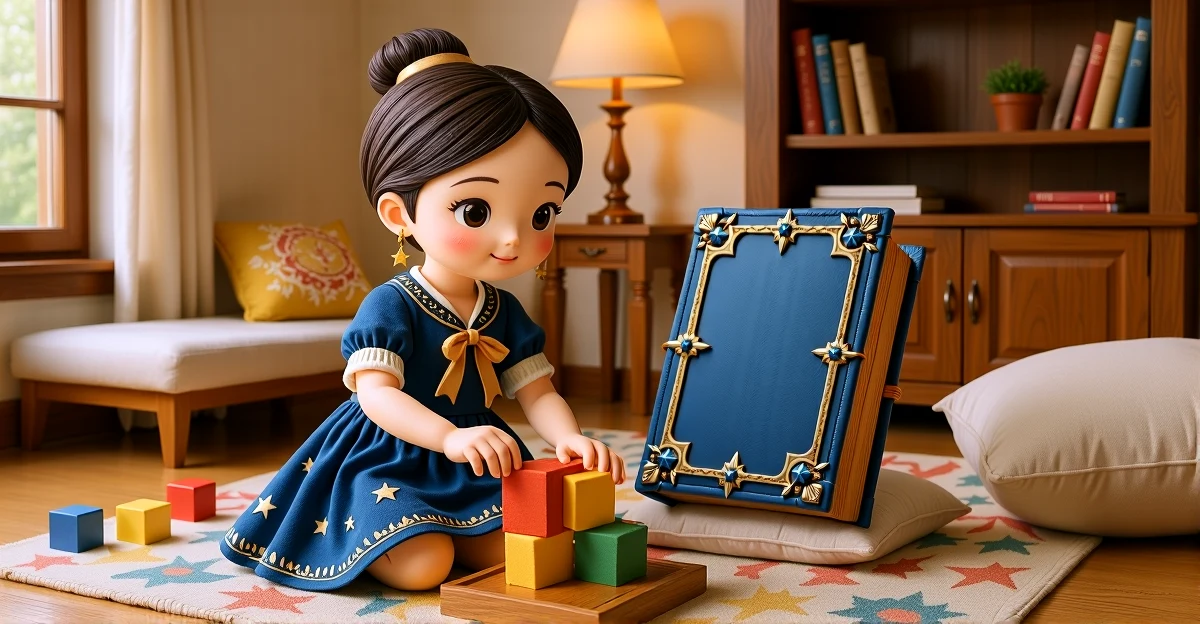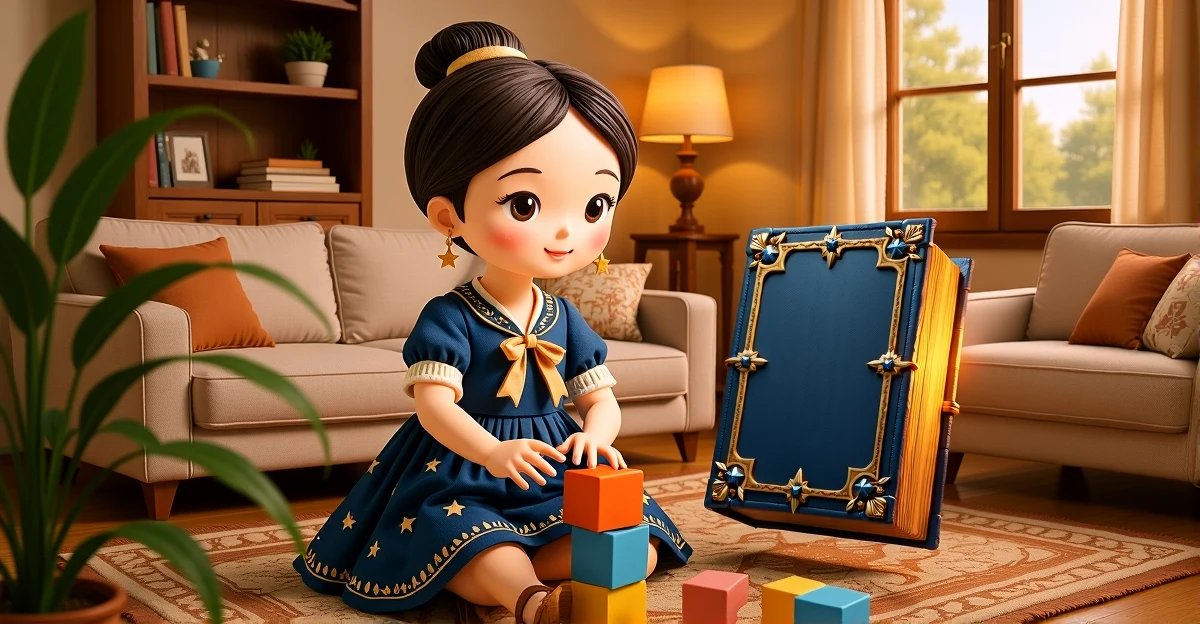

Maybe you've seen it happen. Your little one is building a tower with blocks, concentrating SO hard, their tongue peeking out in determination. And then—crash. The tower topples. Their face crumples. Their shoulders slump. And you feel your own heart break just a tiny bit as you watch disappointment wash over them.
Or perhaps it was the friend who said no to playing together. The shoe that wouldn't cooperate. The puzzle piece that just wouldn't fit no matter how many times they tried. Whatever the specific moment, you know that feeling of wanting to swoop in and make everything better, to shield your precious child from every disappointment and setback.
Here's what the Magic Book and I want you to know, wonderful parent: You are not alone in this instinct. And more importantly, what you're witnessing is not a problem that needs fixing. It's actually something absolutely WONDERFUL happening in your child's developing brain. In this post, we'll explore the science of resilience, why setbacks are actually gifts for your child's emotional development, and gentle strategies that help them build the bounce-back skills they'll need throughout their entire lives.
Understanding Resilience: It's Not What You Think
When most of us hear the word resilience, we might picture someone who never gets knocked down, who powers through challenges without breaking a sweat, who seems almost superhuman in their ability to handle stress.
But here's the beautiful truth the Magic Book has taught me: Resilience is not about never falling down. It's about learning that we can get back up.
Research from leading child development experts, including Dr. Ann S. Masten at the University of Minnesota, shows us something remarkable. Resilience in young children is not something they're born with or without. It's a developmental capacity that grows through supportive relationships and—here's the surprising part—through manageable challenges.
Think about that for a moment. The very disappointments and setbacks that make your heart ache for your child? Those are actually the moments when their brain is building resilience superpowers.
The Critical Window of Ages 3-4
The preschool years, especially ages three and four, represent a critical window when neural systems, executive function skills, and emotional regulation capacities are developing at an incredible pace. During this time, your child's brain is forming the pathways that will help them manage emotions, solve problems, and recover from setbacks for the rest of their lives.
When children experience disappointments in the context of warm, responsive parenting, they're building the foundational skills they'll need to bounce back from future challenges. Every time your child faces a manageable setback and you respond with patient presence rather than immediate rescue, you're helping their brain practice the essential skill of emotional recovery.
The Science of Stress Inoculation
Now, I know what some of you might be thinking. Inara, shouldn't I protect my child from feeling disappointed? Shouldn't I make sure they succeed so they feel confident?
And oh, wonderful parent, I understand that instinct SO deeply. Of course you want to shield your little one from pain. That's not just normal, that's beautiful. That's love.
But here's what the science reveals, and what the Magic Book has shown me time and time again: Some exposure to age-appropriate challenges actually strengthens resilience through what researchers call stress inoculation.
Resilience develops through powerful human adaptive systems, particularly the quality of parenting and parent-child relationships in situations of risk or adversity.
— Dr. Ann S. Masten, University of Minnesota
It's similar to how vaccines prepare the immune system. Small, manageable doses of challenge, experienced in a safe and supportive environment, help children develop the capacity to handle bigger challenges later.
The key word there is manageable. We're not talking about overwhelming stress or trauma. We're talking about the everyday disappointments of childhood:
- The puzzle piece that won't fit
- The friend who wants to play a different game
- The tower that topples
- The shoe that won't cooperate
- The crayon that breaks
- The cookie that crumbles
These moments, when met with your patient presence and gentle support, become the building blocks of emotional strength.
How Your Response Shapes Their Resilience
The Child Mind Institute notes that when kids fear failing, they're at risk for anxiety and meltdowns when things go wrong. But when children learn to fail well—when they experience disappointment in the context of loving support—they build both resilience and self-confidence.
So what does this look like in practice? How do we support our children through disappointments in a way that builds resilience rather than dependence or anxiety?
Strategy 1: Validate Their Feelings
When your child's tower falls and they feel frustrated, you might say something like: I can see you're feeling disappointed right now. You worked so hard on that tower.
That's acknowledging their emotional experience without dismissing it or rushing to fix it. You're teaching them that feelings are valid, that disappointment is a normal part of life, and that emotions have names.
Strategy 2: Stay Present With Them
Your calm, loving presence while they experience big feelings teaches them that emotions are manageable and that they're not alone. You don't need to make the feeling go away. You don't need to distract them or immediately solve the problem. You just need to be there while they feel it.
This might look like sitting beside them quietly, offering a hug if they want one, or simply saying: I'm right here with you.
Strategy 3: Gently Support Problem-Solving When They're Ready
Not immediately, but once the big feelings have passed, you might ask: What could we try differently next time? Or: Would you like to try again, or would you like to build something else?
Notice the gentle invitation rather than directive. You're supporting their autonomy and problem-solving skills, not taking over.
Strategy 4: Celebrate the Attempt, Not Just the Outcome
You might say: I noticed you tried three different ways to build that tower before you found one that worked. Your brain is getting so strong from all that practice!
This helps children understand that the learning happens in the trying, not just in the succeeding. Every attempt, even the wobbly ones, is building their capacity.
What Research Tells Us About Long-Term Resilience
The research is absolutely clear on this, wonderful parent. Children whose parents respond to disappointments with patience and empathy—rather than rescuing or dismissing—develop stronger emotional regulation, greater persistence, and healthier long-term resilience.
The Collaborative for Academic, Social, and Emotional Learning confirms that early childhood represents a prime opportunity for developing emotional competencies through evidence-based approaches. When we view setbacks as learning opportunities rather than threats, we create the conditions for children to develop self-regulation, confidence, and emotional recovery skills that will serve them throughout their entire lives.
And here's something else that's SO important: When you respond to your child's disappointments with this kind of patient, loving support, you're not just teaching them about resilience. You're also showing them something even more profound.
You're showing them that they are worthy of love and support even when things are hard. Even when they fail. Even when they're struggling. That message, my wonderful friend, is one of the greatest gifts you can give your child.
Stories That Can Help
In The Book of Inara, we have beautiful stories that bring these concepts to life for your child. Stories have a magical way of teaching emotional skills that lectures never could. When children see characters facing challenges and bouncing back, they internalize those patterns in their own hearts.
The Singing Circle of Second Chances
Perfect for: Ages 2-3 (and beyond!)
What makes it special: Anya and Noah join a magical folk music circle where something wonderful happens. The instruments in this circle gently encourage learning through mistakes. Every time someone plays a wrong note, instead of it being a problem, it actually helps create more beautiful melodies together.
Key lesson: Mistakes aren't failures—they're essential ingredients in the learning process. Just like wrong notes can create beautiful music, every stumble and setback helps children grow stronger and more capable.
How to use this story: After reading, you might create your own family music circle or practice sessions where mistakes are celebrated as learning moments. Point out how each attempt, even the wobbly ones, contributes to something beautiful.
The Magic Book reminds us that resilience isn't about never falling down. It's about learning that we can get back up. It's about discovering that setbacks are temporary, that feelings pass, and that we have people who love us no matter what.
You're Doing Beautifully
So the next time your little one faces a disappointment, take a deep breath, wonderful parent. Remember that this is not a crisis. This is not a problem to be fixed. This is a moment of growth. This is their brain building the neural pathways of resilience.
Stay close. Validate their feelings. Be their safe harbor while the storm of disappointment passes. And then, when they're ready, gently support them in trying again or trying something different.
You are doing such important work. Every time you stay calm and present through your child's disappointment, you're teaching them that emotions are manageable, that setbacks are temporary, and that they have what it takes to bounce back.
The Magic Book and I believe in you. We believe in your child. And we believe in the beautiful resilience that's growing stronger with every challenge they face and every loving response you give.
With love and starlight,
Inara
Related Articles
- Why Your Child Melts Down at Gentle Correction (And How to Help): Understanding Sensitivity in Ages 3-4
- The Beautiful Truth About Mistakes: Helping Your 3-4 Year Old Embrace Learning
- When Your Child Gets Overwhelmed in Noisy Places: Understanding Sensory Sensitivity
- Why Your Child Struggles with Disappointment (And How to Help)
- Understanding Your Child's Big Feelings: A Gentle Guide for Ages 3-4
Show transcript
Hello, wonderful parent! It's me, Inara, and I am so grateful you're here today. You know, the Magic Book and I have been thinking about something really important lately. Something that touches the hearts of so many parents who are watching their little ones navigate the ups and downs of growing up.
Maybe you've noticed your child struggling when things don't go their way. Perhaps they tried to build a tower and it fell down, or they couldn't quite get their shoes on by themselves, or maybe a friend said no to playing together. And in that moment, you saw their little face crumple, their shoulders slump, and you felt your own heart break just a tiny bit.
Here's what I want you to know, my dear friend. You are not alone in this. And more importantly, what you're witnessing is not a problem. It's actually something absolutely WONDERFUL happening in your child's developing brain.
Let me share what the Magic Book has taught me about resilience and bounce-back, because this is truly one of the most beautiful parts of early childhood development.
Research from some of the world's leading child development experts, including Dr. Ann S. Masten at the University of Minnesota, shows us something remarkable. Resilience in young children is not something they're born with or without. It's a developmental capacity that grows through supportive relationships and, here's the surprising part, through manageable challenges.
Think about that for a moment. The very disappointments and setbacks that make your heart ache for your child? Those are actually the moments when their brain is building resilience superpowers.
The preschool years, especially ages three and four, represent a critical window when neural systems, executive function skills, and emotional regulation capacities are developing at an incredible pace. When children experience disappointments in the context of warm, responsive parenting, they're building the foundational skills they'll need to bounce back from future setbacks throughout their entire lives.
Now, I know what some of you might be thinking. Inara, shouldn't I protect my child from feeling disappointed? Shouldn't I make sure they succeed so they feel confident?
And oh, my wonderful friend, I understand that instinct SO deeply. Of course you want to shield your little one from pain. That's not just normal, that's beautiful. That's love.
But here's what the science reveals, and what the Magic Book has shown me time and time again. Some exposure to age-appropriate challenges actually strengthens resilience through what researchers call stress inoculation. It's similar to how vaccines prepare the immune system. Small, manageable doses of challenge, experienced in a safe and supportive environment, help children develop the capacity to handle bigger challenges later.
The key word there is manageable. We're not talking about overwhelming stress or trauma. We're talking about the everyday disappointments of childhood. The puzzle piece that won't fit. The friend who wants to play a different game. The tower that topples. The shoe that won't cooperate.
These moments, when met with your patient presence and gentle support, become the building blocks of emotional strength.
So what does this look like in practice? How do we support our children through disappointments in a way that builds resilience?
First, validate their feelings. When your child's tower falls and they feel frustrated, you might say something like, I can see you're feeling disappointed right now. You worked so hard on that tower. That's acknowledging their emotional experience without dismissing it or rushing to fix it.
Second, stay present with them. Your calm, loving presence while they experience big feelings teaches them that emotions are manageable and that they're not alone. You don't need to make the feeling go away. You just need to be there while they feel it.
Third, gently support problem-solving when they're ready. Not immediately, but once the big feelings have passed, you might ask, What could we try differently next time? Or, Would you like to try again, or would you like to build something else?
The research is absolutely clear on this. Children whose parents respond to disappointments with patience and empathy, rather than rescuing or dismissing, develop stronger emotional regulation, greater persistence, and healthier long-term resilience.
And here's something else the Magic Book wants you to know. When you view setbacks as learning opportunities rather than threats, you create the conditions for your child to develop self-regulation, confidence, and emotional recovery skills that will serve them throughout their entire life.
Now, I want to tell you about a story that illustrates this so beautifully. It's called The Singing Circle of Second Chances, and it's one of my absolute favorites.
In this story, Anya and Noah join a magical folk music circle where something wonderful happens. The instruments in this circle gently encourage learning through mistakes. Every time someone plays a wrong note, instead of it being a problem, it actually helps create more beautiful melodies together.
Can you imagine? The wrong notes, the mistakes, the stumbles, they all become part of the music. They all contribute to something beautiful.
This is EXACTLY what happens in real life when we create a safe space for our children to try, to fail, and to try again. Their mistakes aren't failures. They're essential ingredients in the learning process. They're the notes that make the melody of growth more rich and complex and beautiful.
After you share this story with your child, you might create your own family music circle or practice sessions where mistakes are celebrated as learning moments. You could point out how each attempt, even the wobbly ones, helps them grow stronger and more capable.
You might say something like, I noticed you tried three different ways to build that tower before you found one that worked. Your brain is getting so strong from all that practice!
Or, Remember in the story how the wrong notes helped make beautiful music? That's exactly what's happening when you keep trying. Every attempt teaches your brain something new.
The Magic Book reminds us that resilience isn't about never falling down. It's about learning that we can get back up. It's about discovering that setbacks are temporary, that feelings pass, and that we have people who love us no matter what.
And you know what else? When you respond to your child's disappointments with this kind of patient, loving support, you're not just teaching them about resilience. You're also showing them something even more important. You're showing them that they are worthy of love and support even when things are hard. Even when they fail. Even when they're struggling.
That message, my dear friend, is one of the greatest gifts you can give your child.
So the next time your little one faces a disappointment, take a deep breath. Remember that this is not a crisis. This is not a problem to be fixed. This is a moment of growth. This is their brain building the neural pathways of resilience.
Stay close. Validate their feelings. Be their safe harbor while the storm of disappointment passes. And then, when they're ready, gently support them in trying again or trying something different.
You are doing such important work, wonderful parent. Every time you stay calm and present through your child's disappointment, you're teaching them that emotions are manageable, that setbacks are temporary, and that they have what it takes to bounce back.
The Magic Book and I believe in you. We believe in your child. And we believe in the beautiful resilience that's growing stronger with every challenge they face and every loving response you give.
If you'd like to explore more stories that support emotional growth and resilience, you can find The Singing Circle of Second Chances and many other beautiful tales in The Book of Inara app. Each story is crafted with love to help children navigate the big feelings and challenges of growing up.
Thank you for being here today, my wonderful friend. Thank you for caring so deeply about your child's emotional well-being. And thank you for trusting the Magic Book and me to walk alongside you on this journey.
With love and starlight, Inara.