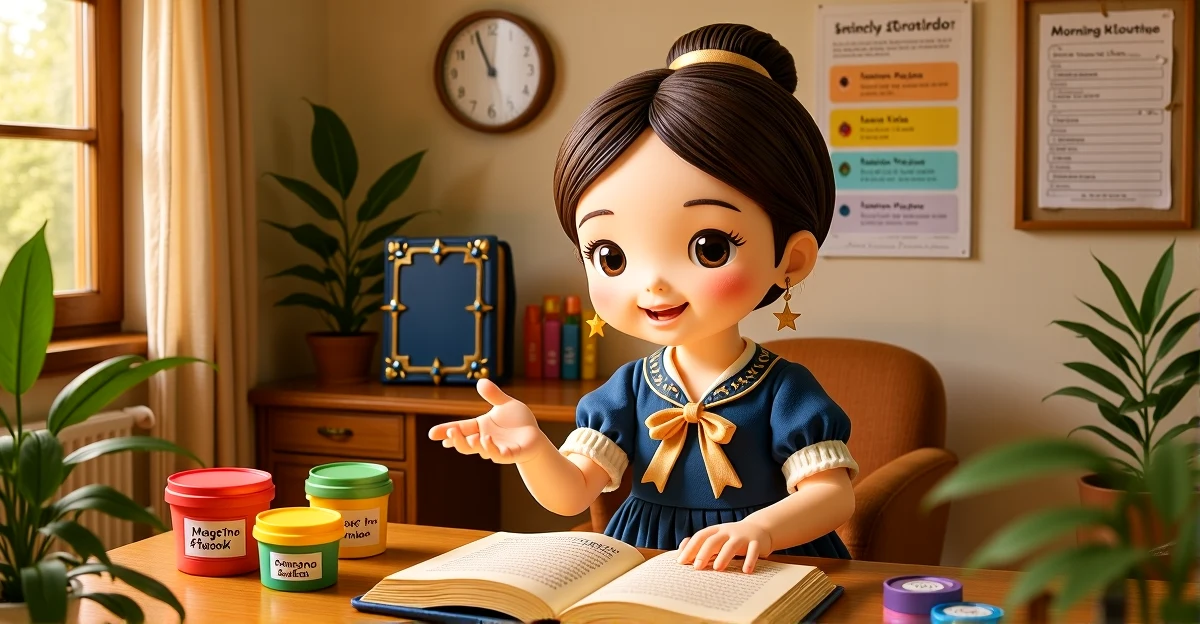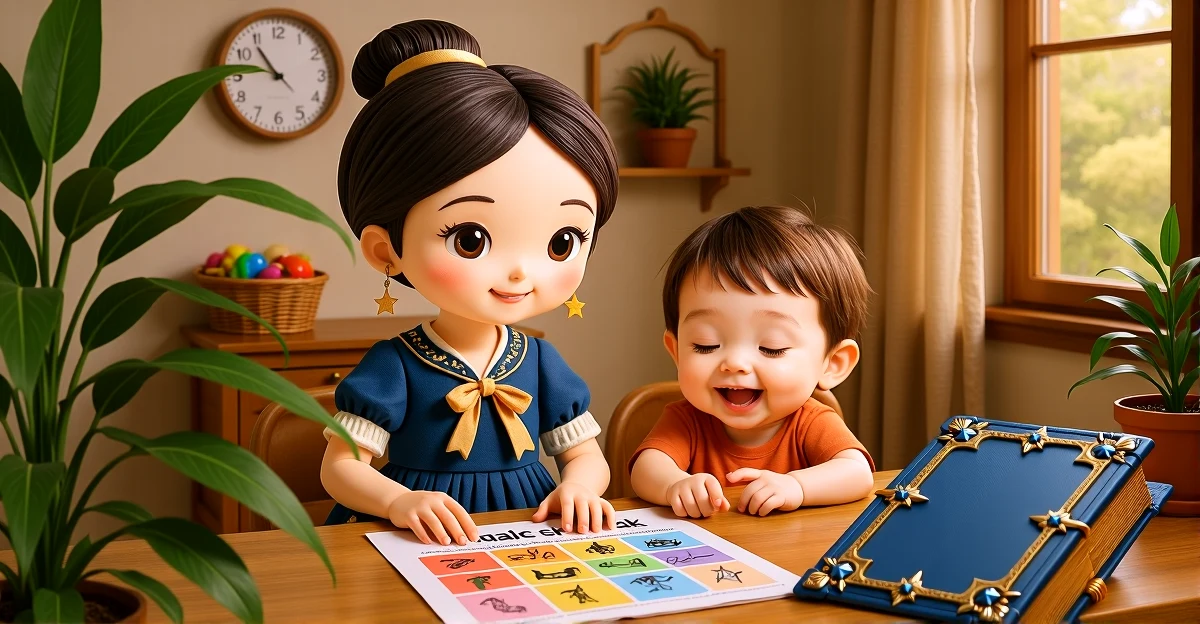

Is your kindergartener constantly losing things? Does time seem like an abstract concept they just can't grasp? You watch them search frantically for their pencil - again - and wonder if they'll ever develop the organizational skills they need for school success.
Oh, my wonderful friend, first let me say this: You're not alone. And here's the beautiful truth - your child's brain is building something absolutely magnificent right now. What looks like disorganization is actually the foundation of executive function being constructed, one neural pathway at a time.
In this guide, we'll explore why organization must come before time management, what research tells us about developing executive function, and gentle strategies that honor where your child is right now. Plus, I'll share a magical story that transforms organization from a chore into a cosmic adventure!
Understanding Executive Function: Your Child's Air Traffic Control System
The Center on the Developing Child at Harvard University describes executive function as an air traffic control system for the brain. Can you imagine? Right now, in this very moment, your child's brain is learning to manage information, make decisions, and plan ahead - coordinating everything like a cosmic traffic controller!
Here's what makes this SO important: While no child is born with these skills fully developed, every single child is born with the ability to build them. Your kindergartener is right on track, even when it feels like they're struggling.
What Executive Function Includes
- Working Memory: Holding information in mind while using it (like remembering where the pencil belongs while putting away other supplies)
- Cognitive Flexibility: Adapting to changes and switching between tasks
- Inhibitory Control: Managing impulses and staying focused
These skills develop over years, not days. And that's perfectly normal and beautiful!
Why Organization Must Come Before Time Management
Here's something that educational experts at Scholastic explain beautifully: For five and six year olds, organization is the foundation. Think about it this way - if your child can't find their pencil, how can they complete their homework on time? It's like trying to navigate the stars without first learning which constellation is which!
"Organization must come before time management. Children need systems for keeping track of their belongings and routines before they can effectively manage their time."
— Sharon Duke Estroff, Scholastic Parents
This insight changes everything. Instead of focusing on time management (which requires abstract thinking that's still developing), we focus on concrete organizational systems that young brains can understand and use.
The Developmental Timeline
Research from developmental scientists shows us that self-regulation development follows an exponential pattern during early childhood. Your kindergartener is right in the middle of this incredible growth period! Their brain is making connections faster than starlight, building the foundation for all future executive function skills.
Gentle Strategies That Honor Your Child's Development
Now that we understand what's happening in your child's beautiful developing brain, let's explore practical strategies that support this growth without pressure or frustration.
Strategy 1: Visual Supports Make Abstract Concepts Concrete
Visual supports are like magic for young brains. Here's why they work so beautifully:
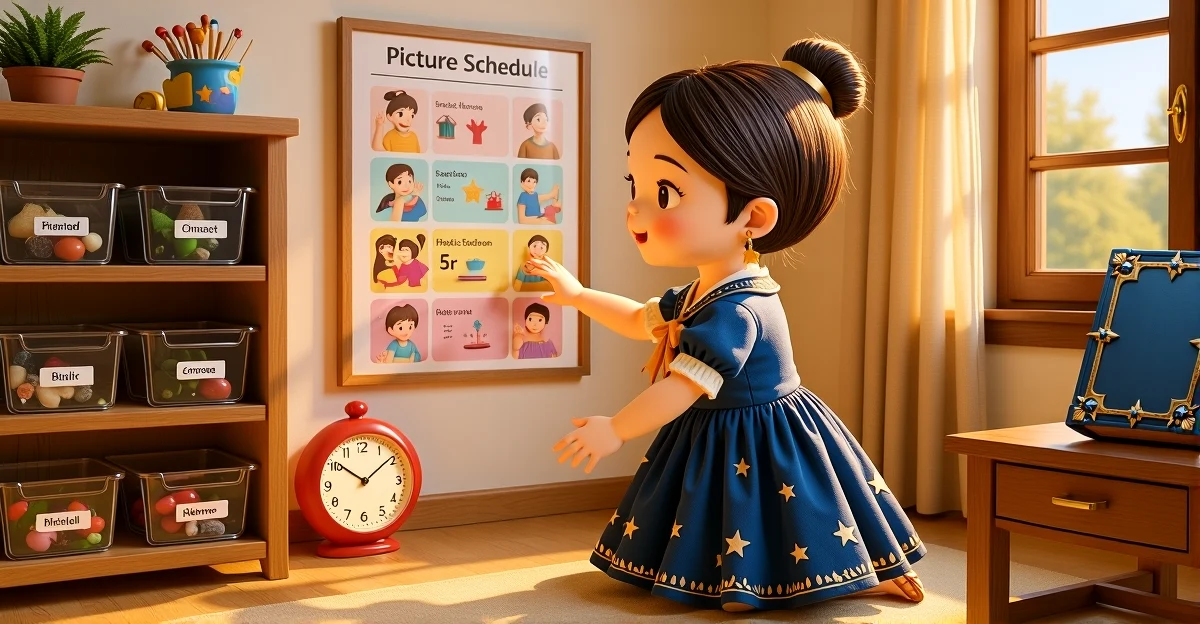
- Picture Schedules: Help children understand the flow of their day. When they can see what comes next, their brain doesn't have to work as hard to remember.
- Visual Timers: Let children actually see time passing. This transforms an abstract concept into something concrete and manageable.
- Photo Labels: Show exactly where things belong, making organization a matching game instead of a memory challenge.
The key is making it playful! When the timer has five minutes left, you might say, "Let's check our timer together! Oh look, it's turning yellow - that means we have five more minutes before we need to clean up." You're teaching them to notice and respond to visual cues.
Strategy 2: Consistent Routines Create Frameworks
When morning routines follow the same pattern, your child's brain doesn't have to work as hard to remember what comes next. This frees up mental energy for learning and growing!
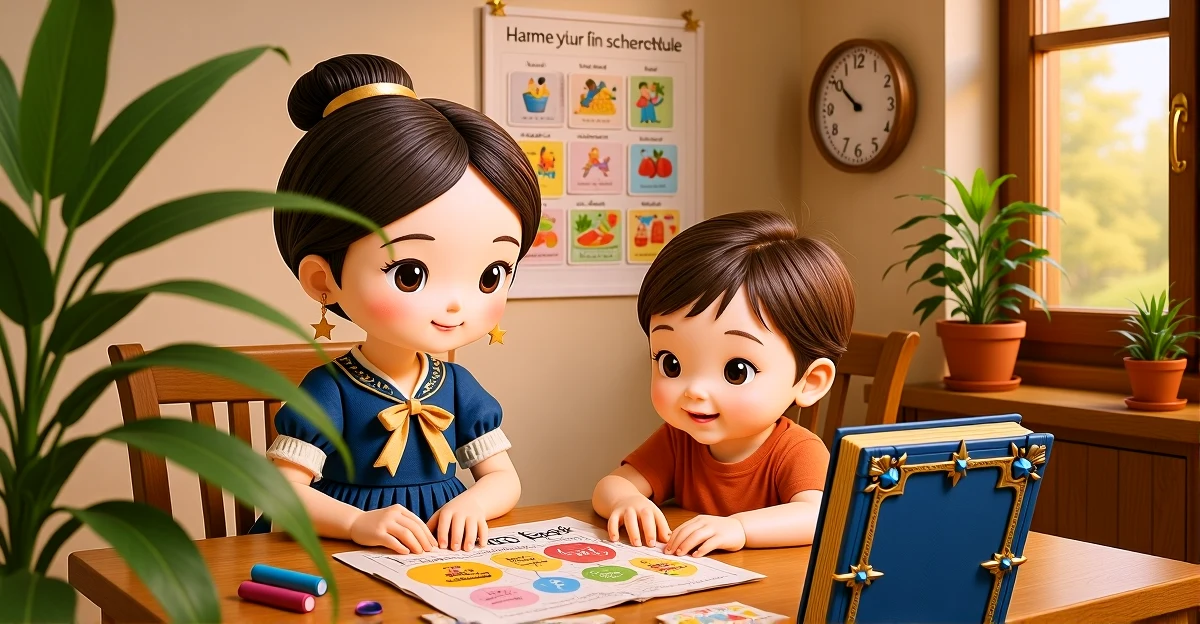
And here's the beautiful part - you can make these routines together! Let your child help create a morning checklist with pictures. When they're involved in the process, they feel empowered and capable. This isn't just about organization - it's about building confidence and autonomy.
Strategy 3: Organization Systems That Make Sense
Start with organization systems that make sense to your child's developing brain:
- Clear bins with picture labels showing what goes inside
- A special spot for their backpack that they can reach independently
- A simple chart showing where different items belong
- Color-coding for different types of items (blue bin for toys, red bin for art supplies)
These aren't just organizational tools - they're teaching your child's brain how to create order from chaos, how to categorize and plan. Every time they use these systems, they're building neural pathways that will serve them for life!
Strategy 4: Celebrate Progress, Not Perfection
Here's what I want you to remember: We're not aiming for perfection. We're building neural pathways, and that takes time and repetition.
When your child forgets where their pencil goes, that's an opportunity for gentle practice. You might say, "Let's think together - where does your pencil live?" And then celebrate when they remember or figure it out! This approach builds both skills and confidence.
What Research Tells Us About Long-Term Success
Research from developmental scientists shows us something beautiful: Children who develop strong self-regulation and organizational skills during this period demonstrate better academic achievement through elementary school and beyond.
But this isn't about pressure - it's about providing supportive environments, consistent routines, and patient guidance. You're not teaching your child to be perfect. You're helping their brain build its own air traffic control system, one day at a time.
"The development of self-regulation across early childhood follows an exponential pattern, with rapid growth during the preschool and kindergarten years."
— Montroy et al., PMC Research
Stories That Can Help
In The Book of Inara, we have a beautiful story that brings these concepts to life for your child:
The Cosmic Traffic Controllers
Perfect for: Ages 5-6
What makes it special: This story follows Theo and Miles as they discover cosmic traffic jams at the Wormhole Transit Authority. They must choose between easy silence and doing the right thing to help restore universal order. It shows children that organization and responsibility aren't about being perfect - they're about making thoughtful choices, even when it feels hard.
Key lesson: Organization transforms from a chore into an adventure when children understand they're like cosmic traffic controllers, helping everything flow smoothly by putting things in the right place at the right time.
How to use it: After reading together, talk about how your child is like a cosmic traffic controller for their own day. Create a special "traffic control station" in their room where everything has its designated spot. This metaphor makes organization feel meaningful and empowering!
You're Doing Beautifully
When your child loses their pencil for the third time today, take a deep breath. Remember that their brain is building something magnificent. Offer a gentle reminder about the pencil's special spot. Maybe create a fun system together - perhaps the pencils live in a cosmic pencil galaxy, and they need to return home after each adventure!
Here's what I want you to remember: Every system you create, every routine you maintain, every patient moment you offer - you're helping your child's brain build the foundation for lifelong success. Not through pressure or perfection, but through gentle guidance and playful practice.
Organization comes before time management. Visual supports make abstract concepts concrete. Consistent routines create frameworks. And celebration of small victories builds both skills and confidence.
You're not just teaching organization - you're helping your child's brain build its own air traffic control system. And that, my wonderful friend, is truly magical.
Until next time, may your days be filled with stardust and wonder!
With cosmic love,
Inara
Related Articles
- When Screen Time Ends in Meltdowns: Understanding Your Child's Brain and What Actually Helps (Ages 5-6)
- When Your Child Feels Invisible: Understanding Social Isolation and the Gentle Path to Friendship
- Why Your Child Can't Keep Track of Things (And How to Help Them Build Organization Skills)
- Teaching Financial Wisdom to Your 5-6 Year Old: A Gentle Guide to Money and Economics
- Supporting Your Child's Social Awareness Development: A Gentle Guide
Show transcript
Hello, my wonderful friend! It's me, Inara, and I am SO happy you're here today! You know, the Magic Book and I have been noticing something beautiful happening in homes all around the world. Parents like you are asking such thoughtful questions about helping your children build organization and time management skills. And I want you to know something right from the start - the fact that you're here, seeking gentle ways to support your child's growing independence, tells me you're doing such a beautiful job.
So let's talk about something that might surprise you. When your kindergartener can't find their pencil, or when getting ready for school feels like herding cosmic stardust, or when your little one seems to lose track of time completely - this isn't a problem to fix. This is actually your child's brain building something AMAZING. The Center on the Developing Child at Harvard University calls it an air traffic control system, and I think that's just perfect!
Can you imagine? Right now, in this very moment, your child's brain is learning to manage information, make decisions, and plan ahead. These are called executive function skills, and here's the wonderful truth - while no child is born with these skills fully developed, every single child is born with the ability to build them. Isn't that beautiful?
Now, I know what you might be thinking. You might be wondering, why does my child struggle so much with keeping track of their things? Why does time seem like such an abstract concept to them? And here's what the Magic Book taught me, and what research beautifully confirms - organization must come before time management. Think about it this way. If your child can't find their materials, how can they complete their tasks on time? It's like trying to build a castle in the stars without gathering the stardust first!
Educational experts at Scholastic explain this so well. They say that for five and six year olds, organization is the foundation. Your child needs systems for keeping track of their belongings and routines before they can effectively manage their time. And this makes so much sense, doesn't it? When we help our children create simple, visual systems for their things, we're actually helping their developing brain learn to categorize, prioritize, and plan.
Here's something else that's WONDERFUL. Research shows that self-regulation development follows an exponential pattern during early childhood. What this means is that most children show rapid gains during the preschool and kindergarten years. Your child is right in the middle of this incredible growth period! Their brain is making connections faster than starlight, learning to coordinate multiple mental processes all at once.
So what can we do to support this beautiful development? Let me share some gentle, brain-based approaches that honor where your child is right now.
First, visual supports are like magic for young brains. Picture schedules help children understand the flow of their day. Visual timers let them actually SEE time passing, which transforms this abstract concept into something concrete and manageable. When your child can watch the timer's colors change, they're learning to pace themselves and understand how long activities take. This is executive function in action!
Second, consistent routines create a framework that helps developing brains feel safe and organized. When morning routines follow the same pattern, your child's brain doesn't have to work as hard to remember what comes next. This frees up mental energy for learning and growing. And here's the beautiful part - you can make these routines together! Let your child help create a morning checklist with pictures. When they're involved in the process, they feel empowered and capable.
Third, start with organization systems that make sense to your child's developing brain. Clear bins with picture labels. A special spot for their backpack that they can reach. A simple chart showing where things belong. These aren't just organizational tools - they're teaching your child's brain how to create order from chaos, how to categorize and plan.
And here's something the Magic Book whispers to me. When we approach these moments with patience and understanding, when we see our children as cosmic traffic controllers learning to manage their own universe, everything shifts. Instead of frustration, we feel wonder. Instead of pressure, we offer support. Instead of expecting perfection, we celebrate progress.
Now, I want to tell you about a story that captures this so beautifully. It's called The Cosmic Traffic Controllers, and it's about Theo and Miles discovering cosmic traffic jams at the Wormhole Transit Authority. In this story, they must choose between easy silence and doing the right thing to help restore universal order. And you know what's magical about this? It shows children that organization and responsibility aren't about being perfect - they're about making thoughtful choices, even when it feels hard.
After you read this story with your child, you can talk about how they're like cosmic traffic controllers for their own day. They're helping their toys, their homework, their activities all flow smoothly by putting things in the right place at the right time. This metaphor transforms organization from a chore into an adventure!
Research from developmental scientists shows us something else that's important. Children who develop strong self-regulation and organizational skills during this period demonstrate better academic achievement through elementary school and beyond. But here's what I want you to hear - this isn't about pressure or perfection. This is about providing supportive environments, consistent routines, and patient guidance. This is about honoring your child's developing brain and giving it the tools it needs to flourish.
The encouraging news, my wonderful friend, is that while no child is born with these skills, all children have the capacity to develop them. Your child isn't behind. Your child isn't struggling. Your child is learning, growing, building their own internal air traffic control system one day at a time. And you, dear parent, are providing exactly what they need - love, patience, structure, and support.
So when your child loses their pencil for the third time today, take a deep breath. Remember that their brain is building something magnificent. Offer a gentle reminder about the pencil's special spot. Maybe create a fun system together - perhaps the pencils live in a cosmic pencil galaxy, and they need to return home after each adventure!
When time seems to slip away and your child is surprised that it's already bedtime, remember that their brain is still learning to perceive time's passage. Use visual timers. Give five-minute warnings. Make transitions playful and predictable.
And most importantly, celebrate the small victories. When your child remembers to put their shoes in the right spot, that's executive function! When they check their morning chart without being asked, that's self-regulation! When they start to understand that the timer turning red means it's almost time to transition, that's time awareness developing!
You're doing such beautiful work, my friend. Every system you create, every routine you maintain, every patient moment you offer - you're helping your child's brain build the foundation for lifelong success. Not just academic success, but life success. The ability to manage information, make decisions, plan ahead - these are gifts that will serve your child throughout their entire cosmic journey.
The Magic Book and I are always here for you, cheering you on, celebrating your child's growth, and reminding you that you're exactly the parent your child needs. You've got this, my wonderful friend. With love and starlight, Inara.