
It's Tuesday morning, and you're running late. Again. Your seven-year-old can't find their homework. Their backpack is a jumbled mess of papers, snacks, and yesterday's art project. You've asked them three times to get their shoes on, but they're still in pajama pants, staring out the window. You feel your frustration rising. Why can't they just remember? Why does everything feel so chaotic?
If this sounds familiar, I want you to take a deep breath and hear something important. You're not witnessing a problem. You're not seeing carelessness or laziness. What you're witnessing is a brain in the most WONDERFUL stage of development. And understanding what's really happening changes everything.
In this guide, we're going to explore what scientists call executive function skills, why ages six and seven are such a critical window for their development, and most importantly, how you can support your child with warmth and patience instead of frustration. The Magic Book and I have some beautiful insights to share with you.
What Are Executive Function Skills?
Think of executive function skills as your child's internal organizer. They're the mental tools that help us plan ahead, organize our thoughts and materials, manage our time, remember instructions, and shift between tasks. These are the skills that help your child remember to pack their lunchbox, organize their homework, and get ready for school without constant reminders.
Here's what's magical about this. These skills aren't something children are born with fully formed. The Harvard Center on the Developing Child tells us something remarkable: children are born with the POTENTIAL to develop executive function skills through interactions and practice. That means every time your child tries to remember their homework, every time they attempt to organize their backpack, every time they work on getting ready for school, their brain is literally building new pathways.
They're not failing at organization. They're LEARNING organization. And that's completely different.
The Three Core Components
Executive function actually includes three interconnected skills:
- Working Memory: Holding information in mind while using it (like remembering the three things you asked them to do)
- Cognitive Flexibility: Adapting to changes and shifting between tasks (like transitioning from playtime to homework time)
- Inhibitory Control: Resisting impulses and staying focused (like not getting distracted when they're supposed to be getting dressed)
When your six or seven-year-old struggles with organization, they're actually working on developing all three of these complex cognitive skills simultaneously. No wonder it feels overwhelming sometimes!
Why Ages 6-7 Are SO Important
Dr. Adele Diamond, one of the world's leading researchers on how children's brains develop, discovered that executive functions develop most rapidly between ages four and twelve. Your six or seven-year-old is right in the sweet spot of this developmental window. Their brain is like a construction site right now, building the very structures they'll use for planning, organizing, and managing time for the rest of their lives.
The Child Mind Institute notes that when parents first learn their child is overwhelmed by organization and planning, it's often a turning point. Not because something is wrong, but because it opens the door to understanding and support. This is the age when the gap between what we expect children to do independently and what their developing brains can actually handle becomes most visible.
Executive functions develop rapidly between ages 4-12 years, and interventions that challenge working memory, cognitive flexibility, and inhibitory control show measurable benefits.
— Dr. Adele Diamond, University of British Columbia
What does this mean for you? It means this is the PERFECT time to provide gentle support and structure. You're not fixing a problem. You're nurturing a developing skill during its most receptive phase.
What Your Child's Brain Is Actually Doing
When you see your child's messy backpack or forgotten homework, here's what's really happening inside their developing brain:
Their prefrontal cortex, the part of the brain responsible for executive functions, is still under construction. It won't be fully developed until their mid-twenties! At ages six and seven, they're building the foundational pathways, but those pathways are still forming, still strengthening, still learning how to work together efficiently.
Research shows that structured activities, consistent routines, and age-appropriate challenges to working memory and cognitive flexibility produce measurable improvements in children's organizational capabilities. But let me translate that into language that feels more real. When you create predictable routines, when you gently challenge your child to remember and plan, when you stay patient and supportive, you're giving their developing brain exactly what it needs to grow stronger.
Your child isn't behind. Your child isn't lazy. Your child isn't careless. Your child is learning one of the most complex sets of skills humans ever develop. And they're learning it at exactly the right age, in exactly the right way, with exactly the right parent to guide them. You.
Gentle Strategies That Actually Work
So how can you support your child's developing executive function skills with warmth and patience? Here's what the research and the Magic Book both tell us:
1. Provide External Structure
The research is clear on this. Children who feel overwhelmed by planning tasks benefit significantly from external structure, visual supports, and breaking larger responsibilities into manageable steps. What does this look like in real life?
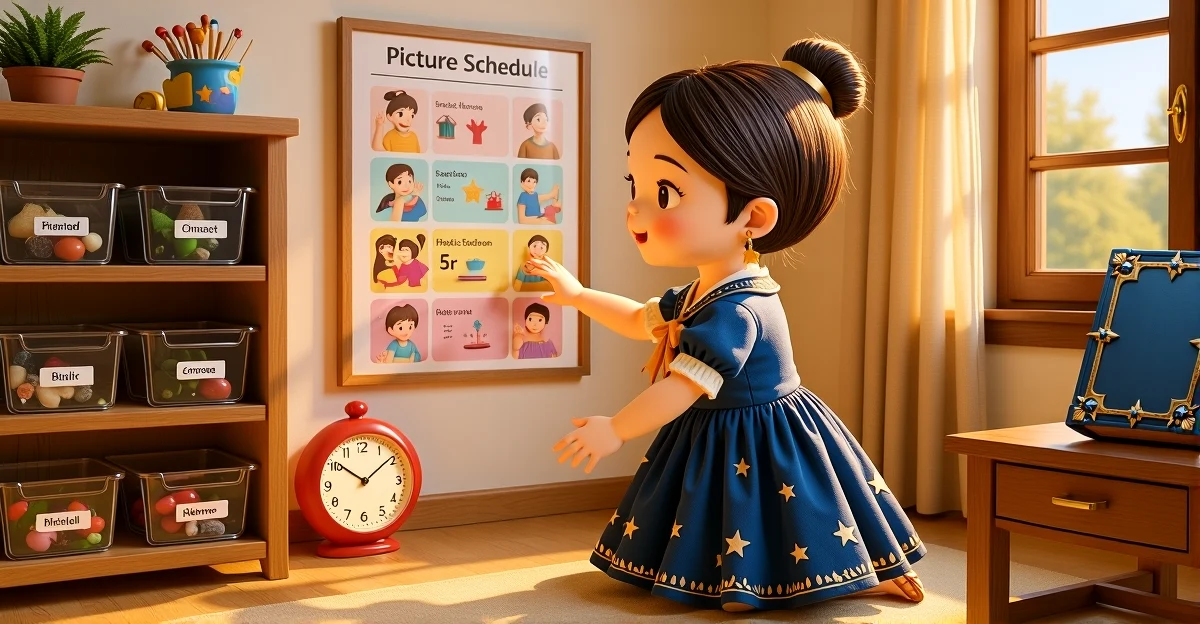
- A morning routine chart with pictures showing each step
- A special basket by the door for their backpack and shoes
- A simple checklist they can follow for homework or bedtime
- Color-coded folders for different subjects
- A visual timer that shows time passing
You're not doing the organizing FOR them. You're providing the scaffolding they need while their brain builds its own internal organizing system.
2. Break Tasks Into Smaller Steps
When you ask your child to clean their room, that can feel overwhelming. Their brain is still learning how to break big tasks into smaller pieces. But when you say, "First, let's put all the books on the shelf. Then we'll gather the toys. Then we'll make the bed," suddenly it becomes manageable.
You're teaching them HOW to organize, not just telling them TO organize. That's the difference between criticism and coaching.
3. Practice Asking Organizing Questions Together
This is where systematic thinking becomes a beautiful practice you share. Instead of telling your child what to do, ask questions that help them think through the process:
- "What do you need for school tomorrow?"
- "What should we do first to get ready?"
- "What comes after that?"
- "How much time do you think this will take?"
You're not quizzing them. You're thinking alongside them, modeling how organized minds work. Over time, they'll internalize these questions and start asking them of themselves.
4. Celebrate the Small Wins
Did your child remember to put their lunchbox in their backpack without being reminded? That's executive function in action! Did they notice it was almost time to leave and start getting their shoes on? That's time awareness developing!
The more you notice and celebrate these moments, the more your child's brain reinforces those pathways. You're literally helping their brain wire itself for success. And you're showing them that learning is a journey worth celebrating.
5. Be Patient With the Process
Here's something else the Magic Book whispers: consistent practice over time yields the strongest developmental gains. This isn't about perfection tomorrow. This is about gentle, patient support over months and years.
Every time you help your child organize their thoughts, every time you model planning ahead, every time you patiently guide them through a multi-step task, you're investing in skills that will serve them for life.
Stories That Can Help
In The Book of Inara, we have beautiful stories that model systematic thinking, problem-solving, and the joy of asking good questions. These stories show children that thinking step by step and working through challenges is not just okay, it's wonderful.
The Giggling Gallery of Forgotten Questions
Perfect for: Ages 6-7
What makes it special: Lucas and Ella discover that asking thoughtful questions unlocks mysteries and helps them solve problems step by step. The process of asking the right questions and following clues mirrors the executive function skills of planning, organizing information, and working through challenges methodically.
Key lesson: When we ask good questions and think systematically, we can solve even the trickiest puzzles. This models the kind of organized thinking that supports executive function development.
After reading together: You can practice asking organizing questions. "What do we need to do first? What comes next? What questions help us plan?" You're building these skills through story and conversation.
You're Doing Beautifully
I want to acknowledge something. This takes time. This takes patience. And some days, when you're running late and your child can't find their shoes for the third time this week, it's hard to remember that their brain is developing beautifully.
On those days, take a deep breath. Remember that you're not just getting through the morning. You're building a brain. You're teaching skills. You're showing your child that learning takes time, and that's okay.
The beautiful truth the Magic Book wants you to know is this: this developmental phase represents a natural learning opportunity, not a deficit. Your child isn't broken. Your child isn't behind. Your child is right on track, building the most complex cognitive skills humans possess. And they're doing it with you by their side.
So tonight, or tomorrow morning, or whenever you have a quiet moment, I invite you to try something. Look at your child's organizational challenges through this new lens. Instead of seeing a messy backpack, see a brain learning to categorize and organize. Instead of seeing forgotten homework, see a developing memory system that needs gentle support. Instead of seeing a child who can't manage time, see a learner who's building their internal clock.
You're doing such important work. You're not just raising a child. You're nurturing a developing brain, supporting emerging skills, and showing your little one that learning is a journey we take together.
The Magic Book and I are cheering you on every step of the way.
With love and starlight,
Inara
Related Articles
- How to Nurture Your Child's Empathy and World-Changing Impact (Ages 6-7)
- Nurturing Your Child Innovation Mindset: A Gentle Guide for Ages 6-7
- When Your Child Makes Insensitive Comments: A Gentle Guide to Teaching Cultural Awareness
- When Your Child Expresses Thoughts of Self-Harm: Getting Help Now
- Nurturing Purpose and Meaning in Young Children: A Gentle Guide for Parents
Show transcript
Hello, wonderful parent! It's me, Inara, and I am SO happy you're here today. You know, the Magic Book and I have been noticing something beautiful happening in homes with six and seven year olds. Parents like you are asking such thoughtful questions about helping your child develop organization and time management skills. And I want you to know something right from the start. If your child seems to lose track of time, forgets where they put things, or struggles to plan ahead, you're not witnessing a problem. You're witnessing a brain in the most WONDERFUL stage of development.
Let me share something the Magic Book taught me that changed everything. Your child's brain right now, at ages six and seven, is building what scientists call executive function skills. Think of these as your child's internal organizer, their mental planner, their time-keeper. And here's the magical part. These skills aren't something children are born with fully formed. They're something that develops gradually, through practice, through patient support, and through gentle guidance from caring adults like you.
The Harvard Center on the Developing Child tells us something remarkable. Children are born with the POTENTIAL to develop executive function skills through interactions and practice. That means every time your child tries to remember their homework, every time they attempt to organize their backpack, every time they work on getting ready for school, their brain is literally building new pathways. They're not failing at organization. They're LEARNING organization. And that's completely different.
Dr. Adele Diamond, one of the world's leading researchers on how children's brains develop, discovered that executive functions develop most rapidly between ages four and twelve. Your six or seven year old is right in the sweet spot of this developmental window. Their brain is like a construction site right now, building the very structures they'll use for planning, organizing, and managing time for the rest of their lives. Isn't that AMAZING?
Now, I know what you might be thinking. But Inara, my child seems so disorganized compared to other kids. Or maybe you're wondering, am I doing something wrong? And I want to pause here and tell you something really important. The Child Mind Institute notes that when parents first learn their child is overwhelmed by organization and planning, it's often a turning point. Not because something is wrong, but because it opens the door to understanding and support.
Your child isn't behind. Your child isn't lazy. Your child isn't careless. Your child is learning one of the most complex sets of skills humans ever develop. And they're learning it at exactly the right age, in exactly the right way, with exactly the right parent to guide them. You.
So what does this mean for you, practically? How can you support your child's developing executive function skills with warmth and patience? Let me share what the research and the Magic Book both tell us.
First, external structure is your friend. The research is clear on this. Children who feel overwhelmed by planning tasks benefit significantly from external structure, visual supports, and breaking larger responsibilities into manageable steps. What does this look like in real life? It might be a morning routine chart with pictures. It might be a special basket by the door for their backpack and shoes. It might be a simple checklist they can follow. You're not doing the organizing FOR them. You're providing the scaffolding they need while their brain builds its own internal organizing system.
Second, break tasks into smaller steps. When you ask your child to clean their room, that can feel overwhelming. Their brain is still learning how to break big tasks into smaller pieces. But when you say, first let's put all the books on the shelf, then we'll gather the toys, then we'll make the bed, suddenly it becomes manageable. You're teaching them HOW to organize, not just telling them TO organize. That's the difference between criticism and coaching.
Third, practice asking organizing questions together. This is where I want to tell you about a story from The Book of Inara called The Giggling Gallery of Forgotten Questions. In this story, Lucas and Ella discover that asking thoughtful questions unlocks new discoveries and helps them solve mysteries step by step. The process of asking the right questions, what do we need to do first, what comes next, what questions help us plan, mirrors the executive function skills your child is building. After you read this story together, you can practice asking organizing questions. What do you need for school tomorrow? What should we do first to get ready? What comes after that? You're not quizzing them. You're thinking alongside them, modeling how organized minds work.
Fourth, celebrate the small wins. Did your child remember to put their lunchbox in their backpack without being reminded? That's executive function in action! Did they notice it was almost time to leave and start getting their shoes on? That's time awareness developing! The more you notice and celebrate these moments, the more your child's brain reinforces those pathways. You're literally helping their brain wire itself for success.
And here's something else the Magic Book whispers. Consistent practice over time yields the strongest developmental gains. This isn't about perfection tomorrow. This is about gentle, patient support over months and years. Every time you help your child organize their thoughts, every time you model planning ahead, every time you patiently guide them through a multi-step task, you're investing in skills that will serve them for life.
I also want to acknowledge something. This takes time. This takes patience. And some days, when you're running late and your child can't find their shoes for the third time this week, it's hard to remember that their brain is developing beautifully. On those days, take a deep breath. Remember that you're not just getting through the morning. You're building a brain. You're teaching skills. You're showing your child that learning takes time, and that's okay.
The research tells us that structured activities, consistent routines, and age-appropriate challenges to working memory and cognitive flexibility produce measurable improvements in children's organizational capabilities. But let me translate that into Inara language. When you create predictable routines, when you gently challenge your child to remember and plan, when you stay patient and supportive, you're giving them exactly what their developing brain needs.
And here's the beautiful truth the Magic Book wants you to know. This developmental phase represents a natural learning opportunity, not a deficit. Your child isn't broken. Your child isn't behind. Your child is right on track, building the most complex cognitive skills humans possess. And they're doing it with you by their side.
So tonight, or tomorrow morning, or whenever you have a quiet moment, I invite you to try something. Look at your child's organizational challenges through this new lens. Instead of seeing a messy backpack, see a brain learning to categorize and organize. Instead of seeing forgotten homework, see a developing memory system that needs gentle support. Instead of seeing a child who can't manage time, see a learner who's building their internal clock.
And if you'd like some extra support on this journey, The Book of Inara has stories that model systematic thinking, problem-solving, and the joy of asking good questions. Stories like The Giggling Gallery of Forgotten Questions show children that thinking step by step, asking thoughtful questions, and working through challenges is not just okay, it's wonderful. It's how we learn. It's how we grow.
You're doing such important work, wonderful parent. You're not just raising a child. You're nurturing a developing brain, supporting emerging skills, and showing your little one that learning is a journey we take together. The Magic Book and I are cheering you on every step of the way.
With love and starlight, Inara.