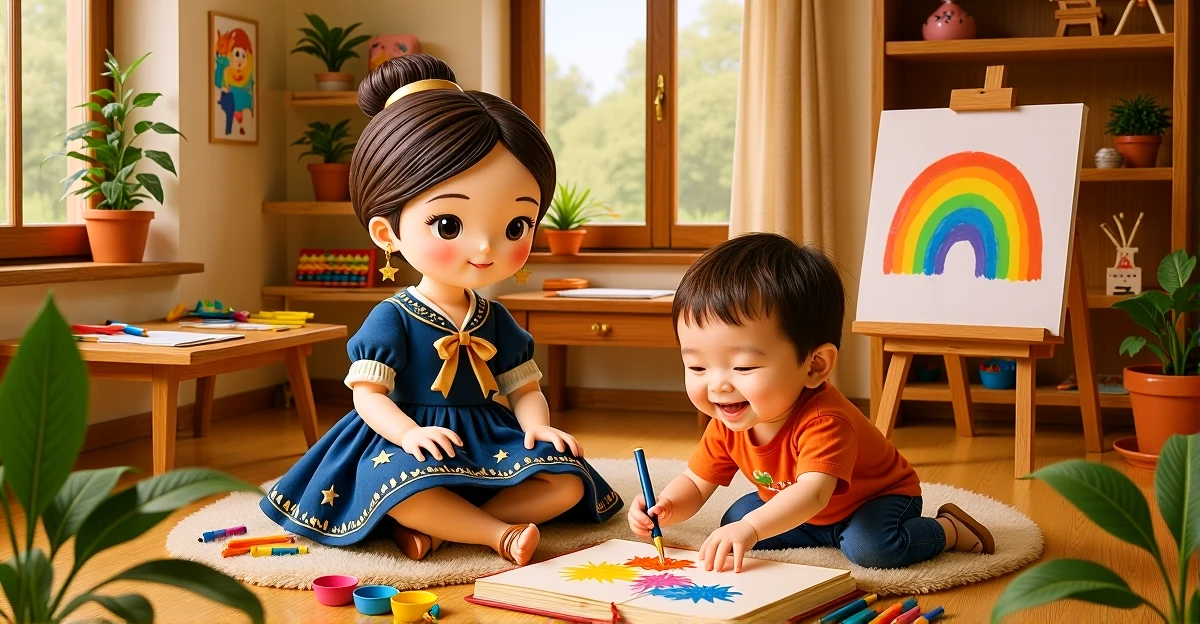
Your three-year-old hands you a piece of paper covered in colorful scribbles. You smile and ask, "What is it?" They look at you with confusion, as if the question doesn't quite make sense. Or maybe your four-year-old spins in circles until they're dizzy, humming a tune only they can hear. Perhaps they bang on pots and pans with wooden spoons, creating what sounds like chaos but feels like pure joy to them.
If you've ever wondered whether these moments of creative expression really matter, or if you've worried that your child isn't "artistic enough," I want you to know something right from the start: You're asking exactly the right questions, and your child is doing EXACTLY what they need to be doing.
In this post, we're going to explore why creative expression through art, music, and movement isn't just play—it's your child's first language. We'll dive into what research tells us about this critical developmental window, and I'll share gentle, practical ways you can support your child's creative spirit without pressure or expectations. The Magic Book and I have so much to share with you today.
Creative Expression Is Your Child's First Language
Here's something beautiful that the Magic Book taught me: Before children have all the words to express what's in their hearts, they use color and sound and movement to tell us who they are. When your three-year-old scribbles with crayons, or hums a little tune, or spins in circles until they're dizzy, they're not just playing. They're speaking in their very first language.
Think about it this way. Your child experiences SO many big feelings, fascinating ideas, and wonderful discoveries every single day. But their verbal skills are still developing. They don't yet have the vocabulary to say, "I felt overwhelmed at the playground today," or "I'm curious about how colors mix together," or "I'm discovering what my body can do in space." So what do they do instead?
They draw it. They dance it. They sing it. They create it.
Creative expression serves as a powerful language for children who are still developing verbal skills. When your child can't quite find the words to tell you about their day, they might draw it. When they're feeling big emotions they don't understand, they might dance them out. This isn't just cute—this is essential communication and emotional processing.
Why Ages 3-4 Are SO Special
Research demonstrates that ages three to four represent a critical developmental window when children naturally explore multiple forms of communication and self-expression. Their imaginative capacities are expanding in the most remarkable ways. Their brains are literally building new connections every single time they create something.
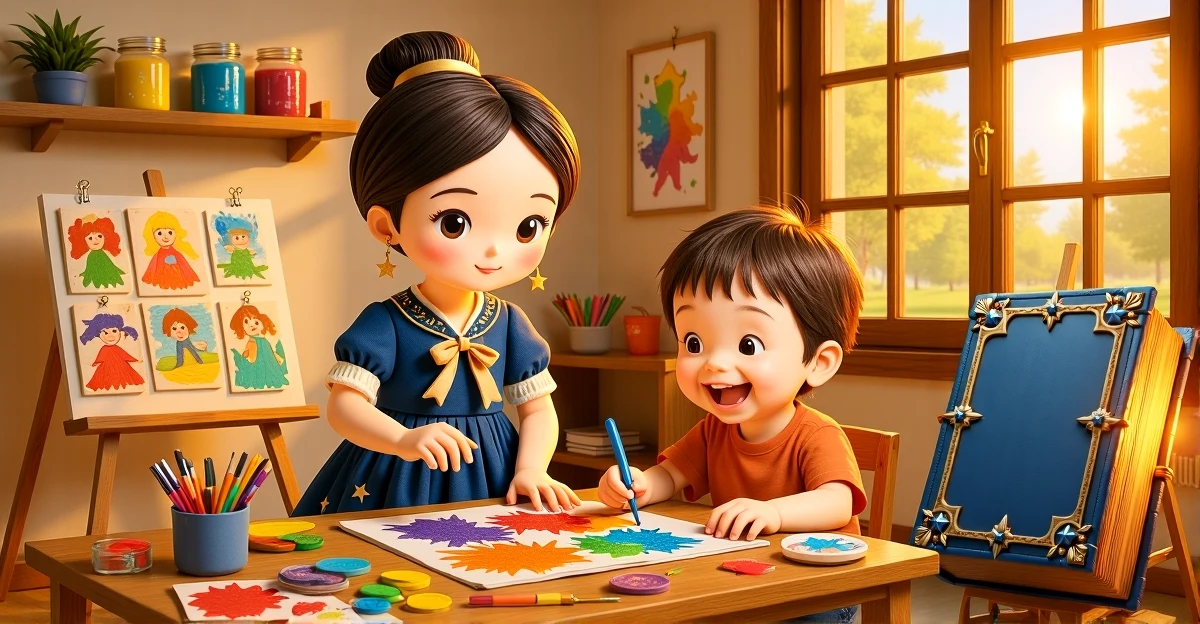
When they mix paint and discover that blue and yellow make green, that's not just art. That's science, discovery, and pure wonder all at once. When they bang on a drum and notice that hitting harder makes louder sounds, they're learning about cause and effect, experimenting with their physical strength, and expressing themselves through rhythm.
What Research Shows About Creative Expression
Dr. Maite Garaigordobil spent twenty years—TWENTY YEARS—studying how creative play affects children's development. What she found is absolutely beautiful and SO important for every parent to understand.
"Cooperative-creative play programs promoted a significant improvement in creative personality behaviors and traits, with large effect sizes in verbal creativity (flexibility, fluency, originality) and graphic creativity (elaboration, fluency, originality)."
— Dr. Maite Garaigordobil, University of the Basque Country
But here's what makes this research even more meaningful: It's not just about making pretty pictures. Creative expression enhances cognitive development, emotional regulation, and social competencies all at the same time. Your child's messy finger painting session? That's brain building in action. That off-key humming while they play? That's them finding their voice and learning about pitch, rhythm, and self-expression.
Dr. Kathy Hirsh-Pasek and Dr. Jennifer Zosh, who study how children learn through play, emphasize something that changed how I understand creativity in young children. They found that playful learning leverages children's natural curiosity to maximize learning while honoring their agency. What does that mean for you as a parent?
It means your role isn't to teach your child to draw perfect circles or play perfect notes. Your role is to provide rich materials, ample time for exploration, and gentle encouragement that follows their lead rather than imposing your expectations.
The Consensus Is Clear
Child development researchers agree: Creative expression is not a luxury or an enrichment activity. It's a fundamental developmental need that supports children's cognitive growth, emotional well-being, and sense of competence and agency in the world.
When you provide opportunities for creative expression, you're not just keeping your child busy. You're nurturing their whole development—their thinking, their feeling, their sense of self, and their understanding of what they can create and contribute to the world.
Releasing the Pressure: Process Over Product
Now, I know what some parents worry about. They see other children creating recognizable drawings or playing actual songs, and they wonder if their child is falling behind. But here's the truth the Magic Book wants you to know, and I need you to really hear this:
At ages three to four, creative expression isn't about the product. It's about the process. It's about exploration, experimentation, and discovering what resonates with their unique spirit.
Your child doesn't need to create masterpieces. They need to create freely. They need to explore, experiment, make messes, and discover what brings them joy. That's where the real magic happens. That's where their unique creative voice begins to emerge.
When adults impose rigid outcomes or correct children's creative choices, research shows it actually diminishes their creative thinking. But when we provide materials and step back, children's creativity flourishes. When we celebrate the process rather than judging the product, we tell our children that their ideas matter, their expressions are valued, and their creativity is a gift to be celebrated.
Gentle Ways to Support Creative Expression
So how can you nurture your child's creative spirit in practical, everyday ways? Here are some approaches that honor your child's natural creativity while providing the support they need:
1. Create a "Yes Space" for Creativity
This might be a corner with washable markers, paper, play dough, scarves for dancing, and simple instruments. When children know they have permission to explore freely, magic happens. The key is making materials accessible and giving them the freedom to use them in their own way.
2. Focus on the Process, Not the Product
Instead of saying, "What is it?" try saying, "Tell me about what you made," or "I noticed you used lots of blue today." This validates their creative process without imposing your expectations. It tells them that the experience of creating matters more than what the final product looks like.
3. Let Them Lead
If your child wants to paint the sky purple and the grass orange, that's not wrong. That's imagination. That's their unique vision of the world. The research is clear: when we provide materials and step back, children's creativity flourishes.
4. Embrace Multiple Modalities
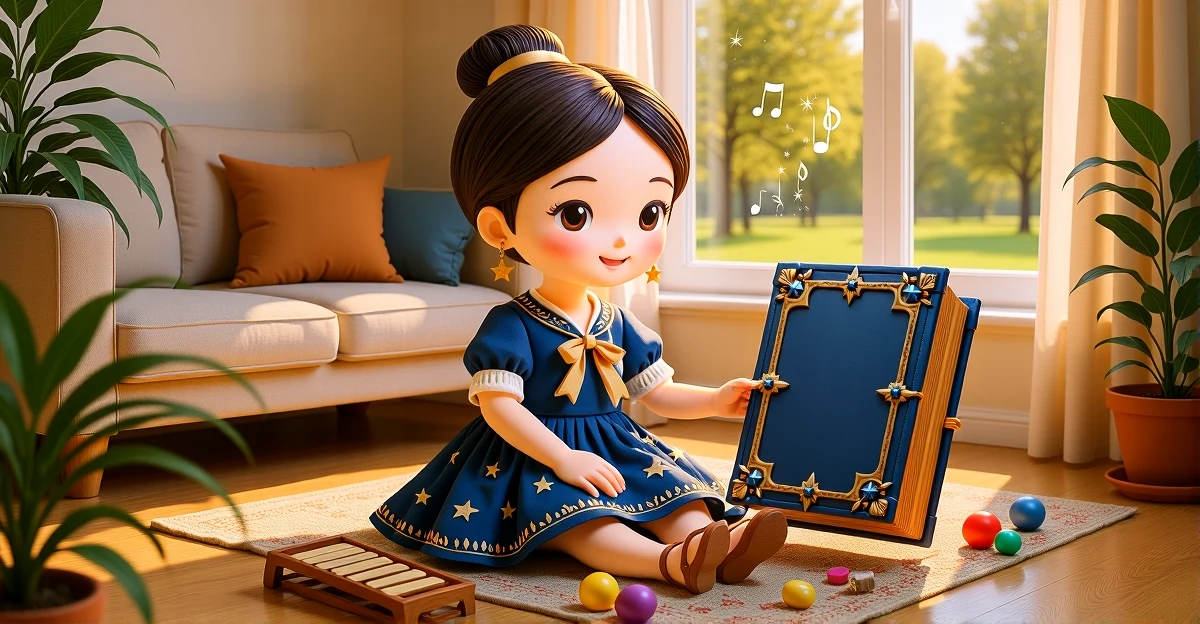
Creative expression isn't just about visual art. Music is another beautiful avenue. You don't need expensive instruments—pots and wooden spoons become drums, rice in a sealed container becomes a shaker, your voice singing together becomes a symphony. And movement! Dancing, spinning, jumping, swaying. Movement is how young children process emotions, build body awareness, and express joy.
5. Provide Rich, Open-Ended Materials
A cardboard box can become a spaceship, a house, a drum, or a canvas. Scarves can become wings, rivers, or dancing partners. The simplest materials often inspire the richest creativity because they leave room for imagination.
6. Model Creative Joy
Let your child see you creating, experimenting, and enjoying the process. Sing while you cook. Doodle while you talk on the phone. Dance in the kitchen. When children see that creativity is a joyful part of life, they internalize that creativity belongs to everyone.
Stories That Celebrate Creative Discovery
In The Book of Inara, we have beautiful stories that bring these concepts to life for your child. Let me share one that's particularly perfect for this journey:
The Dream Treasure Hunters
Perfect for: Ages 4-5 (and wonderful for creative 3-4 year olds too!)
What makes it special: This story beautifully addresses creative expression and self-discovery through the metaphor of finding treasures that match your dreams. Kenji and Maeva learn to trust their inner wisdom and discover their personal talents through building and creating together. The story validates that every child has unique gifts waiting to be expressed and that following your creative impulses leads to meaningful discoveries.
Key lesson: When the children discover that forgotten treasures glow when they find their perfect dreamers, children learn that creative expression is about discovering what resonates with your unique spirit—not about creating what others expect.
After reading together: Notice what makes your child's eyes light up—whether it's colors, sounds, movements, or textures. Those moments of genuine interest are your child showing you their creative language. Follow their lead and provide materials that support their natural curiosity.
You're Doing Beautifully
The Magic Book and I see you. We see you providing materials, making space, encouraging exploration. We see you honoring your child's creative spirit even when it means purple skies and loud drumming and paint on surfaces you didn't intend. You're doing something SO important.
You're telling your child that their ideas matter, their expressions are valued, and their creativity is a gift to be celebrated. You're providing the foundation for a lifetime of creative thinking, problem-solving, and self-expression.
Remember, ages three to four are when children are discovering which creative modalities resonate with them. Some children will gravitate toward visual art. Others will love music or movement or dramatic play. There's no right way to be creative. There's only your child's way, and that way is perfect.
So keep providing those rich opportunities. Keep following their lead. Keep celebrating the process. And know that every scribble, every song, every dance is your child building their brain, expressing their heart, and discovering who they are.
With love and starlight,
Inara and the Magic Book of Wonder
Related Articles
- Understanding Fantasy vs Reality in Preschoolers: A Gentle Guide to Teaching Honesty
- Building Friendship Skills in Young Children: A Gentle Guide for Parents
- Understanding Your Child's Attention-Seeking Behavior (And How to Guide Them Gently)
- When Your Child Can't Express Their Feelings: A Gentle Guide to Building Emotional Vocabulary
- Supporting Your Shy Child: Understanding Behavioral Inhibition in Young Children
Show transcript
Hello, wonderful parent! It's me, Inara, and I am SO happy you're here today. You know, the Magic Book and I have been noticing something truly beautiful. So many parents are asking about creative expression, wondering how to help their little ones explore art, music, and movement. And I want you to know something right from the start. If you're asking this question, you're already doing something WONDERFUL. You're seeing your child as the creative being they truly are.
Let me share something the Magic Book taught me that changed everything I understand about creativity in young children. When your three or four year old scribbles with crayons, or hums a little tune, or spins in circles until they're dizzy, they're not just playing. They're speaking in their very first language. You see, before children have all the words to express what's in their hearts, they use color and sound and movement to tell us who they are.
And here's what makes this age so incredibly special. Research shows that ages three to four represent a critical window when children's imaginative capacities are expanding in the most remarkable ways. Their brains are literally building new connections every single time they create something. When they mix paint and discover that blue and yellow make green, that's not just art. That's science, discovery, and pure wonder all at once.
Dr. Maite Garaigordobil spent twenty years studying how creative play affects children's development, and what she found is absolutely beautiful. Cooperative creative play programs significantly increase both verbal and graphic creativity in young children. But it's not just about making pretty pictures. Creative expression enhances cognitive development, emotional regulation, and social competencies all at the same time. Your child's messy finger painting session? That's brain building in action.
Now, I know what some parents worry about. They see other children creating recognizable drawings or playing actual songs, and they wonder if their child is falling behind. But here's the truth the Magic Book wants you to know. At this age, creative expression isn't about the product. It's about the process. It's about exploration, experimentation, and discovering what resonates with their unique spirit.
Dr. Kathy Hirsh-Pasek and Dr. Jennifer Zosh, who study how children learn through play, emphasize something so important. Playful learning leverages children's natural curiosity to maximize learning while honoring their agency. What does that mean for you? It means your role isn't to teach your child to draw perfect circles or play perfect notes. Your role is to provide rich materials, ample time for exploration, and gentle encouragement that follows their lead.
Let me tell you about some practical ways you can support your child's creative expression. First, create a yes space for creativity. This might be a corner with washable markers, paper, play dough, scarves for dancing, and simple instruments. When children know they have permission to explore freely, magic happens. Second, focus on the process, not the product. Instead of saying, what is it, try saying, tell me about what you made, or I noticed you used lots of blue today. This validates their creative process without imposing your expectations.
Third, and this is so important, let them lead. If your child wants to paint the sky purple and the grass orange, that's not wrong. That's imagination. That's their unique vision of the world. The research is clear. When adults impose rigid outcomes or correct children's creative choices, it actually diminishes their creative thinking. But when we provide materials and step back, children's creativity flourishes.
Music is another beautiful avenue for expression. You don't need expensive instruments. Pots and wooden spoons become drums. Rice in a sealed container becomes a shaker. Your voice singing together becomes a symphony. The Magic Book reminds me that children don't need perfection. They need permission to make joyful noise, to experiment with rhythm and melody, to discover that their voice matters.
And movement! Oh, how children love to move. Dancing, spinning, jumping, swaying. Movement is how young children process emotions, build body awareness, and express joy. Put on music and dance together. Create freeze dance games. Let them move like different animals. Every wiggle and twirl is your child learning about their body and how it moves through space.
Now, let me tell you about a story that captures this spirit of creative discovery so beautifully. It's called The Dream Treasure Hunters, and it's about two friends, Kenji and Maeva, who discover a magical garage sale where forgotten treasures glow when they find their perfect dreamers. What I love about this story is how it shows that creative expression is about discovering what resonates with your unique spirit, not about creating what others expect.
In the story, the children learn to trust their inner wisdom and discover their personal talents through building and creating together. It validates that every child has unique gifts waiting to be expressed, and that following your creative impulses leads to meaningful discoveries. After reading this story with your child, you might notice what makes their eyes light up. Is it colors? Sounds? Textures? Movements? Those moments of genuine interest are your child showing you their creative language.
The Magic Book also wants you to know this. Creative expression serves as a powerful language for children who are still developing verbal skills. When your child can't quite find the words to tell you about their day, they might draw it. When they're feeling big emotions they don't understand, they might dance them out. This isn't just cute. This is essential communication and emotional processing.
Here's something else that's so important. The consensus among child development researchers is clear. Creative expression is not a luxury or an enrichment activity. It's a fundamental developmental need that supports children's cognitive growth, emotional well-being, and sense of competence and agency in the world. When you provide opportunities for creative expression, you're not just keeping your child busy. You're nurturing their whole development.
So what can you do today? Start simple. Offer open ended materials and see what happens. A cardboard box can become a spaceship, a house, a drum, or a canvas. Scarves can become wings, rivers, or dancing partners. The simplest materials often inspire the richest creativity because they leave room for imagination.
And please, wonderful parent, release any pressure about outcomes. Your child doesn't need to create masterpieces. They need to create freely. They need to explore, experiment, make messes, and discover what brings them joy. That's where the real magic happens. That's where their unique creative voice begins to emerge.
The Magic Book and I see you. We see you providing materials, making space, encouraging exploration. We see you honoring your child's creative spirit even when it means purple skies and loud drumming. You're doing something so important. You're telling your child that their ideas matter, their expressions are valued, and their creativity is a gift to be celebrated.
Remember, ages three to four are when children are discovering which creative modalities resonate with them. Some children will gravitate toward visual art. Others will love music or movement or dramatic play. There's no right way to be creative. There's only your child's way, and that way is perfect.
So keep providing those rich opportunities. Keep following their lead. Keep celebrating the process. And know that every scribble, every song, every dance is your child building their brain, expressing their heart, and discovering who they are.
The Book of Inara has many stories that celebrate creativity and self-discovery. I invite you to explore them with your little one. Watch what captures their imagination. Notice what inspires their own creative play. Stories and creativity go hand in hand, each one feeding the other in the most beautiful ways.
Thank you for being here today, wonderful parent. Thank you for honoring your child's creative spirit. The Magic Book and I are always here, cheering you on. With love and starlight, Inara.