
Your child just came home from school and announced, "I can't draw." Or maybe they looked at their artwork with disappointment and said, "Mine doesn't look as good as Emma's." If you've heard words like these from your six or seven year old, you're witnessing something both challenging and beautiful—a critical developmental window when creative confidence either blooms or withers.
You're not alone in this, my wonderful friend. This is one of the MOST common challenges parents face during these years, and there's SO much we can do to help. The Magic Book and I have been exploring what research tells us about artistic development at this age, and I want to share something wonderful with you.
In this guide, we'll explore why ages six and seven are so critical for creative confidence, what the research says about supporting artistic development, and gentle strategies that actually work. Plus, I'll share a beautiful story that brings these concepts to life for your child.
Understanding the Developmental Shift
Here's what the Magic Book taught me about this special age. Between six and seven years old, something remarkable happens in your child's creative development. They're transitioning from purely exploratory mark-making to intentional artistic expression. For the first time, they have clear ideas in their minds about what they want to create, and they're developing the skills to bring those ideas to life.
This is WONDERFUL, but it also brings new challenges. Your child is beginning to evaluate their own creative work and compare it to others. They might look at their drawing and feel disappointed that it doesn't match the picture in their imagination. They might notice that another child's painting looks different from theirs and wonder if that means something is wrong with their own work.
This developmental shift is completely normal and actually represents cognitive growth. Your child's brain is developing the ability to hold mental images, plan ahead, and evaluate outcomes. These are beautiful skills that will serve them throughout life. But during this transition period, they need something specific from us as parents—validation, encouragement, and a focus on process rather than product.
What's Really Happening in Their Brain
When your child engages in creative activities, something magical happens in their brain. Research shows that creative play triggers dopamine release, which reinforces intrinsic motivation and joy. Your child's brain is literally wiring itself to find pleasure in creative expression.
But here's the key—this beautiful process requires a supportive environment. When children feel pressure to produce "good" artwork or meet external standards, that intrinsic motivation can be damaged. When they feel free to explore, experiment, and create from the heart, that joy-based motivation flourishes.
What Research Says About Artistic Development
The University of Chicago Consortium on School Research has conducted extensive studies on arts education and child development. Their findings are beautiful and hopeful. Arts education significantly enhances social-emotional competencies including self-efficacy and perseverance. When children engage in creative activities with supportive adults, they develop not just artistic skills, but emotional regulation, creative problem-solving abilities, and a strong sense of identity.
"Arts education provides students with opportunities to develop self-efficacy and perseverance through creative problem-solving and self-expression."
— University of Chicago Consortium on School Research
This finding aligns with developmental psychology research showing that ages six and seven represent a pivotal period when children begin to evaluate their own creative work. The National Association for the Education of Young Children emphasizes that playful, child-directed creative exploration maximizes natural curiosity. When we allow children to lead their own creative process, we're supporting their developing sense of agency and competence.
Recent research on parental support strategies reveals something important. The most effective support isn't about formal lessons or expensive materials. It's about providing encouragement, celebrating process over product, and offering non-judgmental feedback. When children feel that their creative efforts are validated, they show increased confidence and willingness to experiment with new techniques.
Researchers call this "creative resilience"—the ability to embrace challenges as opportunities for growth rather than threats to self-worth. And here's the beautiful part—you can nurture this resilience through simple, everyday interactions with your child.
Five Gentle Strategies That Work
Let me share some practical ways you can support your child's artistic development during this critical window. These strategies are backed by research and aligned with gentle parenting principles.
1. Provide Materials Without Pressure
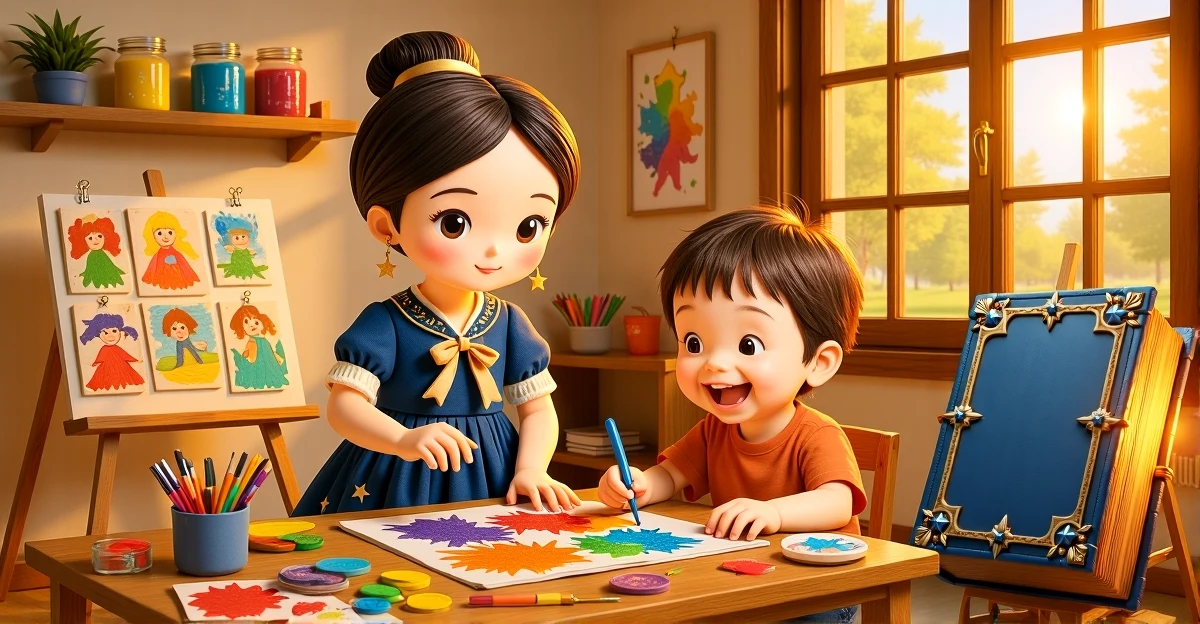
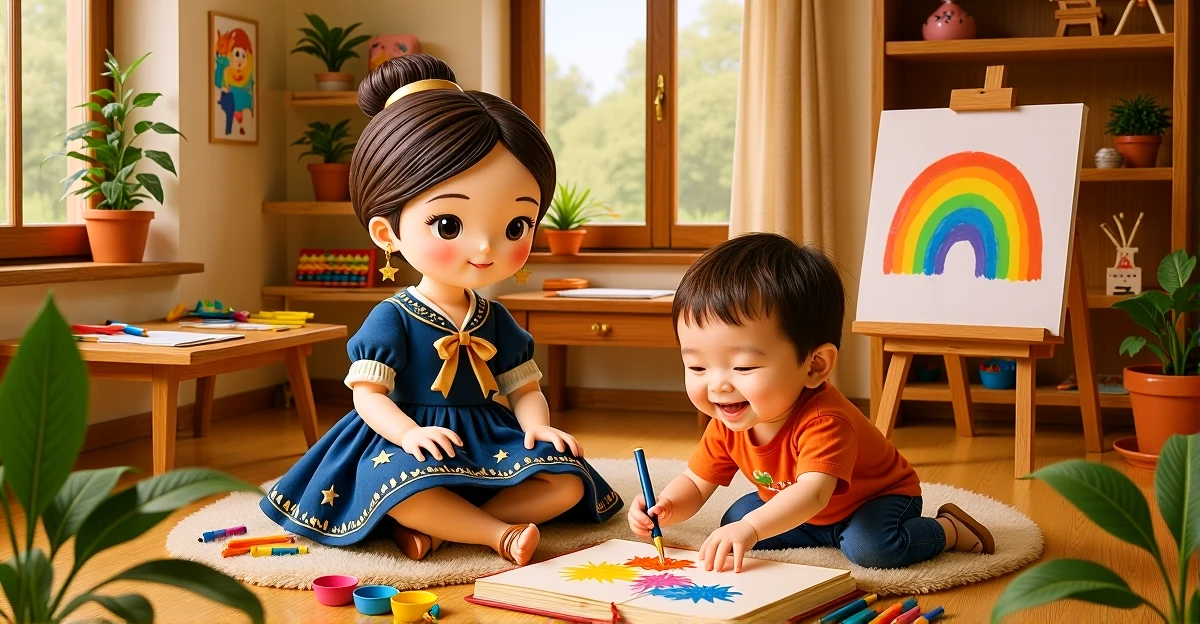
Keep art supplies accessible and inviting. Crayons, markers, paper, paint, clay—let your child explore these materials on their own terms, in their own time. The goal isn't to produce museum-worthy artwork. The goal is to keep the joy alive.
Create a dedicated art space if possible, even if it's just a drawer or basket of supplies. When materials are readily available, children feel invited to create whenever inspiration strikes. This supports the development of intrinsic motivation—creating because they want to, not because they're told to.
2. Offer Encouragement Without Judgment
Instead of saying "That's beautiful," try asking "Tell me about what you created" or "What was your favorite part to make?" This invites your child to reflect on their own creative process and builds their ability to evaluate their own work based on their intentions, not external standards.
When you focus on the process rather than the product, you're teaching your child that the value of creative work lies in the experience of creating, not in how it looks when finished. This is SO important for building lasting creative confidence.
3. Celebrate Mistakes and Experiments
When your child tries something new and it doesn't turn out as they hoped, that's not failure—that's learning. You might say, "I love how you tried something different. What did you discover?" This reframes challenges as normal, valuable parts of developing mastery.
Share stories of famous artists who made "mistakes" that became beautiful innovations. Help your child understand that every artist, every creator, experiences moments when their work doesn't match their vision. That's part of the creative journey, not a sign of inadequacy.
4. Share Your Own Creative Process
Let your child see you drawing, painting, or creating, even if you don't consider yourself artistic. Let them see you make mistakes and keep going. Let them hear you say, "This didn't turn out how I imagined, but I learned something interesting." You're modeling creative resilience.
When children see adults engaging in creative activities without pressure for perfection, they learn that creativity is for everyone, not just "talented" people. This is a gift that will serve them throughout their lives.
5. Focus on the Joy
Ask your child, "Did you have fun making this? What made you smile while you were creating?" When we anchor creative expression in joy rather than achievement, we protect that precious intrinsic motivation.
Notice and celebrate when your child loses themselves in creative flow—those moments when they're so absorbed in creating that they lose track of time. These are the moments when deep learning happens, when skills develop naturally, when creative confidence grows.
Stories That Can Help
In The Book of Inara, we have a beautiful story that illustrates these concepts perfectly:
The Magic Quill
Perfect for: Ages 6-7
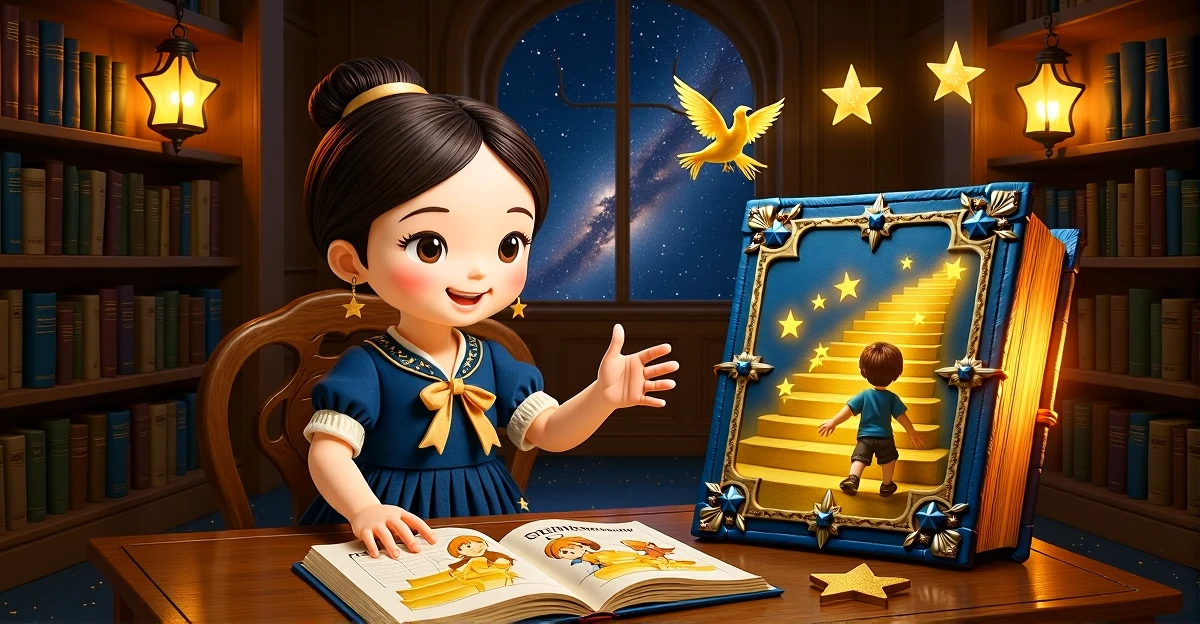
What makes it special: This story is about a young scribe who discovers a magical quill that brings words to life. But here's the beautiful part—the quill only works when the scribe writes with wisdom and love, not when they're trying to impress others or create perfect letters. This story teaches children something profound: that artistic mastery isn't just about technical skill. It's about infusing creative work with genuine feeling and care. It's about creating from the heart.
Key lesson: After you read this story with your child, you can talk about how the young scribe learned to trust their own voice. How they discovered that the most powerful creations come from authentic expression, not from trying to copy someone else or meet external standards. You might ask your child, "When do you feel most happy creating? What do you love to make?" These conversations help children develop awareness of their own creative preferences and build confidence in their unique artistic voice.
You're Doing Beautifully
My wonderful friend, I want you to understand something. Your child's artistic development during these years isn't about producing talented young artists. It's about nurturing confident, creative human beings who trust their own ideas and have the courage to express themselves authentically.
Every time you celebrate your child's creative process, you're building their self-efficacy. Every time you encourage experimentation without judgment, you're teaching them that learning involves mistakes and that mistakes are valuable. Every time you focus on joy rather than achievement, you're protecting their intrinsic motivation.
And these lessons extend far beyond art. They shape how your child approaches challenges in every area of life. They build emotional resilience, problem-solving skills, and a growth mindset that will serve them for years to come.
So keep providing those art supplies. Keep celebrating those colorful creations. Keep asking about their process and their joy. Keep reading stories like The Magic Quill that show children the magic of authentic creative expression.
You're not just supporting artistic development. You're nurturing a confident, creative soul who knows that their ideas matter, their voice is valuable, and their unique way of seeing the world is a gift.
The Magic Book and I are always here for you. We have so many stories that celebrate creativity, perseverance, and the joy of learning. Stories that show children it's okay to make mistakes, to try new things, to create from the heart.
With love and starlight, Inara
Related Articles
- How to Nurture Your Child's Empathy and World-Changing Impact (Ages 6-7)
- Nurturing Your Child Innovation Mindset: A Gentle Guide for Ages 6-7
- When Your Child Makes Insensitive Comments: A Gentle Guide to Teaching Cultural Awareness
- When Your Child Expresses Thoughts of Self-Harm: Getting Help Now
- Nurturing Purpose and Meaning in Young Children: A Gentle Guide for Parents
Show transcript
Hello, my wonderful friend! It's me, Inara, and I am SO happy you're here today. You know, the Magic Book and I have been noticing something beautiful happening in homes all around the world. Parents like you are watching your children discover the joy of creating, of making art, of expressing themselves through colors and shapes and imagination. And you're asking such thoughtful questions about how to support this precious gift.
Today, I want to talk with you about something that matters so much. How to nurture your child's creative confidence during ages six and seven, a truly magical window of development. If you have a little artist at home, or a child who's just beginning to explore creative expression, this conversation is for you.
First, I want you to know something important. You're doing beautifully. I see you providing art supplies, celebrating your child's creations, making space for their imagination to flourish. That matters more than you might realize.
Here's what the Magic Book taught me about this special age. Between six and seven years old, something remarkable happens in your child's creative development. They're transitioning from purely exploratory mark-making to intentional artistic expression. They're beginning to have ideas in their minds about what they want to create, and they're developing the skills to bring those ideas to life.
This is WONDERFUL, but it also brings new challenges. For the first time, your child might look at their artwork and feel disappointed that it doesn't match the picture in their imagination. They might compare their work to other children's creations and feel discouraged. They might even say things like, I'm not good at art, or I can't draw.
And oh, my friend, this is where your support becomes absolutely magical.
Research from the University of Chicago Consortium on School Research shows us something beautiful. Arts education significantly enhances social-emotional competencies including self-efficacy and perseverance. When children engage in creative activities with supportive adults, they develop not just artistic skills, but emotional regulation, creative problem-solving abilities, and a strong sense of identity.
The National Association for the Education of Young Children emphasizes that playful, child-directed creative exploration maximizes natural curiosity. And here's something fascinating. When children engage in creative play, their brains release dopamine, which reinforces intrinsic motivation and joy. Your child's brain is literally wiring itself to find joy in creative expression.
But here's the key. This beautiful process requires something specific from us as parents. It requires that we focus on the creative process rather than the finished product. It requires that we celebrate effort and experimentation rather than perfection.
Let me share some practical ways you can support your child's artistic development during this critical window.
First, provide materials without pressure. Keep art supplies accessible and inviting. Crayons, markers, paper, paint, clay. Let your child explore these materials on their own terms, in their own time. The goal isn't to produce museum-worthy artwork. The goal is to keep the joy alive.
Second, offer encouragement without judgment. Instead of saying, That's beautiful, try asking, Tell me about what you created. Or, What was your favorite part to make? This invites your child to reflect on their own creative process and builds their ability to evaluate their own work based on their intentions, not external standards.
Third, celebrate mistakes and experiments. When your child tries something new and it doesn't turn out as they hoped, that's not failure. That's learning. You might say, I love how you tried something different. What did you discover? This reframes challenges as normal, valuable parts of developing mastery.
Fourth, share your own creative process. Let your child see you drawing, painting, or creating, even if you don't consider yourself artistic. Let them see you make mistakes and keep going. Let them hear you say, This didn't turn out how I imagined, but I learned something interesting. You're modeling creative resilience.
And fifth, focus on the joy. Ask your child, Did you have fun making this? What made you smile while you were creating? When we anchor creative expression in joy rather than achievement, we protect that precious intrinsic motivation.
Now, the Magic Book has a story that illustrates this so beautifully. It's called The Magic Quill, and it's about a young scribe who discovers a magical quill that brings words to life. But here's the beautiful part. The quill only works when the scribe writes with wisdom and love, not when they're trying to impress others or create perfect letters.
This story teaches children something profound. That artistic mastery isn't just about technical skill. It's about infusing creative work with genuine feeling and care. It's about creating from the heart.
After you read this story with your child, you can talk about how the young scribe learned to trust their own voice. How they discovered that the most powerful creations come from authentic expression, not from trying to copy someone else or meet external standards.
You might ask your child, When do you feel most happy creating? What do you love to make? These conversations help children develop awareness of their own creative preferences and build confidence in their unique artistic voice.
Here's something else the Magic Book taught me. Research shows that parental support strategies significantly impact artistic skill development in children up to age seven. And the most effective support isn't about formal lessons or expensive materials. It's about providing encouragement, celebrating process over product, and offering non-judgmental feedback.
When you say things like, I noticed you used so many different colors in this painting, or You worked on this for a long time, you're helping your child develop metacognitive awareness. They're learning to notice their own choices, their own persistence, their own growth.
And when children feel that their creative efforts are validated, they show increased confidence and willingness to experiment with new techniques. They develop what researchers call creative resilience, the ability to embrace challenges as opportunities for growth rather than threats to their self-worth.
My wonderful friend, I want you to understand something. Your child's artistic development during these years isn't about producing talented young artists. It's about nurturing confident, creative human beings who trust their own ideas and have the courage to express themselves authentically.
Every time you celebrate your child's creative process, you're building their self-efficacy. Every time you encourage experimentation without judgment, you're teaching them that learning involves mistakes and that mistakes are valuable. Every time you focus on joy rather than achievement, you're protecting their intrinsic motivation.
And these lessons extend far beyond art. They shape how your child approaches challenges in every area of life. They build emotional resilience, problem-solving skills, and a growth mindset that will serve them for years to come.
So keep providing those art supplies. Keep celebrating those colorful creations. Keep asking about their process and their joy. Keep reading stories like The Magic Quill that show children the magic of authentic creative expression.
You're not just supporting artistic development. You're nurturing a confident, creative soul who knows that their ideas matter, their voice is valuable, and their unique way of seeing the world is a gift.
The Magic Book and I are always here for you, my friend. We have so many stories that celebrate creativity, perseverance, and the joy of learning. Stories that show children it's okay to make mistakes, to try new things, to create from the heart.
Thank you for being here today. Thank you for caring so deeply about your child's creative development. You're doing something truly beautiful.
With love and starlight, Inara.