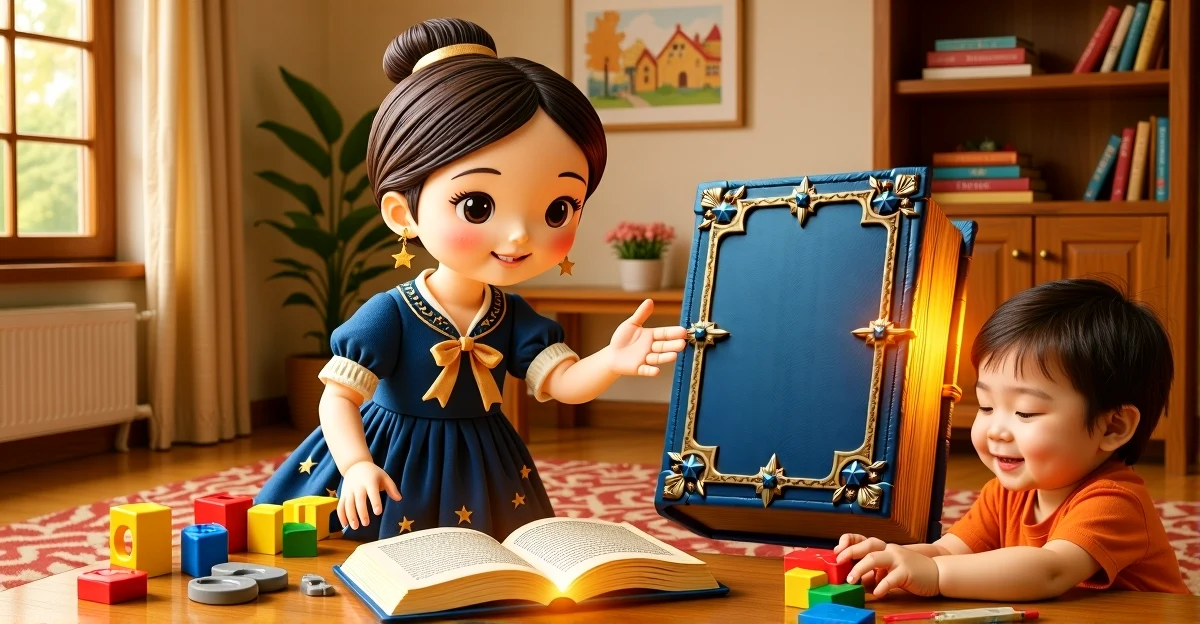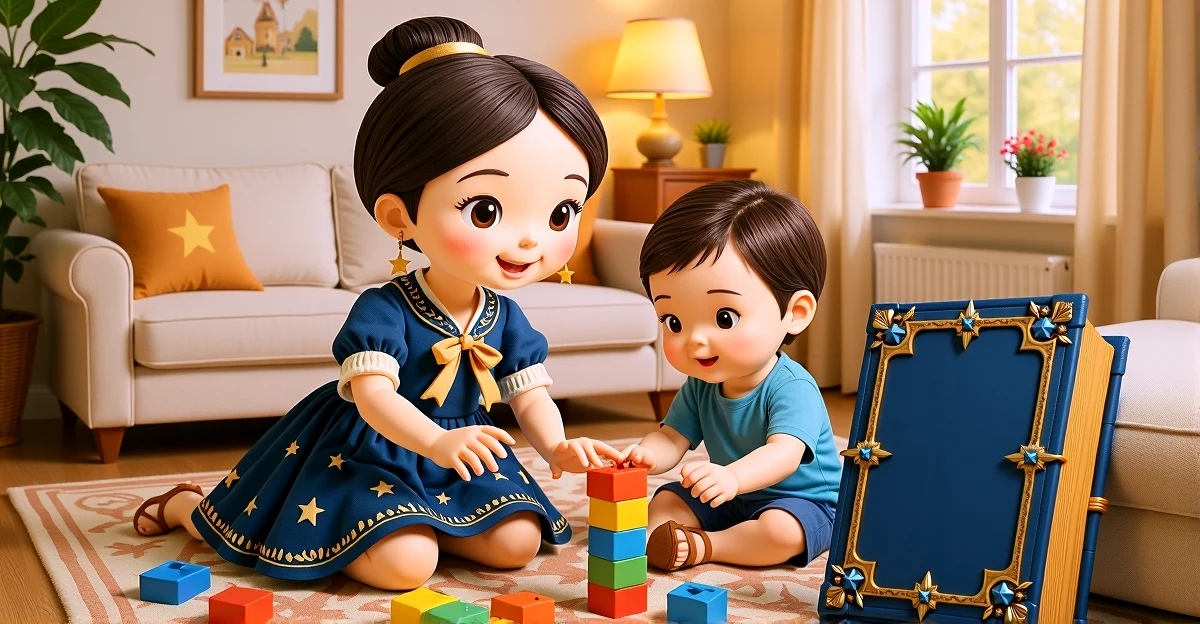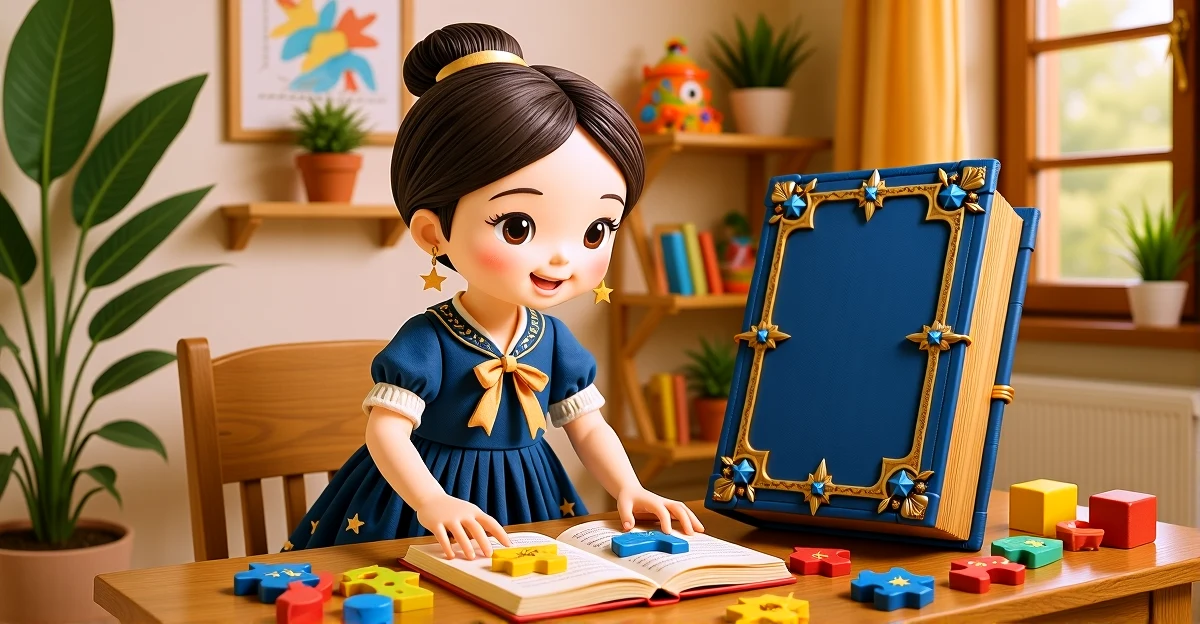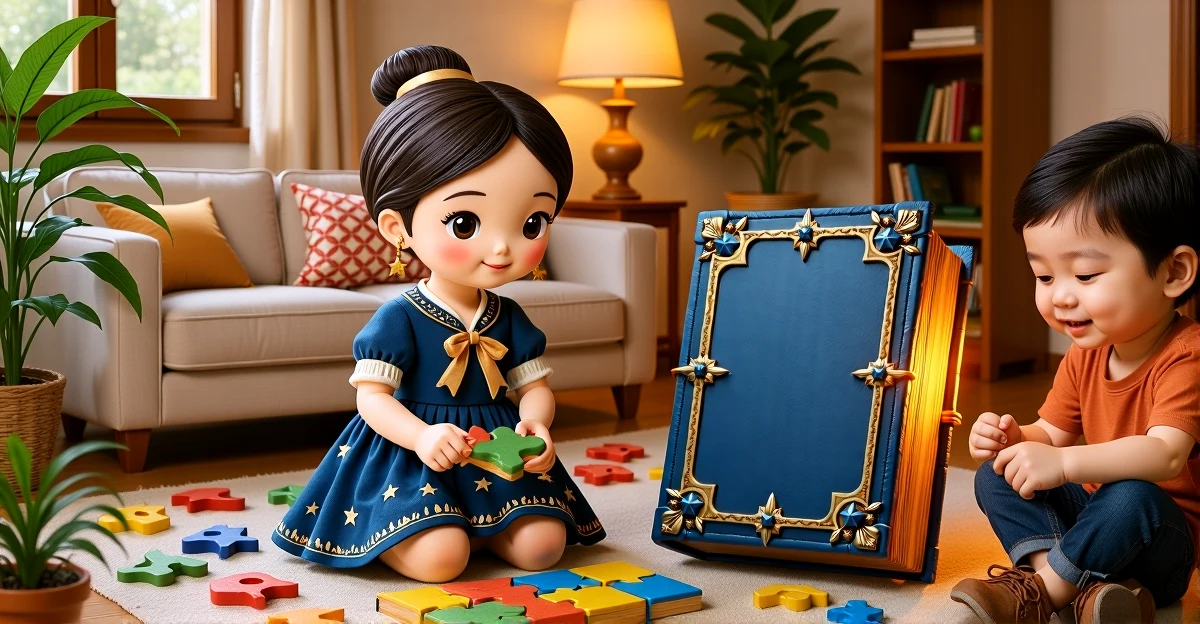

Picture this: Your little one is trying to fit a puzzle piece into place. They turn it one way, then another. It doesn't fit. Their face scrunches up. Their hands move faster, more frantically. And every part of you wants to reach out and show them exactly where that piece goes. To make it easier. To take away that frustration.
I see you, and that impulse comes from such a loving place. But here's something WONDERFUL the Magic Book taught me: When your child is working through a challenge, even when they're getting frustrated, their brain is doing something absolutely magnificent. It's making new connections. It's learning persistence. It's discovering that they are capable of figuring things out.
In this guide, we're going to explore how problem-solving skills develop in young children, what research tells us about supporting this beautiful growth, and gentle strategies you can use starting today. Plus, I'll share a magical story that brings these concepts to life for your child.
Understanding Problem-Solving Development in Ages 3-4
Between ages three and four, your child is in a critical window where their cognitive abilities are expanding in the most amazing ways. This is when they're beginning to use tools creatively, engage in pretend play that requires planning and flexible thinking, and develop the ability to break larger problems into manageable steps.
And here's what makes this phase SO special: Research demonstrates that problem-solving skills develop through a beautiful progression of exploration, play, and guided discovery. Your child is naturally wired to experiment with different strategies and learn from both their successes AND their setbacks.
What Problem-Solving Looks Like at This Age
You might notice your child:
- Trying different approaches when something doesn't work the first time
- Using objects as tools to reach or accomplish something
- Creating elaborate pretend play scenarios that require planning
- Asking questions to gather information before attempting a task
- Showing persistence when faced with challenges (even if they get frustrated)
- Celebrating their own successes with genuine pride
This is completely normal development, and it represents tremendous cognitive growth. Their brains are making new connections and processing information in increasingly sophisticated ways.
What Research Says About Play and Problem-Solving
Let me share what the research tells us, because it's truly beautiful. Studies from the American Academy of Pediatrics show that playful learning provides the optimal environment for developing problem-solving skills. When children play, they're not just having fun. They're building the very skills that will help them navigate challenges for the rest of their lives.
Caregivers need to provide the appropriate amount of input and guidance for children to develop optimal problem-solving skills through guided play.
— American Academy of Pediatrics, The Power of Play (2018)
The National Association for the Education of Young Children has found that play-based approaches encourage initiative, independence, and creative thinking. All those essential components of effective problem-solving. So when your child is playing with blocks, dolls, or even just exploring how water pours from one cup to another, they're conducting experiments. They're testing hypotheses. They're learning.
The Power of Modeling Persistence
Here's something that might surprise you: Child development experts have discovered that when parents model persistence through challenges and demonstrate out-of-the-box thinking, children internalize these strategies and apply them to their own obstacles.
Research shows that children who watch their parents persist through challenges are significantly more likely to show persistence themselves. They develop what experts call grit. The ability to set goals and work through obstacles. And this skill is linked to long-term success in SO many areas of life.
Parents who model out of the box ways to play can encourage creative thinking and problem-solving in their children, starting in toddlerhood.
— Lovevery Child Development Experts (2023)
Why It's So Hard to Watch Them Struggle
Before we talk about strategies, I want to validate something you might be feeling. It can be SO hard to watch your child struggle with something. Maybe it's shoes that won't go on the right way, or a tower of blocks that keeps tumbling down, or a zipper that just won't zip.
Your instinct to help comes from love. From wanting to protect them from frustration and disappointment. From wanting their world to feel safe and manageable. And those are BEAUTIFUL parenting instincts.
But here's the gentle truth the Magic Book whispers: Giving your child time to work through frustration, rather than immediately solving problems for them, builds both confidence and persistence. It tells them, I believe you can figure this out. I'm here if you need me, but I trust in your abilities.
And that message is one of the greatest gifts you can give.
Gentle Strategies to Support Problem-Solving Skills
So how can you support this beautiful development? Here are some gentle strategies the Magic Book and I want to share with you:
1. Resist the Urge to Help Immediately
I know this is hard, but try giving your child time to work through the challenge on their own first. Count to ten in your head. Take a breath. Let them experience that moment of struggle, because that's where the learning happens.
You'll know when they truly need help versus when they're just working through the natural frustration of learning something new. Trust your instincts, and trust your child.
2. Ask Questions Instead of Giving Answers
Instead of saying, Here, let me show you, try asking:
- What do you think might work?
- What could we try next?
- I wonder if there's another way to do that?
- What happened when you tried it that way?
- How do you think we could solve this together?
These questions encourage them to think through different possibilities and develop their own problem-solving strategies.
3. Celebrate the Process, Not Just the Outcome
When your child tries something and it doesn't work, you might say:
- I love how you tried that! What a creative idea!
- You're working SO hard on this. I can see you thinking.
- That didn't work, but now we know something new. What else could we try?
- Look at you, trying different ways! That's exactly how we learn.
This teaches them that mistakes are part of learning, not something to be ashamed of. It builds what researchers call a growth mindset.
4. Model Your Own Problem-Solving Out Loud
When you encounter a challenge, narrate your thinking:
Oh, this jar lid is stuck. Let me try twisting it the other way. Hmm, that didn't work. Maybe if I run it under warm water first. There we go!
You're showing them that everyone encounters problems, and there are always different strategies to try. You're also demonstrating that it's okay to try something that doesn't work and then adjust your approach.
5. Use Pretend Play as a Problem-Solving Laboratory
Research shows that pretend play is linked to better divergent problem-solving. It helps children think outside the box. So when your child is playing with dolls or action figures, join in and create scenarios where the characters need to solve problems together.
Oh no, the teddy bear can't reach the honey on the high shelf! What could teddy do? Should he ask for help? Find something to stand on? Use a long stick to reach it?
This playful practice translates directly to real-world problem-solving skills.
6. Provide the Right Amount of Support
The key is finding the balance between support and independence. Think of it as scaffolding. You provide just enough support to keep them from becoming overwhelmed, but not so much that you're doing it for them.
If they're working on a puzzle, you might say, I notice all the edge pieces have flat sides. Or, What if we looked for pieces that have the same color? You're giving them tools and strategies, not solutions.
A Story That Brings This to Life
In The Book of Inara, we have a magical tale that shows this so beautifully:
Captain Giggles and the Treasure of Trying Again
Perfect for: Ages 2-4
What makes it special: In this story, Anya and Noah discover a sunken pirate ship where friendly ghost Captain Giggles teaches them something WONDERFUL. The treasure chests only open when you make mistakes and try again. Every time Anya and Noah try something that doesn't work, the treasure chests giggle with delight. Because Captain Giggles knows that mistakes aren't failures. They're discoveries. They're opportunities to learn and grow.
Key lesson: When Anya and Noah finally figure out how to open the chests through persistence and trying different approaches, they discover that the real treasure was the problem-solving skills they developed along the way.
How to use it: After you read this story with your child, you can reference it when they encounter challenges. You might say, Remember how the treasure chests needed Anya and Noah to try different ways? Let's think of different ways you could try this. It gives you a shared language for talking about persistence and problem-solving.
What to Remember on Hard Days
Here's what I want you to remember: You don't have to be perfect at this. There will be times when you jump in too quickly. Times when you solve the problem because you're tired or in a hurry. And that's okay. You're learning too.
The goal isn't perfection. It's progress. It's awareness. It's creating more moments where your child gets to experience the joy of figuring something out on their own.
Because when your child solves a problem independently, even a small one, something magical happens. Their eyes light up. Their confidence grows. They learn that their brain is powerful and capable. And they carry that knowledge with them into every new challenge they face.
You're Doing Beautifully
The Magic Book reminds us that this developmental phase represents tremendous growth. Your child's brain is making new connections every single day. They're learning that they are capable. That challenges can be overcome. That trying again is not just okay, it's WONDERFUL.
So the next time you see your little one struggling with a puzzle, or trying to zip their jacket, or building a tower that keeps falling down, take a breath. Resist that urge to fix it. Instead, be their cheerleader. Their encourager. Their witness to the beautiful process of learning and growing.
You're doing such important work. By supporting your child's problem-solving development, you're giving them tools they'll use for the rest of their lives. And the Magic Book and I are here to help you every step of the way.
With love and starlight,
Inara
Related Articles
- Why Your Child Follows You Everywhere and How to Build Independent Play
- Understanding Your Child's Toilet Training Resistance (And How to Support Their Journey)
- Understanding Your Child's Fear of the Dark: A Gentle Parenting Guide
- Why Your Child Won't Use the Bathroom at School (And How to Help)
- Understanding Self-Care Resistance in Preschoolers: A Gentle Guide
Show transcript
Hello, wonderful parent! It's me, Inara, and I am so happy you're here today. You know, the Magic Book and I have been noticing something beautiful happening in homes all around the world. Parents like you are asking such thoughtful questions about how to help your little ones learn to think through challenges and find their own solutions. And I want you to know, this is one of the MOST important gifts you can give your child.
So grab a cozy cup of tea, settle in, and let's talk about something truly magical. How your child's brain is growing right now, in this very moment, as they encounter puzzles and problems and wonderful challenges that help them become the amazing problem-solvers they're meant to be.
First, I want to validate something you might be feeling. It can be SO hard to watch your child struggle with something. Maybe it's a puzzle piece that won't quite fit, or shoes that won't go on the right way, or a tower of blocks that keeps tumbling down. And every part of you wants to reach out and fix it for them, right? To make it easier, to take away that frustration. I see you, and that impulse comes from such a loving place.
But here's something WONDERFUL the Magic Book taught me. When your child is working through a challenge, even when they're getting frustrated, their brain is doing something absolutely magnificent. It's making new connections. It's learning persistence. It's discovering that they are capable of figuring things out. And that, my friend, is pure magic.
Let me share what the research tells us, because it's truly beautiful. Between ages three and four, your child is in a critical window where their cognitive abilities are expanding in the most amazing ways. Studies from the American Academy of Pediatrics show that playful learning provides the optimal environment for developing problem-solving skills. Your child is naturally wired to experiment with different strategies and learn from both their successes AND their setbacks.
And here's what makes this even more special. The National Association for the Education of Young Children has found that play-based approaches encourage initiative, independence, and creative thinking. All those essential components of effective problem-solving. So when your child is playing, they're not just having fun. They're building the very skills that will help them navigate challenges for the rest of their lives.
Now, I know what you might be thinking. But Inara, what about when they get SO frustrated? What about when they're about to give up? And this is where your role becomes truly magical. Child development experts have discovered something powerful. When parents model persistence through challenges and demonstrate out-of-the-box thinking, children internalize these strategies and apply them to their own obstacles.
So what does this look like in real life? Let me paint you a picture. Your little one is trying to fit a shape into a shape sorter, and it's not working. Instead of immediately showing them the solution, you might say something like, Hmm, I wonder if we could try turning it a different way? Or, That's tricky! Let's think about what else we could try. You're not solving it FOR them. You're showing them that challenges are opportunities to think creatively.
And here's the beautiful part. Research shows that children who watch their parents persist through challenges are significantly more likely to show persistence themselves. They develop what experts call grit. The ability to set goals and work through obstacles. And this skill is linked to long-term success in so many areas of life.
The Magic Book also whispers this truth. Giving your child time to work through frustration, rather than immediately solving problems for them, builds both confidence and persistence. It tells them, I believe you can figure this out. I'm here if you need me, but I trust in your abilities. And that message, my friend, is one of the greatest gifts you can give.
Now, by ages three and four, children are beginning to use tools creatively. They're engaging in pretend play that requires planning and flexible thinking. They're developing the ability to break larger problems into manageable steps. This is completely normal development, and it represents tremendous cognitive growth. Their brains are making new connections and processing information in increasingly sophisticated ways.
So how can you support this beautiful development? Here are some gentle strategies the Magic Book and I want to share with you.
First, resist the urge to help immediately. I know this is hard, but try giving your child time to work through the challenge on their own first. Count to ten in your head. Take a breath. Let them experience that moment of struggle, because that's where the learning happens.
Second, ask questions instead of giving answers. Instead of saying, Here, let me show you, try asking, What do you think might work? Or, What could we try next? This encourages them to think through different possibilities.
Third, celebrate the process, not just the outcome. When your child tries something and it doesn't work, you might say, I love how you tried that! What a creative idea! Let's see what else might work. This teaches them that mistakes are part of learning, not something to be ashamed of.
Fourth, model your own problem-solving out loud. When you encounter a challenge, narrate your thinking. Oh, this jar lid is stuck. Let me try twisting it the other way. Hmm, that didn't work. Maybe if I run it under warm water first. You're showing them that everyone encounters problems, and there are always different strategies to try.
And fifth, use pretend play as a problem-solving laboratory. Pretend play is linked to better divergent problem-solving. It helps children think outside the box. So when your child is playing with dolls or action figures, join in and create scenarios where the characters need to solve problems together.
Now, let me tell you about a story that shows this so beautifully. In The Book of Inara, we have a magical tale called Captain Giggles and the Treasure of Trying Again. In this story, Anya and Noah discover a sunken pirate ship where friendly ghost Captain Giggles teaches them something WONDERFUL. The treasure chests only open when you make mistakes and try again.
Can you imagine? Every time Anya and Noah try something that doesn't work, the treasure chests giggle with delight. Because Captain Giggles knows that mistakes aren't failures. They're discoveries. They're opportunities to learn and grow. And when Anya and Noah finally figure out how to open the chests through persistence and trying different approaches, they discover that the real treasure was the problem-solving skills they developed along the way.
After you read this story with your child, you can reference it when they encounter challenges. You might say, Remember how the treasure chests needed Anya and Noah to try different ways? Let's think of different ways you could try this. It gives you a shared language for talking about persistence and problem-solving.
The Magic Book reminds us that this developmental phase is completely normal and represents tremendous growth. Your child's brain is making new connections every single day. They're learning that they are capable. That challenges can be overcome. That trying again is not just okay, it's WONDERFUL.
And here's what I want you to remember, my friend. You don't have to be perfect at this. There will be times when you jump in too quickly. Times when you solve the problem because you're tired or in a hurry. And that's okay. You're learning too. The goal isn't perfection. It's progress. It's awareness. It's creating more moments where your child gets to experience the joy of figuring something out on their own.
Because when your child solves a problem independently, even a small one, something magical happens. Their eyes light up. Their confidence grows. They learn that their brain is powerful and capable. And they carry that knowledge with them into every new challenge they face.
So the next time you see your little one struggling with a puzzle, or trying to zip their jacket, or building a tower that keeps falling down, take a breath. Resist that urge to fix it. Instead, be their cheerleader. Their encourager. Their witness to the beautiful process of learning and growing.
You're doing such important work, my friend. By supporting your child's problem-solving development, you're giving them tools they'll use for the rest of their lives. And the Magic Book and I are here to help you every step of the way.
Find Captain Giggles and the Treasure of Trying Again in The Book of Inara app. Let it be a gentle helper on this journey. And remember, you're doing beautifully.
With love and starlight, Inara.