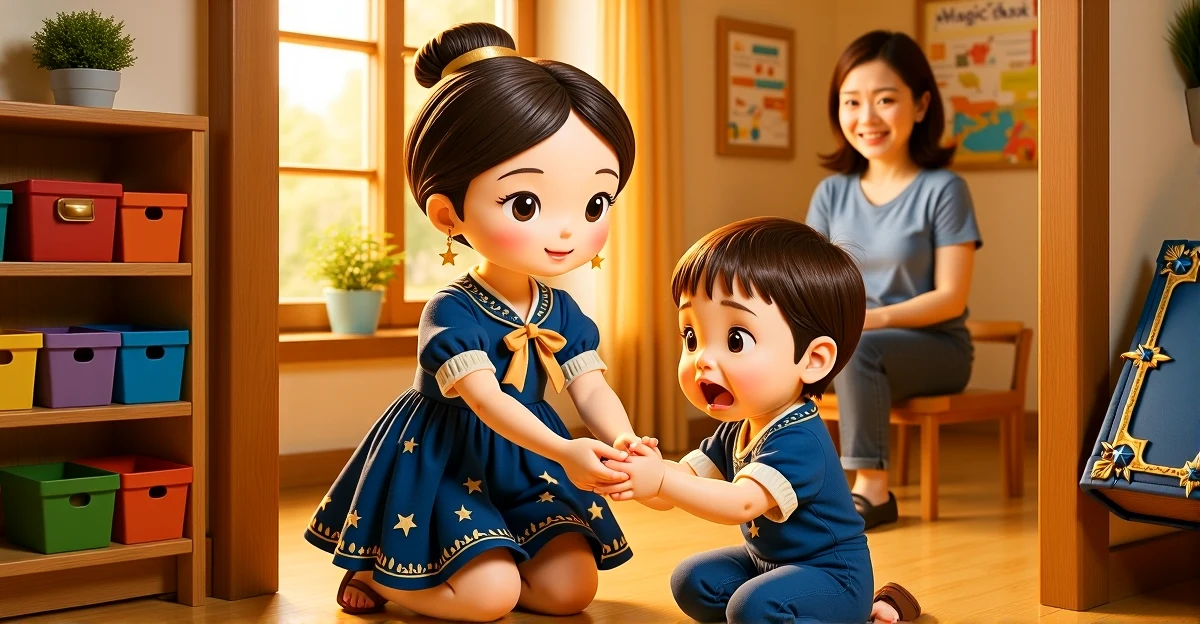

It's 7:30 in the morning. You're trying to get your child ready for school, and suddenly, the screaming starts. Your beautiful four-year-old is crying so hard they can barely breathe. Their body is shaking. And then it happens - they vomit. Again.
You're standing there, exhausted, worried, and maybe even a little frustrated. You're wondering: Is this normal? Am I doing something wrong? Will this ever get better?
My wonderful friend, let me wrap you in the warmest cosmic hug right now. You are not alone. What you're experiencing is one of the most common ways childhood anxiety shows up, and there is SO much hope. In this guide, we'll explore what's really happening when your child's body says no to school, what the research tells us, and most importantly, gentle strategies that actually work.
What's Really Happening: It's Not Manipulation
First, let me tell you something the Magic Book taught me, something you need to hear with your whole heart: Your child is not being difficult. They are not trying to manipulate you. And you are not doing anything wrong.
What you're witnessing is called separation anxiety, and when it shows up with physical symptoms like vomiting, screaming, or intense distress, it's your child's nervous system sending out a signal that says: I need help feeling safe when we're apart.
Dr. Rachel Busman, a clinical psychologist at the Child Mind Institute, explains this beautifully: "Anxiety does manifest in physical ways, so their symptoms could be indicative of that. As a parent, the first thing you want to do is validate the child's feelings while maintaining expectations for school attendance."
Think about it this way. When you feel really anxious - maybe before a big presentation or during a stressful situation - what happens to your body? Your stomach might get tight. Your heart might race. You might feel a little sick. That's your nervous system activating its stress response.
Your child's nervous system is doing the EXACT same thing. But they're four or five years old. They don't have the words to say, "Mom, Dad, I'm experiencing overwhelming anxiety about separation." So their body speaks for them.
The tears, the screaming, the vomiting - it's all communication. Your child is saying: I love you so much that being apart from you feels impossible right now. And that's not a problem to fix, my friend. That's a developmental stage to support.
What the Research Tells Us
The research on separation anxiety is both illuminating and hopeful. According to peer-reviewed studies published in StatPearls, approximately four percent of children experience separation anxiety disorder. And here's what's important: seventy-five percent of those children show school refusal behaviors.
That means if your child is struggling with this, they are absolutely not alone. This is one of the most common ways childhood anxiety presents itself.
The physical symptoms your child experiences are genuine physiological responses to anxiety, not imagination or manipulation. When young children face overwhelming separation anxiety, their nervous systems activate stress responses that can include nausea, vomiting, and intense distress.
"Separation anxiety disorder severely affects the quality of life and functioning across several areas, including school, work, social interactions, and close relationships."
— Feriante, Torrico, and Bernstein, StatPearls Publishing
But here's where it gets really hopeful. The research also tells us that cognitive behavioral therapy - which is a gentle way of helping children face their fears step by step - works beautifully for this. Sixty percent of children respond to this approach. And when we combine it with validation, consistent routines, and patient support, that number goes even higher.
Experts emphasize that while developmentally appropriate separation anxiety typically diminishes by age three, separation anxiety disorder manifests with inappropriate intensity that significantly impairs daily functioning. The key to supporting these children lies in validating their genuine distress while maintaining consistent expectations, teaching anxiety management skills, and understanding that this is a treatable developmental challenge rather than willful misbehavior.
Three Gentle Strategies That Actually Work
So what does this look like in real life? How do you help your child through this? Let me share three strategies that are backed by research and filled with compassion.
Strategy 1: Validation First, Always
Every single morning, before anything else, acknowledge what your child is feeling. You might say: "I can see your body is feeling really scared right now. That's okay. Those feelings are real, and I'm right here with you."
You're not saying "you're fine, stop crying." You're not saying "there's nothing to be scared of." Because to them, there IS something to be scared of. Separation feels genuinely frightening. When you validate that, you become their safe place.
The Child Mind Institute notes that "accommodating avoidance can reinforce anxiety patterns over time," but validation is different from accommodation. Validation says: Your feelings are real and important. Accommodation says: We'll avoid the thing that scares you. We want the first, not the second.
Strategy 2: Consistency with Compassion
This is SO important. Even though it's hard, even though they're crying, even though your heart is breaking, school still happens. Not as punishment, but because avoiding the thing that scares us makes the fear grow bigger. Gentle, consistent exposure, with lots of support, helps the fear shrink.
Think of it like learning to swim. You don't throw a child in the deep end. But you also don't keep them out of the water forever. You start in the shallow end, you hold their hand, you go slowly, and gradually, they learn that water is safe.
The same principle applies here. Gradual exposure to school, with your loving support and consistent routines, teaches your child's nervous system: Separation is safe. Mom and Dad always come back. I can handle this.
Strategy 3: Teach Concrete Coping Tools
This is where the magic happens. You teach your child little tools they can use when big feelings show up. Here are some beautiful examples:
- Deep Breathing: Practice "smell the flower, blow out the candle" breathing together every morning.
- Special Object: Let them bring a small item that reminds them of you - a photo, a special stone, a bracelet.
- Goodbye Ritual: Create a consistent goodbye ceremony that's the same every single day. Maybe it's three hugs, a special handshake, and "I love you to the moon and back."
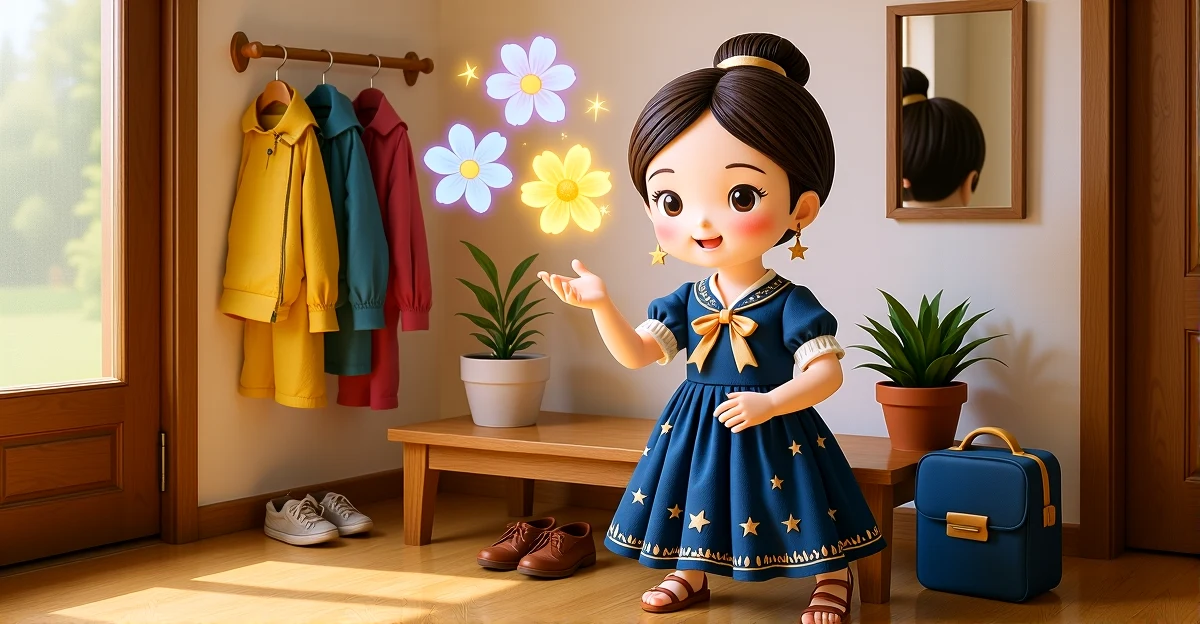
- Worry Flower Practice: Sit together and name the worry, then imagine it blooming into solution petals. What's one small thing that might help? What's another?
The Magic Book and I have seen these practices work beautifully. One family created a "kiss in the hand" ritual. Every morning, the parent would kiss the child's palm, and the child would close their hand to keep the kiss safe all day. Whenever they felt scared, they'd open their hand and feel that love.
A Story That Can Help
In The Book of Inara, we have a beautiful story that brings these concepts to life for your child in the most magical way:
The Center Where Hearts Are Heard
Perfect for: Ages 4-5
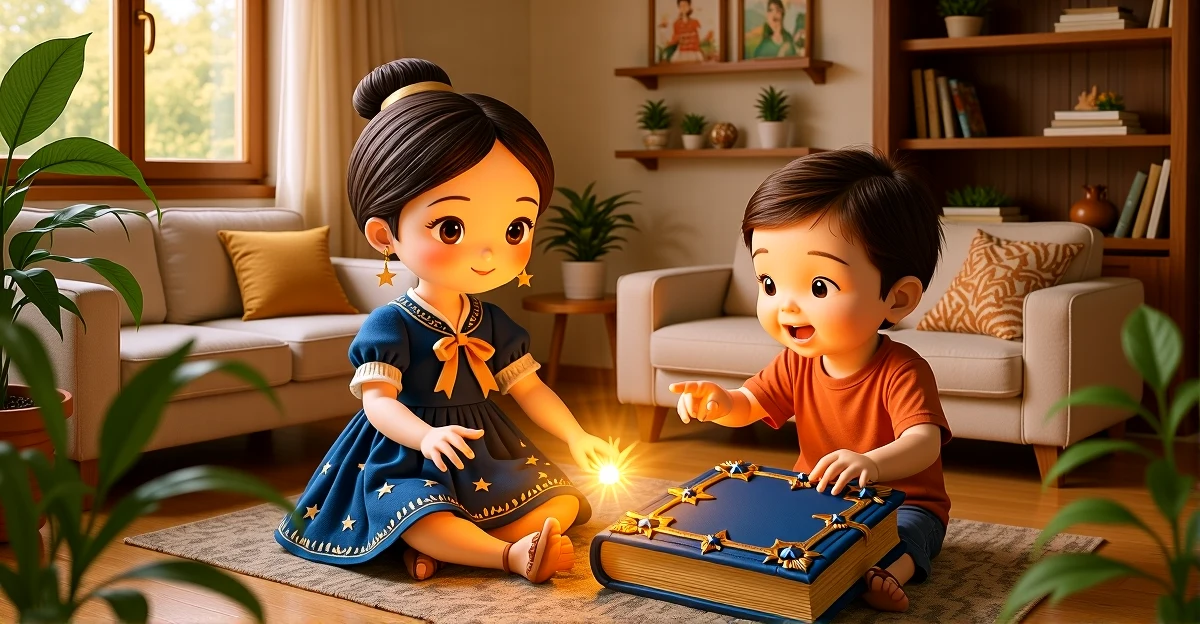
What makes it special: This story directly addresses the core challenge of overwhelming worry that manifests physically. Ethan and Sofia visit a magical advocacy center with Grandpa Ravi where worried feelings actually bloom into solution flowers. The story teaches that every problem has many creative answers waiting to be found.
Key lesson: When children discover that their worried feelings can bloom into solution flowers, they learn that anxiety and fear are not permanent states - they can be transformed into actionable solutions with support and creative thinking.
How to use it: After reading this story together, create your own worry flower ritual. Each morning before school, help your child name their worry. Then together, brainstorm solution petals - small steps that make the worry feel more manageable. Maybe one petal is "I'll bring my special stuffed animal." Another might be "Mom will pick me up right after snack time." Suddenly, this overwhelming feeling has steps, has solutions, has hope.
The Journey Takes Time (And That's Okay)
I want to talk about something really important. This journey takes time. Your child's anxiety won't disappear overnight. There will be hard mornings. There will be setbacks. And that's okay. That's normal. That's part of learning.
The research shows us that with consistent support, most children move through this phase beautifully. Their nervous systems learn that separation is safe. That you always come back. That they can handle big feelings. That school is a place where good things happen.
But it takes patience. It takes compassion. It takes you showing up, morning after morning, with love and consistency, even when it's hard.
You're Doing Beautifully
And here's what I need you to know, my wonderful friend. You are doing this. Right now, by reading this article, by seeking understanding, by wanting to help your child, you are being exactly the parent they need.
The Magic Book whispers this truth: The strongest love is patient love. The deepest care is consistent care. And the most powerful healing happens when a child knows, no matter how big my feelings get, my parent will stay calm, stay loving, and stay with me.
You are giving your child that gift every single day.
So be gentle with yourself. Be patient with your child. And trust that every morning you show up with love, you're teaching them the most important lesson of all: They are safe. They are loved. And they can do hard things.
The Magic Book and I are here with you, every step of the way. You've got this, my friend.
With love and starlight,
Inara
Related Articles
- Building Physical Confidence in Young Children: Gentle Movement Strategies for Ages 4-5
- Teaching Your 4-5 Year Old Peaceful Conflict Resolution: A Gentle Parenting Guide
- When Your Child Only Eats 3 Foods: Understanding ARFID in Young Children
- Building Confidence in Young Performers: A Gentle Guide for Ages 4-5
- When Your Child Says They're Stupid: Understanding Academic Anxiety in Young Learners
Show transcript
Hello, my wonderful friend. It's me, Inara, and I'm so glad you're here today. I want to wrap you in the warmest cosmic hug right now, because I know if you're watching this, mornings at your house might feel really, really hard.
Your child screams. They cry. Sometimes they even get physically sick before school. And you, beautiful parent, you're standing there feeling helpless, worried, and maybe even a little frustrated. You're wondering, is this normal? Am I doing something wrong? Will this ever get better?
Let me tell you something the Magic Book taught me, something I need you to hear with your whole heart. You are not doing anything wrong. Your child is not being difficult. And yes, this will get better.
What you're experiencing has a name. It's called separation anxiety, and when it shows up with physical symptoms like vomiting or intense distress, it's your child's nervous system sending out a signal that says, I need help feeling safe when we're apart.
Now, I know that might sound scary, but stay with me, because understanding what's really happening changes everything.
The research is so clear on this. About four percent of children experience separation anxiety disorder, and here's what's important. Seventy-five percent of those children show school refusal behaviors. That means if your child is struggling with this, they are absolutely not alone. This is one of the most common ways childhood anxiety shows up.
And those physical symptoms? Dr. Rachel Busman, a wonderful psychologist at the Child Mind Institute, says something so important. She says, anxiety does manifest in physical ways. Your child's symptoms are real. They're not making it up. They're not trying to manipulate you. Their body is genuinely responding to overwhelming feelings of fear and worry.
Think about it this way. When you feel really anxious, maybe your stomach gets tight, or your heart races, or you feel a little sick. That's your nervous system activating its stress response. Your child's nervous system is doing the exact same thing, but they're four or five years old. They don't have the words to say, Mom, Dad, I'm experiencing overwhelming anxiety about separation. So their body speaks for them.
The Magic Book showed me something beautiful about this. Every big feeling, every physical symptom, every tear, it's all communication. Your child is saying, I love you so much that being apart from you feels impossible right now. And that's not a problem to fix, my friend. That's a developmental stage to support.
Now, here's where it gets really hopeful. The research tells us that cognitive behavioral therapy, which is a gentle way of helping children face their fears step by step, works beautifully for this. Sixty percent of children respond to this approach. And when we combine it with lots of validation, consistent routines, and patient support, that number goes even higher.
So what does this look like in real life? How do you help your child through this?
First, validation. Every single morning, before anything else, you acknowledge what they're feeling. You might say, I can see your body is feeling really scared right now. That's okay. Those feelings are real, and I'm right here with you.
You're not saying, you're fine, stop crying. You're not saying, there's nothing to be scared of. Because to them, there IS something to be scared of. Separation feels genuinely frightening. When you validate that, you become their safe place.
Second, consistency. This is so important. Even though it's hard, even though they're crying, even though your heart is breaking, school still happens. Not as punishment, but because avoiding the thing that scares us makes the fear grow bigger. Gentle, consistent exposure, with lots of support, helps the fear shrink.
Think of it like learning to swim. You don't throw a child in the deep end. But you also don't keep them out of the water forever. You start in the shallow end, you hold their hand, you go slowly, and gradually, they learn that water is safe.
Third, coping strategies. This is where the magic happens. You teach your child little tools they can use when big feelings show up. Deep breathing. Counting to ten. Holding a special object that reminds them of you. Creating a goodbye ritual that's the same every single day.
The Magic Book and I have seen this work so beautifully. One family created a kiss in the hand ritual. Every morning, the parent would kiss the child's palm, and the child would close their hand to keep the kiss safe all day. Whenever they felt scared, they'd open their hand and feel that love.
Another family used a worry flower practice. They'd sit together and name the worry, then imagine it blooming into solution petals. What's one small thing that might help? What's another? And suddenly, this overwhelming feeling had shape, had solutions, had hope.
And this brings me to a story I want to share with you. It's called The Center Where Hearts Are Heard, and it's about Ethan and Sofia visiting a magical advocacy center with Grandpa Ravi. In this center, worried feelings actually bloom into solution flowers. Every problem has many creative answers waiting to be found.
When children hear this story, something shifts. They learn that worries are not permanent. Worries can transform. And there are always, always solutions, especially when we have people who love us helping us find them.
After you read this story with your child, you can create your own worry flower ritual. Each morning before school, help them name their worry. Then together, brainstorm solution petals. Maybe one petal is, I'll bring my special stuffed animal. Another petal might be, Mom will pick me up right after snack time. Another could be, I can tell my teacher if I feel scared.
Suddenly, this big, overwhelming feeling has steps. Has solutions. Has hope.
Now, I want to talk about something really important. This journey takes time. Your child's anxiety won't disappear overnight. There will be hard mornings. There will be setbacks. And that's okay. That's normal. That's part of learning.
The research shows us that with consistent support, most children move through this phase beautifully. Their nervous systems learn that separation is safe. That you always come back. That they can handle big feelings. That school is a place where good things happen.
But it takes patience. It takes compassion. It takes you showing up, morning after morning, with love and consistency, even when it's hard.
And here's what I need you to know, my wonderful friend. You are doing this. Right now, by watching this video, by seeking understanding, by wanting to help your child, you are being exactly the parent they need.
The Magic Book whispers this truth. The strongest love is patient love. The deepest care is consistent care. And the most powerful healing happens when a child knows, no matter how big my feelings get, my parent will stay calm, stay loving, and stay with me.
You are giving your child that gift every single day.
So here's what I want you to do. Tonight, or tomorrow morning, read The Center Where Hearts Are Heard together. Talk about the worry flowers. Create your own ritual. And then, step by step, morning by morning, walk this path together.
You can find this story and so many others in The Book of Inara. Every story is designed to help children understand their feelings, build courage, and know they're not alone.
And my friend, neither are you. The Magic Book and I, we're here with you. Thousands of parents are walking this same path. You're part of a beautiful community of people who love their children deeply and are learning, growing, and healing together.
This will get better. Your child will learn that they're safe. That you always come back. That they can handle hard things. And one day, maybe sooner than you think, mornings will feel lighter. The tears will be fewer. And you'll look back and see how far you've both come.
Until then, be gentle with yourself. Be patient with your child. And trust that every morning you show up with love, you're teaching them the most important lesson of all. They are safe. They are loved. And they can do hard things.
Sweet dreams, my wonderful friend. The Magic Book and I are always here for you.