
Your child freezes in the middle of the playground, caught between two friends who are arguing. You can see the confusion on their face as they try to figure out who is right, whose side to take, what the fair thing to do is. They know the basic rules, they understand right from wrong, but this situation? This feels impossibly complicated to their six or seven year old mind.
If this sounds familiar, wonderful parent, you are not alone. This is one of the most common challenges parents notice at this age, and here is the beautiful truth: your child is not struggling because something is wrong. They are struggling because something is SO right. Their brain is doing something absolutely amazing.
In this post, we will explore why complex moral situations challenge children at this age, what is happening in their developing brain, and most importantly, how you can support them with warmth, patience, and the right tools. This is not a problem to fix. This is growth to celebrate.
Understanding the Beautiful Complexity of This Age
At ages six and seven, your child is going through one of the most remarkable developmental leaps in their entire childhood. For years, they have been learning basic right and wrong. Do not hit. Share your toys. Tell the truth. Use kind words. These are clear, simple rules, and they have learned them beautifully.
But now, their growing brain is discovering something that even adults find challenging: real life is not always simple. Sometimes, the right answer depends on the situation. Sometimes, two people can both be a little bit right and a little bit wrong at the same time. Sometimes, being kind means different things in different moments.
According to research from child development experts, children at this age are transitioning from purely egocentric thinking to understanding that other people have completely different thoughts, feelings, and perspectives. Can you imagine how HUGE that cognitive leap is?
What Makes This Stage So Special
Your child is developing what researchers call theory of mind, the ability to understand that others have mental states different from their own. This is not just an academic concept. This is the foundation of empathy, of moral reasoning, of being able to navigate the beautifully complex social world we all live in.
At the same time, children this age have a very strong desire to please the important adults in their lives. They want to do things the right way. They want to make you proud. So when they encounter a situation where the right answer is not immediately clear, it can create real anxiety for them. They are thinking: what if I choose wrong? What if I disappoint someone I love?
What Research Tells Us About Moral Development
The research on moral development at this age is absolutely fascinating. Studies show that six and seven year olds are developing a much better understanding of cause and effect. They are beginning to see how their actions affect other people, though they can still seem self-focused at times.
Children at this age develop strong opinions about whether things are right or wrong and want to please important adults like parents and teachers. They become more aware of what others are doing, leading to comparisons and heightened sensitivity to fairness and justice.
Raising Children Network Australia, Child Development at 6-8 Years
Here is what makes complex situations SO challenging for them: multiple developmental processes must work together simultaneously. While they understand basic right and wrong, nuanced scenarios requiring consideration of intentions, context, competing values, and multiple perspectives strain their cognitive capacity.
Think about it this way. Your child is learning to juggle for the first time, and instead of balls, they are juggling perspectives, emotions, rules, empathy, and their own needs all at once. Sometimes, all those balls come tumbling down, and that is completely normal and healthy.
The Role of Empathy
Something else beautiful is happening at this age. Your child is developing empathy in deeper ways. They can feel when their friends are distressed. They can imagine how someone else might be feeling. Research shows they show genuine concern when family and friends are upset.
But they are still learning how to balance that empathy with fairness, with rules, with their own needs. It is like they have this wonderful new superpower of feeling what others feel, but they have not quite figured out how to use it yet. And that takes time, practice, and your gentle guidance.
Why Complex Situations Feel Impossible
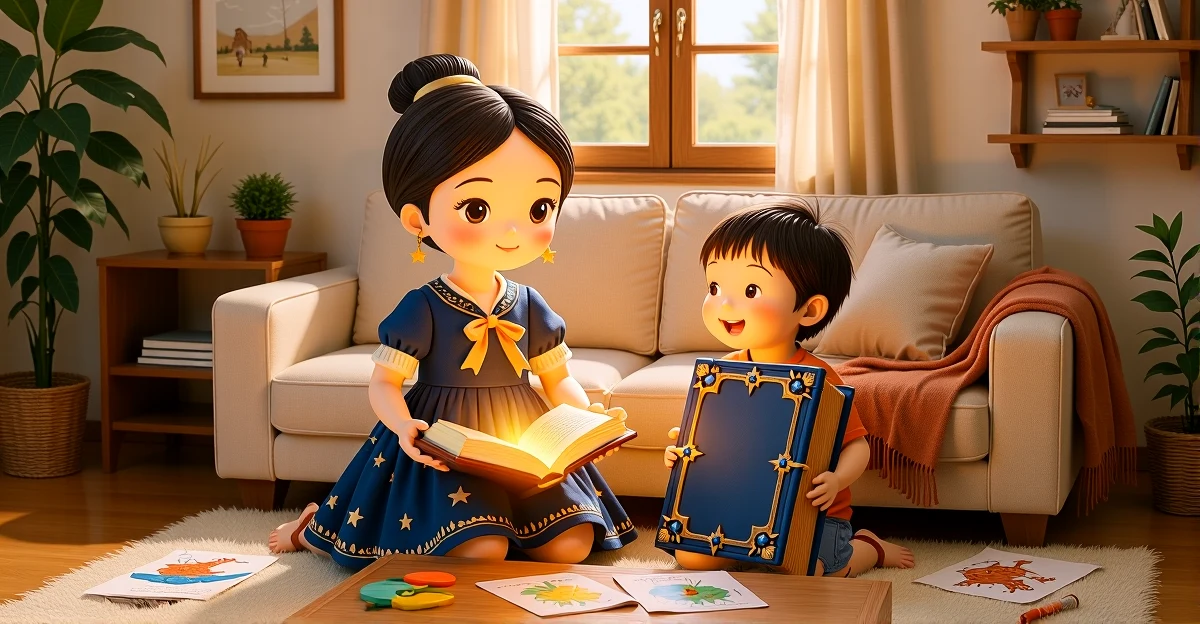
Let me share what the Magic Book taught me about why these situations feel so overwhelming for children this age. It is not just one thing. It is a perfect storm of developmental factors all happening at once.
Multiple Perspectives Are Hard Work
Your child is learning that their friend who took the toy might not have been trying to be mean. Maybe that friend did not see that someone else was playing with it first. Maybe they were having a hard day and made a mistake. Holding all of these possibilities in their mind at the same time? That is advanced cognitive work.
Context Changes Everything
They are also discovering that context matters. Telling the truth is important, but what if telling the truth will hurt someone feelings? Sharing is kind, but what if someone is not being respectful with your things? These contextual nuances are brand new territory for their developing brain.
The Desire to Please Creates Pressure
Add to this their strong desire to do the right thing and please you, and you can see why a complicated social situation can leave them frozen with indecision. They are not being difficult. They are experiencing cognitive overload while trying SO hard to make the right choice.
Gentle Strategies to Support Your Child
So how can we help our children navigate these beautifully complex moral waters? Here are strategies that work, grounded in both research and the wisdom of the Magic Book.
1. Validate Their Confusion
When your child comes to you struggling with a complicated situation, resist the urge to immediately tell them the right answer. Instead, try saying something like: This is a tricky situation, is it not? I can see why you are having trouble figuring this out.
That validation tells them that their struggle is normal, that complex situations are SUPPOSED to be confusing, and that you are there to help them think it through, not to judge them for not knowing instantly.
2. Ask Perspective-Taking Questions
Guide them gently to consider multiple viewpoints with questions like:
- How do you think Emma felt when that happened?
- What do you think Jacob was trying to do?
- If you were in their shoes, what would you want someone to do?
- Can you think of a reason why they might have acted that way?
These questions help them practice the skill of perspective-taking without you having to provide all the answers. You are teaching them HOW to think, not just WHAT to think.
3. Break It Down Into Smaller Parts
When everything feels tangled up, help them separate the different pieces. You might say: Okay, let us think about this step by step. What happened first? How did each person feel? What was each person trying to do? Were they trying to be hurtful, or did something else happen?
This scaffolding helps them develop the thinking skills they will use for the rest of their lives. You are essentially teaching them a process for moral reasoning that will serve them well into adulthood.
4. Share Your Own Thinking Process
When you face a tricky decision, let them hear how you work through it. You might say: I am not sure what the right thing to do is here. Let me think about it. I want to be fair to everyone, and I also want to be kind. What do you think would be the most caring choice?
This models that even adults have to think carefully about complex situations, and that is perfectly okay. It shows them that moral reasoning is a process, not an instant answer.
5. Use Stories as Practice Spaces
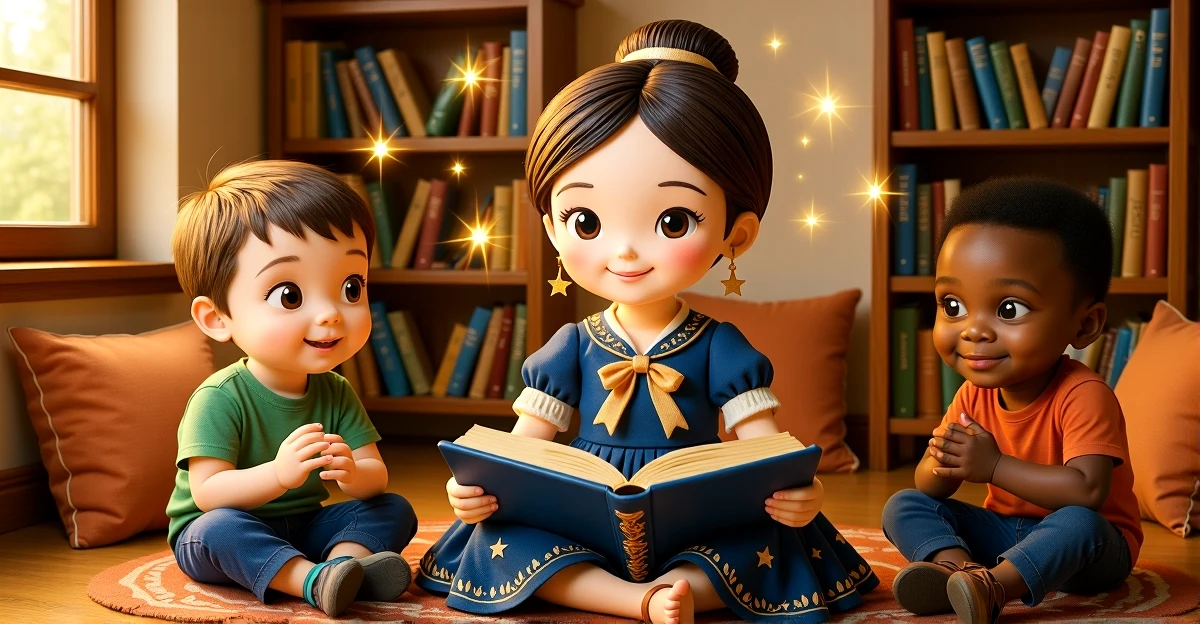
Here is something the Magic Book taught me that I absolutely love: stories are one of the most powerful tools we have for helping children practice moral reasoning in a safe space. When children hear stories about characters facing difficult choices, they can explore different perspectives and outcomes without the pressure of a real situation.
They can think about what they would do, what feels fair, what feels kind, all while snuggled up safely with you. Stories create a beautiful bridge between abstract moral concepts and concrete examples children can understand.
Stories That Can Help
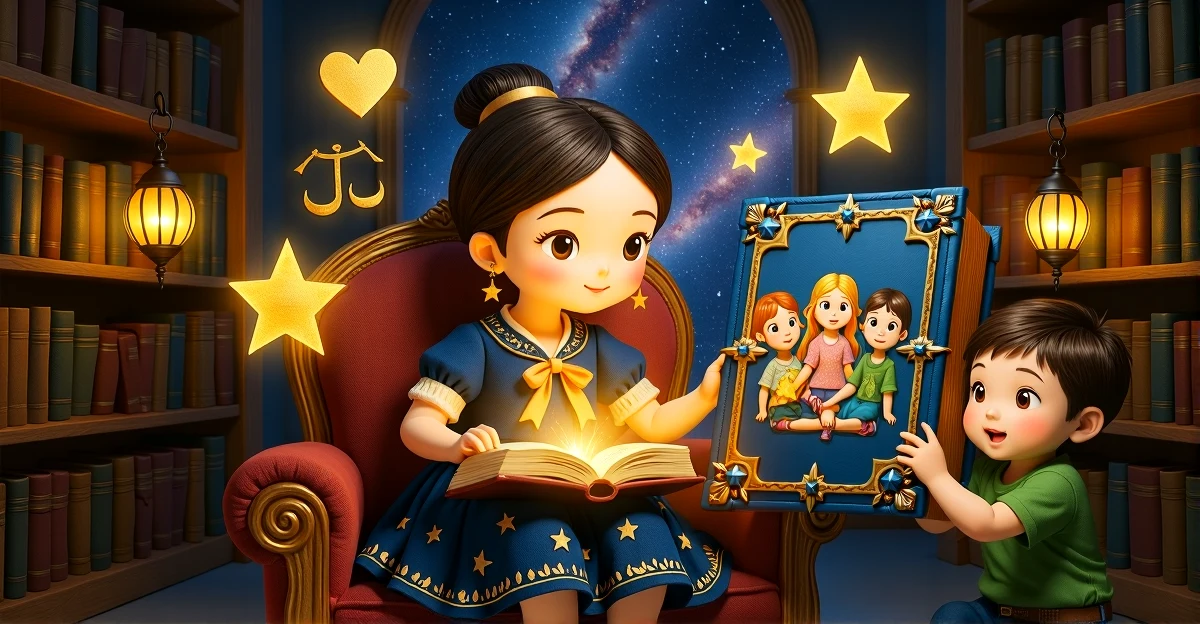
In The Book of Inara, we have beautiful stories that bring these concepts to life for your child. Let me share one that is especially perfect for this stage:
The Marble Voices of Ancient Athens
Perfect for: Ages 6-7
What makes it special: Lucas and Ella discover that ancient marble columns glow and echo with voices when children speak up for fairness. Through their magical adventure in ancient Athens, they learn about democracy, about listening to different perspectives, and about how speaking up for what is right matters even when situations are complicated.
Key lesson: This story beautifully demonstrates that moral decisions are not always simple, but that does not mean we should be afraid of them. It teaches children that making good choices often means listening to many voices, considering different viewpoints, and then having the courage to speak up for fairness.
Why it helps: The story provides a concrete example of moral reasoning in action. Children see Lucas and Ella grappling with complex questions about fairness and democracy, learning that complexity is not something to fear but something to navigate with thoughtfulness and care.
After you read this story together, you might ask your child: What would you do if you saw something unfair happening? How can we listen to everyone perspective before deciding what is right? These conversations, wonderful parent, are where the real learning happens.
You Are Doing Beautifully
I want you to know something important, wonderful parent. The fact that your child struggles with complex moral situations is not a sign that something is wrong. It is a sign that something is beautifully RIGHT.
It means their brain is growing. It means they are developing empathy. It means they care about fairness and kindness and doing the right thing. Those struggles you are seeing? They are the growing pains of a conscience being born. They are the beautiful evidence of a child learning to navigate the wonderfully complex world of human relationships.
Your child will not be consistent in this skill. Some days, they will show remarkably sophisticated moral reasoning. Other days, they will seem to regress to much simpler thinking. This is completely normal. They are consolidating these new abilities, and that takes time. Be patient with them. Be patient with yourself.
By being patient with their confusion, by asking thoughtful questions, by reading stories together that explore these themes, you are helping your child develop the moral reasoning skills they will carry with them for their entire life. You are teaching them that it is okay not to have all the answers immediately. You are showing them that thinking carefully about right and wrong is valuable work.
You are raising a thoughtful, empathetic human being. And that, my wonderful friend, is some of the most important work in the entire universe.
The Magic Book and I are always here for you, cheering you on. With love and starlight, Inara.
Related Articles
- How to Nurture Your Child's Empathy and World-Changing Impact (Ages 6-7)
- Nurturing Your Child Innovation Mindset: A Gentle Guide for Ages 6-7
- When Your Child Makes Insensitive Comments: A Gentle Guide to Teaching Cultural Awareness
- When Your Child Expresses Thoughts of Self-Harm: Getting Help Now
- Nurturing Purpose and Meaning in Young Children: A Gentle Guide for Parents
Show transcript
Hello, wonderful parent! It is me, Inara, and I am so happy you are here today. You know, the Magic Book and I have been noticing something beautiful happening with children around ages six and seven, and I want to talk with you about it today.
Have you ever watched your child freeze up when trying to figure out who is right in a complicated situation? Maybe two friends are arguing, and your child cannot decide whose side to take. Or perhaps they are struggling to understand why something that seems wrong in one situation might be okay in another. And you are wondering, why is this so hard for them? They know right from wrong, so why do complex situations leave them so confused?
First, let me tell you something WONDERFUL. You are not alone in this. This is one of the most common challenges parents notice at this age, and here is the beautiful truth. Your child is not struggling because something is wrong. They are struggling because something is RIGHT. Their brain is doing something absolutely amazing.
Let me explain what the Magic Book taught me about this magical age. At six and seven years old, your child is going through one of the most beautiful developmental leaps in their entire childhood. They are transitioning from seeing the world through just their own eyes to understanding that other people have completely different thoughts, feelings, and perspectives. Can you imagine how HUGE that is?
For years, your little one has been learning basic right and wrong. Do not hit. Share your toys. Tell the truth. These are clear, simple rules, and they have learned them beautifully. But now, their growing brain is discovering something that even adults find challenging. Real life is not always simple. Sometimes, the right answer depends on the situation. Sometimes, two people can both be a little bit right and a little bit wrong at the same time. Sometimes, being kind means different things in different moments.
This is what researchers call theory of mind, and it is developing rapidly right now in your child. They are learning that their friend who took the toy might not have been trying to be mean. Maybe that friend did not see that someone else was playing with it first. They are learning that the child who said something hurtful might have been feeling hurt themselves. They are beginning to hold multiple perspectives in their mind at once, and wonderful parent, that is HARD work for a developing brain.
Here is what makes this even more complex. At this age, children also have a very strong desire to please the important adults in their lives. They want to do things the right way. They want to make you proud. So when they encounter a situation where the right answer is not clear, it can create real anxiety for them. They are thinking, what if I choose wrong? What if I disappoint someone I love?
The Magic Book showed me something else that is so important to understand. Your child is also developing empathy in deeper ways now. They can feel when their friends are distressed. They can imagine how someone else might be feeling. But they are still learning how to balance that empathy with fairness, with rules, with their own needs. It is like they are learning to juggle for the first time, and sometimes, all the balls come tumbling down.
So what can we do to help? How can we support our children as they navigate these beautifully complex moral waters?
First, validate their confusion. When your child comes to you struggling with a complicated situation, resist the urge to immediately tell them the right answer. Instead, try saying something like, this is a tricky situation, is it not? I can see why you are having trouble figuring this out. That validation tells them that their struggle is normal, that complex situations are supposed to be confusing, and that you are there to help them think it through, not to judge them for not knowing.
Second, ask questions that help them practice perspective taking. Try questions like, how do you think Emma felt when that happened? What do you think Jacob was trying to do? If you were in their shoes, what would you want someone to do? These questions gently guide them to consider multiple viewpoints without you having to provide all the answers.
Third, break complex situations into smaller parts. When everything feels tangled up, help them separate the different pieces. We can say, okay, let us think about this step by step. What happened first? How did each person feel? What was each person trying to do? Were they trying to be hurtful, or did something else happen? This scaffolding helps them develop the thinking skills they will use for the rest of their lives.
Fourth, share your own thinking process. When you face a tricky decision, let them hear how you work through it. You might say, I am not sure what the right thing to do is here. Let me think about it. I want to be fair to everyone, and I also want to be kind. What do you think would be the most caring choice? This models that even adults have to think carefully about complex situations, and that is okay.
And here is something the Magic Book taught me that I absolutely love. Stories are one of the most powerful tools we have for helping children practice moral reasoning in a safe space. When children hear stories about characters facing difficult choices, they can explore different perspectives and outcomes without the pressure of a real situation. They can think about what they would do, what feels fair, what feels kind, all while snuggled up safely with you.
We have a story in The Book of Inara that I think might be especially helpful for this. It is called The Marble Voices of Ancient Athens, and it follows Lucas and Ella as they discover something magical. When children speak up for fairness, ancient marble columns glow and echo with voices. Through their adventure, they learn about democracy, about listening to different perspectives, and about how speaking up for what is right matters, even when situations are complicated.
What I love about this story is that it shows children that moral decisions are not always simple, but that does not mean we should be afraid of them. Lucas and Ella learn that making good choices often means listening to many voices, considering different viewpoints, and then having the courage to speak up for fairness. It is such a beautiful way to help children understand that complexity is not something to fear. It is something to navigate with thoughtfulness and care.
After you read this story together, you might ask your child, what would you do if you saw something unfair happening? How can we listen to everyone before deciding what is right? These conversations, wonderful parent, are where the real learning happens. Not in having all the answers, but in practicing the thinking together.
I also want to remind you of something important. Your child will not be consistent in this skill. Some days, they will show remarkably sophisticated moral reasoning. Other days, they will seem to regress to much simpler thinking. This is completely normal. They are consolidating these new abilities, and that takes time. Be patient with them. Be patient with yourself.
And please, please know this. The fact that your child struggles with complex moral situations is not a sign that something is wrong. It is a sign that something is beautifully right. It means their brain is growing. It means they are developing empathy. It means they care about fairness and kindness and doing the right thing. Those struggles you are seeing? They are the growing pains of a conscience being born.
You are doing such important work, wonderful parent. By being patient with their confusion, by asking thoughtful questions, by reading stories together that explore these themes, you are helping your child develop the moral reasoning skills they will carry with them for their entire life. You are teaching them that it is okay not to have all the answers immediately. You are showing them that thinking carefully about right and wrong is valuable work. You are raising a thoughtful, empathetic human being.
The Magic Book and I are always here for you, cheering you on. You have got this, and your child has got this too. With time, patience, and lots of practice, they will learn to navigate even the trickiest moral waters with confidence and care.
Sweet dreams and thoughtful days, my wonderful friend. Until our next adventure together. With love and starlight, Inara.