
Your child comes home from school, and when you ask about their day, they shrug. When it is time for homework, they do the absolute minimum. And when you try to spark their curiosity about learning something new, they just are not interested.
If this sounds familiar, I want you to know something really important right now. You are not alone in this. This is one of the MOST common concerns parents of six and seven year olds share with me and the Magic Book. And here is what is even more important: this does not mean your child is lazy. It does not mean they lack intelligence. And it absolutely does not mean you are doing anything wrong.
In this guide, we are going to explore the beautiful truth about what is really happening when children seem unmotivated. We will discover what research from places like Harvard and leading neuroscientists tells us about intrinsic motivation. And I will share gentle, practical strategies that actually work, plus a magical story that can help your child rediscover the joy of curiosity.
Understanding What Is Really Happening
Let me share something WONDERFUL that the Magic Book taught me, something that research confirms again and again. Your child's curiosity is not gone. It is still there, shimmering like stardust inside them. But right now, it is waiting for something specific. It is waiting for the right kind of environment to sparkle again.
You see, children at ages six and seven are going through such an important developmental phase. Their brains are learning how motivation actually works. They are transitioning from the pure wonder of early childhood to a more complex understanding of effort, achievement, and self-determination. And during this transition, what looks like a lack of motivation is often something completely different.
The Neuroscience of Motivation
Here is the fascinating part. Research shows that intrinsic motivation, that beautiful inner drive to learn, is mediated by something called dopamine pathways in the brain. And the strongest predictor of whether those pathways light up? Autonomy. Choice. The feeling that they have some control over their own learning journey.
Dr. Betsy Ng, a researcher who studies the neuroscience of motivation at the National Institute of Education, found that autonomy is the key substrate to intrinsic motivation. What that means in everyday language is this: when your child feels like they have some say in what they are learning and how they are learning it, their brain literally lights up differently. They become more engaged, more curious, more willing to put in effort.
Think about it this way. When we were children, remember how magical it felt to discover something on our own? To follow our curiosity down a winding path and find something AMAZING at the end? That is what your child's brain is craving right now. Not more worksheets. Not more pressure. But more opportunities to explore what genuinely interests them.
What Research Tells Us About Nurturing Curiosity
The Center on the Developing Child at Harvard University has done beautiful research on how to motivate children, and their findings are SO hopeful. They discovered that children are more motivated when they have some degree of self-determination and can elect to pursue tasks that are personally meaningful to them.
Children are motivated when they have some degree of self-determination and can elect to pursue tasks that are personally meaningful.
— Center on the Developing Child at Harvard University
The National Academies of Sciences did research showing that secure attachment relationships and play-based exploration are foundational to intellectual curiosity at this age. What does that mean for you? It means that the connection you have with your child, the warmth and safety they feel with you, that is actually the FOUNDATION for their curiosity to bloom.
The Power of Process-Focused Praise
Here is something else the research shows, and I think this is SO important. When children receive what scientists call process-focused praise rather than outcome-focused praise, they develop what is called a growth mindset.
Instead of saying "you are so smart," we can say "I noticed how hard you worked on that," or "I love how you kept trying different strategies." This helps children see that their effort matters more than just getting the right answer. And when children believe that effort leads to growth, they are much more willing to engage with challenging tasks.
As Harvard researchers note, when we praise children for their effort rather than outcome, they will be more likely to believe that they can achieve what they put their mind to. This is not just feel-good advice. This is neuroscience showing us how to help children's brains develop resilience and sustained engagement.
Gentle Strategies That Actually Work
So what can we do? How can we help that beautiful curiosity sparkle again? Here are strategies backed by research and sprinkled with the Magic Book's wisdom:
1. Follow Their Lead
If your child shows even the tiniest interest in something, anything, honor that. Maybe they are fascinated by how ants work together. Or maybe they love dinosaurs. Or maybe they are curious about how music is made. Whatever it is, that is your doorway. That is where their intrinsic motivation is already glowing, just waiting for you to notice.
When you follow their interests, you are not being permissive or letting them avoid important learning. You are actually teaching them that their curiosity matters, that their interests are valid, and that learning can be joyful. These lessons are MORE important than any specific fact they might memorize.
2. Give Them Meaningful Choices
Not overwhelming choices, but meaningful ones. Instead of saying "do your homework now," you might say "would you like to do your math first or your reading first?" Or "would you like to work at the table or on the floor?" These small choices give them that sense of autonomy their brain is craving.
Research shows that even small amounts of choice can significantly increase motivation and engagement. When children feel they have some control over their learning environment, they are more likely to invest effort and persist through challenges.
3. Make Learning Feel Like Play
Research shows that play is intrinsically motivating. It presents opportunities for novel experiences and learning from others. When learning feels like an adventure, like a treasure hunt, like a game, children's natural curiosity emerges.
This does not mean you have to turn everything into a game. But it does mean looking for ways to add elements of exploration, discovery, and joy to learning experiences. Can math become a cooking adventure? Can reading become a treasure map to new worlds? Can science become a detective investigation?
4. Create Question Games
Make curiosity itself rewarding. When your child asks a question, any question, celebrate it. You could even create a special ritual where every curious question unlocks a small surprise or leads to a mini adventure together.
Maybe you create a question jar, where you collect wonderful questions and pick one to explore each week. Maybe you go on question adventures together, where you both wonder about something and then explore it together. The key is helping children experience curiosity as inherently rewarding, not as something they do to please us or to get a grade.
5. Shift to Effort-Based Encouragement
Notice and celebrate the process, not just the outcome. "I saw you working really hard on that puzzle," "I noticed you tried three different ways to solve that problem," "I love how you kept going even when it was tricky." This kind of encouragement helps children develop intrinsic motivation because it focuses on what they can control: their effort and strategies.
Stories That Can Help
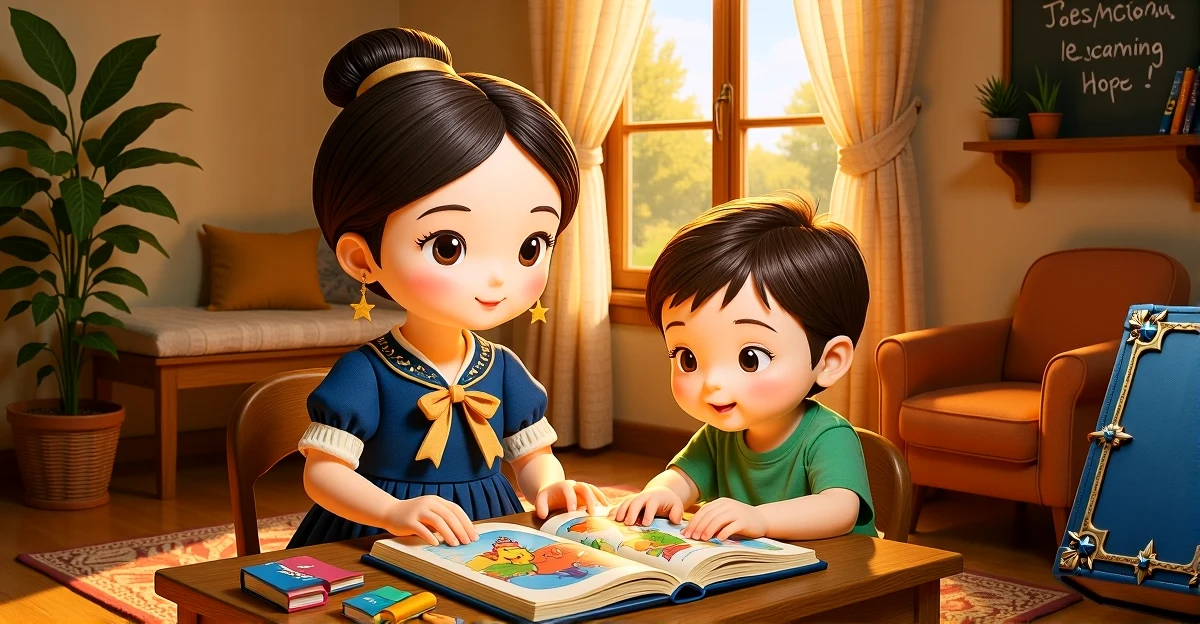
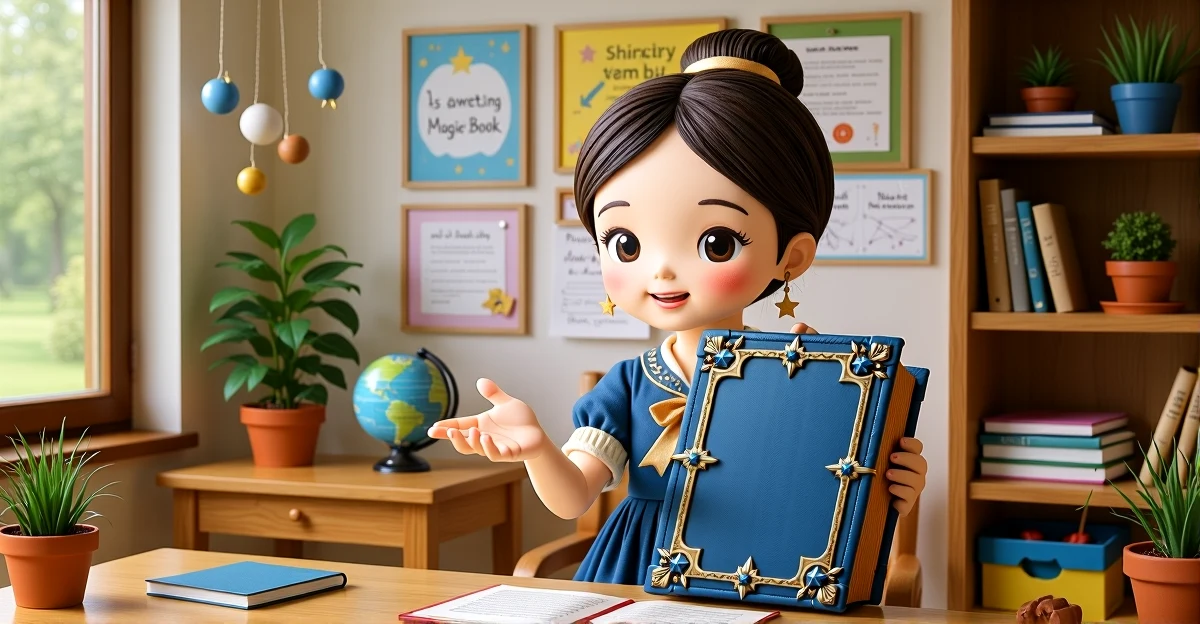
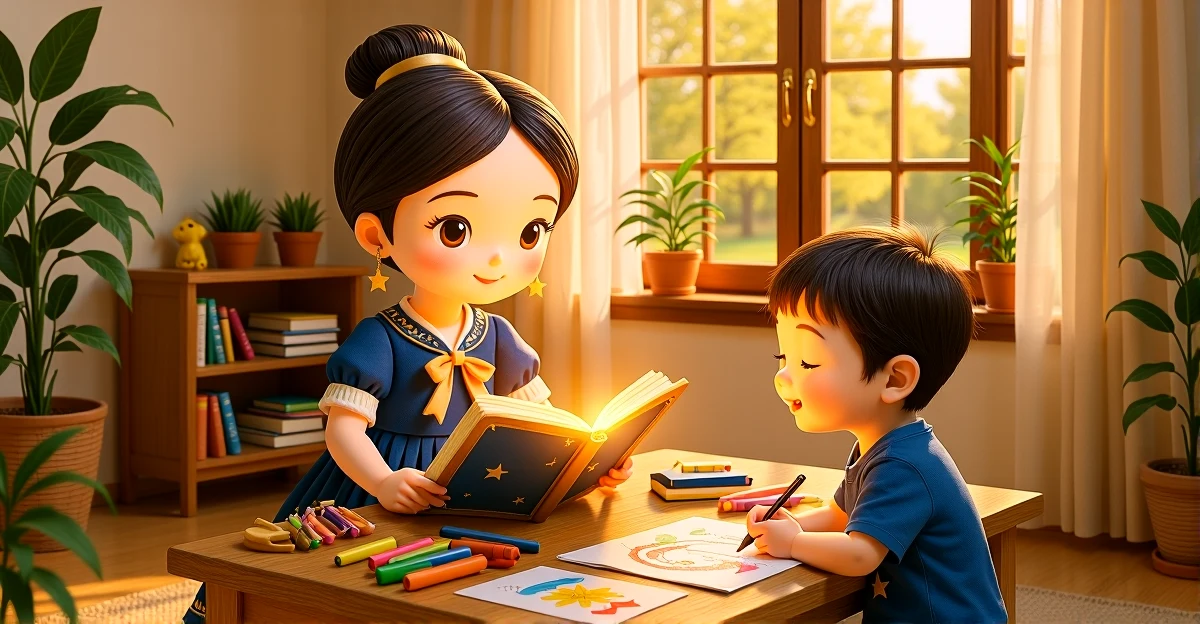
In The Book of Inara, we have beautiful stories that bring these concepts to life for your child. Let me tell you about one that the Magic Book and I created specifically for moments like this:
The Giggling Gallery of Forgotten Questions
Perfect for: Ages 6-7
What makes it special: This story is about two wonderful friends named Lucas and Ella who discover something absolutely MAGICAL. They find this archive, this special place, where old photographs actually giggle when you ask them the right questions. Can you imagine? And every question they ask unlocks more mysteries, more discoveries, more delightful surprises.
Key lesson: The story shows children that curiosity itself is the adventure. That asking questions is not a chore, it is a treasure hunt. When Lucas and Ella discover that each question makes the photographs giggle and reveals new mysteries, children watching or listening learn something beautiful. They learn that curiosity itself is rewarding. That wondering about things, asking questions, exploring ideas, that is where the magic lives.
How to use it: After you experience this story with your child, you might try creating your own question games at home. Maybe every curious question your child asks unlocks a small surprise. Maybe you go on question adventures together, where you both wonder about something and then explore it together.
You Are Doing Beautifully
Here is what I want you to remember, wonderful parent. Your child's apparent lack of motivation right now? It is not permanent. It is not a character flaw. It is actually their brain telling you something important. It is saying, I need more autonomy. I need more choice. I need learning to feel meaningful and connected to my interests.
The research is SO clear on this. When children experience autonomy, when they have supportive relationships, when they receive effort-based encouragement rather than outcome-based pressure, their intrinsic motivation flourishes. It blooms like a flower opening to starlight.
You are doing such important work, my wonderful friend. By being here, by seeking to understand your child better, by wanting to nurture their curiosity rather than force it, you are already giving them exactly what they need. You are creating that safe, supportive environment where their natural love of learning can emerge again.
The Magic Book and I believe in you. We believe in your child. And we believe in the beautiful journey of discovery you are on together.
With love and starlight,
Inara
Related Articles
- How to Nurture Your Child's Empathy and World-Changing Impact (Ages 6-7)
- Nurturing Your Child Innovation Mindset: A Gentle Guide for Ages 6-7
- When Your Child Makes Insensitive Comments: A Gentle Guide to Teaching Cultural Awareness
- When Your Child Expresses Thoughts of Self-Harm: Getting Help Now
- Nurturing Purpose and Meaning in Young Children: A Gentle Guide for Parents
Show transcript
Hello, wonderful parent! It's me, Inara, and I am so happy you're here today. You know, the Magic Book and I have been noticing something that many parents are experiencing right now. Maybe you're experiencing it too. Your child comes home from school, and when you ask about their day, they shrug. When it's time for homework, they do the absolute minimum. And when you try to spark their curiosity about learning something new, they just... aren't interested.
And I want you to know something really important right now. You are not alone in this. This is one of the MOST common concerns parents of six and seven year olds share with me. And here's what's even more important. This doesn't mean your child is lazy. It doesn't mean they lack intelligence. And it absolutely doesn't mean you're doing anything wrong.
Let me share something WONDERFUL that the Magic Book taught me, something that research from places like Harvard's Center on the Developing Child confirms. Your child's curiosity isn't gone. It's still there, shimmering like stardust inside them. But right now, it's waiting for something specific. It's waiting for the right kind of environment to sparkle again.
You see, children at this age are going through such an important developmental phase. Their brains are learning how motivation actually works. And here's the fascinating part. Research shows that intrinsic motivation, that beautiful inner drive to learn, is mediated by something called dopamine pathways in the brain. And the strongest predictor of whether those pathways light up? Autonomy. Choice. The feeling that they have some control over their own learning journey.
Think about it this way. When we were children, remember how magical it felt to discover something on our own? To follow our curiosity down a winding path and find something AMAZING at the end? That's what your child's brain is craving right now. Not more worksheets. Not more pressure. But more opportunities to explore what genuinely interests them.
The National Academies of Sciences did this beautiful research showing that secure attachment relationships and play-based exploration are foundational to intellectual curiosity at this age. What does that mean for you? It means that the connection you have with your child, the warmth and safety they feel with you, that's actually the FOUNDATION for their curiosity to bloom.
Here's something else the research shows, and I think this is so important. When children receive what scientists call process-focused praise rather than outcome-focused praise, they develop what's called a growth mindset. Instead of saying, you're so smart, we can say, I noticed how hard you worked on that, or, I love how you kept trying different strategies. This helps children see that their effort matters more than just getting the right answer.
Dr. Betsy Ng, a researcher who studies the neuroscience of motivation, found that autonomy is the key substrate to intrinsic motivation. What that means in everyday language is this. When your child feels like they have some say in what they're learning and how they're learning it, their brain literally lights up differently. They become more engaged, more curious, more willing to put in effort.
So what can we do? How can we help that beautiful curiosity sparkle again?
First, follow their lead. If your child shows even the tiniest interest in something, anything, honor that. Maybe they're fascinated by how ants work together. Or maybe they love dinosaurs. Or maybe they're curious about how music is made. Whatever it is, that's your doorway. That's where their intrinsic motivation is already glowing, just waiting for you to notice.
Second, give them choices. Not overwhelming choices, but meaningful ones. Instead of saying, do your homework now, you might say, would you like to do your math first or your reading first? Or, would you like to work at the table or on the floor? These small choices give them that sense of autonomy their brain is craving.
Third, make learning feel like play. Research shows that play is intrinsically motivating. It presents opportunities for novel experiences and learning from others. When learning feels like an adventure, like a treasure hunt, like a game, children's natural curiosity emerges.
And fourth, this is so important, create question games. Make curiosity itself rewarding. When your child asks a question, any question, celebrate it. You could even create a special ritual where every curious question unlocks a small surprise or leads to a mini adventure together.
Now, let me tell you about a story that the Magic Book and I created specifically for moments like this. It's called The Giggling Gallery of Forgotten Questions, and it's about two wonderful friends named Lucas and Ella who discover something absolutely MAGICAL.
They find this archive, this special place, where old photographs actually giggle when you ask them the right questions. Can you imagine? And every question they ask unlocks more mysteries, more discoveries, more delightful surprises. The story shows children that curiosity itself is the adventure. That asking questions isn't a chore, it's a treasure hunt.
When Lucas and Ella discover that each question makes the photographs giggle and reveals new mysteries, children watching or listening learn something beautiful. They learn that curiosity itself is rewarding. That wondering about things, asking questions, exploring ideas, that's where the magic lives.
After you experience this story with your child, you might try creating your own question games at home. Maybe every curious question your child asks unlocks a small surprise. Maybe you go on question adventures together, where you both wonder about something and then explore it together. Maybe you create a question jar, where you collect wonderful questions and pick one to explore each week.
The key is this. We want to help children experience curiosity as inherently rewarding, not as something they do to please us or to get a grade. We want them to feel that beautiful spark of wonder that comes from discovering something new.
And here's what I want you to remember, wonderful parent. Your child's apparent lack of motivation right now? It's not permanent. It's not a character flaw. It's actually their brain telling you something important. It's saying, I need more autonomy. I need more choice. I need learning to feel meaningful and connected to my interests.
The research is so clear on this. When children experience autonomy, when they have supportive relationships, when they receive effort-based encouragement rather than outcome-based pressure, their intrinsic motivation flourishes. It blooms like a flower opening to starlight.
You're doing such important work, my friend. By being here, by seeking to understand your child better, by wanting to nurture their curiosity rather than force it, you're already giving them exactly what they need. You're creating that safe, supportive environment where their natural love of learning can emerge again.
The Magic Book and I believe in you. We believe in your child. And we believe in the beautiful journey of discovery you're on together. Find The Giggling Gallery of Forgotten Questions in The Book of Inara, and let it be a gentle companion on this journey.
With love and starlight, Inara.