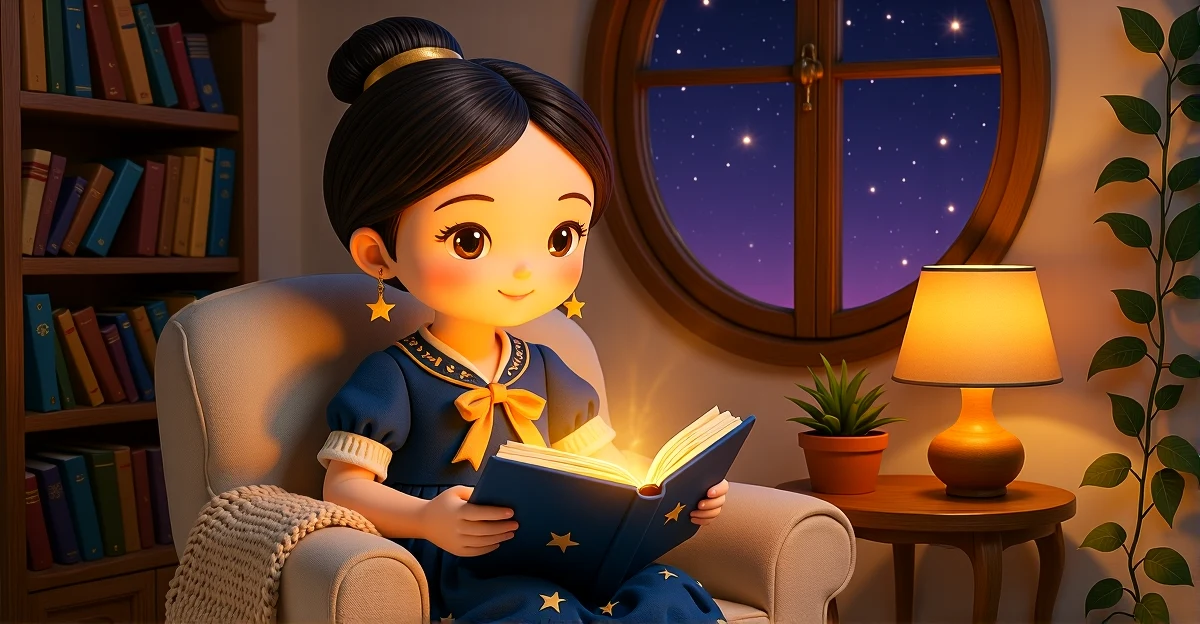

Hello, my wonderful friend! If your child seems to be doing just the minimum required at school, showing little interest in learning, I want you to know something right from the start. You are not alone in this. I see you. I know how worrying this can feel, and I am here to share something WONDERFUL with you today that might completely change how you see this situation.
That lack of interest? It is not laziness. It is not your child being difficult. What you are seeing is actually your child's way of telling you something really important. They are saying, Learning does not feel joyful to me right now. And you know what? That is completely normal, and there is so much we can do to help.
In this article, we will explore what is really happening when your child shows minimal engagement with learning, what research tells us about motivation in young children, and gentle, practical strategies to reignite that natural spark of curiosity. We will also discover a beautiful story from The Book of Inara that can help your child reconnect with the joy of learning.
Understanding What Is Really Happening
Children aged five and six are in this incredible developmental phase where their natural curiosity can either flourish or go quiet, depending on their experiences. And here is what the Magic Book taught me, and it is BEAUTIFUL. When children are given agency in their learning, when they get to make choices and pursue topics that feel meaningful to them, their motivation increases dramatically.
Think about it this way. Imagine if someone told you that you had to spend your days doing tasks that felt completely disconnected from anything you cared about, with no choice in the matter. You would probably do the minimum too, right? Our children are the same way. They are not being difficult. They are responding naturally to learning that feels like a chore instead of an adventure.
The Difference Between Intrinsic and Extrinsic Motivation
When your child was younger, you probably noticed them exploring everything with wonder. They wanted to know how things worked, why the sky is blue, where butterflies go at night. That was intrinsic motivation, the natural drive to learn that comes from within. It is joyful, self-directed, and deeply satisfying.
But when learning becomes about completing worksheets, earning stickers, or avoiding consequences, we shift to extrinsic motivation. And while external rewards can work in the short term, they actually dim that natural spark of curiosity over time. Your child is not broken. They are responding exactly as research would predict when learning stops feeling meaningful.
What Research Tells Us About Learning Motivation
Here is what research from child development experts tells us, and this is SO important. Studies from the National Association for the Education of Young Children reveal that playful learning approaches, which harness children's innate drive to experiment and explore, lead to significantly deeper engagement than rigid, teacher-directed instruction.
Playful learning leverages children's natural curiosity and their proclivities to experiment, explore, problem solve, and stay engaged in meaningful activities.
— Jennifer M. Zosh, Caroline Gaudreau, Roberta Michnick Golinkoff, Kathy Hirsh-Pasek, NAEYC
The research emphasizes that what may appear as lack of interest is often a child's response to learning experiences that feel disconnected from their sense of purpose and belonging. When children are taught primarily through memorization and rote learning, they can fall more than a year behind children who learn by relating concepts to their existing knowledge and interests.
But here is the hopeful part. The NAEYC position statement on developmentally appropriate practice notes that children's motivation to learn increases when their learning environment fosters their sense of belonging, purpose, and agency. Opportunities for agency must be widely available for all children, not limited as a reward after completing other tasks.
The Critical Role of Agency
Agency means that your child gets to have a say in what they learn and how they learn it. It means their choices matter, their interests are valued, and their curiosity is honored. Research shows that when children have agency, they see themselves as capable learners whose ideas matter. And when learning feels like it belongs to them, rather than something being done to them, their natural motivation flourishes.
Gentle Strategies to Reignite Learning Motivation
So what can we do? How do we help our children find that spark again? Let me share some WONDERFUL strategies that are backed by research and aligned with gentle parenting principles.
1. Bring Back Playful Learning
Research shows that when children learn through play, through guided exploration where they still have agency and choice, they learn more deeply than through direct instruction alone. You can do this at home, even when your child has homework to complete.
Instead of just sitting down to do a math worksheet, you might say, Hey, I noticed you are learning about addition. What if we counted all your toy cars and then figured out how many more you would need to have twenty? Or if your child is learning to read, let them choose books about topics they love, even if it is dinosaurs for the hundredth time.
The key is connecting the learning they need to do with topics and activities that already spark their interest. You are not lowering standards. You are making learning feel joyful and meaningful again.
2. Focus on Belonging and Purpose
Children need to feel that their learning environment is a place where they belong, where their ideas matter, where they can see themselves. You can create this at home through the questions you ask and the conversations you have.
Instead of asking, Did you finish your homework? try asking, What did you discover today? or What are you curious about right now? Notice how that question is different. You are shifting the focus from completion to curiosity, from performance to exploration.
When your child feels that their curiosity matters, that their discoveries are valued, their natural motivation starts to come back. You are showing them that learning is not about getting things done. It is about growing, discovering, and becoming.
3. Celebrate the Process, Not Just Outcomes
Every attempt your child makes, every time they try something, that is growth. That is their brain getting stronger. And we want to help them see that. Instead of saying, Good job! you might say, I noticed you tried three different ways to solve that problem. That shows such creative thinking! or I saw you working really hard on that drawing. Tell me about your process.
You are noticing the effort, the strategy, the thinking, not just the result. This helps your child value the learning itself, not just getting it done. It shows them that mistakes and attempts are all part of the beautiful journey of learning.
4. Follow Their Curiosity
Have a conversation with your child about what they wonder about. What questions do they have? What are they curious about? Write these down. These are your starting points for making learning feel meaningful again.
If your child is fascinated by bugs, bring bugs into math problems. If they love stories, let them write their own. If they are curious about space, connect reading and science to astronomy. When learning connects to what they care about, that spark comes back.
5. Create a Different Experience at Home
If your child is in a school environment that is very rigid, very focused on worksheets and test prep, this can be challenging. You might not be able to change the school, but you can create a different experience at home. You can be the place where learning feels joyful again. You can be the one who asks, What are you curious about today? instead of Did you do your homework?
The research is so clear on this. Playful learning, where children have choice and agency, where they can explore topics that matter to them, leads to deeper understanding and stronger motivation. And the beautiful thing is, you do not need special materials or expensive programs. You just need to follow your child's curiosity and support their natural love of discovery.
Stories That Can Help
In The Book of Inara, we have beautiful stories that bring these concepts to life for your child. Let me share one that I think will resonate deeply with what we have been talking about.
The Learning Voyage
Perfect for: Ages 4-5 (appropriate for 5-6 year olds as well)
What makes it special: In this story, Ethan and Sofia discover a magical cruise ship where every mistake becomes a wonderful learning experiment. The ship has cozy spaces that remember and celebrate each attempt at trying something new. This story directly addresses learning motivation by showing children that mistakes and attempts are valuable parts of the learning journey.
Key lesson: When the children discover that the ship remembers and celebrates each attempt at trying something new, young readers learn that the process of learning matters more than perfect outcomes. They begin to see their own efforts as valuable, helping them reconnect with the joy of discovery.
How to use it: After you read this story together, you might say, You know what? Your brain is like that learning ship. Every time you try something, even if it feels hard, your brain is growing and learning. What did you discover today? This helps shift the focus from completion to curiosity, from performance to exploration.
You Are Doing Beautifully
My wonderful friend, I want you to remember something important. Your child is not broken. They are not lazy. They are not difficult. They are a natural learner whose curiosity has gone quiet because learning has not felt joyful. But that spark is still there, waiting to be reignited. And you, with your love and patience and willingness to follow their lead, you can help that spark grow into a flame.
The strategies we have talked about today, bringing back playful learning, focusing on belonging and purpose, celebrating the process, following their curiosity, these are not quick fixes. They are a gentle, loving approach to helping your child reconnect with their natural love of learning. And the beautiful thing is, as you do this work, you are not just helping them with school. You are showing them that learning can be joyful, that their ideas matter, and that they are capable of amazing things.
The Magic Book and I believe in you. We believe in your child. And we know that when learning feels like an adventure instead of a chore, when children have agency and choice and connection, their natural love of discovery comes flooding back.
May your days be filled with stardust and wonder, and may your child's curiosity shine bright once more.
With love and starlight,
Inara
Related Articles
- When Screen Time Ends in Meltdowns: Understanding Your Child's Brain and What Actually Helps (Ages 5-6)
- When Your Child Has Given Up on Learning: Understanding Learning Shutdown
- Teaching Financial Wisdom to Your 5-6 Year Old: A Gentle Guide to Money and Economics
- Understanding Your Child Developing Goal-Setting Abilities (Ages 5-6)
- Why Your Child Lives in the Present Moment (And How to Nurture Future-Thinking)
Show transcript
Hello, my wonderful friend! Its me, Inara, and I am SO happy youre here today. You know, the Magic Book and I have been noticing something that many parents are experiencing, and I want you to know right from the start that youre not alone in this. If your child seems to be doing just the minimum required at school, showing little interest in learning, I see you. I know how worrying this can feel, and I want to share something WONDERFUL with you today that might completely change how you see this situation.
First, let me tell you what the Magic Book showed me. That lack of interest? Its not laziness. Its not your child being difficult. What youre seeing is actually your childs way of telling you something really important. Theyre saying, Learning doesnt feel joyful to me right now. And you know what? Thats completely normal, and theres so much we can do to help.
Heres what the research tells us, and this is BEAUTIFUL. Children aged five and six are in this incredible developmental phase where their natural curiosity can either flourish or go quiet, depending on their experiences. And heres the key insight from experts at the National Association for the Education of Young Children. When children are given agency in their learning, when they get to make choices and pursue topics that feel meaningful to them, their motivation increases dramatically.
Think about it this way. Imagine if someone told you that you had to spend your days doing tasks that felt completely disconnected from anything you cared about, with no choice in the matter. Youd probably do the minimum too, right? Our children are the same way. Theyre not being difficult. Theyre responding naturally to learning that feels like a chore instead of an adventure.
The Magic Book taught me something else thats so important. Research shows that children who are taught primarily through memorization and rote learning, those worksheets and drills, are actually more than a year behind children who learn by connecting new ideas to what they already know and care about. Isnt that fascinating? The very approaches that are supposed to help can actually dim that natural spark of curiosity.
So what can we do? How do we reignite that love of learning? Let me share some WONDERFUL strategies.
First, bring back playful learning. This is huge. Research shows that when children learn through play, through guided exploration where they still have agency and choice, they learn more deeply than through direct instruction alone. You can do this at home. If your child is learning about numbers, turn it into a treasure hunt. If theyre learning to read, let them choose books about topics they love, even if its dinosaurs for the hundredth time.
Second, focus on belonging and purpose. Children need to feel that their learning environment is a place where they belong, where their ideas matter, where they can see themselves. Ask your child what they wonder about. What questions do they have? Start there. Let their curiosity lead, and then gently guide them deeper.
Third, celebrate the process, not just the outcome. This is where our story comes in, and I think youre going to love this. In The Book of Inara, we have a beautiful story called The Learning Voyage. In this story, Ethan and Sofia discover a magical cruise ship where every mistake becomes a wonderful learning experiment. The ship has these cozy spaces that remember and celebrate each attempt at trying something new.
What I love about this story is how it shows children that learning isnt about getting everything right the first time. Its about the journey, the discoveries, the beautiful moments of trying and growing. When children hear this story, they start to see their own efforts differently. They begin to understand that their brain is like that magical ship, growing stronger with every attempt.
You can use this story as a conversation starter with your child. After you read it together, you might say, You know what? Your brain is like that learning ship. Every time you try something, even if it feels hard, your brain is growing and learning. What did you discover today? Notice how that question is different from Did you finish your work? Were shifting the focus from completion to curiosity, from performance to exploration.
Heres another beautiful insight from the research. When learning environments foster a sense of belonging, purpose, and agency, childrens natural motivation flourishes. You can create this at home. Make sure your child sees that their ideas and interests matter. If theyre fascinated by bugs, bring bugs into math problems. If they love stories, let them write their own. When learning connects to what they care about, that spark comes back.
And heres something the Magic Book wants you to know. Some children are denied opportunities to exercise agency because adults mistakenly think they cant handle it. But children are SO capable. They can make choices. They can pursue their interests. They can direct their own learning with gentle guidance. When we give them that opportunity, we give them back their motivation.
I also want to acknowledge something important. If your child is in a school environment thats very rigid, very focused on worksheets and test prep, this can be challenging. You might not be able to change the school, but you can create a different experience at home. You can be the place where learning feels joyful again. You can be the one who asks, What are you curious about today? instead of Did you do your homework?
The research is so clear on this. Playful learning, where children have choice and agency, where they can explore topics that matter to them, leads to deeper understanding and stronger motivation. And the beautiful thing is, you dont need special materials or expensive programs. You just need to follow your childs curiosity and support their natural love of discovery.
So heres what I want you to try this week. First, have a conversation with your child about what they wonder about. What questions do they have? What are they curious about? Write these down. These are your starting points. Second, find ways to bring play into learning. Turn math into games. Turn reading into adventures. Let your child lead, and you guide gently. Third, read The Learning Voyage together and talk about how mistakes and attempts are all part of the beautiful journey of learning.
And remember, my wonderful friend, your child isnt broken. Theyre not lazy. Theyre not difficult. Theyre a natural learner whose curiosity has gone quiet because learning hasnt felt joyful. But that spark is still there, waiting to be reignited. And you, with your love and patience and willingness to follow their lead, you can help that spark grow into a flame.
The Magic Book and I believe in you. We believe in your child. And we know that when learning feels like an adventure instead of a chore, when children have agency and choice and connection, their natural love of discovery comes flooding back.
Sweet dreams and happy discoveries, my wonderful friend. Until our next adventure together! With love and starlight, Inara.