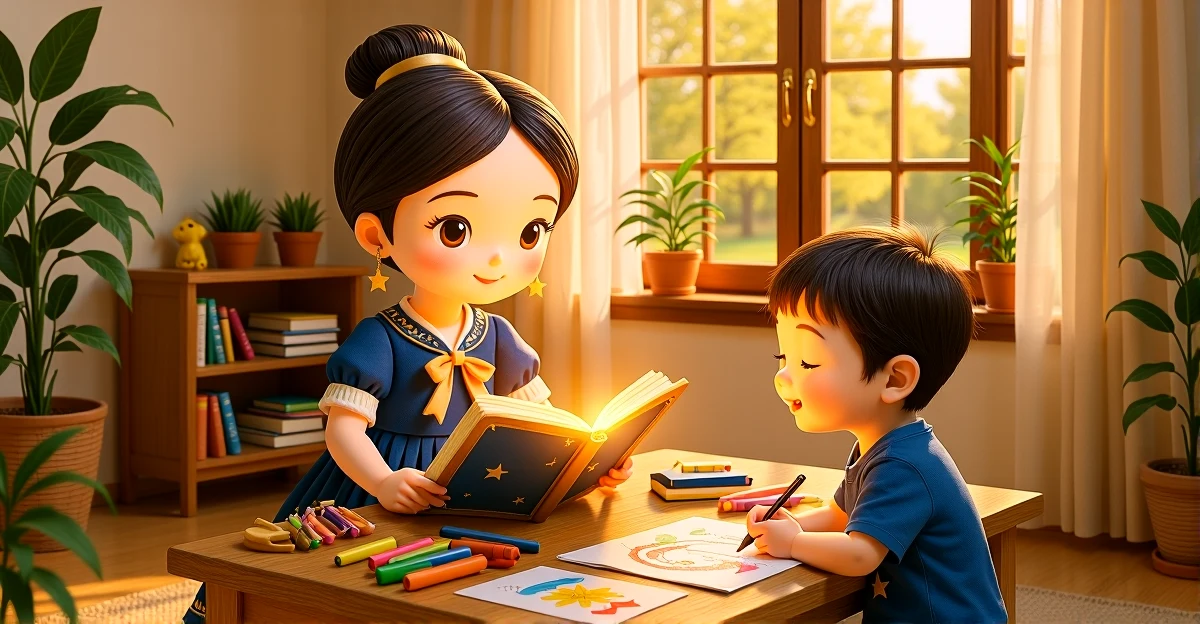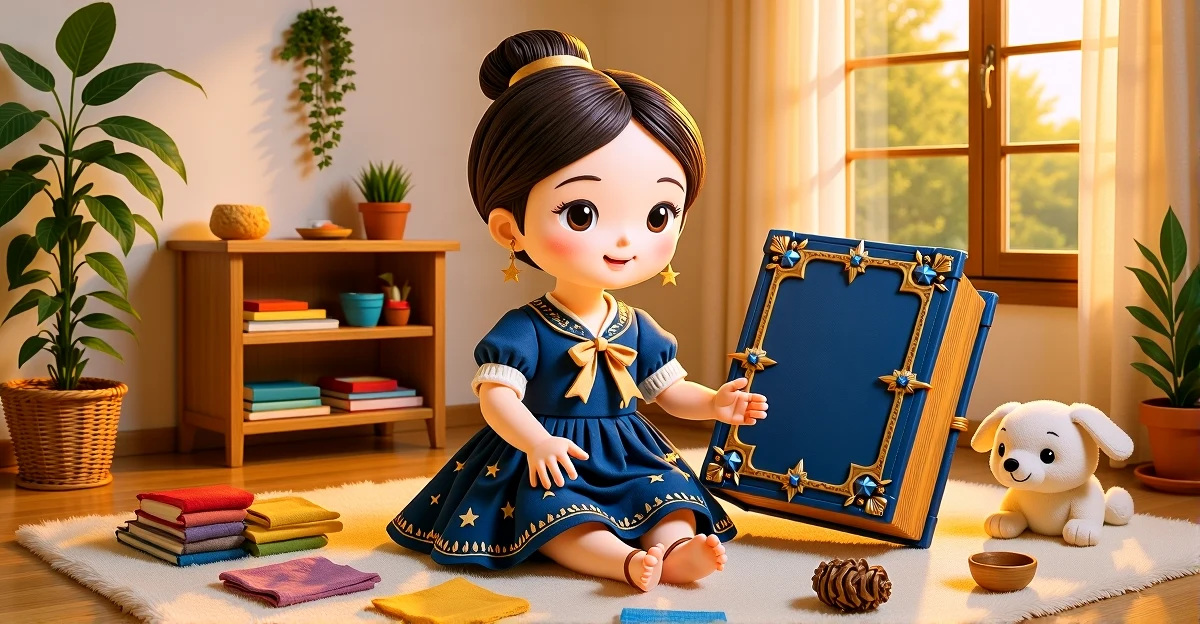

Hello, my wonderful friend! It's me, Inara, and I'm SO happy you're here today. I know what brought you here. Your little explorer is touching everything, opening every cabinet, investigating every corner of your home with those curious little hands. And sometimes, that beautiful curiosity can feel a bit overwhelming, can't it?
Maybe you find yourself saying "no" more than you'd like. Maybe you're worried about safety while also wanting to encourage that wonderful sense of wonder. If that's you, I want you to know something important: You are not alone in this, and what you're experiencing is actually one of the most WONDERFUL signs of healthy development.
In this guide, we'll explore why curiosity is your child's superpower, what research tells us about exploration and learning, and most importantly, how to create safe spaces where your little one's natural genius can flourish. Let's dive in together!
The Beautiful Truth About Toddler Curiosity
Here's something the Magic Book taught me that changed everything: Your child's curiosity isn't mischief. It's genius at work.
Between ages two and three, your little one's brain is building connections at an absolutely astonishing rate. Every time they touch something new, explore a different texture, or discover how something works, their brain is creating neural pathways that will serve them for their entire life. That drive to touch, to discover, to understand? That's your child's brain doing exactly what it's designed to do.
Dr. Kathy Hirsh-Pasek and her colleagues at Temple University have studied this extensively, and they discovered something remarkable: playful learning harnesses children's natural curiosity and their proclivities to experiment, explore, problem solve, and stay engaged in meaningful activities. In other words, when your child is exploring, they're not just playing. They're learning in the most powerful way possible.
What Research Says About Curiosity and Development
The science behind curiosity is absolutely fascinating, and it gives us such beautiful insight into what's happening in your little one's mind.
The National Academies of Sciences tells us that curiosity and exploration in early childhood are fundamental to cognitive development and school readiness. This isn't just about keeping your child entertained. This is about building the foundation for all future learning.
"Curiosity and exploration in early childhood are fundamental to cognitive development and school readiness. Interventions that promote social-emotional learning help instill curiosity and self-confidence in children."
— National Academies of Sciences, Engineering, and Medicine
Research from the North Carolina Department of Health and Human Services emphasizes that children ages 2-3 showing curiosity and expressing interest in the world around them is a foundational developmental goal. Creating safe environments for children to actively explore supports the development of new skills across all domains.
Here's what's SO important to understand: when children feel safe to experiment without fear of failure, they develop resilience and a growth mindset that serves them throughout their educational journey. Every exploration, every discovery, every moment of wonder is building your child's confidence as a learner.
The Challenge: Balancing Safety and Freedom
Now, I know what you might be thinking. "That's wonderful, Inara, but how do I keep them safe while encouraging all this exploration?" And that, my friend, is such an important question.
Here's what the research shows us: Children benefit most when adults provide freedom within clear boundaries. It's not about saying yes to everything or no to everything. It's about creating safe spaces where curiosity can flourish.
Think of it like this. Your home can become a landscape of discovery, where certain areas are absolutely safe for exploration, and other areas have gentle limits. We're not trying to stop the exploration. We're trying to channel it into safe, enriching directions.
The Yes Space Philosophy
A yes space is an area where your little one can explore freely without hearing "no." It might be a low cabinet filled with plastic containers they can stack and nest. It might be a basket of safe household items - wooden spoons, soft cloths, things with different textures and weights. When children have spaces where they CAN touch and explore, they're less likely to seek out the things they can't.
Gentle Strategies for Nurturing Safe Exploration
Let me share some practical, research-backed strategies that can transform your home into a safe exploration zone while maintaining your sanity and your child's safety.
Strategy 1: Create Dedicated Yes Spaces
Designate specific areas in your home where exploration is always welcome. This might include:
- A low kitchen cabinet with safe items like plastic containers, wooden spoons, and measuring cups
- A basket of exploration materials with different textures - smooth stones, soft fabric, bumpy pinecones
- A designated play area with age-appropriate toys that encourage discovery
- A sensory bin with safe materials like dried pasta, rice, or water (with supervision)
Strategy 2: Rotate Exploration Opportunities
Just like the research suggests, providing new and varied materials keeps that curiosity engaged. You don't need expensive toys. A cardboard box, some fabric scraps, a collection of pinecones from your yard - these simple things become treasures to a curious two-year-old.
Try rotating materials every week or two. What was fascinating last month might be brand new again after a break. This keeps the environment fresh and exciting without overwhelming your space or budget.
Strategy 3: Join Them in Discovery
This is SO important. Get down on their level. Notice what captures their attention. When they pick up a smooth stone, you might say, "Oh, you found something smooth! Can you feel how cool it is?" You're not directing their play. You're enriching it with language and shared wonder.
This co-exploration does something magical. It validates their curiosity, builds vocabulary, and strengthens your connection. Plus, seeing the world through their eyes? That's pure magic.
Strategy 4: Embrace the Learning in Failure
When your little one tries to stack blocks and they tumble down, resist the urge to fix it for them. Instead, you might say, "Hmm, they fell! I wonder what would happen if we tried again?" You're teaching them that exploration sometimes means things don't work the first time, and that's perfectly okay.
This is how resilience is built. This is how children learn that challenges are opportunities, not obstacles.
Strategy 5: Set Clear, Consistent Boundaries
While we want to encourage exploration, safety is paramount. Be clear and consistent about what's off-limits. Instead of just saying "no," try redirection: "The stove isn't safe to touch, but you CAN explore these pots and pans over here!"
This approach maintains safety while honoring their need to explore. You're not saying no to their curiosity. You're guiding it toward safe, enriching experiences.
A Story That Celebrates Curiosity
In The Book of Inara, we have a beautiful story that captures this spirit of curiosity and exploration perfectly:
How the Animals Got Their Special Features
Perfect for: Ages 2-3
What makes it special: This gentle classic tale celebrates curiosity and learning as the animals discover their unique features through exploration and asking questions. The story shows children that curiosity isn't something to be ashamed of or to suppress - it's a gift. It's how we learn and grow.
Key lesson: When the animals ask their "insatiable curiosity" questions and learn through their explorations, children see that asking questions and exploring the world is how we discover wonderful things about ourselves and our world.
After reading together: You might find your little one asking more questions, wanting to explore more. And that's wonderful! You can say things like, "What a curious question! Let's explore and find out together," just like the animals in the story who learned through their curiosity.
The Long-Term Gift of Supported Curiosity
Here's something else the Magic Book taught me, and it's SO important: The ages of two and three represent a critical window when children's drive to explore reaches new heights. This isn't a phase to endure. It's a phase to celebrate and support.
By providing safe spaces for discovery while maintaining appropriate boundaries, you're supporting your child's natural developmental trajectory. You're raising a confident, enthusiastic learner who will approach new challenges with curiosity rather than fear.
Think about what that means for their future. A child who learns that curiosity is valued, that questions are welcome, that exploration leads to discovery - that child becomes an adult who isn't afraid to try new things, who sees challenges as opportunities, who approaches life with wonder and confidence.
And that, my friend, is one of the greatest gifts you can give your child.
You're Doing Beautifully
So the next time your little one reaches for something new, take a breath. Ask yourself: Is this safe? If yes, let them explore. If no, can I redirect them to something that IS safe to explore? You're not saying no to their curiosity. You're guiding it toward safe, enriching experiences.
Remember, every time you support their exploration, you're telling them something powerful: "Your curiosity matters. Your questions are important. You are a capable learner." And they will carry that message with them for the rest of their lives.
The Magic Book and I believe in you. We see the love and care you bring to parenting. We know it's not always easy to balance safety and freedom, structure and exploration. But you're doing it. Every single day, you're doing it beautifully.
Keep nurturing that beautiful curiosity. Keep creating safe spaces for discovery. And keep being the amazing parent you are.
With love and starlight,
Inara
Related Articles
- Understanding Your Toddler's Hesitation with New Experiences (And How to Gently Encourage Curiosity)
- Understanding Your Toddler's Need for Connection: The Journey from Attachment to Independence
- Your Toddler Isn't Being Slow on Walks - They're Being a Scientist: Nurturing Nature Connection in Early Childhood
- Building Physical Confidence in Toddlers: A Gentle Parenting Guide
- Building Independence Through Play: A Gentle Guide for Ages 2-3
Show transcript
Hello, my wonderful friend! It's me, Inara, and I am SO happy you're here today!
You know, the Magic Book and I have been noticing something beautiful happening in homes all around the world. Parents are watching their little ones, ages two and three, reaching for everything, touching everything, exploring everything with those curious little hands. And sometimes, that curiosity can feel a bit overwhelming, can't it?
Maybe your little explorer wants to open every cabinet, touch every button, investigate every corner of your home. Maybe you find yourself saying "no" more than you'd like, or worrying about safety while also wanting to encourage that beautiful sense of wonder. If that's you, I want you to know something important. You are not alone in this, and what you're experiencing is actually one of the most WONDERFUL signs of healthy development!
Let me share what the Magic Book has taught me about this magical age of curiosity and exploration.
First, here's the beautiful truth. Your child's curiosity isn't mischief. It's genius at work. Between ages two and three, your little one's brain is building connections at an absolutely astonishing rate. Every time they touch something new, explore a different texture, or discover how something works, their brain is creating pathways that will serve them for their entire life.
Dr. Kathy Hirsh-Pasek and her colleagues at Temple University have studied this extensively, and they discovered something remarkable. Playful learning harnesses children's natural curiosity and their proclivities to experiment, explore, problem solve, and stay engaged in meaningful activities. In other words, when your child is exploring, they're not just playing. They're learning in the most powerful way possible.
The National Academies of Sciences tells us that curiosity and exploration in early childhood are fundamental to cognitive development and school readiness. That drive to touch, to discover, to understand, that's your child's brain doing exactly what it's designed to do. Building the foundation for all future learning.
Now, I know what you might be thinking. That's wonderful, Inara, but how do I keep them safe while encouraging all this exploration? And that, my friend, is such an important question.
Here's what the research shows us. Children benefit most when adults provide freedom within clear boundaries. It's not about saying yes to everything or no to everything. It's about creating safe spaces where curiosity can flourish.
Think of it like this. Your home can become a landscape of discovery, where certain areas are absolutely safe for exploration, and other areas have gentle limits. The North Carolina Department of Health and Human Services emphasizes that creating safe environments for children to actively explore supports the development of new skills. So we're not trying to stop the exploration. We're trying to channel it into safe, enriching directions.
Let me give you some practical ways to do this.
First, create yes spaces in your home. These are areas where your little one can explore freely without hearing no. Maybe it's a low cabinet filled with plastic containers they can stack and nest. Maybe it's a basket of safe household items, wooden spoons, soft cloths, things with different textures and weights. When children have spaces where they CAN touch and explore, they're less likely to seek out the things they can't.
Second, rotate the exploration opportunities. Just like the research suggests, providing new and varied materials keeps that curiosity engaged. You don't need expensive toys. A cardboard box, some fabric scraps, a collection of pinecones from your yard, these simple things become treasures to a curious two-year-old.
Third, and this is so important, join them in their exploration. Get down on their level. Notice what captures their attention. When they pick up a smooth stone, you might say, "Oh, you found something smooth! Can you feel how cool it is?" You're not directing their play. You're enriching it with language and shared wonder.
The research is clear that when children feel safe to experiment without fear of failure, they develop resilience and a growth mindset that serves them throughout their educational journey. So when your little one tries to stack blocks and they tumble down, resist the urge to fix it for them. Instead, you might say, "Hmm, they fell! I wonder what would happen if we tried again?" You're teaching them that exploration sometimes means things don't work the first time, and that's perfectly okay.
Now, let me tell you about a story that captures this spirit of curiosity so beautifully. It's called "How the Animals Got Their Special Features," and it's one of my favorites from the Magic Book's collection.
In this gentle tale, the animals are filled with what the story calls "insatiable curiosity." They ask questions, they explore, they discover. And through their curiosity, they learn about themselves and the world around them. The Elephant discovers his trunk, the Camel discovers his hump, the Leopard discovers his spots, all through the power of curiosity and exploration.
What I love about this story is how it celebrates asking questions and seeking answers. It shows children that curiosity isn't something to be ashamed of or to suppress. It's a gift. It's how we learn and grow.
After you read this story with your little one, you might find them asking more questions, wanting to explore more. And that's wonderful! You can say things like, "What a curious question! Let's explore and find out together," just like the animals in the story who learned through their curiosity.
You can find "How the Animals Got Their Special Features" in The Book of Inara app, along with so many other stories that celebrate learning, discovery, and the beautiful process of growing up.
Here's something else the Magic Book taught me. The ages of two and three represent a critical window when children's drive to explore reaches new heights. This isn't a phase to endure. It's a phase to celebrate and support. By providing safe spaces for discovery while maintaining appropriate boundaries, you're supporting your child's natural developmental trajectory.
You're raising a confident, enthusiastic learner who will approach new challenges with curiosity rather than fear. And that, my friend, is one of the greatest gifts you can give your child.
So the next time your little one reaches for something new, take a breath. Ask yourself, is this safe? If yes, let them explore. If no, can I redirect them to something that IS safe to explore? You're not saying no to their curiosity. You're guiding it toward safe, enriching experiences.
Remember, every time you support their exploration, you're telling them, "Your curiosity matters. Your questions are important. You are a capable learner." And they will carry that message with them for the rest of their lives.
The Magic Book and I believe in you. We see the love and care you bring to parenting. We know it's not always easy to balance safety and freedom, structure and exploration. But you're doing it. Every single day, you're doing it beautifully.
Thank you for being here with me today. Thank you for being the kind of parent who wants to understand and support their child's development. The world needs more parents like you.
If you'd like more stories that celebrate curiosity, exploration, and the joy of learning, visit The Book of Inara app. We have a whole library of tales waiting to inspire your little one's sense of wonder.
Until our next adventure together, my wonderful friend. Keep nurturing that beautiful curiosity. Keep creating safe spaces for discovery. And keep being the amazing parent you are.
With love and starlight, Inara.