
It's happening again. Your children are arguing over who gets to sit in the special chair. Voices are rising. Tears are starting. And you're standing there thinking, why can't they just get along? If this sounds familiar, wonderful parent, I want you to take a deep breath. Because what I'm about to share with you might completely change how you see those daily sibling disagreements.
You are not alone in this. Not even a little bit. Parents all around the world are reaching out to the Magic Book, feeling exhausted and sometimes even heartbroken, saying their children are constantly fighting with their siblings. And here's what's SO important for you to know right from the start. What you're experiencing isn't a sign that something is wrong with your children or with your parenting. It's actually a sign that something very IMPORTANT is happening in your home.
In this post, we're going to explore why sibling conflict is actually normal development, what research tells us about these emotionally charged interactions, and most importantly, how you can guide your children through this phase with gentle strategies that actually work. Plus, I'll share a beautiful story from The Book of Inara that teaches children the empathy foundation they need for peaceful sibling relationships.
The Beautiful Truth About Sibling Conflict
Here's the truth that research shows us, and it's actually quite beautiful when you think about it. When your children are having those emotionally charged disagreements with each other, when they're arguing over toys or who gets to sit where or whose turn it is, their brains are actually in a natural learning laboratory.
Dr. Nina Howe and her colleagues from the Encyclopedia on Early Childhood Development explain that the sibling relationship provides opportunities to learn how to manage disagreements and to learn how to regulate both positive and negative emotions in socially acceptable ways. Can you imagine? Those moments that feel so frustrating to you, those times when you think why can't they just get along, those are actually the moments when your children are developing critical life skills.
They're learning conflict resolution. They're learning emotional regulation. They're learning cooperation. And they're learning all of this through the frequent, emotionally charged social exchanges with their siblings. Research from the Journal of Marriage and Family confirms that the frequent and emotionally charged social exchanges of siblings serve as an impetus for socioemotional development as young children work to manage relationships.
This Isn't Happening TO You—It's Happening FOR Your Children
I know what you might be thinking. Inara, it doesn't FEEL like learning. It feels like chaos. It feels like my home is a battlefield. And I hear you, wonderful parent. I really do. These sibling interactions can be intense. But here's what's so important to understand. Siblings provide a natural laboratory for young children to learn about their world, including how to interact with others and manage disagreements.
This challenging phase, when met with patient, empathetic parenting, becomes an invaluable opportunity for children to build the relationship skills they'll use throughout their lives. The positive benefits of establishing warm and positive sibling relationships may last a lifetime. You're not just managing today's conflict. You're building tomorrow's friendship.
What Research Says About Your Role
Now let me tell you what the research shows about how we can guide our children through this developmental phase. And this is where your role becomes so beautifully important.
When parents respond to sibling disagreements with calm, developmentally appropriate mediation strategies rather than harsh punishment, children develop stronger relationship skills and experience less ongoing conflict. Did you catch that? Calm mediation, not harsh punishment. The research is very clear on this point.
When parents employ harsh, punitive discipline, this is associated with greater sibling conflict and less friendly interaction between the children.
— Encyclopedia on Early Childhood Development
So what does calm mediation look like in practice? It means structuring the negotiation process while empowering your children to reach their own resolutions. You're not swooping in to fix everything or deciding who's right and who's wrong. You're teaching them HOW to work through disagreements themselves.
The Power of Parent Mediation
Interventions that train parents to mediate sibling conflicts by structuring negotiation while leaving resolution to children show particularly promising results. This approach validates both children's feelings while giving them the tools to solve problems together. It's not about eliminating conflict. It's about teaching constructive ways to navigate it.
Parenting expert Amy McCready reminds us that while rivalry is natural, constant fighting can strain family relationships. But here's the hopeful part. Parents can foster harmony through specific positive parenting strategies that validate each child's feelings. Creating opportunities for cooperation rather than competition reduces sibling conflict. Teaching conflict resolution skills empowers children to solve problems independently.
Gentle Strategies That Actually Work
Let me share some practical strategies you can use right away when your children are in conflict. These are based on research and designed to teach rather than punish.
Strategy 1: Validate Both Children's Feelings
When conflict erupts, start by acknowledging that both children have valid feelings. You might say, I can see you both really want to play with this toy. That's hard when two people want the same thing. This simple validation helps children feel heard and understood, which actually calms their nervous systems and makes them more receptive to problem-solving.
Strategy 2: Structure the Negotiation
Instead of deciding the outcome yourself, help your children brainstorm solutions together. Ask, what ideas do you have for solving this problem? Then wait. Give them space to think. You might need to help them brainstorm. You might say, some families take turns. Some families play together. Some families set a timer. What sounds fair to you?
You're teaching them that conflicts can be resolved. That both people's feelings matter. That there are creative solutions. And most importantly, that they have the power to work things out themselves.
Strategy 3: Teach Empathy Through Understanding Invisible Feelings
One of the most powerful things you can teach your children is that everyone, including their siblings, has invisible feelings and worries. When children understand that their siblings have their own feelings and challenges, when they learn that everyone carries feelings that aren't always visible, they develop the empathy foundation they need for peaceful conflict resolution.
After a conflict, you might talk with your children about how everyone in your family has invisible feelings and worries. Help them understand that when their sibling seems grumpy or difficult, there might be invisible feelings underneath that need kindness and understanding.
Strategy 4: Create Opportunities for Cooperation
Look for ways to shift from competition to cooperation. Instead of who can clean up fastest, try let's work together to clean up before the timer goes off. Instead of separate activities, create projects they can do together. Research shows that creating opportunities for cooperation rather than competition reduces sibling conflict over time.
Strategy 5: Celebrate Small Victories
When your children work something out, even imperfectly, acknowledge it. You two figured that out together. I'm so proud of how you're learning to solve problems. This positive reinforcement helps them see themselves as capable problem-solvers and strengthens their motivation to cooperate in the future.
Stories That Can Help
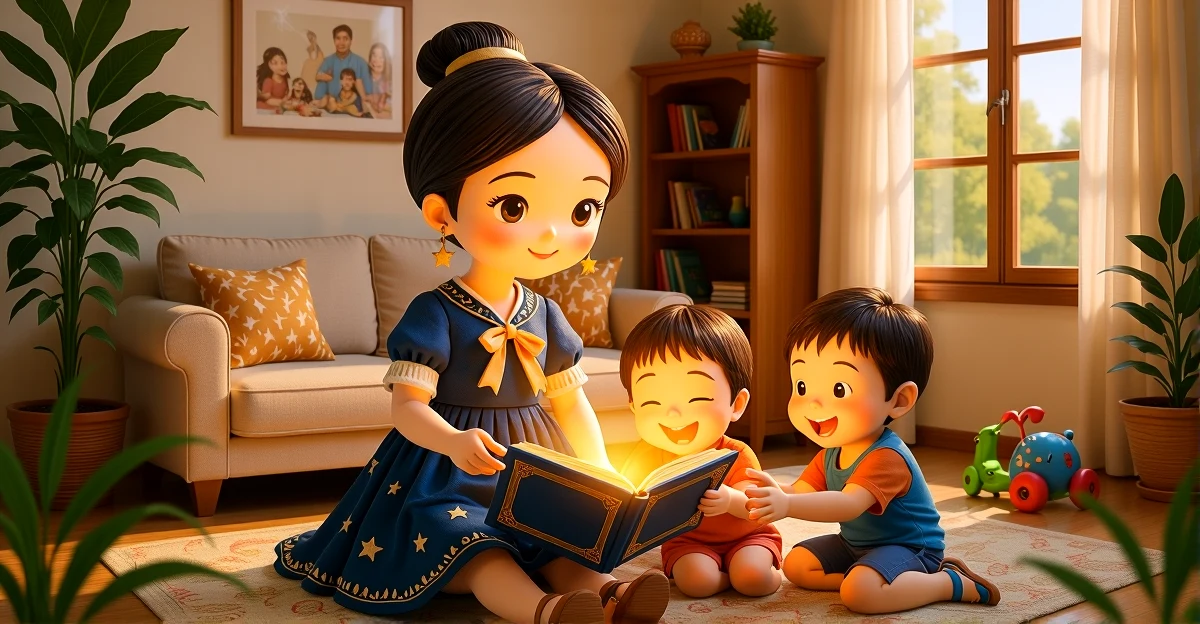
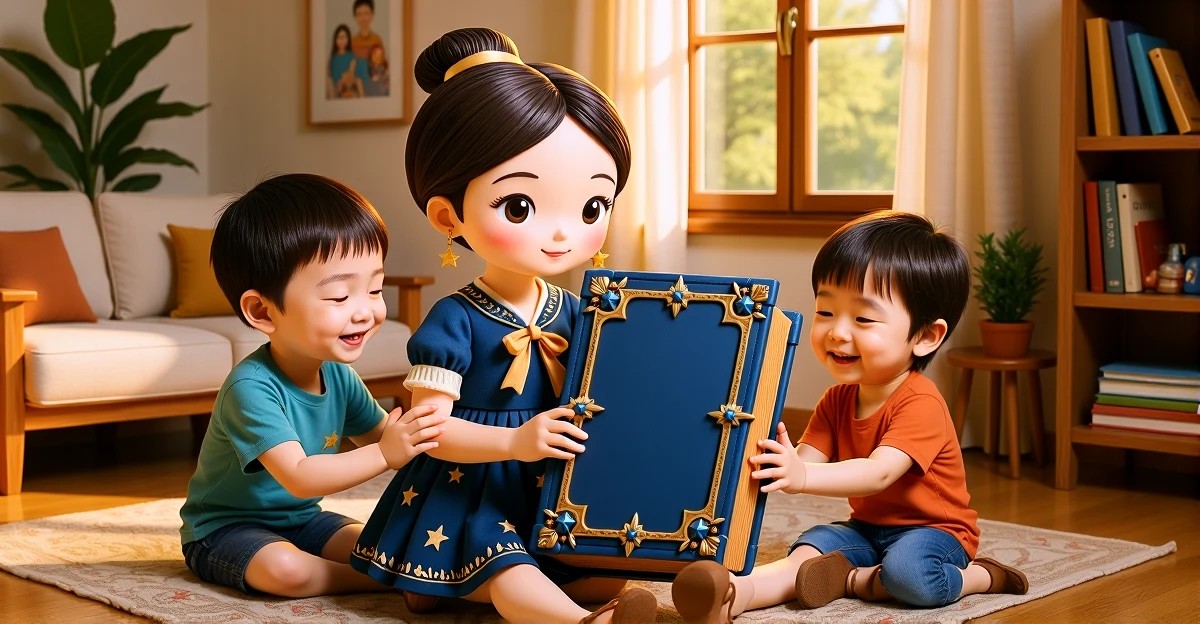
In The Book of Inara, we have beautiful stories that bring these concepts to life for your child. Let me share one that's particularly powerful for building sibling empathy:
The Room Where Hearts Speak Softly
Perfect for: Ages 6-7 (also wonderful for 5-6)
What makes it special: This story teaches children that everyone, even adults, has invisible worries and struggles. When Theo and Miles discover that the grown-ups in their lives carry hidden feelings, children learn that everyone, including their siblings, has feelings that aren't always visible. This is foundational for sibling empathy.
Key lesson: When children understand that their siblings have their own feelings and challenges, they develop the compassion needed to resolve conflicts peacefully. The story's focus on caring actions, emotional understanding, and kindness without judgment directly supports the therapeutic goals of family cooperation and sibling bonding.
How to use it: After reading this story together, talk with your children about how everyone in your family has invisible feelings and worries. Help them understand that when their sibling seems grumpy or difficult, there might be invisible feelings underneath that need kindness and understanding.
You're Doing Beautifully
Wonderful parent, I want you to remember something important. When your children are fighting, take a deep breath. Remind yourself that this is normal development. This is their learning laboratory. Your job is not to create perfect harmony every moment. Your job is to guide them with patience and empathy as they learn these crucial skills.
Stay calm. Validate both children's feelings. Help them brainstorm solutions. Empower them to resolve things themselves. And celebrate the small victories along the way. The work you're doing right now, in these challenging moments, is building the foundation for your children's lifelong relationship with each other.
When you stay calm and teach them how to navigate disagreements, you're giving them skills they'll use for the rest of their lives. Siblings who learn to manage conflicts with parental support develop better emotional regulation, stronger social competence, and more positive lifelong relationships.
The Magic Book and I believe in you. You're doing such important work, even when it doesn't feel like it. Your children are so lucky to have a parent who cares enough to learn, to grow, and to guide them with love.
Sweet dreams, wonderful parent. Until our next adventure together.
With love and starlight,
Inara
Related Articles
- When Screen Time Ends in Meltdowns: Understanding Your Child's Brain and What Actually Helps (Ages 5-6)
- When Your Child Feels Invisible: Understanding Social Isolation and the Gentle Path to Friendship
- Nurturing Leadership Skills in Young Children: A Gentle Parenting Guide for Ages 5-6
- Teaching Financial Wisdom to Your 5-6 Year Old: A Gentle Guide to Money and Economics
- Supporting Your Child's Social Awareness Development: A Gentle Guide
Show transcript
Hello, wonderful parent! It's me, Inara, and I am so happy you're here today. You know, the Magic Book and I have been noticing something happening in homes all around the world. Parents are reaching out, feeling exhausted and sometimes even a little heartbroken, saying their children are constantly fighting with their siblings and disrupting family peace. And I want you to know something really important right from the start. You are not alone in this. Not even a little bit. And what you're experiencing? It's not a sign that something is wrong with your children or with your parenting. It's actually a sign that something very IMPORTANT is happening in your home.
Let me share what the Magic Book taught me about sibling relationships, and I think it might change how you see those daily conflicts.
Here's the truth that research shows us, and it's actually quite beautiful when you think about it. When your children are having those emotionally charged disagreements with each other, when they're arguing over toys or who gets to sit where or whose turn it is, their brains are actually in a natural learning laboratory. Dr. Nina Howe and her colleagues from the Encyclopedia on Early Childhood Development explain that the sibling relationship provides opportunities to learn how to manage disagreements and to learn how to regulate both positive and negative emotions in socially acceptable ways.
Can you imagine? Those moments that feel so frustrating to you, those times when you think, why can't they just get along, those are actually the moments when your children are developing critical life skills. They're learning conflict resolution. They're learning emotional regulation. They're learning cooperation. And they're learning all of this through the frequent, emotionally charged social exchanges with their siblings.
Now, I know what you might be thinking. Inara, it doesn't FEEL like learning. It feels like chaos. It feels like my home is a battlefield. And I hear you, wonderful parent. I really do. Research from the Journal of Marriage and Family confirms that these sibling interactions can be intense. But here's what's so important to understand. Siblings provide a natural laboratory for young children to learn about their world, including how to interact with others and manage disagreements. This isn't happening TO you. This is happening FOR your children.
Let me tell you what the research shows about how we can guide our children through this developmental phase. And this is where your role becomes so beautifully important.
When parents respond to sibling disagreements with calm, developmentally appropriate mediation strategies rather than harsh punishment, children develop stronger relationship skills and experience less ongoing conflict. Did you catch that? Calm mediation, not harsh punishment. The research is very clear on this. When parents employ harsh, punitive discipline, it's actually associated with greater sibling conflict and less friendly interaction between the children.
So what does calm mediation look like? It means structuring the negotiation process while empowering your children to reach their own resolutions. You're not swooping in to fix everything or deciding who's right and who's wrong. You're teaching them HOW to work through disagreements themselves.
Here's a beautiful example. When your children are fighting over a toy, instead of taking the toy away or declaring one child the winner, you might say something like, I can see you both really want to play with this toy. That's hard when two people want the same thing. What ideas do you have for solving this problem? And then you wait. You give them space to think. You might need to help them brainstorm. You might say, some families take turns. Some families play together. Some families set a timer. What sounds fair to you?
You're teaching them that conflicts can be resolved. That both people's feelings matter. That there are creative solutions. And most importantly, that they have the power to work things out themselves.
Parenting expert Amy McCready reminds us that while rivalry is natural, constant fighting can strain family relationships. But here's the hopeful part. Parents can foster harmony through specific positive parenting strategies that validate each child's feelings. Creating opportunities for cooperation rather than competition reduces sibling conflict. Teaching conflict resolution skills empowers children to solve problems independently.
And this is where I want to tell you about something really special. In The Book of Inara, we have a story called The Room Where Hearts Speak Softly. It's about two friends, Theo and Miles, who discover that everyone, even adults, has invisible worries and struggles. And this story teaches something so important for sibling relationships.
When children understand that their siblings have their own feelings and challenges, when they learn that everyone carries feelings that aren't always visible, they develop the empathy foundation they need for peaceful conflict resolution. After you share this story with your children, you can talk with them about how everyone in your family has invisible feelings and worries. You can help them understand that when their sibling seems grumpy or difficult, there might be invisible feelings underneath that need kindness and understanding.
This is the kind of gentle teaching that transforms sibling relationships over time. Not overnight, wonderful parent. This takes patience. This takes consistency. But the research is so encouraging. Siblings who learn to manage conflicts with parental support develop better emotional regulation, stronger social competence, and more positive lifelong relationships.
Think about that for a moment. The work you're doing right now, in these challenging moments, is building the foundation for your children's lifelong relationship with each other. When you stay calm and teach them how to navigate disagreements, you're giving them skills they'll use for the rest of their lives.
The Magic Book whispers this wisdom. The goal is not to eliminate sibling disagreements entirely. That's not realistic, and it's actually not even desirable. The goal is to teach children constructive ways to navigate those disagreements. To help them learn that conflict doesn't mean the end of love. That you can be angry with someone and still care about them. That working through hard things together actually makes relationships stronger.
So here's what I want you to remember, wonderful parent. When your children are fighting, take a deep breath. Remind yourself that this is normal development. This is their learning laboratory. Your job is not to create perfect harmony every moment. Your job is to guide them with patience and empathy as they learn these crucial skills.
Stay calm. Validate both children's feelings. Help them brainstorm solutions. Empower them to resolve things themselves. And celebrate the small victories. When they work something out, even imperfectly, acknowledge it. You two figured that out together. I'm so proud of how you're learning to solve problems.
And on the hard days, when it feels like too much, remember this. The positive benefits of establishing warm and positive sibling relationships may last a lifetime. You're not just managing today's conflict. You're building tomorrow's friendship.
The Magic Book and I believe in you. You're doing such important work, even when it doesn't feel like it. Your children are so lucky to have a parent who cares enough to learn, to grow, and to guide them with love.
Sweet dreams, wonderful parent. Until our next adventure together. With love and starlight, Inara.