
You've set up the perfect family dinner. The table is ready, everyone's seated, and you're hoping for just ten peaceful minutes together. But within two minutes, your toddler is squirming, wiggling, and asking to get down. Story time? Same thing. They can't seem to sit still for more than a few moments before their little body is in motion again.
If this sounds familiar, I want you to know something really important: You are not alone in this, and there is absolutely nothing wrong with your child. What you're experiencing is completely normal, healthy development. And once you understand what's really happening in your toddler's growing brain, everything shifts.
In this post, we'll explore the science behind why sitting still is SO challenging for 2-3 year olds, share gentle strategies that honor their developmental stage, and introduce you to a beautiful story that helps children understand that new skills take practice and patience.
The Science of Sitting Still: What's Happening in Your Toddler's Brain
Here's something that might surprise you: The average attention span for a two year old is only four to six minutes. For a three year old, it's six to eight minutes. That's it! So if your child can't sit through a twenty minute meal or a fifteen minute story, they're not being difficult or defiant. They're being exactly what they should be at this age.
The part of your child's brain that helps them sit still, focus their attention, and control their impulses is called the executive function system. Think of it like an air traffic control system for the brain, managing attention, impulse control, and focus. But here's the thing: in toddlers, this system is just beginning to develop. It's brand new, and it needs time and practice to grow stronger.
Executive function and self-regulation skills act like an air traffic control system for the brain, managing attention, impulse control, and focus. These skills develop gradually throughout early childhood and require patient, supportive environments to flourish.
— Center on the Developing Child, Harvard University
Your two or three year old's brain is doing something absolutely magnificent right now. It's growing and developing at an incredible pace, building all these amazing connections that will serve them for their entire life. But the part that helps them sit still? That's still being built. It's like a beautiful house that's under construction. The foundation is there, the walls are going up, but it's not finished yet. And that's completely normal and healthy.
Movement IS Learning for Toddlers
Here's something magical that the research shows us: When young children are moving, they're not just being wiggly. They're actually learning. Their bodies and brains are designed to learn through movement at this age. Every time they climb, run, jump, or wiggle, they're building neural pathways, strengthening their muscles, and developing coordination.
Movement isn't the opposite of learning for toddlers. Movement IS learning. Their little bodies are telling them to move, to explore, to learn through action. And that's beautiful and important for their development.
Why Your Toddler's Body Needs to Move
At ages 2-3, children are developing:
- Gross motor skills: Large muscle movements like running, jumping, and climbing
- Spatial awareness: Understanding where their body is in space
- Sensory integration: Processing information from their senses through movement
- Energy regulation: Learning to manage their natural high energy levels
- Body confidence: Building trust in what their body can do
When we ask toddlers to sit still for extended periods, we're actually asking them to override a fundamental developmental need. It's not that they won't sit still. It's that their developing brain and body are telling them they need to move.
Gentle Strategies That Honor Your Child's Development
Now, I know what you might be thinking. But Inara, we need to eat meals together. We need to read stories. We need some quiet time. And you're absolutely right! These moments are important for connection and routine. So let me share some gentle strategies that honor your child's developmental stage while still creating those special moments together.
1. Adjust Your Expectations to Match Development
Instead of expecting your two year old to sit for an entire meal, what if we aimed for just five or six minutes of sitting together? You could start the meal with everyone at the table, share a few bites together, and then allow your child to get down when their body tells them they need to move. You can always invite them back for a few more bites later.
This way, you're honoring their developmental needs while still practicing the skill of sitting together. And here's what's magical: Every time they practice, even for just a few minutes, they're building those executive function skills. Practice is how these abilities grow stronger.
2. Make Activities More Interactive
For story time, try making it more interactive. Let your child turn the pages, point to pictures, or even act out parts of the story with their body. Movement and stories can absolutely go together! You might read a few pages while they're sitting, then let them hop like a bunny when the bunny appears in the story, then sit again for a few more pages. This keeps their body engaged while their mind is learning to focus.
3. Use Movement Breaks Strategically
If you know you need your child to sit for something important, like a doctor's appointment or a special meal, try giving them lots of movement time beforehand. Let them run, jump, climb, and play actively for twenty or thirty minutes. This helps their body release that natural energy so they can settle more easily when it's time to be still.
4. Create Transition Rituals
Create little rituals that signal transition times. Maybe you have a special song you sing before meals, or a gentle breathing exercise you do together before story time. These rituals help your child's brain prepare for what's coming next. It's like giving their air traffic control system a heads up that it's time to shift gears.
5. Limit Screen Time
Research shows that screen time can actually make it harder for young children to develop attention skills. When little ones spend a lot of time with screens, their brains get used to very fast-paced, constantly changing stimulation. Then when it's time for slower-paced activities like meals or stories, their brains have a harder time adjusting.
Limiting screen time and offering lots of real-world play, movement, and interaction actually supports the development of those attention skills you're hoping to see.
Reframing the Challenge: Your Child Isn't Giving You a Hard Time
I want to share something really important with you. Your child is not giving you a hard time. They're having a hard time. Their body is telling them to move, and they don't yet have the brain development to override that signal easily. When you see it this way, it becomes easier to respond with patience and creativity instead of frustration.
The research is really clear about this: Children develop attention and self-control skills best in environments that are supportive, patient, and full of love. When parents understand that difficulty sitting still is normal development, not misbehavior, everything shifts. You can stay calm, your child feels safe, and you can work together as a team.
Children with higher self-regulation skills develop these abilities through consistent, supportive relationships and environments that match their developmental stage. What parents often perceive as inability to sit still is actually normal brain development in action.
— National Academies of Sciences, Engineering, and Medicine
And please, please be gentle with yourself too. Parenting a toddler who can't sit still can feel exhausting. You might feel like you're doing something wrong, or like other parents have it easier. But I promise you, this is one of the MOST common challenges parents of toddlers face. You're doing beautifully, even on the days when it doesn't feel that way.
A Story That Can Help: The Kangaroo Who Learned to Hop
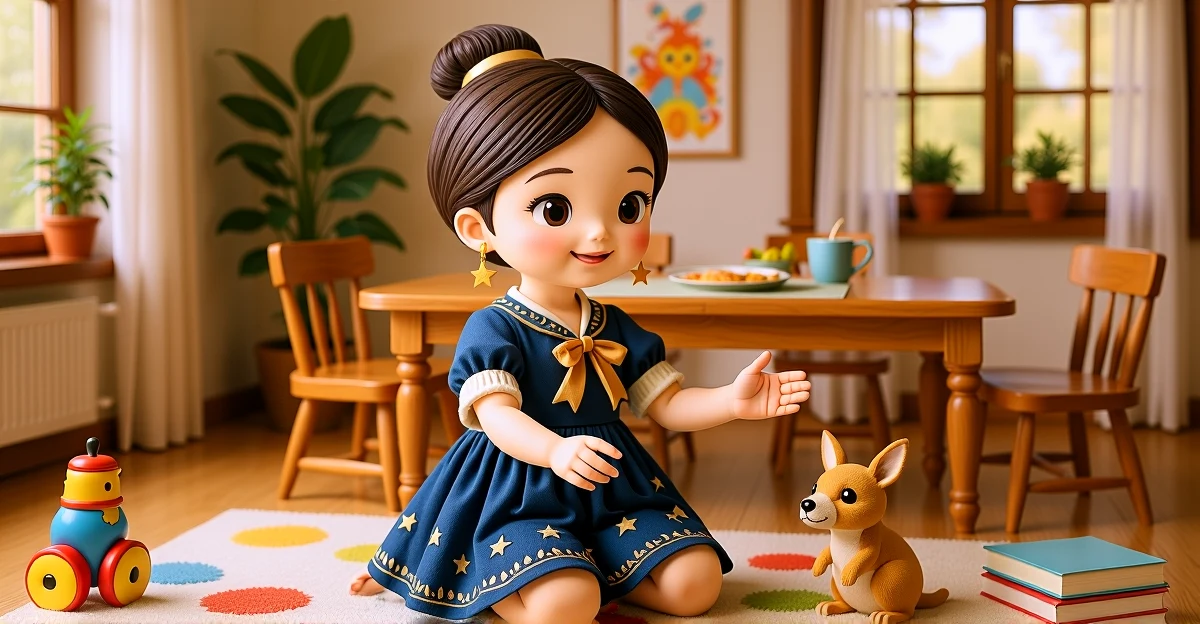
In The Book of Inara, we have a beautiful story that I think might really help with this. It's called The Kangaroo Who Learned to Hop, and it's perfect for teaching children that developing new abilities takes practice and patience.
The Kangaroo Who Learned to Hop
Perfect for: Ages 2-3
What makes it special: In this gentle tale, Young Kangaroo is learning something new and challenging. Hopping doesn't come easily at first. It takes practice, patience, and lots of encouragement from Wallaby, a wise friend who understands that learning new skills takes time. This story beautifully demonstrates that developing new abilities, whether it's hopping or sitting still or focusing attention, happens gradually.
Key lesson: Every time you practice, you get a little bit better. And having someone who believes in you and supports you makes all the difference.
How to use it: After you read this story with your child, you can gently remind them that just like Kangaroo practiced hopping, they're practicing sitting skills. Every meal where they try, even for just a few minutes, is practice. And practice is how we grow and learn new things. This takes the pressure off both of you and turns it into a learning adventure instead of a battle.
You're Doing Beautifully
The skills your child is building right now—attention, focus, impulse control—these are skills that will serve them for their entire life. And they're building them with your patient support, one moment at a time. Some days will be easier than others. Some meals will go smoothly, and others will feel chaotic. That's all part of the journey.
Remember, you're not trying to change who your child is. You're supporting them as they grow into the person they're becoming. And that active, curious, energetic little person? They're absolutely perfect exactly as they are right now.
The Magic Book and I are always here for you, cheering you on, believing in you, and offering stories and wisdom whenever you need them. You can find The Kangaroo Who Learned to Hop and so many other helpful stories in The Book of Inara app. Each story is crafted with love to support your child's emotional and social learning in the gentlest, most magical way.
Until our next adventure together, sweet dreams and starlight to you and your little one.
With love,
Inara
Related Articles
- Understanding Your Energetic Toddler: Why Quiet Play Develops Gradually
- Why Your Toddler Resists Cleanup (And How to Make It Joyful)
- Understanding Public Meltdowns: Why Your Toddler Isn't Trying to Embarrass You
- Understanding Why Toddlers Hit and Bite (And Gentle Ways to Help)
- Why Transitions Are Hard for Toddlers (And Gentle Strategies That Help)
Show transcript
Hello, my wonderful friend! It's me, Inara, and I am SO happy you're here today. You know, the Magic Book and I have been hearing from so many parents lately about something that feels really challenging. Maybe you're experiencing this too. Your little one just can't seem to sit still for meals, for story time, or for those quiet moments you're hoping to share together. And I want you to know something really important right from the start. You are not alone in this, and there is absolutely nothing wrong with your child.
Let me tell you what the Magic Book has taught me about this, because it's actually quite WONDERFUL when you understand what's really happening.
Your two or three year old's brain is doing something absolutely magnificent right now. It's growing and developing at an incredible pace, building all these amazing connections that will serve them for their entire life. But here's the thing, and this is so important. The part of their brain that helps them sit still, focus their attention, and control their impulses? That's still being built. It's like a beautiful house that's under construction. The foundation is there, the walls are going up, but it's not finished yet. And that's completely normal and healthy.
Research from some of the most respected child development experts in the world, including the wonderful scientists at Harvard University's Center on the Developing Child, tells us that executive function and self-regulation skills act like an air traffic control system for the brain. They manage attention, impulse control, and focus. But in toddlers, this system is just beginning to develop. It's brand new, and it needs time and practice to grow stronger.
Here's something that might surprise you. The average attention span for a two year old is only four to six minutes. For a three year old, it's six to eight minutes. That's it! So if your child can't sit through a twenty minute meal or a fifteen minute story, they're not being difficult or defiant. They're being exactly what they should be at this age. Their little body is telling them to move, to explore, to learn through action. And that's beautiful.
The Magic Book showed me something else that's really important. When children are moving, they're not just being wiggly. They're actually learning. Their bodies and brains are designed to learn through movement at this age. Every time they climb, run, jump, or wiggle, they're building neural pathways, strengthening their muscles, and developing coordination. Movement isn't the opposite of learning for toddlers. Movement IS learning.
Now, I know what you might be thinking. But Inara, we need to eat meals together. We need to read stories. We need some quiet time. And you're absolutely right! These moments are important for connection and routine. So let me share some gentle strategies that honor your child's developmental stage while still creating those special moments together.
First, let's talk about realistic expectations. Instead of expecting your two year old to sit for an entire meal, what if we aimed for just five or six minutes of sitting together? You could start the meal with everyone at the table, share a few bites together, and then allow your child to get down when their body tells them they need to move. You can always invite them back for a few more bites later. This way, you're honoring their developmental needs while still practicing the skill of sitting together.
For story time, try making it more interactive. Let your child turn the pages, point to pictures, or even act out parts of the story with their body. Movement and stories can absolutely go together! You might read a few pages while they're sitting, then let them hop like a bunny when the bunny appears in the story, then sit again for a few more pages. This keeps their body engaged while their mind is learning to focus.
The Magic Book also taught me about something called movement breaks. If you know you need your child to sit for something important, like a doctor's appointment or a special meal, try giving them lots of movement time beforehand. Let them run, jump, climb, and play actively for twenty or thirty minutes. This helps their body release that natural energy so they can settle more easily when it's time to be still.
And here's something really powerful. Create little rituals that signal transition times. Maybe you have a special song you sing before meals, or a gentle breathing exercise you do together before story time. These rituals help your child's brain prepare for what's coming next. It's like giving their air traffic control system a heads up that it's time to shift gears.
Now, I want to tell you about a story that the Magic Book and I think might really help with this. It's called The Kangaroo Who Learned to Hop. In this gentle tale, Young Kangaroo is learning something new and challenging. Hopping doesn't come easily at first. It takes practice, patience, and lots of encouragement from Wallaby, a wise friend who understands that learning new skills takes time.
This story is so beautiful because it shows children that developing new abilities, whether it's hopping or sitting still or focusing attention, happens gradually. It's not something you can do perfectly right away. Every time you practice, you get a little bit better. And having someone who believes in you and supports you makes all the difference.
After you read this story with your child, you can gently remind them that just like Kangaroo practiced hopping, they're practicing sitting skills. Every meal where they try, even for just a few minutes, is practice. And practice is how we grow and learn new things. This takes the pressure off both of you and turns it into a learning adventure instead of a battle.
The research is really clear about something else too. Children develop these attention and self-control skills best in environments that are supportive, patient, and full of love. When parents understand that difficulty sitting still is normal development, not misbehavior, everything shifts. You can stay calm, your child feels safe, and you can work together as a team.
One more thing the Magic Book wants you to know. Screen time can actually make it harder for young children to develop attention skills. When little ones spend a lot of time with screens, their brains get used to very fast-paced, constantly changing stimulation. Then when it's time for slower-paced activities like meals or stories, their brains have a harder time adjusting. So limiting screen time and offering lots of real-world play, movement, and interaction actually supports the development of those attention skills you're hoping to see.
I also want to remind you of something really important. Your child is not giving you a hard time. They're having a hard time. Their body is telling them to move, and they don't yet have the brain development to override that signal easily. When you see it this way, it becomes easier to respond with patience and creativity instead of frustration.
And please, please be gentle with yourself too. Parenting a toddler who can't sit still can feel exhausting. You might feel like you're doing something wrong, or like other parents have it easier. But I promise you, this is one of the most common challenges parents of toddlers face. You're doing beautifully, even on the days when it doesn't feel that way.
The skills your child is building right now, attention, focus, impulse control, these are skills that will serve them for their entire life. And they're building them with your patient support, one moment at a time. Some days will be easier than others. Some meals will go smoothly, and others will feel chaotic. That's all part of the journey.
Remember, you're not trying to change who your child is. You're supporting them as they grow into the person they're becoming. And that active, curious, energetic little person? They're absolutely perfect exactly as they are right now.
The Magic Book and I are always here for you, cheering you on, believing in you, and offering stories and wisdom whenever you need them. You can find The Kangaroo Who Learned to Hop and so many other helpful stories in The Book of Inara app. Each story is crafted with love to support your child's emotional and social learning in the gentlest, most magical way.
Thank you so much for being here with me today. Thank you for loving your child so deeply that you're seeking to understand them better. That's what makes you a wonderful parent.
Until our next adventure together, sweet dreams and starlight to you and your little one.
With love, Inara.