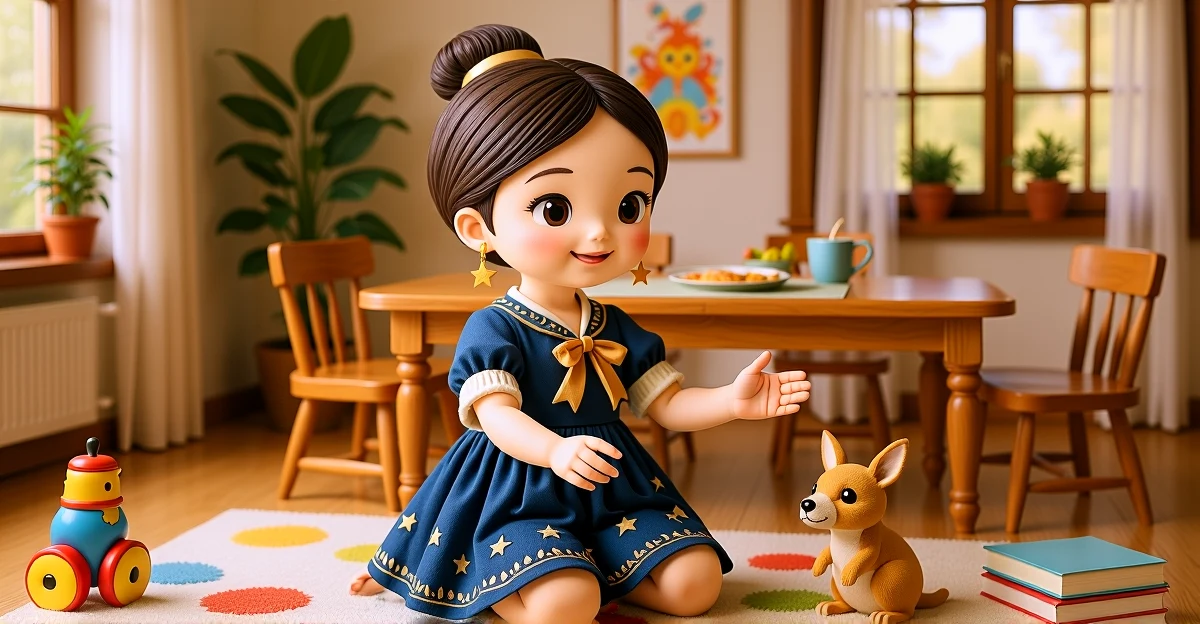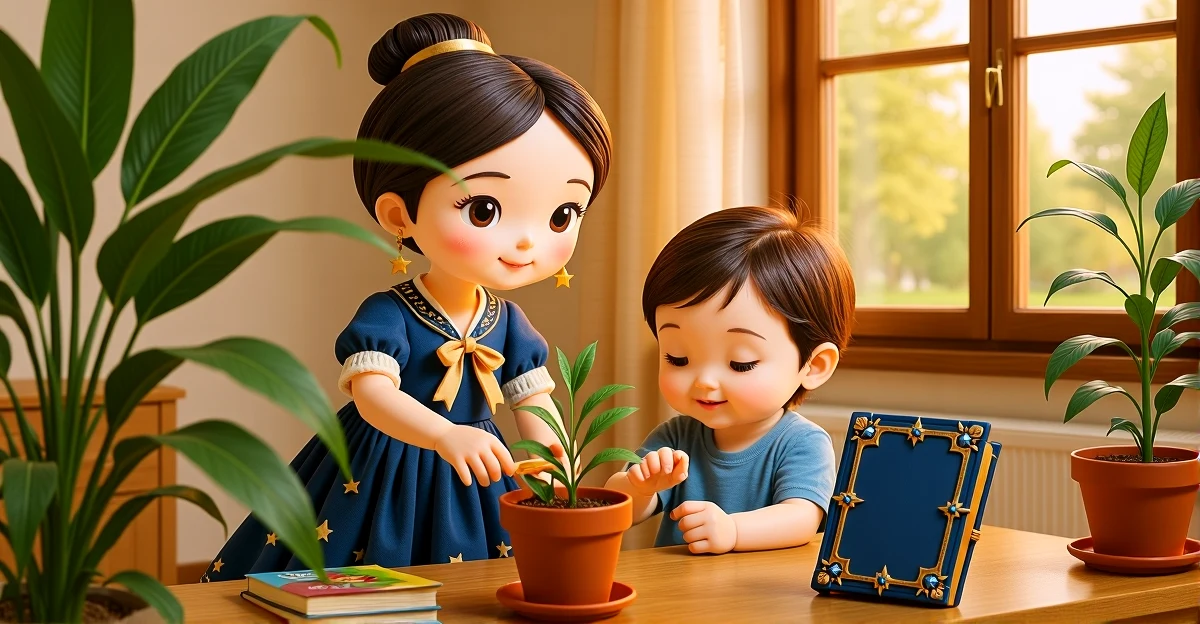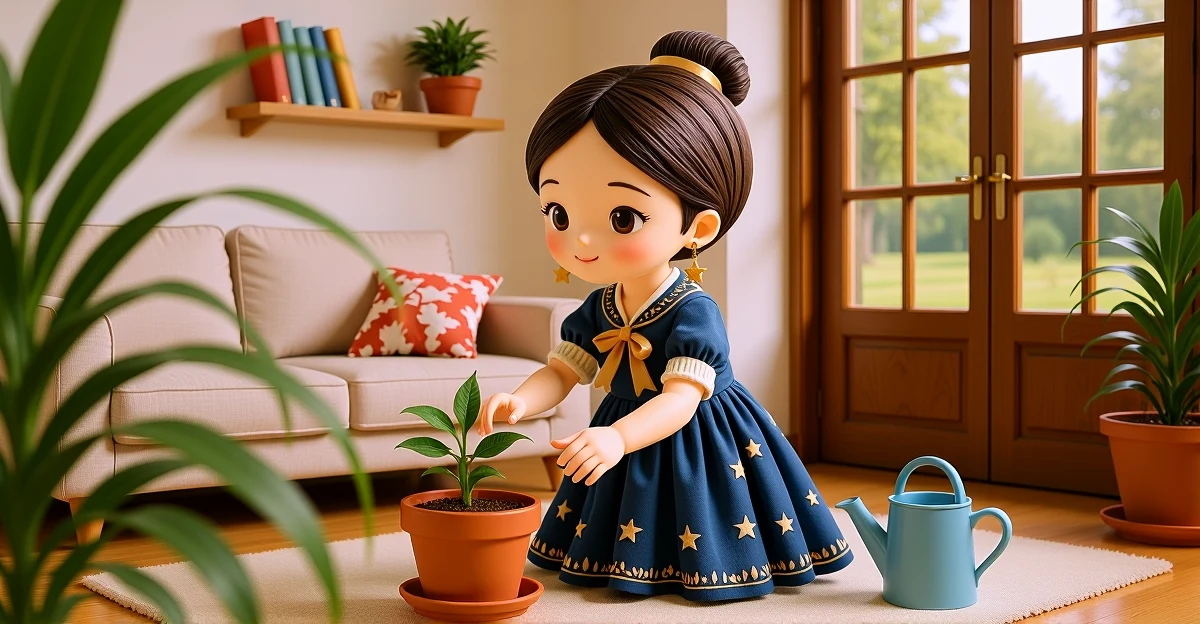

Hello, my wonderful friend! It's me, Inara, and I want to start by celebrating something BEAUTIFUL. If your two or three-year-old is always on the move, filling your home with joyful noise, exploring every corner, and finding it challenging to settle into quiet activities, you are witnessing something absolutely wonderful. You're watching healthy brain development in action!
I know it can feel exhausting sometimes. I know you might long for just five minutes of calm. And those feelings? They're completely valid. But here's what the Magic Book has taught me, and what research confirms: your child's energy, their curiosity, their constant movement, these aren't problems to fix. They're signs of a developing brain doing exactly what it's supposed to be doing.
In this post, we're going to explore why energetic play is so important at this age, what research tells us about how quiet play skills develop, and most importantly, how you can gently support your child's journey toward calm, focused activities without forcing or rushing this natural process. Let's dive in together!
Why Your Toddler's Energy is Actually Perfect
When your two or three-year-old is bouncing, running, exploring, and expressing themselves through movement and sound, their brain is doing exactly what it needs to do. The American Academy of Pediatrics tells us something IMPORTANT: at this age, children are just beginning to learn how to control their actions, impulses, and feelings. Just beginning!
Think about it this way. Your little one's brain is like a garden that's just been planted. The seeds of self-regulation are there, but they need time, sunshine, gentle rain, and patient care to grow. Right now, those seeds are just starting to sprout. And that's PERFECT.
At age two, children simply don't have much control over their emotional impulses yet. Testing limits, exploring boundaries, and expressing themselves through movement and sound, this is all part of being two! It's not a behavior problem, my friend. It's a sign of healthy, beautiful development.
What's Happening in Your Toddler's Brain
Your child's prefrontal cortex, the part of the brain responsible for impulse control, planning, and self-regulation, is still in the very early stages of development. This development doesn't happen overnight. It unfolds gradually over years, not days or weeks.
When your toddler is running, jumping, and exploring, they're actually building crucial foundations:
- Body awareness: Understanding where their body is in space and how it moves
- Spatial understanding: Learning about distance, direction, and physical relationships
- Attention skills: Practicing focusing on activities that interest them
- Emotional regulation: Learning to manage the big feelings that come with exploration
All of these skills, developed through active play, will eventually help them settle into calmer, more focused activities. Active play doesn't compete with quiet play, it builds the foundation for it!
What Research Says About Quiet Play Development
Here's something fascinating that research has shown us. Children who spend time in both active play and quiet play during their toddler years develop better self-regulation abilities as they grow. But here's the key: the quiet play skills don't come first.
The more time children spent in unstructured quiet play in the toddler and preschool years, the better their self-regulation abilities later in childhood.
— Early Childhood Research Quarterly, 2021
This research tells us something beautiful: quiet play skills develop progressively over time. Your child isn't refusing quiet activities. They're simply not developmentally ready for long periods of quiet play yet. And that's completely normal!
The American Academy of Pediatrics emphasizes that two-year-olds are learning to control their actions, impulses, and feelings. This developmental stage involves testing limits and exploring their capabilities, which often manifests as high energy and difficulty with quiet activities.
Play provides opportunities for fostering children's curiosity and self-regulation skills. Serve-and-return behaviors during play promote impulse control in children and form a strong foundation for emotional development.
— American Academy of Pediatrics, The Power of Play, 2018
What this means for you: your child's current energy level is not only normal, it's necessary. They're building the very skills they'll need to engage in quiet play later. Be patient with the process, my friend. You're right on track.
Gentle Strategies to Support Emerging Quiet Play Skills
So how can we support our energetic little ones while gently nurturing those emerging quiet play skills? I'm so glad you asked! Here are strategies that honor your child's developmental stage while creating opportunities for calm, focused moments.
1. Honor Their Need for Movement First
Your child's body is telling them to MOVE, and that's wisdom we should listen to. Create safe spaces where they can run, jump, climb, and explore. When they get that physical energy out, they're actually better able to settle into calmer moments later.
This isn't about tiring them out, it's about respecting their developmental needs. Active play is how they learn about their bodies, their environment, and their capabilities. Honor this need, celebrate it even, and you'll find that brief moments of calm come more naturally afterward.
2. Introduce Quiet Activities in Very Small Doses
Here's where many parents get discouraged. They expect their two-year-old to sit quietly for 20 or 30 minutes, and when that doesn't happen, they think something's wrong. But here's the truth: we're talking five minutes, maybe even just two or three minutes at first!
You might:
- Sit together and look at a book for just a few minutes
- Gently touch the leaves of a plant together
- Watch bubbles float through the air
- Observe a candle flicker (safely, with supervision)
- Listen to soft music for a brief moment
Keep it short, keep it sweet, and celebrate every moment of calm focus, no matter how brief. These tiny moments are planting seeds, my friend. Seeds that will grow into the ability to engage in longer periods of quiet play.
3. Create Predictable Routines
The Magic Book has shown me that children thrive on rhythm and routine. When they know what to expect, when quiet time comes at the same time each day, their nervous system can begin to prepare for that shift in energy. It's like teaching their body a gentle dance.
You might create a simple routine like:
- Active play in the morning
- A brief quiet moment before lunch (looking at books, gentle music)
- More active play in the afternoon
- A calm-down routine before dinner (helping with simple, quiet tasks)
- Bedtime routine with stories and gentle activities
The key is consistency. When your child's body learns the rhythm of the day, transitions to quieter moments become easier over time.
4. Model Calm Behavior Yourself
Your little one is watching you, learning from you, absorbing your patterns even when they can't quite replicate them yet. When you sit quietly with a book, when you speak in soft tones, when you move gently through your home, you're teaching them what calm looks like.
This doesn't mean you need to be perfect or always calm (we're all human!). It simply means that when you do engage in quiet activities, your child is taking mental notes. They're learning that calm, focused time is valuable and peaceful.
5. Make Quiet Activities Magical
Here's something wonderful: quiet activities don't have to be boring! When we make them magical, interesting, and engaging, children are naturally more drawn to them.
Try activities like:
- Caring for plants together (watering, touching leaves gently)
- Watching fish in an aquarium
- Creating a calm-down corner with soft pillows and gentle lighting
- Looking at picture books with beautiful illustrations
- Gentle sensory play (soft fabrics, smooth stones, warm water)
The goal isn't to force quiet time. It's to create opportunities where calm, focused attention feels natural and rewarding.
A Story That Can Help
In The Book of Inara, we have a beautiful story that shows this concept so perfectly. It's called The Greenhouse Where Plants Whisper Thank You, and it features two of our dear friends, Milo and Nana.
The Greenhouse Where Plants Whisper Thank You
Perfect for: Ages 2-3
What makes it special: This story models gentle, focused attention and calm behavior through the act of caring for plants. Milo and Nana discover a magical greenhouse where plants glow softly when they're cared for with gentle touches and kind words. As Milo learns to move slowly, speak quietly, and focus his attention on the delicate plants, something magical happens. The plants respond to his gentle care by glowing brighter and brighter!
Key lesson: This story is PERFECT for your energetic little one because it doesn't ask them to be quiet for the sake of being quiet. Instead, it shows them that calm, focused activities can be just as magical and rewarding as active play. Milo isn't being told to settle down. He's discovering the wonder of gentle attention all on his own.
How to use it: After you read this story together, you might try creating your own plant-care routine. It doesn't have to be complicated! Even a single small plant that your child can help water, a leaf they can gently touch, or a flower they can observe, these simple activities give them practice with focused, calm attention in short, manageable sessions.
You're Doing Beautifully
Here's what I want you to remember, my wonderful friend. Your child's energy, their curiosity, their desire to explore and move and discover, these are GIFTS. These are signs of a healthy, developing brain. Yes, it can be exhausting sometimes. Yes, you might long for just five minutes of quiet. And those feelings are valid too!
But when you can shift your perspective, even just a little bit, and see your child's energy as development rather than defiance, as learning rather than misbehavior, everything changes. You can stay calmer. Your child feels safer. And those quiet play skills? They'll emerge naturally, in their own perfect time.
The Magic Book reminds us that every child develops at their own pace. Some children naturally gravitate toward quieter activities earlier. Others need more time to develop those skills. Both paths are BEAUTIFUL. Both paths are normal.
If your child is two or three and still finding it challenging to engage in quiet play, you're right on track. The research tells us that self-regulation skills develop gradually over the toddler and preschool years. You're not behind. You're not doing anything wrong. You're exactly where you're supposed to be.
So celebrate those moments of joyful noise. Dance with your energetic little one. Run and jump and explore together. And then, when the moment feels right, invite them into a brief moment of calm. These tiny moments of focused attention are planting seeds, my friend. Seeds that will grow into the ability to engage in longer periods of quiet play.
But right now, in this precious stage, your child is exactly as they should be. Energetic, curious, learning, and growing.
Thank you so much for being here with me today. The Magic Book and I are always here for you, cheering you on, celebrating your journey.
With love and starlight,
Inara
Related Articles
- Why Your Toddler Resists Cleanup (And How to Make It Joyful)
- Understanding Public Meltdowns: Why Your Toddler Isn't Trying to Embarrass You
- Understanding Why Toddlers Hit and Bite (And Gentle Ways to Help)
- Understanding Your Toddler's Need to Move: Why Sitting Still is Hard (Ages 2-3)
- Why Transitions Are Hard for Toddlers (And Gentle Strategies That Help)
Show transcript
Hello, my wonderful friend! It's me, Inara, and I am SO happy you're here today!
You know, the Magic Book and I have been noticing something beautiful happening in homes all around the world. Parents are reaching out, asking about their energetic, lively, wonderfully active two and three-year-olds who seem to have endless energy. And I want to tell you something IMPORTANT right from the start. If your little one is always on the move, full of energy, and finds it challenging to settle into quiet activities, you are witnessing something absolutely WONDERFUL. You're watching healthy brain development in action!
Let me share what the Magic Book has taught me about this magical stage of development.
When your two or three-year-old is bouncing, running, exploring, and filling your home with joyful noise, their brain is doing exactly what it's supposed to be doing. The American Academy of Pediatrics tells us that at this age, children are just beginning to learn how to control their actions, impulses, and feelings. Just beginning! This isn't something that happens overnight, my friend. It's a journey that unfolds over years.
Think about it this way. Your little one's brain is like a garden that's just been planted. The seeds of self-regulation are there, but they need time, sunshine, gentle rain, and patient care to grow. Right now, those seeds are just starting to sprout. And that's PERFECT.
Research shows us something fascinating. Children who spend time in both active play and quiet play during their toddler years develop better self-regulation abilities as they grow. But here's the key, the quiet play skills don't come first. Active play actually helps BUILD the foundation for quiet play! When your child is running, jumping, and exploring, they're developing body awareness, spatial understanding, and the ability to focus their attention. All of these skills will eventually help them settle into calmer activities.
The Magic Book whispers this truth. Your child isn't refusing quiet activities. They're simply not developmentally ready for long periods of quiet play yet. And that's completely normal!
Let me share what experts have discovered. At age two, children just don't have much control over their emotional impulses. Testing limits, exploring boundaries, and expressing themselves through movement and sound, this is all part of being two! It's not a behavior problem, my friend. It's a sign of healthy, beautiful development.
So what can we do to support our energetic little ones while gently nurturing those emerging quiet play skills? I'm so glad you asked!
First, honor their need for movement. Your child's body is telling them to MOVE, and that's wisdom we should listen to. Create safe spaces where they can run, jump, climb, and explore. When they get that physical energy out, they're actually better able to settle into calmer moments later.
Second, introduce quiet activities in very small doses. We're talking five minutes, maybe even just two or three minutes at first! You might sit together and look at a book, or gently touch the leaves of a plant, or watch bubbles float through the air. Keep it short, keep it sweet, and celebrate every moment of calm focus, no matter how brief.
Third, create predictable routines. The Magic Book has shown me that children thrive on rhythm and routine. When they know what to expect, when quiet time comes at the same time each day, their nervous system can begin to prepare for that shift in energy. It's like teaching their body a gentle dance.
Fourth, model calm behavior yourself. When you sit quietly with a book, when you speak in soft tones, when you move gently through your home, your little one is watching and learning. They're absorbing these patterns, even if they can't quite replicate them yet.
And here's something WONDERFUL. We have a story in The Book of Inara that shows this so beautifully. It's called The Greenhouse Where Plants Whisper Thank You, and it features two of our dear friends, Milo and Nana.
In this story, Milo and Nana discover a magical greenhouse where plants glow softly when they're cared for with gentle touches and kind words. As Milo learns to move slowly, speak quietly, and focus his attention on the delicate plants, something magical happens. The plants respond to his gentle care by glowing brighter and brighter!
This story is PERFECT for your energetic little one because it doesn't ask them to be quiet for the sake of being quiet. Instead, it shows them that calm, focused activities can be just as magical and rewarding as active play. Milo isn't being told to settle down. He's discovering the wonder of gentle attention all on his own.
After you read this story together, you might try creating your own plant-care routine. It doesn't have to be complicated! Even a single small plant that your child can help water, a leaf they can gently touch, or a flower they can observe, these simple activities give them practice with focused, calm attention in short, manageable sessions.
The Magic Book reminds us that every child develops at their own pace. Some children naturally gravitate toward quieter activities earlier. Others need more time to develop those skills. Both paths are BEAUTIFUL. Both paths are normal.
If your child is two or three and still finding it challenging to engage in quiet play, you're right on track. The research tells us that self-regulation skills develop gradually over the toddler and preschool years. You're not behind. You're not doing anything wrong. You're exactly where you're supposed to be.
Here's what I want you to remember, my friend. Your child's energy, their curiosity, their desire to explore and move and discover, these are GIFTS. These are signs of a healthy, developing brain. Yes, it can be exhausting sometimes. Yes, you might long for just five minutes of quiet. And those feelings are valid too!
But when you can shift your perspective, even just a little bit, and see your child's energy as development rather than defiance, as learning rather than misbehavior, everything changes. You can stay calmer. Your child feels safer. And those quiet play skills? They'll emerge naturally, in their own perfect time.
The Magic Book has one more whisper for you today. Be patient with yourself, just as you're being patient with your child. You're learning too. You're discovering how to support this unique, wonderful little person as they grow. And you're doing BEAUTIFULLY.
So celebrate those moments of joyful noise. Dance with your energetic little one. Run and jump and explore together. And then, when the moment feels right, invite them into a brief moment of calm. Read The Greenhouse Where Plants Whisper Thank You together. Touch a soft leaf. Watch a candle flicker. Observe a butterfly.
These tiny moments of focused attention are planting seeds, my friend. Seeds that will grow into the ability to engage in longer periods of quiet play. But right now, in this precious stage, your child is exactly as they should be. Energetic, curious, learning, and growing.
Thank you so much for being here with me today. The Magic Book and I are always here for you, cheering you on, celebrating your journey. You can find The Greenhouse Where Plants Whisper Thank You and so many other helpful stories in The Book of Inara app. Each story is crafted with love to support your child's emotional and social development.
Until our next adventure together, my wonderful friend. You've got this!