
Does your toddler seem to have only one volume setting, and that setting is LOUD? Do they shout when they're excited, scream when they're frustrated, and seem completely unaware that there's such a thing as an indoor voice? If you're nodding your head right now, let me tell you something really important: you are not alone in this.
This is one of the MOST common challenges parents of two and three year olds face, and there's a beautiful reason why. Your little one isn't being difficult or trying to drive you up the wall. Their brain is actually in the middle of learning one of the most complex skills humans ever master, and that's volume control and social awareness.
In this post, we're going to explore why toddlers shout and scream, what the research tells us about communication development, and most importantly, gentle strategies that actually work. Plus, I'll share a magical story that can help your child learn appropriate communication in a way that feels natural and fun.
Why Your Toddler's Loud Voice Is Actually Normal Development
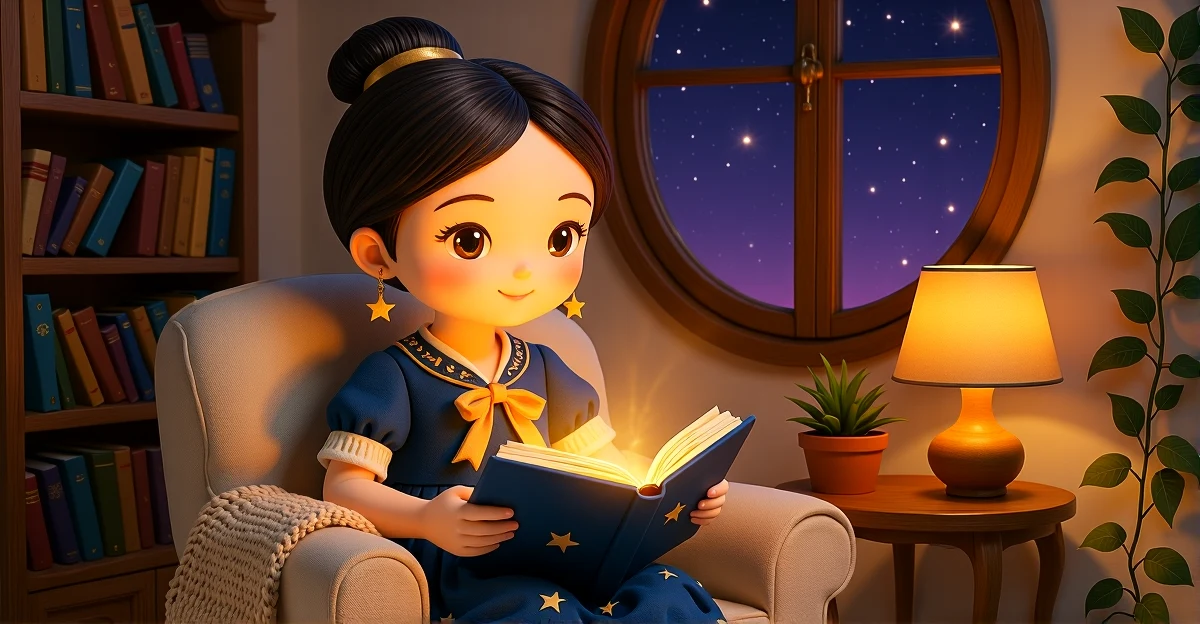
Let me share what the Magic Book and the research tell us about this. When your toddler shouts and screams instead of talking normally, they're showing you that their brain is right on track developmentally. You see, volume control isn't something children are born knowing how to do. It's a learned skill that requires several different parts of the brain to work together, and those connections are still being built in your two or three year old.
Think about everything that goes into volume control. Your child needs to be aware of their own voice level, which requires self-monitoring. They need to understand social context, knowing that the library requires a different voice than the playground. They need impulse control to actually modulate their volume even when they're excited or upset. And they need the physical coordination to control their vocal cords and breathing. That's a LOT for a little person who's only been on this planet for two or three years!
Here's something that might surprise you. Your toddler's loud voice is actually a sign of healthy development in many ways. They're discovering the power of their voice. They're experimenting with sound. They're learning that they can make an impact on the world around them. That's WONDERFUL! The challenge is that they haven't yet learned the social awareness piece, the understanding that different situations call for different volume levels.
What Brain Development Research Tells Us
The Center on the Developing Child at Harvard University explains that responsive, attentive relationships with caring adults help build the strong foundation for a child's brain architecture. And this applies directly to helping toddlers learn appropriate communication, including volume control. Every time you model a calm voice, every time you gently remind them about indoor voices, you're helping build those neural pathways.
Responsive, attentive relationships with a caring adult help build a strong foundation for a child's brain architecture and for all future health and well-being.
— Center on the Developing Child at Harvard University
Research from the National Academies of Sciences emphasizes that young children rely heavily on learning from others and become astute at distinguishing reliable adult speakers by preschool years. Development of social and cognitive skills requires precision and controlled production of sound for speaking. Communication skills develop through consistent interaction and modeling from caregivers.
The National Institute on Deafness and Other Communication Disorders emphasizes that speech and language development, including social communication skills like volume modulation, follows developmental milestones that unfold gradually through early childhood. This isn't something you can rush. It's something you support, gently and patiently, as your child's brain develops.
The Four Components of Volume Control
Understanding what your child is learning can help you be more patient with the process. Volume control requires:
- Self-Awareness: Your child needs to be aware of their own voice level, which requires the ability to monitor themselves while they're speaking.
- Social Understanding: They need to understand that different places and situations call for different voice levels. This is a sophisticated social skill!
- Impulse Control: Even when they KNOW they should use a quiet voice, they need the self-regulation to actually do it when they're excited or upset.
- Physical Coordination: They need the physical ability to control their vocal cords, breathing, and mouth movements to produce different volumes.
When you see it this way, it's clear why this skill takes time to develop. Your toddler is working on building all four of these components simultaneously!
Gentle Strategies That Actually Work
So what can you do to help? Let me share some gentle, research-backed strategies that the Magic Book and I have seen work beautifully.
1. Model the Voice Level You Want to Hear
This is SO important. When your child is shouting, your instinct might be to raise your voice to be heard over them. But here's the magic: when you lower your voice instead, you're showing them what an indoor voice sounds like. You're giving their brain the example it needs to learn from. Try speaking in a calm, quiet tone, and watch how often your child naturally starts to match your volume.
2. Make It Playful
Toddlers learn best through play, so turn volume control into a game. You can practice loud voices and quiet voices together. Pretend to be different animals: a tiny mouse with a tiny voice, a big lion with a big voice. Practice whisper voices and talking voices and outside voices. When it's fun, your child's brain is much more receptive to learning.
3. Give Them the Words They Need
Sometimes toddlers shout because they don't have the vocabulary to express what they need. Teach them to say, "I need help," or "I'm excited," or "I want your attention." The more words they have, the less they need to rely on volume to communicate.
4. Acknowledge Their Feelings While Guiding Their Behavior
You can say, "I can see you're really excited about the playground! Let's use our inside voice while we're in the car, and then you can use your big outside voice when we get there." This validates their emotion while teaching them about appropriate context.
5. Be Patient with Yourself and Your Child
The research shows that toddlers who receive consistent, gentle guidance about voice volume in a supportive environment develop stronger communication and social awareness skills that serve them throughout life. But that word "consistent" is key. This isn't something that changes overnight. It's something that unfolds over months and years as your child's brain develops.
When you feel frustrated by the constant noise, when you find yourself wishing for just five minutes of quiet, that's completely normal too. Parenting a toddler is LOUD, and it's okay to need breaks. It's okay to step outside for a moment of quiet. It's okay to use headphones sometimes. Taking care of yourself helps you show up as the calm, patient guide your child needs.
A Story That Can Help
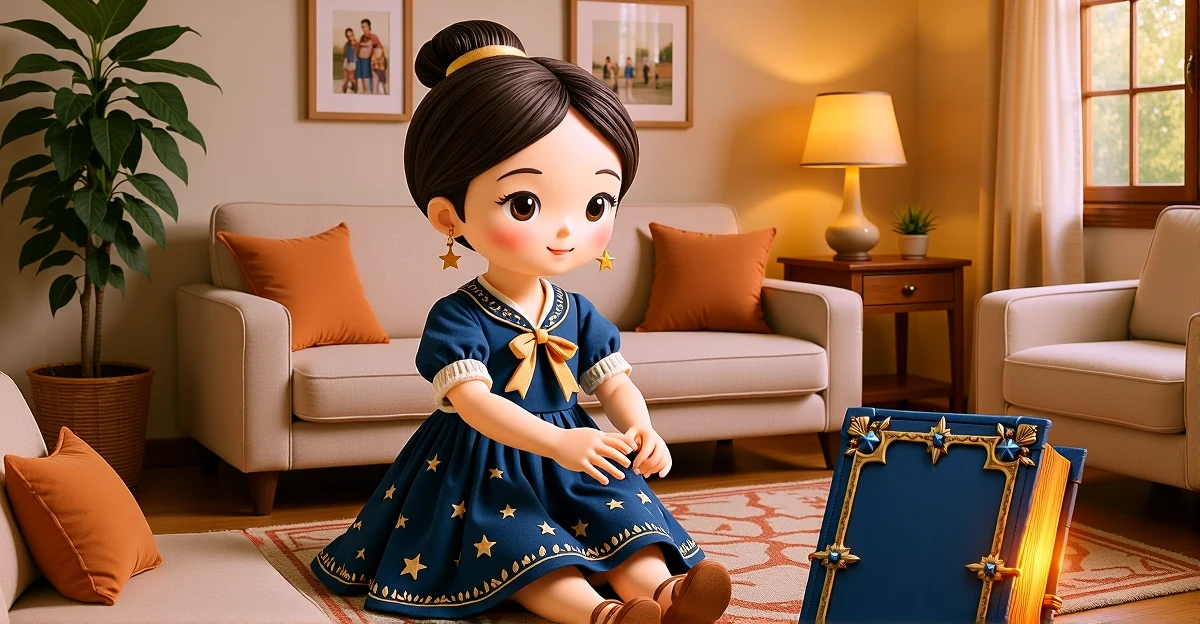
In The Book of Inara, we have a beautiful story that brings these concepts to life for your child in a magical, engaging way:
The Magic Show Where Everything Says Hello
Perfect for: Ages 2-3
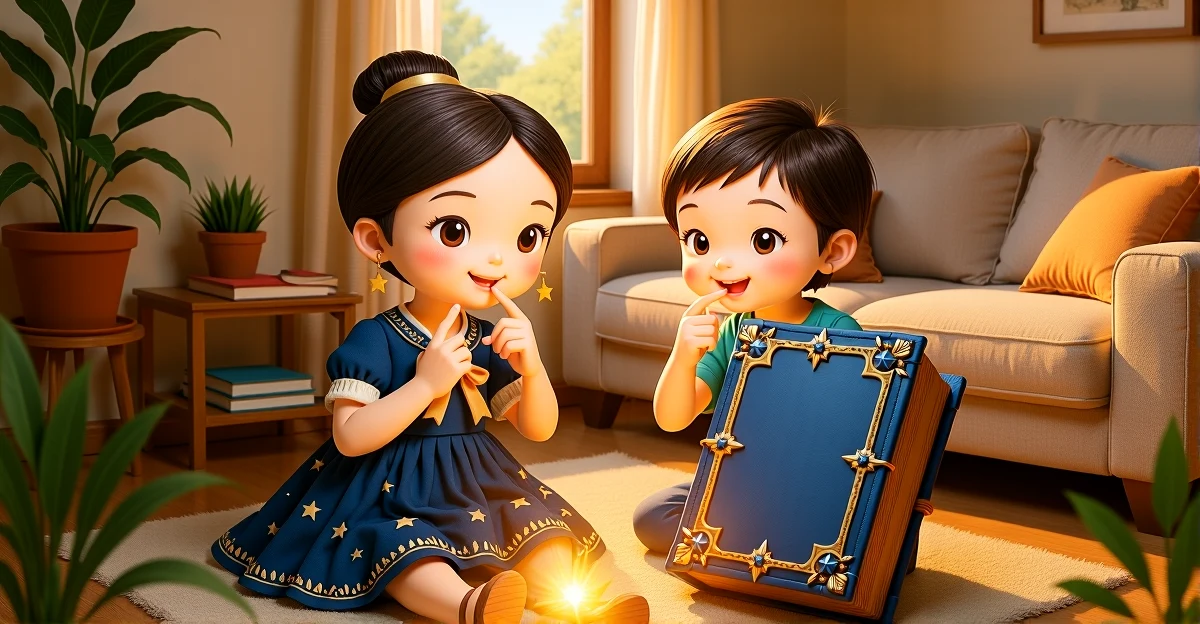
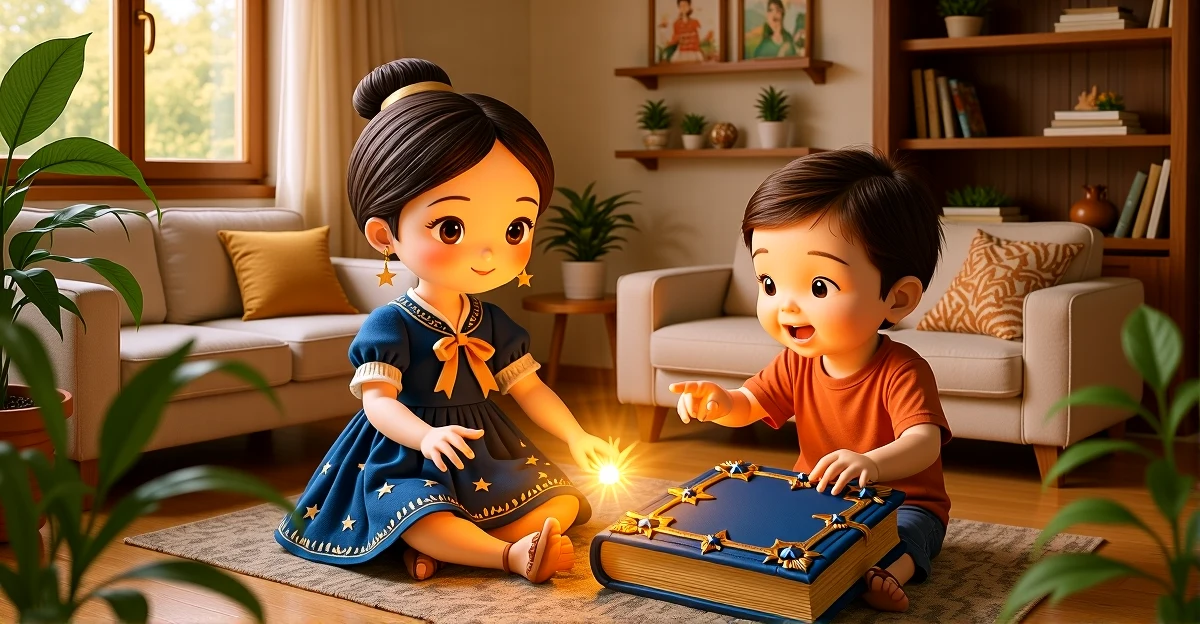
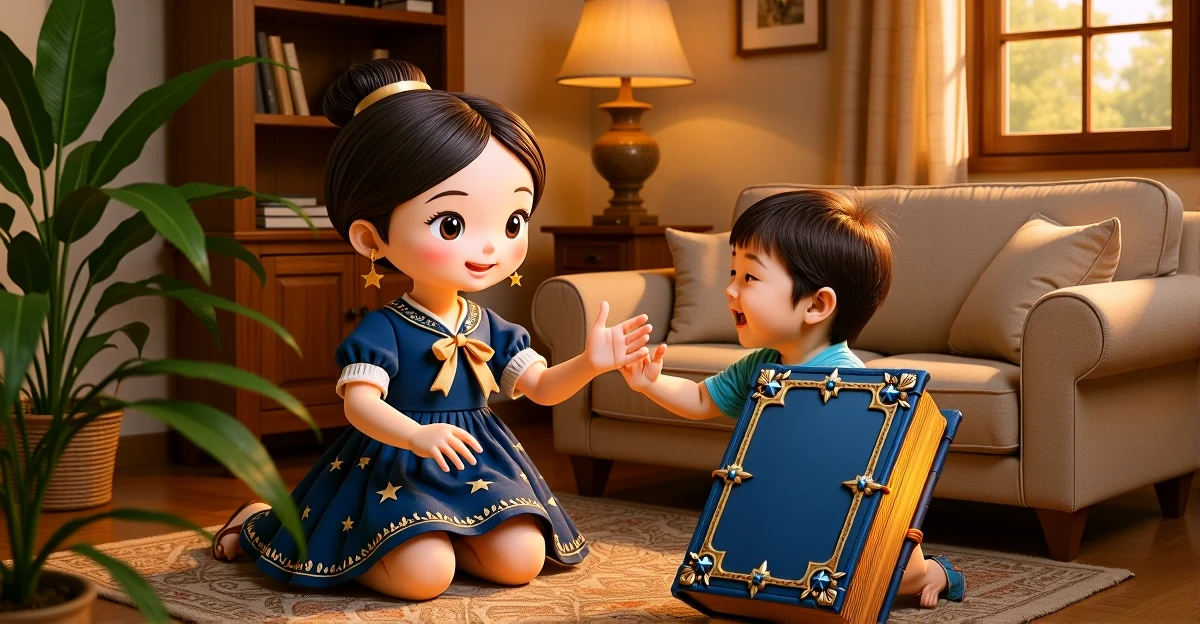
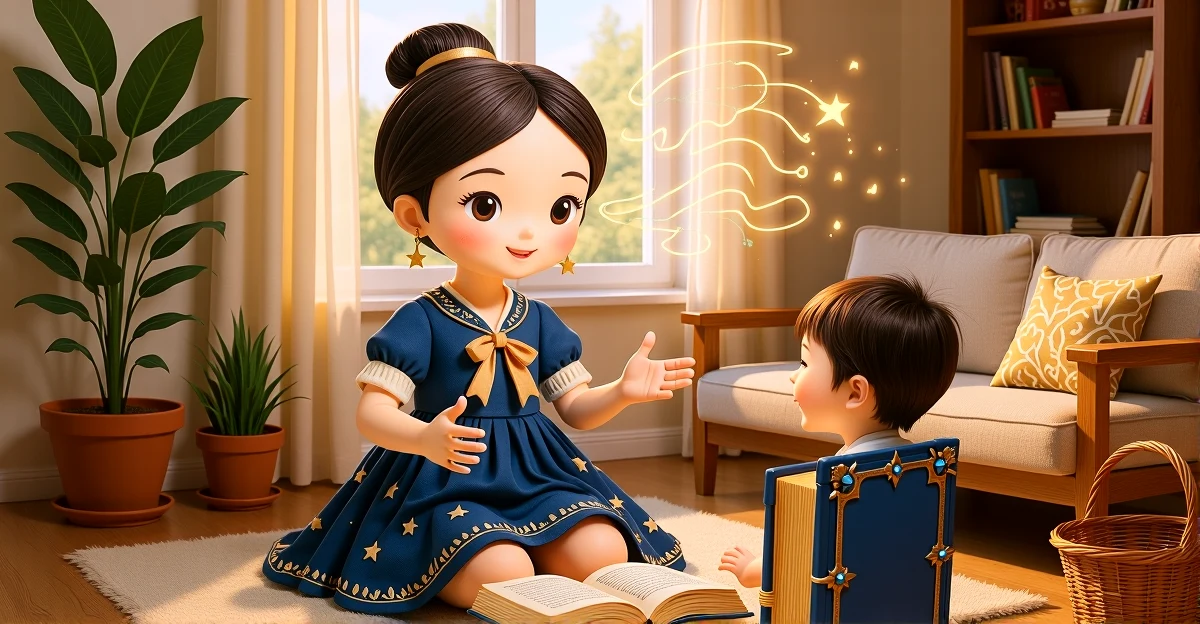
What makes it special: Anya and Noah discover a magical puppet theater where every prop giggles and introduces itself. They learn that everything in the world wants to be their friend, and they discover how to greet and interact with these magical friends in gentle, appropriate ways.
Key lesson: When Anya and Noah learn to use gentle greetings with the magical props, the props respond with warmth and friendship. It's a beautiful example of how calm, appropriate communication creates positive connections.
How to use this story: After you read this story with your child, you can practice gentle greetings together. You can talk about how the characters learned to communicate appropriately with their new friends. You can even create your own magic show at home, practicing different ways of saying hello and using different voice levels for different situations.
The magic of stories is that they teach these lessons in a way that feels natural and fun for children. Your toddler isn't thinking, "Oh, I'm learning about volume control." They're thinking, "I love this story about the magic show!" But their brain is absorbing those lessons about appropriate communication all the same.
You're Doing Beautifully
Remember, every time your child shouts or screams, they're not trying to be difficult. They're showing you where they are developmentally. They're showing you what skills they're still building. And with your patient, loving guidance, they WILL learn. The neural pathways will strengthen. The social awareness will develop. The volume control will come.
Your child is learning one of the most complex skills humans ever master. They're learning to be aware of themselves, aware of others, and aware of social context all at the same time. They're learning to control their impulses and their bodies in increasingly sophisticated ways. And they're doing all of this while their brain is still under construction.
So the next time your toddler shouts across the quiet library or screams with excitement in the grocery store, take a deep breath. Remember that this is normal, healthy development. Remember that you're not alone. Remember that with your gentle, consistent guidance, your child is building the skills they need. And remember that the Magic Book and I are always here to support you on this journey.
With love and starlight,
Inara
Related Articles
- Why Your Toddler Says Mine to Everything (And Why That is Beautiful)
- The Beautiful Science of Toddler Empathy: Supporting Your Child's Caring Heart (Ages 2-3)
- Understanding Parallel Play: Why Your Toddler Plays Near (Not With) Other Kids
- When Your Toddler Hurts Themselves During Big Feelings: Understanding and Gentle Support
- Understanding Why Toddlers Hit and Bite (And Gentle Ways to Help)
Show transcript
Hello, wonderful parent! It's me, Inara, and I am SO happy you're here today. You know, the Magic Book and I have been hearing from so many parents lately about something that might sound familiar to you. Does your toddler seem to have only one volume setting, and that setting is LOUD? Do they shout when they're excited, scream when they're frustrated, and seem completely unaware that there's such a thing as an indoor voice?
First, let me tell you something really important. You are not alone in this. This is one of the MOST common challenges parents of two and three year olds face, and there's a beautiful reason why. Your little one isn't being difficult or trying to drive you up the wall. Their brain is actually in the middle of learning one of the most complex skills humans ever master, and that's volume control and social awareness.
Let me share what the Magic Book and the research tell us about this. When your toddler shouts and screams instead of talking normally, they're showing you that their brain is right on track developmentally. You see, volume control isn't something children are born knowing how to do. It's a learned skill that requires several different parts of the brain to work together, and those connections are still being built in your two or three year old.
The Center on the Developing Child at Harvard University explains that responsive, attentive relationships with caring adults help build the strong foundation for a child's brain architecture. And this applies directly to helping toddlers learn appropriate communication, including volume control. Every time you model a calm voice, every time you gently remind them about indoor voices, you're helping build those neural pathways.
Here's something that might surprise you. Your toddler's loud voice is actually a sign of healthy development in many ways. They're discovering the power of their voice. They're experimenting with sound. They're learning that they can make an impact on the world around them. That's WONDERFUL! The challenge is that they haven't yet learned the social awareness piece, the understanding that different situations call for different volume levels.
Think about everything that goes into volume control. Your child needs to be aware of their own voice level, which requires self-monitoring. They need to understand social context, knowing that the library requires a different voice than the playground. They need impulse control to actually modulate their volume even when they're excited or upset. And they need the physical coordination to control their vocal cords and breathing. That's a LOT for a little person who's only been on this planet for two or three years!
The National Institute on Deafness and Other Communication Disorders emphasizes that speech and language development, including social communication skills like volume modulation, follows developmental milestones that unfold gradually through early childhood. This isn't something you can rush. It's something you support, gently and patiently, as your child's brain develops.
So what can you do to help? Let me share some gentle, research-backed strategies that the Magic Book and I have seen work beautifully.
First, model the voice level you want to hear. This is SO important. When your child is shouting, your instinct might be to raise your voice to be heard over them. But here's the magic, when you lower your voice instead, you're showing them what an indoor voice sounds like. You're giving their brain the example it needs to learn from. Try speaking in a calm, quiet tone, and watch how often your child naturally starts to match your volume.
Second, make it playful. Toddlers learn best through play, so turn volume control into a game. You can practice loud voices and quiet voices together. Pretend to be different animals, a tiny mouse with a tiny voice, a big lion with a big voice. Practice whisper voices and talking voices and outside voices. When it's fun, your child's brain is much more receptive to learning.
Third, give them the words they need. Sometimes toddlers shout because they don't have the vocabulary to express what they need. Teach them to say, I need help, or I'm excited, or I want your attention. The more words they have, the less they need to rely on volume to communicate.
Fourth, acknowledge their feelings while guiding their behavior. You can say, I can see you're really excited about the playground! Let's use our inside voice while we're in the car, and then you can use your big outside voice when we get there. This validates their emotion while teaching them about appropriate context.
And here's something really important. Be patient with yourself and with your child. The research shows that toddlers who receive consistent, gentle guidance about voice volume in a supportive environment develop stronger communication and social awareness skills that serve them throughout life. But that word consistent is key. This isn't something that changes overnight. It's something that unfolds over months and years as your child's brain develops.
Now, let me tell you about a story that might help. In The Book of Inara, there's a beautiful tale called The Magic Show Where Everything Says Hello. In this story, Anya and Noah discover a magical puppet theater where every prop giggles and introduces itself. They learn that everything in the world wants to be their friend, and they discover how to greet and interact with these magical friends in gentle, appropriate ways.
What I love about this story is how it shows children that calm, friendly communication creates positive connections. When Anya and Noah learn to use gentle greetings with the magical props, the props respond with warmth and friendship. It's a beautiful example of how appropriate communication, including voice level, helps us connect with others.
After you read this story with your child, you can practice gentle greetings together. You can talk about how the characters learned to communicate appropriately with their new friends. You can even create your own magic show at home, practicing different ways of saying hello and using different voice levels for different situations.
The magic of stories is that they teach these lessons in a way that feels natural and fun for children. Your toddler isn't thinking, Oh, I'm learning about volume control. They're thinking, I love this story about the magic show! But their brain is absorbing those lessons about appropriate communication all the same.
Remember, every time your child shouts or screams, they're not trying to be difficult. They're showing you where they are developmentally. They're showing you what skills they're still building. And with your patient, loving guidance, they WILL learn. The neural pathways will strengthen. The social awareness will develop. The volume control will come.
I want you to know something else. When you feel frustrated by the constant noise, when you find yourself wishing for just five minutes of quiet, that's completely normal too. Parenting a toddler is LOUD, and it's okay to need breaks. It's okay to step outside for a moment of quiet. It's okay to use headphones sometimes. Taking care of yourself helps you show up as the calm, patient guide your child needs.
The experts agree that when adults respond with patience and model appropriate voice levels rather than reacting with frustration, children develop better self-regulation skills. So on the days when you manage to stay calm and model that indoor voice, celebrate that! And on the days when you lose your patience and raise your voice too, give yourself grace. You're learning too, and that's beautiful.
Your child is learning one of the most complex skills humans ever master. They're learning to be aware of themselves, aware of others, and aware of social context all at the same time. They're learning to control their impulses and their bodies in increasingly sophisticated ways. And they're doing all of this while their brain is still under construction.
So the next time your toddler shouts across the quiet library or screams with excitement in the grocery store, take a deep breath. Remember that this is normal, healthy development. Remember that you're not alone. Remember that with your gentle, consistent guidance, your child is building the skills they need. And remember that the Magic Book and I are always here to support you on this journey.
You can find The Magic Show Where Everything Says Hello and so many other helpful stories in The Book of Inara app. Each story is crafted with love to support your child's social and emotional learning in ways that feel magical and fun.
Thank you so much for being here today, wonderful parent. Thank you for seeking to understand your child's development. Thank you for choosing gentle, patient guidance even when it's hard. You're doing such important work, and you're doing it beautifully.
Until our next adventure together, with love and starlight, Inara.