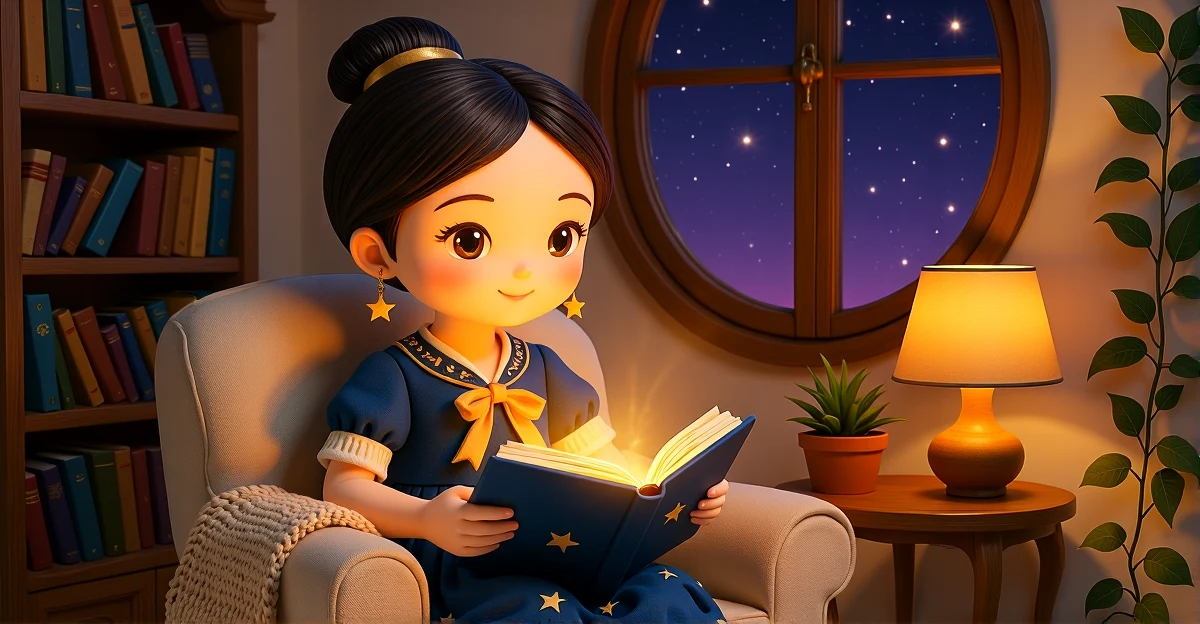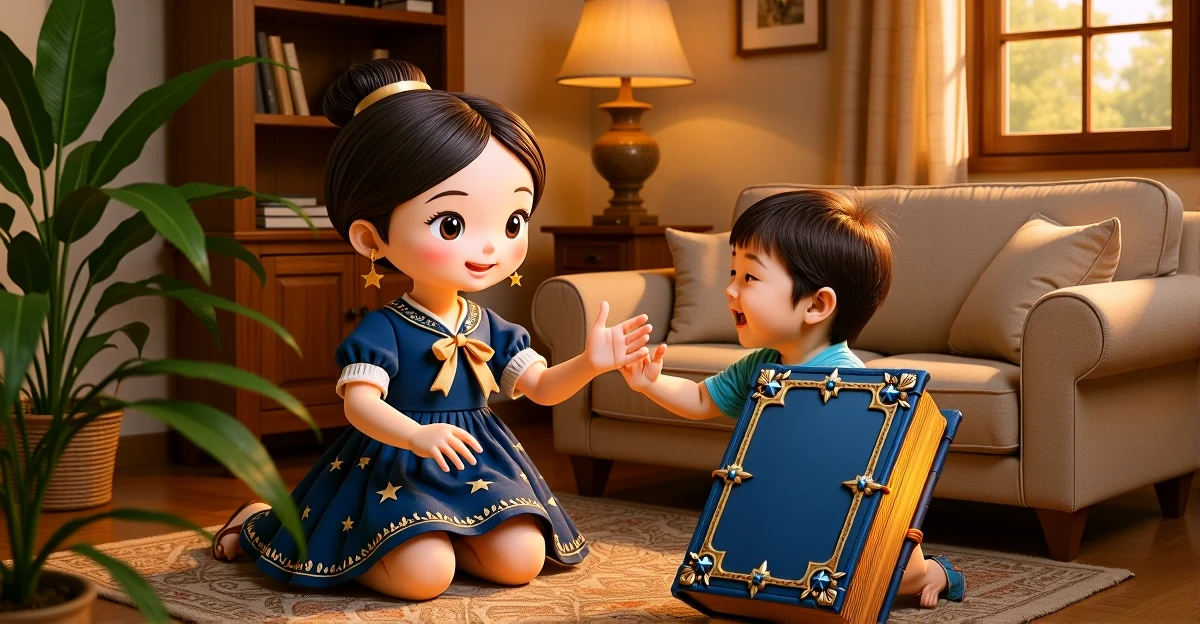

Hello, wonderful parent! It's me, Inara, and the Magic Book and I want to talk with you about something that might be happening in your home right now. Your three or four year old whines and cries instead of simply asking for what they need. You're trying SO hard to help, but you can't understand what they want, and the whining just continues. You might feel frustrated, exhausted, or even worried that you're doing something wrong.
I want you to know something important right now. You are not alone in this, and your child is not being difficult. What's happening is actually something quite WONDERFUL.
In this post, we're going to explore why young children whine instead of using clear words, what research tells us about this beautiful phase of development, and gentle strategies that actually work. Plus, I'll share a story from the Magic Book that can help your child build the exact skills they're learning right now.
Understanding the Bridge Between Feelings and Words
Let me share what the Magic Book has taught me about this phase. When your three or four year old whines instead of using clear words, they're not manipulating you. They're not being stubborn or trying to make your life harder. They're actually in the middle of building one of the most important bridges they'll ever build: the bridge between feelings and words.
Think about it this way. Your child has BIG feelings inside their heart. They feel hungry, tired, frustrated, or overwhelmed. Those feelings are very real and very strong. But here's the challenge: their brain is still learning how to take those feelings, identify them, and turn them into clear words. That's an incredibly complex skill! And whining, believe it or not, is actually a step FORWARD in that journey.
Your child's brain is doing remarkable work right now. They're learning to:
- Recognize what they're feeling inside their body
- Identify which emotion matches that feeling
- Find the right words to describe it
- Organize those words into a clear request
- Communicate that request to you
That's FIVE complex steps! And your little one is working on all of them at once. The whining you hear is their current best effort to communicate while they're still developing these crucial skills.
What Research Tells Us About Whining
Research from child development experts shows us something fascinating about whining. When young children whine, they're using what scientists call a lower intensity expression of distress. The whining typically contains some verbal content, that up and down melody you hear, and it represents their current best effort to communicate while they're still developing the language skills they need.
Whining typically contains some verbal content with an up-and-down melody and represents children's attempts to communicate needs during a developmental transition period.
— Dr. James Green and colleagues, University of Connecticut
Dr. James Green and his colleagues at the University of Connecticut studied children's vocal expressions and found that whining is part of a normal developmental progression. It's not a problem to fix, it's a phase to support. Young children ages two to four use whining and crying as normal expressions of sadness and distress during emotional regulation challenges. The transition from whining to clear verbal communication is a natural developmental progression that requires patient adult support.
The National Association for the Education of Young Children reminds us that children ages three to four are actively constructing knowledge about how to communicate through their social interactions with caring adults like you. And here's the beautiful part: when you respond with patience and model clear communication, your child gradually develops the skills to express their needs verbally.
Research from the Society for Research in Child Development confirms something SO important: the quality of adult-child conversational exchanges directly impacts children's ability to communicate needs clearly. Children benefit from adults who model clear communication and provide opportunities for practice in low-pressure contexts. Social-emotional learning and communication development are deeply interconnected during the preschool years.
What does this mean for you? It means you have tremendous power to help! Your patient, empathetic responses are not just getting you through the moment, they're actively building your child's communication skills for life.
Gentle Strategies That Actually Work
So what can you do when your child starts whining? Here are strategies that the Magic Book and I have seen work beautifully for families:
1. Get Down to Their Eye Level
When your little one starts whining, physically lower yourself to their eye level. Kneel down, sit on the floor, or bring them up to your lap. This simple act does something magical: it shows them you're truly present and ready to help. It creates connection before communication, and that connection is the foundation for everything else.
2. Help Them Find the Words
Gently guide them toward language. You might say something like, "I can hear that you need something. Can you use your words to tell me?" Or, "I want to help you. Let's find the words together. Are you feeling hungry? Tired? Frustrated?"
You're not demanding they stop whining. You're offering them a bridge to the words they're searching for. You're teaching them that their feelings matter, that words have power, and that you're a safe person who will help them learn.
3. Create a Feelings Chart Together
Draw or print simple faces showing different emotions: happy, sad, frustrated, tired, excited, angry. When your child starts to whine, you can point to the chart and say, "Can you show me how you're feeling?" This gives them a tool to communicate before they have all the words. It's like training wheels for emotional expression!
4. Model Your Own Feelings Out Loud
Your child is watching how YOU express your needs. When you're frustrated, try narrating your own feelings out loud. You might say, "I'm feeling frustrated right now because I can't find my keys. I'm going to take a deep breath and look carefully." You're modeling exactly what you want them to learn. You're showing them that feelings are normal, that we can name them, and that we can handle them calmly.
5. Validate First, Then Guide
Before you try to solve the problem or redirect the whining, validate what they're experiencing. "I can see you're having a hard time right now. Your body is telling me something is wrong." This validation helps them feel seen and understood, which often reduces the intensity of the whining and makes them more receptive to finding words.
6. Practice During Calm Moments
Don't wait for whining to teach communication skills. During peaceful moments, practice naming feelings together. Read books about emotions. Play games where you make different feeling faces. Build the vocabulary and awareness during times when emotions aren't running high, and those skills will be more accessible during challenging moments.
Remember, every time you help them find the words, you're strengthening that bridge between feelings and language. You're not just surviving this phase, you're actively helping your child develop crucial life skills.
A Story That Can Help
In The Book of Inara, we have a beautiful story that brings these concepts to life for your child in the most magical way:
The Garden Where Hearts Bloom
Perfect for: Ages 2-4
What makes it special: This story teaches children to listen to their inner wisdom and trust the feelings in their hearts. When Milo and Nana discover a magical garden where heart-shaped flowers glow when children listen to what their hearts are telling them, your child learns something SO important: their feelings have messages worth paying attention to and sharing.
Key lesson: Listening to our hearts is the first step to sharing what we need with others. When children learn to recognize what their heart is telling them, they develop the self-awareness needed to communicate those needs verbally rather than through whining or crying.
How to use this story: After you read it together, you can help your child practice by asking, "What is your heart telling you right now?" This builds the emotional awareness that makes clear communication possible. You're helping them connect their inner feelings to outer words. And that's the bridge we're building!
Remember: This Phase Is Temporary
I want to remind you of something the Magic Book whispers to me often. This phase is temporary. Your child WILL learn to express their needs clearly. Right now, they're doing their very best with the skills they have. And you're doing your very best to support them. That's all any of us can do, and it's more than enough.
Some days will be harder than others. Some days, you might feel like you've tried everything and the whining continues. On those days, please be gentle with yourself. Take a break if you need to. Ask for help. Remember that you're teaching your child one of life's most important skills, and that takes time and patience and so much love. You're giving all of that.
The research is so clear on this: children whose communication attempts are met with empathy and gentle coaching, rather than frustration, show stronger growth in their ability to articulate needs clearly. You're not just surviving this phase, you're actively shaping your child's communication abilities for life.
You're Doing Beautifully
The Magic Book and I believe in you. We see the beautiful work you're doing, even on the hard days. We see you getting down to your child's level, helping them find words, staying patient when it's difficult. We see you building that bridge with them, one conversation at a time.
Your child's whining isn't a problem to solve. It's a phase to support. It's evidence that they're growing, learning, and building the skills they need to express themselves clearly. And with your patient, loving guidance, they're going to get there. I promise you that.
Thank you for being here, for caring enough to learn about your child's development, and for showing up with love even when it's hard. The Magic Book and I are always here for you, cheering you on.
With love and starlight,
Inara
Related Articles
- Understanding Fantasy vs Reality in Preschoolers: A Gentle Guide to Teaching Honesty
- Building Friendship Skills in Young Children: A Gentle Guide for Parents
- Understanding Your Child's Attention-Seeking Behavior (And How to Guide Them Gently)
- When Your Child Can't Express Their Feelings: A Gentle Guide to Building Emotional Vocabulary
- Supporting Your Shy Child: Understanding Behavioral Inhibition in Young Children
Show transcript
Hello, wonderful parent! It's me, Inara, and I am so happy you're here today. You know, the Magic Book and I have been hearing from so many parents who are experiencing something that might sound familiar. Your little one whines and cries instead of simply asking for what they need, and it can feel SO frustrating. You're trying to help, but you can't understand what they want, and the whining just continues. I want you to know something important right now. You are not alone in this, and your child is not being difficult. What's happening is actually something quite WONDERFUL.
Let me share what the Magic Book has taught me about this beautiful phase of development. When your three or four year old whines instead of using clear words, they're not manipulating you. They're not being stubborn or trying to make your life harder. They're actually in the middle of building one of the most important bridges they'll ever build, the bridge between feelings and words.
Think about it this way. Your child has BIG feelings inside their heart. They feel hungry, tired, frustrated, or overwhelmed. Those feelings are very real and very strong. But here's the challenge. Their brain is still learning how to take those feelings, identify them, and turn them into clear words. That's an incredibly complex skill! And whining, believe it or not, is actually a step FORWARD in that journey.
Research from child development experts shows us something fascinating. When young children whine, they're using what scientists call a lower intensity expression of distress. The whining typically contains some verbal content, that up and down melody you hear, and it represents their current best effort to communicate while they're still developing the language skills they need. Dr. James Green and his colleagues at the University of Connecticut studied children's vocal expressions and found that whining is part of a normal developmental progression. It's not a problem to fix, it's a phase to support.
The National Association for the Education of Young Children reminds us that children ages three to four are actively constructing knowledge about how to communicate through their social interactions with caring adults like you. And here's the beautiful part. When you respond with patience and model clear communication, your child gradually develops the skills to express their needs verbally. The quality of your conversations with your child directly impacts this developmental progression. You have so much power to help!
So what can you do? First, take a deep breath and remember this is temporary and normal. Your child is learning, and learning takes time. When your little one starts whining, get down to their eye level. Make that connection. Then, gently help them find the words. You might say something like, I can hear that you need something. Can you use your words to tell me? Or, I want to help you. Let's find the words together. Are you feeling hungry? Tired? Frustrated?
You're not just helping them in that moment. You're teaching them that their feelings matter, that words have power, and that you're a safe person who will help them learn. That's BEAUTIFUL work you're doing.
Now, let me tell you about a story from the Magic Book that can help with this. It's called The Garden Where Hearts Bloom, and it's about two friends, Milo and Nana, who discover a magical garden where heart shaped flowers glow when children listen to their inner wisdom. In this story, children learn something so important. Their feelings have messages worth paying attention to and sharing.
When Milo and Nana learn to listen to what their hearts are telling them, they discover they can trust those feelings and find ways to express them. This is exactly the skill your child is building right now. The story shows, in such a gentle and magical way, that listening to our hearts is the first step to sharing what we need with others.
After you read this story together, you can help your child practice. You might ask, what is your heart telling you right now? This builds the emotional awareness that makes clear communication possible. You're helping them connect their inner feelings to outer words. And that's the bridge we're building!
Here's another helpful strategy. Create a feelings chart together. You can draw simple faces showing happy, sad, frustrated, tired, and excited. When your child starts to whine, you can point to the chart and say, can you show me how you're feeling? This gives them a tool to communicate before they have all the words. It's like training wheels for emotional expression!
And remember, your child is watching how YOU express your needs. When you're frustrated, try narrating your own feelings out loud. You might say, I'm feeling frustrated right now because I can't find my keys. I'm going to take a deep breath and look carefully. You're modeling exactly what you want them to learn. You're showing them that feelings are normal, that we can name them, and that we can handle them calmly.
The research is so clear on this. Children whose communication attempts are met with empathy and gentle coaching, rather than frustration, show stronger growth in their ability to articulate needs clearly. You're not just surviving this phase, you're actively helping your child develop crucial life skills. Every time you help them find the words, you're strengthening that bridge between feelings and language.
I also want to remind you of something the Magic Book whispers to me often. This phase is temporary. Your child WILL learn to express their needs clearly. Right now, they're doing their very best with the skills they have. And you're doing your very best to support them. That's all any of us can do, and it's more than enough.
Some days will be harder than others. Some days, you might feel like you've tried everything and the whining continues. On those days, please be gentle with yourself. Take a break if you need to. Ask for help. Remember that you're teaching your child one of life's most important skills, and that takes time and patience and so much love. You're giving all of that.
The Magic Book and I believe in you. We see the beautiful work you're doing, even on the hard days. We see you getting down to your child's level, helping them find words, staying patient when it's difficult. We see you building that bridge with them, one conversation at a time.
If you'd like to explore The Garden Where Hearts Bloom and other stories that help children develop emotional awareness and communication skills, you can find them in The Book of Inara app. These stories are designed with so much care to support exactly what your child is learning right now. They're gentle helpers on this journey.
Remember, wonderful parent, your child's whining isn't a problem to solve. It's a phase to support. It's evidence that they're growing, learning, and building the skills they need to express themselves clearly. And with your patient, loving guidance, they're going to get there. I promise you that.
Thank you so much for being here today, for caring enough to learn about your child's development, and for showing up with love even when it's hard. The Magic Book and I are always here for you, cheering you on.
With love and starlight, Inara.