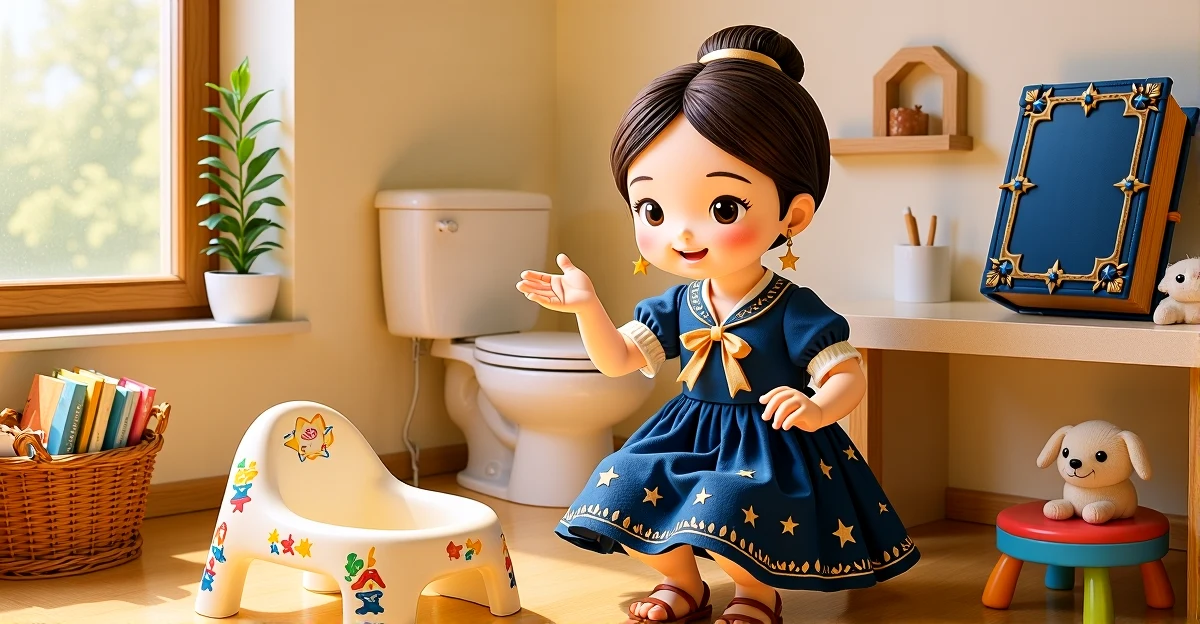

Your child was doing so well. For weeks, maybe even months, they were using the potty consistently. You were celebrating this milestone, feeling proud of how far they'd come. And then, seemingly out of nowhere, the accidents started again. Wet pants. Requests for diapers. Resistance to the bathroom. You might be wondering: What happened? Did I do something wrong? Is my child okay?
Let me tell you something important: you are not alone, and what you're experiencing is completely normal. Toilet training regression—when a child who was successfully using the potty starts having frequent accidents again—is one of the most common challenges parents of toddlers face. And here's the beautiful truth: it's not a failure. It's actually a sign that your child is processing something important in their world.
In this post, I'll share what research tells us about why toilet training regression happens in young children ages 2-3, how your response can make all the difference, and gentle, evidence-based strategies to support your child through this temporary phase. Plus, I'll introduce you to a story from the Magic Book that can help create comfort and connection around bathroom time.
What Is Toilet Training Regression?
Toilet training regression occurs when a child who has been successfully using the potty for a period of time—usually at least a few weeks—suddenly starts having accidents again. This might look like wet or soiled pants during the day, nighttime accidents after being dry, or outright refusal to use the toilet.
The key word here is "suddenly." We're not talking about the occasional accident that happens when a child is deeply engaged in play or learning a new skill. We're talking about a noticeable pattern of accidents that feels like a step backward from where your child was just days or weeks ago.
And here's what's SO important to understand: this is incredibly common. According to pediatric experts, toilet training regression affects many families, and it's almost always temporary. Dr. Noah Schwartz, a pediatrician at Cleveland Clinic, emphasizes that regressions are a normal part of the learning process, not a sign that something is wrong with your child or your parenting.
Why Does Toilet Training Regression Happen?
When young children between ages 2 and 3 experience toilet training regression, it's almost always because their little minds and hearts are working hard to understand changes happening around them. Let me explain what research tells us about this.
The Connection Between Stress and Regression
Dr. Schwartz explains that stress is the most common reason for toilet training regression. But here's what's fascinating: what feels stressful to a young child might not be what we adults would consider stressful. In fact, even positive changes can trigger regression.
"Anything that's new or perceived to be new, or different or stressful for a child can invoke a regression. As a parent, a potty training regression can be really challenging. It's really common for kids to have accidents and regressions, though. And how their parents handle them can make the difference in how long they continue."
— Dr. Noah Schwartz, Pediatrician, Cleveland Clinic
Common triggers for toilet training regression include:
- Starting a new daycare or preschool - Even if your child seems excited about their new school, their brain is processing SO much new information: new routines, new caregivers, new friends, new expectations.
- Welcoming a new sibling - The arrival of a baby brother or sister is a major life transition that shifts family dynamics and requires significant emotional adjustment.
- Moving to a new home - New spaces, new rooms, even a new bathroom can feel disorienting to a young child.
- Changes in family dynamics - Parents returning to work, separation or divorce, or even a beloved grandparent visiting can shift a child's sense of routine and security.
- Developmental leaps - When children are working hard on new skills like language development, physical coordination, or social understanding, their cognitive resources are stretched thin.
How the Brain Processes Change
Here's what's happening in your child's developing brain: when they face changes or transitions, their cognitive and emotional resources are directed toward processing these new experiences. Think of it like a computer running multiple programs at once—something has to slow down to keep everything functioning.
The skill they recently learned—staying dry and using the potty—temporarily takes a back seat while their brain prioritizes what feels most urgent: understanding and adapting to the changes around them. It's not that they've forgotten how to use the potty. It's that their attention is somewhere else, somewhere that feels more important to their developing sense of safety and understanding.
Your Response Makes All the Difference
Here's where your role becomes SO powerful. Research consistently shows that how parents respond to toilet training regression significantly impacts how long it lasts and how children feel about themselves during this phase.
When we respond with patience and understanding rather than frustration or pressure, children move through regression more quickly. When we validate their experience and offer gentle support, we're teaching them that challenges are temporary, that setbacks are normal, and that we're here to help them through difficult moments.
What NOT to Do
First, let's talk about what doesn't help:
- Punishment or shame - Scolding, expressing disappointment, or making your child feel bad about accidents will only increase their stress and likely prolong the regression.
- Pressure or urgency - Constantly asking "Do you need to go potty?" or hovering anxiously can create performance pressure that makes accidents more likely.
- Comparison to other children - "Your friend Emma doesn't have accidents anymore" creates shame and doesn't address the underlying cause.
- Giving up entirely - While it's tempting to go back to diapers full-time, this can confuse your child about expectations and prolong the regression.
What DOES Help
Evidence-based approaches prioritize understanding over pressure, validation over frustration, and patience over punishment. Here's what works:
- Stay calm and matter-of-fact - When accidents happen, respond with gentle neutrality: "Oops, you had an accident. Let's get you cleaned up." No drama, no disappointment, just practical help.
- Return to basics - Bring back the strategies that worked when you first started potty training. If sticker charts helped before, use them again. If gentle reminders worked, reintroduce them.
- Increase support temporarily - Offer more frequent bathroom breaks, more reminders, more presence. Think of this as scaffolding that you'll gradually remove as your child regains confidence.
- Talk with your child - Get down on their level and ask if anything feels different or scary. Sometimes children can't articulate what's bothering them, but the conversation itself shows them you're paying attention and you care.
- Validate their feelings - "I know starting your new school is a big change. Your body is learning to adjust. I'm here to help you."
- Celebrate small wins - When your child does use the potty successfully, offer warm encouragement: "You did it! I'm so proud of you for listening to your body."
The Power of Child-Led Learning
Early childhood educator Janet Lansbury offers beautiful perspective on this phase. She reminds us that when children are allowed to lead their own potty learning journey with gentle support, they develop deeper self-confidence that extends beyond toileting to other developmental areas.
"When children own their potty learning accomplishment, the result is a child whose self-confidence grows in all areas."
— Janet Lansbury, Early Childhood Educator
This means that how we handle toilet training regression isn't just about getting back to dry pants—though that's certainly the practical goal. It's about teaching our children that setbacks are normal, that we believe in them, and that learning happens in waves, not straight lines.
When we allow children autonomy in the process, when we offer support without pressure, we're building lasting confidence rather than compliance-based training. We're showing them that their bodies are their own, that they can trust themselves, and that we're here as guides, not controllers.
Practical Strategies for Supporting Your Child
Let's get practical. Here are specific strategies you can implement today to support your child through toilet training regression:
1. Create a Calm Bathroom Environment
Make the bathroom feel safe and inviting. Add a nightlight if darkness feels scary. Keep a favorite book nearby. Play gentle music. The goal is to remove any anxiety associated with the space itself.
2. Establish Consistent Routines
During times of change, routines provide security. Establish regular bathroom times—after waking up, before meals, before bed—so your child knows what to expect.
3. Offer Extra Comfort and Presence
If your child seems anxious about using the bathroom, offer to stay nearby. Read a story, sing a song, or simply sit with them. Your presence is powerful reassurance.
4. Address the Underlying Stressor
If you can identify what's causing stress—a new sibling, a new school, a change in routine—talk about it openly. Validate your child's feelings and offer extra support in that area.
5. Be Patient with the Timeline
Regression typically lasts a few days to a few weeks. Some children bounce back quickly; others need more time. Trust that this is temporary and that your steady, patient presence is exactly what your child needs.
6. Take Care of Yourself
This is challenging for parents too. It's okay to feel frustrated. Take deep breaths. Ask for support from your partner or a friend. Remember that you're doing beautifully, even when it doesn't feel that way.
A Story That Can Help
In The Book of Inara, we have a beautiful story that brings comfort and connection to moments that feel scary or uncertain—including bathroom-related anxiety:
The Gentle Glow of Friendship
Perfect for: Ages 2-3
What makes it special: This story follows Ayli, a little one who feels scared during a nighttime bathroom trip. She and her friend Igar discover that their night light glows brighter whenever they share comforting hugs. While this story isn't specifically about toilet training regression, it addresses something deeply connected: how scary moments become manageable with gentle support and connection.
Key lesson: When we feel afraid or uncertain, comfort and connection help us feel safe and brave again.
How to use it: After reading this story with your child, you might create your own "gentle glow" ritual around bathroom time. Offer extra comfort and presence during this regression phase. Remind your child that you're there to help them feel safe and confident, just like Ayli's friend was there for her. The story becomes a gentle way to talk about feelings and support without making bathroom time feel like a big, pressured deal.
You're Doing Beautifully
I want you to hear this: toilet training regression is not a failure. It's not a sign that you did something wrong or that your child is struggling in a concerning way. It's a completely normal part of development that happens when young children are processing changes, transitions, or new experiences.
Your child learned to use the potty once. They will learn again. The skills are still there. They just need a little time, a little patience, and a lot of your warm, steady presence to find their way back.
Even on the days when it feels frustrating, even when you're doing more laundry than you'd like, you're doing exactly what your child needs. You're showing up. You're staying calm. You're believing in them. That's the magic that helps children grow.
This phase will pass. Your child will regain their confidence. And the way you handle this moment—with patience, understanding, and gentle support—will teach them something far more valuable than just using the potty. You'll teach them that setbacks are temporary, that they can trust themselves, and that you're always there to help them through.
With love and starlight,
Inara
Related Articles
- Why Bedtime Battles Are Normal Development (And the Gentle Routine That Changes Everything)
- Understanding Your Toddler's Sensitivity to Loud Sounds (And How to Help)
- When Your Toddler Wakes Up Screaming: Understanding Night Terrors
- Understanding Public Meltdowns: Why Your Toddler Isn't Trying to Embarrass You
Show transcript
Hello, wonderful parent. I'm Inara, and I want to talk with you today about something that might be happening in your home right now - your child was doing so well with potty training, and suddenly, the accidents are back.
First, let me say this: you are not alone. What you're experiencing is completely normal, and it doesn't mean you've failed or that your child is regressing in a bad way. In fact, what's happening is a beautiful sign that your child is processing something important in their world.
Let me explain what research tells us about this. When young children between ages two and three experience toilet training regression, it's almost always because their little minds and hearts are working hard to understand changes happening around them. Dr. Noah Schwartz, a pediatrician at Cleveland Clinic, explains that stress is the most common reason for these regressions. And here's what's so important to understand - what feels stressful to a young child might not be what we adults would consider stressful.
Starting a new daycare, welcoming a new baby sibling, moving to a new home, or even smaller changes like a new bedtime routine - these transitions ask your child's brain to work overtime. And when their cognitive and emotional resources are focused on processing these changes, the skill they recently learned - staying dry - temporarily takes a back seat. It's not that they've forgotten. It's that their attention is somewhere else, somewhere important.
Think about it this way. When you're going through something challenging in your own life - maybe a big project at work, or a family situation that's weighing on your mind - you might forget to do things you normally do automatically. You might leave your keys in unusual places, or forget an appointment. Your child's experience is similar. They're not choosing to have accidents. They're simply overwhelmed by the work of growing and adapting.
Now, here's where your response becomes so powerful. Research shows that how parents handle regression significantly impacts how long it continues. When we respond with patience and understanding rather than frustration or pressure, children move through this phase more quickly. When we validate their experience and offer gentle support, we're teaching them that challenges are temporary and that we're here to help them through.
So what does this look like practically? First, take a deep breath. This is temporary. Your child will get back on track. Second, return to the basics that worked when you first started potty training. If sticker charts helped before, bring them back. If gentle reminders worked, use them again. The strategies that built confidence initially will help rebuild it now.
Third, and this is so important - talk with your child. Get down on their level and ask if anything feels different or scary. Sometimes children can't articulate what's bothering them, but the conversation itself shows them you're paying attention and you care. Keep your tone warm and nonjudgmental. If your child senses you're upset about the accidents, it can actually make the regression last longer.
Early childhood educator Janet Lansbury reminds us that when children are allowed to lead their own potty learning journey with gentle support, they develop deeper self-confidence that extends beyond toileting to other developmental areas. This means that how we handle this regression isn't just about getting back to dry pants - it's about teaching our children that setbacks are normal, that we believe in them, and that learning happens in waves, not straight lines.
Now, I want to share something with you. In the Magic Book, there's a story called The Gentle Glow of Friendship. It's about a little one named Ayli who feels scared during a nighttime bathroom trip. She and her friend Igar discover that their night light glows brighter whenever they share comforting hugs. This story isn't about fixing toilet training regression - but it is about something deeply connected. It's about how scary moments become manageable with gentle support and connection.
When you read this story with your child, you might create your own gentle glow ritual around bathroom time. Maybe you offer extra comfort and presence during this phase. Maybe you remind your child that you're there to help them feel safe and confident, just like Ayli's friend was there for her. The story becomes a gentle way to talk about feelings and support without making bathroom time feel like a big, pressured deal.
Here's what I want you to remember. Toilet training regression is not a failure. It's a sign that your child is processing something important. It's a sign that they're growing, adapting, and learning to navigate their world. And most importantly, it's temporary.
Your child learned to use the potty once. They will learn again. The skills are still there. They just need a little time, a little patience, and a lot of your warm, steady presence to find their way back.
You're doing beautifully. Even on the days when it feels frustrating, even when you're doing more laundry than you'd like, you're doing exactly what your child needs - you're showing up, you're staying calm, and you're believing in them. That's the magic that helps children grow.
With love and starlight, Inara.