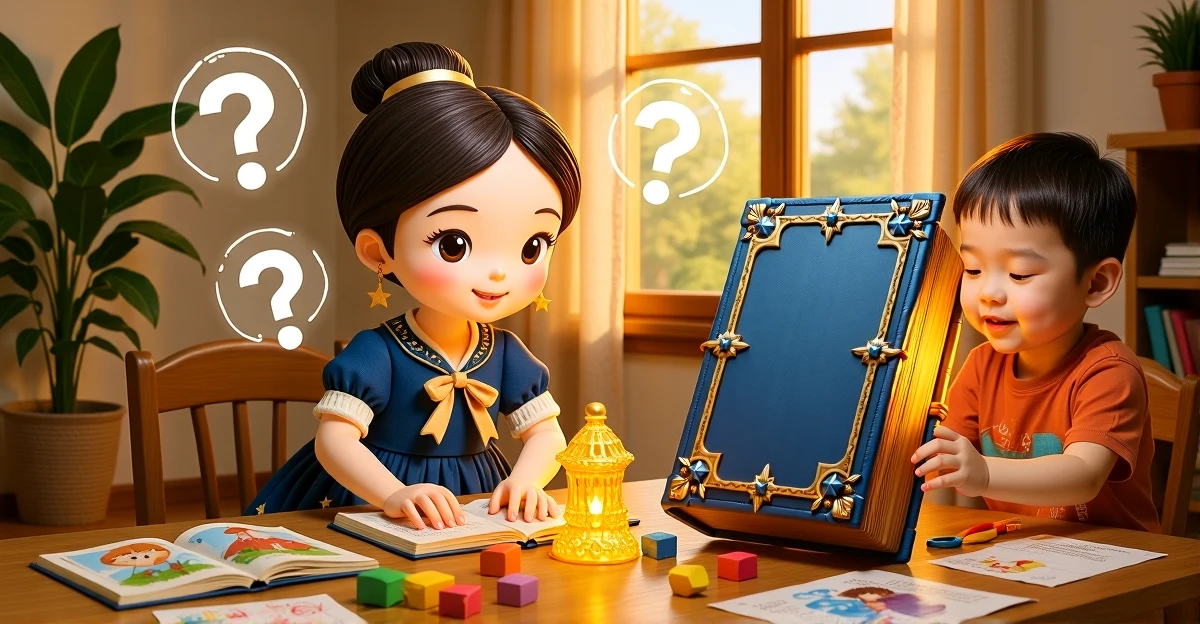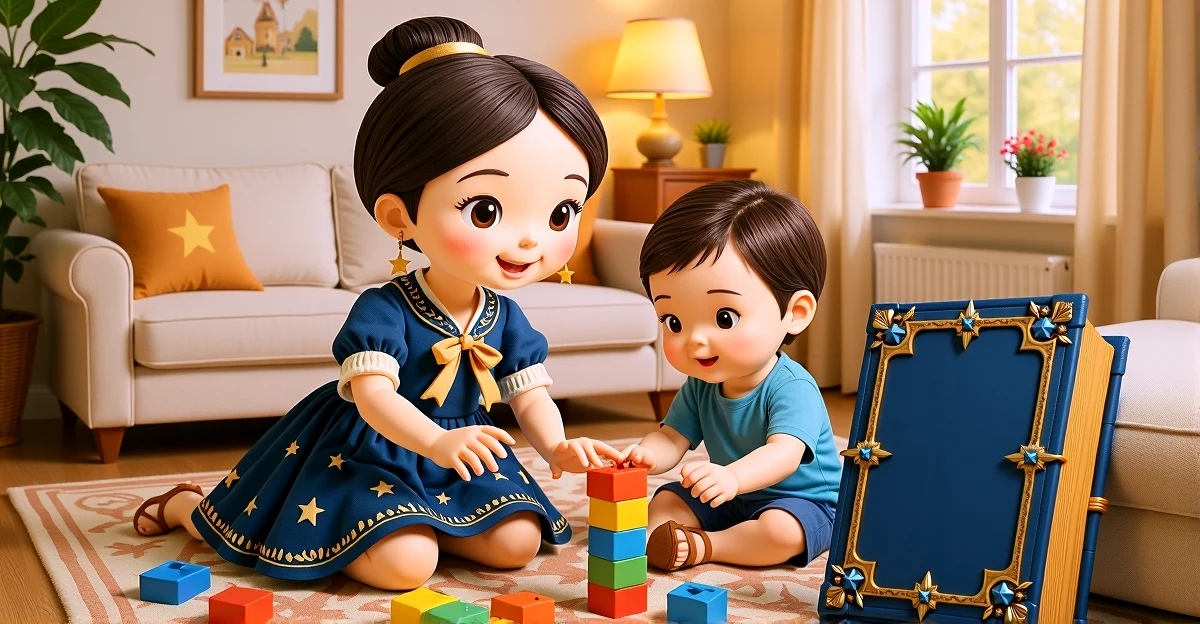

You watch your child carefully arrange their blocks in the same pattern they have used for weeks. When you suggest trying something new, something creative, they hesitate. Maybe they shake their head. Maybe they return to what they know, what feels safe. And perhaps, in a quiet moment, you have wondered: Is my child avoiding creative thinking? Should I be worried?
Oh, wonderful parent, let me share something BEAUTIFUL with you. What you are seeing is not a problem. It is not a limitation. It is actually a crucial phase of development, and understanding it changes everything.
In this post, we will explore why children aged 6-7 sometimes prefer established patterns, what research tells us about creative development at this age, and gentle strategies to nurture the innovation that is already growing inside your child. Plus, I will share a magical story that shows children how curiosity unlocks creative possibilities.
The Beautiful Truth About Pattern-Loving Children
Here is what the Magic Book taught me, and what research confirms: when children in this age group prefer patterns and established ways of doing things, they are building the very foundation they need for future innovation.
Think about it this way. Before a child can innovate, before they can think outside the box, they need to understand what the box IS. They need to know the patterns, the rules, the established ways of doing things. It is like learning music. You practice scales before you improvise. You learn the notes before you compose your own song.
Dr. Maite Garaigordobil from the University of the Basque Country conducted twenty years of research on children creativity and development. Her findings are SO important for parents to understand. Children who engage in structured, pattern-based activities are developing crucial skills like focus, attention to detail, and the ability to follow through on tasks. These are not obstacles to creativity. They are the building blocks OF creativity.
What Your Child Is Actually Learning
When your 6 or 7 year old follows established patterns, they are:
- Developing focus and concentration - The ability to stick with something, to see it through, to pay attention to details
- Building confidence through mastery - Knowing they can do something well creates the safety they need to take creative risks later
- Understanding systems and structures - Learning how things work, how pieces fit together, how patterns create outcomes
- Practicing impulse control - Following a pattern requires patience and self-regulation, both essential for creative work
- Creating a foundation for innovation - You cannot break rules creatively until you understand what the rules are
Your child is not stuck. They are learning. And that is BEAUTIFUL.
What Research Says About Creative Development at Ages 6-7
Children aged 6-7 are in such a fascinating developmental window. Their brains are growing and changing in remarkable ways, and what might look like resistance to creativity is often something much more meaningful.
Research shows that this age group is incredibly sensitive to their environment. Dr. Kimberly Sheridan and Dr. Margaret Defeyter conducted cross-cultural studies on children innovation and tool use. Here is what they discovered: when children feel genuine permission to explore, when they are in environments that encourage tinkering and innovation, their creative problem-solving abilities flourish dramatically.
Learning environments supporting tool exploration and invention and conveying ownership over materials may encourage successful tool innovation at earlier ages.
— Dr. Kimberly Sheridan and Dr. Margaret Defeyter, Scientific Reports
This is SO hopeful! It means that what might appear as reluctance to engage in creative thinking often reflects children developing understanding of social norms and boundaries rather than a lack of creative capacity. They are learning when it is safe to explore, when it is okay to try new things, when their ideas will be welcomed.
The Role of Environment in Creative Development
The research is clear on this: environment matters enormously. When children aged 6-7 are given:
- Materials they feel ownership over
- Permission to modify and explore freely
- Time to tinker without pressure for results
- Encouragement for questions and wondering
- Celebration of process over product
Their innovation soars. Their creative problem-solving abilities emerge beautifully. Their natural curiosity finds expression.
Studies on play-based learning show that cooperative-creative play programs significantly increase verbal creativity, graphic-figurative creativity, and original thinking in children this age. The effects are not small. They are substantial, lasting, and they extend beyond creativity to emotional stability, self-concept, and social skills.
The Magic of Curiosity: The Gateway to Innovation
Here is a truth the Magic Book whispers to me: Innovation does not come from forcing creativity. It comes from curiosity. It comes from asking questions. It comes from feeling safe enough to wonder, what if?
Your child who loves patterns, who follows established ways of doing things, they have this capacity for wonder inside them. They are just learning when it is safe to let it out.
Think about the great innovators throughout history. They did not start by breaking all the rules. They started by asking questions. Why does this work this way? What would happen if we tried something different? Could there be another possibility?
Questions are the seeds of innovation. And every child, including your pattern-loving child, is born with the ability to ask questions. Our job as parents is to create the environment where those questions feel welcome, valued, and safe.
Gentle Strategies to Nurture Creative Thinking
So how do we support our children creative development without pushing, without pressure, without making them feel like their current way of being is wrong? Here are research-backed strategies that work:
1. Create Spaces Where There Are No Wrong Answers
Set up a question jar or wonder wall where your child can write down or draw any question they have, no matter how silly it seems. The Magic Book taught me that every question is valuable, every wondering is worth honoring. When children see their questions treated as treasures, they ask more of them.
2. Model Curiosity Yourself
When you are doing everyday tasks together, wonder aloud. I wonder why the sky turns pink at sunset. I wonder how birds know when to fly south. I wonder what would happen if we tried this a different way. You are showing your child that questions are not interruptions. They are invitations to discovery.
3. Give Them Ownership Over Materials and Projects
The research is SO clear on this. When children feel that materials belong to them, when they have permission to modify and explore and even make mistakes, their innovation soars. Set up a tinkering space with cardboard boxes, tape, scissors, markers. Tell them, this is YOUR space. You can create anything you want here. No judgment, no corrections, just exploration.
4. Celebrate the Process, Not Just the Product
When your child does try something new, focus on their courage, their curiosity, their willingness to explore. You tried a new way of building that tower! You asked such an interesting question! You wondered what would happen, and then you tested it out! This builds creative confidence in ways that praising the final product never can.
5. Provide Structured Creative Play Opportunities
Research shows that cooperative-creative play programs have lasting effects on creativity, emotional stability, and self-concept. This does not mean elaborate activities. It means simple things like:
- Building challenges with open-ended materials
- Story creation games where anything can happen
- Art projects with no example to copy
- Dramatic play with costumes and props
- Nature exploration with collection and observation
6. Be Patient With the Timeline
This is SO important. Every child has their own rhythm, their own way of blooming. Some children burst into creative expression early. Others build their foundation carefully, thoughtfully, and then one day, they surprise you with the most innovative ideas you have ever heard. Your child is exactly where they need to be right now. Trust their process. Trust their timeline.
Stories That Can Help
In The Book of Inara, we have beautiful stories that bring these concepts to life for your child. Stories that show them the magic of curiosity, the power of questions, and the joy of creative exploration.
The Giggling Gallery of Forgotten Questions
Perfect for: Ages 6-7
What makes it special: Lucas and Ella discover a magical archive where old photographs actually giggle when you ask them the right questions. At first, they do not know what to do in this mysterious place with all its rules about being quiet and careful. But then Lucas asks a simple question, and everything changes. The photograph giggles with delight! This beautiful story shows children that asking questions unlocks magical possibilities, that curiosity is not something to suppress but something to celebrate.
Key lesson: Innovation does not start with having all the answers. It starts with asking questions. It starts with curiosity. It starts with wonder. When children see Lucas and Ella journey from uncertainty to discovery through the power of questions, they learn that their own curiosity is valuable and important.
You Are Doing Beautifully
Wonderful parent, I want you to know something. Your child is not behind. They are not stuck. They are not avoiding creativity. They are building the foundation they need for a lifetime of innovative thinking.
The research shows us that children who feel safe, who are given permission to explore, who are celebrated for their questions and their process, develop remarkable creative capacities. And you are creating that environment for your child right now, simply by seeking to understand them, by honoring their current phase, by looking for ways to support rather than push.
The Magic Book taught me that every child has their own way of blooming. Some bloom early and bright. Others take their time, building roots deep and strong before they show the world what they can create. Both ways are beautiful. Both ways are exactly right.
Your pattern-loving child is learning focus, mastery, patience, and understanding. These are the very skills that will allow them to innovate beautifully when they are ready. And with your gentle support, with environments that encourage exploration, with stories that show them the magic of curiosity, they will find their own creative voice in their own perfect time.
Keep creating those spaces where questions are welcome. Keep modeling wonder. Keep celebrating their process. You are doing SO beautifully.
With starlight and endless possibility, Inara
Related Articles
Show transcript
Hello, wonderful parent! It's me, Inara, and I am so happy you're here today. You know, the Magic Book and I have been noticing something beautiful happening in homes all around the world. Parents like you are asking such thoughtful questions about their children's development, and today I want to talk about something that might be on your heart.
Maybe you've noticed that your child seems to prefer following established patterns. They like routines, they enjoy doing things the way they've always been done, and when you suggest trying something new or creative, they hesitate. And perhaps you've wondered, is my child avoiding creative thinking? Should I be worried?
Oh, my dear friend, let me share something WONDERFUL with you that the Magic Book taught me. What you're seeing isn't a problem at all. It's actually a beautiful phase of development, and understanding it changes everything.
You see, children aged six and seven are in such a fascinating developmental window. Their brains are growing and changing in remarkable ways, and what might look like resistance to creativity is often something much more meaningful. Let me explain.
Research from some of the world's leading child development experts shows us that when children in this age group prefer patterns and established ways of doing things, they're actually building the very foundation they need for future innovation. Dr. Maite Garaigordobil from the University of the Basque Country conducted twenty years of research on children's creativity, and here's what she discovered. Children who engage in structured, pattern-based activities are developing crucial skills like focus, attention to detail, and the ability to follow through on tasks. These aren't obstacles to creativity, they're the building blocks OF creativity.
Think about it this way. Before a child can innovate, before they can think outside the box, they need to understand what the box IS. They need to know the patterns, the rules, the established ways of doing things. It's like learning music. You practice scales before you improvise. You learn the notes before you compose your own song.
And here's something even more beautiful. The research shows that children aged six and seven are incredibly sensitive to their environment. Dr. Kimberly Sheridan and Dr. Margaret Defeyter conducted fascinating cross-cultural studies and found that when children feel genuine permission to explore, when they're in environments that encourage tinkering and innovation, their creative problem-solving abilities flourish dramatically.
So what does this mean for you, wonderful parent? It means that your child isn't stuck. They're not avoiding creativity. They're building the skills they need, and they're waiting for the right environment to feel safe enough to take creative risks.
The Magic Book whispers this truth to me. Innovation doesn't come from forcing creativity. It comes from curiosity. It comes from asking questions. It comes from feeling safe enough to wonder, what if?
And this is where stories become such powerful helpers. You know, Lucas and Ella, two of the children who visit the Magic Book, had their own journey with this. In a story called The Giggling Gallery of Forgotten Questions, they discover something magical. They find an archive where old photographs actually giggle when you ask them the right questions.
At first, Lucas and Ella don't know what to do. They're in this mysterious place with all these rules about how archives work, how you're supposed to be quiet and careful. But then something wonderful happens. Lucas asks a simple question. He looks at an old photograph and wonders aloud, what game were those children playing? And the photograph giggles! It actually giggles with delight!
And that moment, that beautiful moment, shows us something so important. Innovation doesn't start with having all the answers. It starts with asking questions. It starts with curiosity. It starts with wonder.
Your child who loves patterns, who follows established ways of doing things, they have this capacity for wonder inside them. They're just learning when it's safe to let it out.
So here are some gentle, research-backed ways you can nurture this.
First, create spaces where there are no wrong answers. Maybe it's a question jar where your child can write down or draw any question they have, no matter how silly it seems. The Magic Book taught me that every question is valuable, every wondering is worth honoring.
Second, model curiosity yourself. When you're doing everyday tasks together, wonder aloud. I wonder why the sky turns pink at sunset. I wonder how birds know when to fly south. I wonder what would happen if we tried this a different way. You're showing your child that questions are treasures, not interruptions.
Third, give them ownership over materials and projects. The research is so clear on this. When children feel that materials belong to them, when they have permission to modify and explore and even make mistakes, their innovation soars. Set up a tinkering space with cardboard boxes, tape, scissors, markers. Tell them, this is YOUR space. You can create anything you want here.
Fourth, celebrate the process, not just the product. When your child does try something new, focus on their courage, their curiosity, their willingness to explore. You tried a new way of building that tower! You asked such an interesting question! You wondered what would happen, and then you tested it out! This builds creative confidence.
And fifth, be patient with the timeline. The research shows that structured creative play programs have lasting effects on emotional stability, self-concept, and creative thinking. But these things take time. Your child is exactly where they need to be right now.
You know what the Magic Book taught me? That every child has their own rhythm, their own way of blooming. Some children burst into creative expression early. Others build their foundation carefully, thoughtfully, and then one day, they surprise you with the most innovative ideas you've ever heard.
Your child isn't behind. They're not stuck. They're learning, growing, building the skills they need. And with your gentle support, with environments that encourage exploration, with stories that show them the magic of curiosity, they will find their own creative voice.
After you finish listening to this, I encourage you to explore The Giggling Gallery of Forgotten Questions with your child. Watch how Lucas and Ella discover that asking questions unlocks possibilities. Talk about it together. What questions does your child have? What do they wonder about?
And remember, wonderful parent, you're doing beautifully. Your child is exactly who they're meant to be, right now, in this moment. The Magic Book and I see the wonder in them, and we see the love in you.
With starlight and endless possibility, I'm Inara, and I'm so grateful you're here. Until our next adventure together!