You're trying to share something you find fascinating—a story about ancient civilizations, a tradition from your family's heritage, a moment in history that shaped our world—and your child looks at you with glazed eyes and says, "That's boring." Or maybe they ask, "Why does that even matter?" and you feel your heart sink a little.
If this sounds familiar, I want you to take a deep breath and know something WONDERFUL: you are not alone in this, and your child isn't rejecting history or culture. What's actually happening is that their brilliant, curious brain is asking a very important question. They're asking, "How does this connect to MY world? How does this matter to ME?"
And that, my wonderful friend, is not disinterest. That's actually the beginning of real learning. In this guide, we'll explore why children aged 5-6 need stories instead of facts, what neuroscience tells us about curiosity and learning, and how to transform historical and cultural learning into something your child absolutely loves.
The Beautiful Truth About Your Child's Brain at Ages 5-6
Here's something that will make your heart sing: children between the ages of five and six are in this magical phase where their curiosity is at its absolute PEAK. Research shows that curiosity during kindergarten actually predicts how well children will do in school later on. Isn't that amazing?
Neuroscience researchers Dr. Matthias J. Gruber and Dr. Yana Fandakova discovered something beautiful in their brain imaging studies. When children are curious about something, their brains light up in the most wonderful way. The hippocampus, the prefrontal cortex, and these special reward circuits all work together to make memories stronger and learning deeper. Curiosity isn't just nice to have—it's actually how our brains are designed to learn best.
"Curiosity is a powerful driver of learning, especially in children, and experiencing higher curiosity during kindergarten predicts academic achievement in primary school."
— Dr. Matthias J. Gruber & Dr. Yana Fandakova, Neuroscience Researchers
So when your child says history is boring, they're not showing a lack of curiosity. They're actually demonstrating exactly what researchers have found: their curiosity is activated by stories, by connections, by seeing themselves in what they're learning—not by facts and dates presented in isolation.
Why Facts Feel Boring (But Stories Never Do)
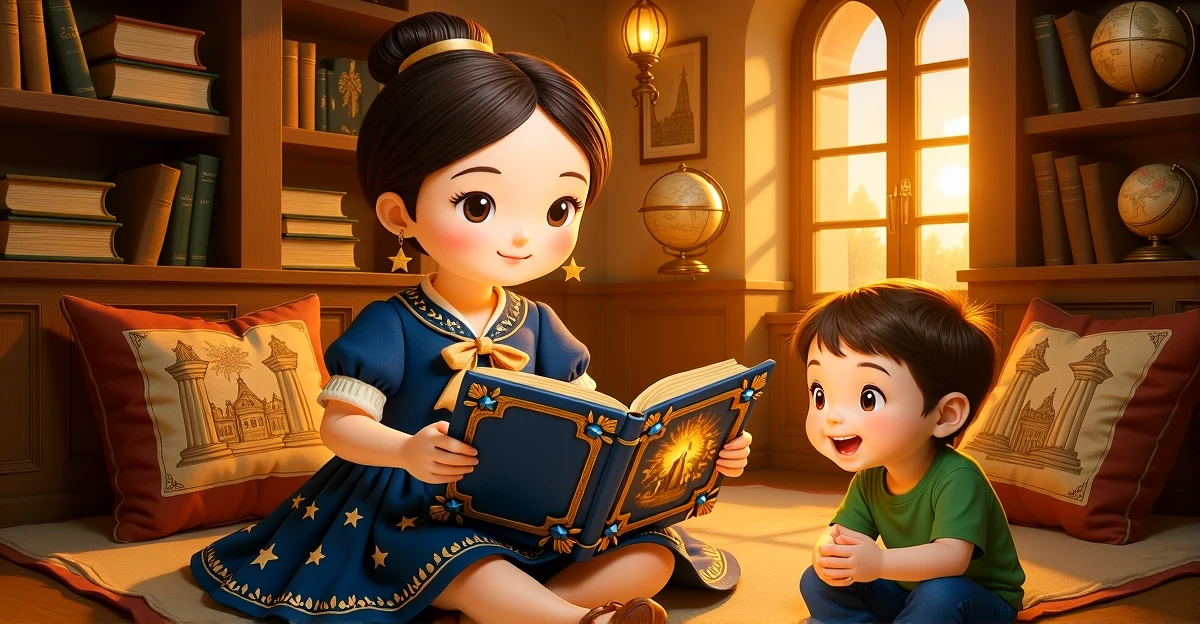
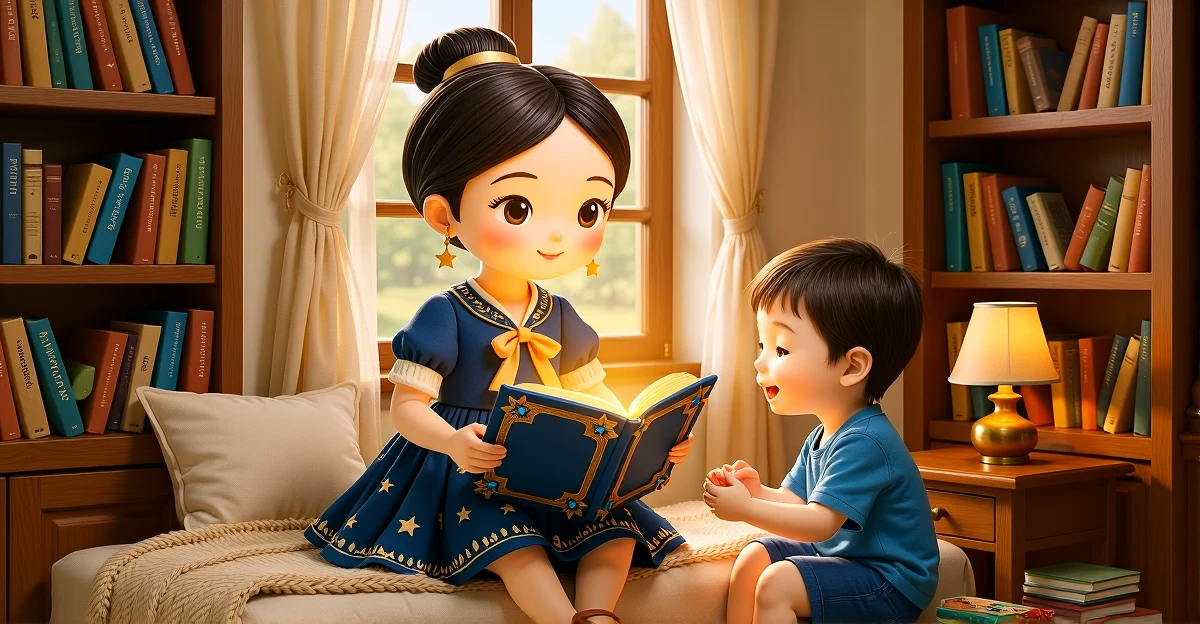
Let me share something the Magic Book taught me that changed everything. When we present history and culture as dusty facts—as things that happened long ago to people who have nothing to do with us—of COURSE it feels boring. But when we present history and culture as stories about real people who had feelings just like we do, who made choices just like we make, who faced challenges and showed courage, suddenly everything shifts. Suddenly, the past comes alive.
The Science of Storytelling
Harvard Business Publishing research reveals that storytelling is one of the most powerful ways humans have EVER learned. Stories convey culture, history, and values in ways that forge emotional connections. Stories make abstract concepts concrete and memorable. When we tell children the STORY of how people lived, what they cared about, what challenges they faced, we're not just teaching history. We're teaching empathy. We're teaching connection. We're teaching them that they're part of this long, beautiful chain of human experience.
Dr. Tyrone C. Howard, a wonderful professor at UCLA, discovered something SO important in his research on cultural learning. He found that culture matters in teaching and learning because when we use cultural connections, when we help children see themselves in what they're learning, we empower them intellectually, socially, emotionally, and even politically. We're not just teaching them facts. We're teaching them that they MATTER, that their voice matters, that they're part of something bigger.
What Your Child Is Really Asking For
When your child says history is boring, they're actually giving you incredibly valuable information. They're telling you that they need:
- Connection to their own experiences: They need to see how ancient Athens connects to their own sense of fairness, how family traditions connect to their daily life, how historical events connect to the world they see around them.
- Stories about people, not just events: They need to understand that the people who lived hundreds or thousands of years ago were just like them, with hopes and dreams and big feelings.
- Hands-on exploration: They need to touch, create, imagine, and play their way into understanding, not just sit and listen to lectures.
- Relevance to their world: They need to know why this matters NOW, how it affects THEM, what it means for their life today.
And here's what's beautiful: what adults sometimes perceive as disinterest is often just a mismatch between how we're teaching and how children naturally learn. Your child isn't broken. They're not difficult. They're actually showing you exactly what they need.
Gentle Strategies That Awaken Curiosity
So how do we transform historical and cultural learning into something children love? Here are research-backed strategies that work beautifully:
1. Start With Their Sense of Fairness
Instead of saying, "Let me tell you about ancient Greece," try asking your child, "Have you ever felt like something wasn't fair? Have you ever wanted to speak up about something that mattered to you?" And when they share, you can say, "You know what? There were children just like you in ancient Athens who felt the same way. And they helped create something called democracy, which means everyone gets a voice. Isn't that WONDERFUL?"
You see, when we connect historical learning to their own experiences, to their own sense of justice and fairness and voice, suddenly it's not boring anymore. Suddenly, it's about THEM.
2. Make It Personal and Alive
Talk to your child about your own family's history. Share stories about their grandparents, about where your family came from, about traditions that matter to you. When learning connects to children's lived experiences, to their family stories, to their community contexts, engagement increases dramatically. Make history personal. Make culture alive.
3. Use Storytelling as Your Primary Tool
Find one story from history or culture that connects to something your child already cares about. If they love animals, tell them about how ancient Egyptians honored cats. If they love building things, tell them about the children who helped build the great cathedrals. If they love fairness, tell them about the children who marched for civil rights. Make it personal. Make it real. Make it a STORY.
4. Honor Their Ways of Knowing
Research from the National Academies of Sciences shows that by age six, children have been exposed to symbol systems and cultural learning patterns that shape how they process information. When historical and cultural learning honors children's ways of knowing, when it builds on their natural curiosity and their cultural capital, engagement flourishes.
5. Connect the Past to Their Present
Help your child see that history isn't just about the past—it's about understanding the present and shaping the future. When they learn about how people in ancient Athens created democracy, they're learning about why they get to vote when they're older. When they learn about cultural traditions, they're learning about identity and belonging. Make these connections explicit and meaningful.
Stories That Bring History to Life
In The Book of Inara, we have beautiful stories that transform historical and cultural learning into magical adventures your child will love. Here's one that's perfect for this challenge:
The Marble Voices of Ancient Athens
Perfect for: Ages 6-7 (also wonderful for curious 5-6 year olds)
What makes it special: This story directly addresses historical and cultural learning by bringing ancient Athens to life through magical marble columns that echo with voices when children speak up for fairness. It transforms abstract historical concepts into tangible, engaging experiences that show children how their own actions connect to history, making the past feel relevant and alive rather than boring and distant.
Key lesson: When Lucas and Ella discover that the ancient marble columns glow and echo with voices as they learn about democracy, children see that history is not just dusty facts but living stories about real people who created the world we live in today. The story shows them that their own voices matter just like the voices of children in ancient Athens.
After reading together: Ask your child, "What would YOU want to speak up about if you lived in ancient Athens? What matters to you?" Watch how their eyes light up when they realize that history is actually about people just like them making choices that mattered.
You're Doing Beautifully
I want you to know something important, my wonderful friend. Raising curious, thoughtful children is one of the most important things anyone can do. And when you honor their curiosity, when you meet them where they are, when you transform facts into stories and history into connection, you're giving them a gift that will last their entire lives.
Your child's question—"Why does this matter?"—is actually the most important question a learner can ask. It's the question that drives all meaningful learning. And when you help them find the answer through stories, through connections to their own lives, through seeing themselves in the past, you're not just teaching them history. You're teaching them that learning is about understanding themselves and their place in this beautiful, diverse human family.
The Magic Book and I are always here for you. We have so many stories that bring history and culture to life in ways that children absolutely love. Stories that show them that the past isn't boring—it's full of adventure and courage and people just like them.
With love and starlight, Inara
Related Articles
- When Screen Time Ends in Meltdowns: Understanding Your Child's Brain and What Actually Helps (Ages 5-6)
- When Your Child Feels Invisible: Understanding Social Isolation and the Gentle Path to Friendship
- Teaching Financial Wisdom to Your 5-6 Year Old: A Gentle Guide to Money and Economics
- When Your Child Says Reading is Boring: The Beautiful Truth About Learning at Their Own Pace
- Supporting Your Child's Social Awareness Development: A Gentle Guide
Show transcript
Hello, my wonderful friend! It's me, Inara, and I am SO happy you're here today. You know, the Magic Book and I have been noticing something that many parents are experiencing, and I want you to know right from the start that you are not alone in this. If your child seems uninterested when you try to share stories about history or culture, if they say things like "that's boring" or "why does that matter," I want you to take a deep breath and know that this is actually a beautiful sign of exactly where they are in their development.
Let me tell you something WONDERFUL that the Magic Book taught me. Your child isn't rejecting history or culture. What's happening is that their brilliant, curious brain is asking a very important question. They're asking, "How does this connect to MY world? How does this matter to ME?" And that, my friend, is not disinterest. That's actually the beginning of real learning.
You see, children between the ages of five and six are in this magical phase where their curiosity is at its absolute PEAK. Research shows that curiosity during kindergarten actually predicts how well children will do in school later on. Isn't that amazing? But here's the key. Their curiosity isn't activated by facts and dates. It's activated by stories, by connections, by seeing themselves in what they're learning.
The Magic Book showed me something that changed everything. When we present history and culture as dusty facts, as things that happened long ago to people who have nothing to do with us, of COURSE it feels boring. But when we present history and culture as stories about real people who had feelings just like we do, who made choices just like we make, who faced challenges and showed courage, suddenly everything shifts. Suddenly, the past comes alive.
Dr. Tyrone Howard, a wonderful professor at UCLA, discovered something so important. He found that culture matters in teaching and learning because when we use cultural connections, when we help children see themselves in what they're learning, we empower them intellectually, socially, emotionally, and even politically. We're not just teaching them facts. We're teaching them that they MATTER, that their voice matters, that they're part of something bigger.
And here's something else that will make your heart sing. Neuroscience researchers discovered that when children are curious about something, their brains light up in the most beautiful way. The hippocampus, the prefrontal cortex, and these special reward circuits all work together to make memories stronger and learning deeper. Curiosity isn't just nice to have. It's actually how our brains are designed to learn best.
So what does this mean for you and your child? It means that when your child says history is boring, they're actually giving you incredibly valuable information. They're telling you that they need the story, not just the facts. They need to see how ancient Athens connects to their own sense of fairness. They need to understand that the people who lived hundreds or thousands of years ago were just like them, with hopes and dreams and big feelings.
Let me share something practical you can try tonight. Instead of saying, "Let me tell you about ancient Greece," try asking your child, "Have you ever felt like something wasn't fair? Have you ever wanted to speak up about something that mattered to you?" And when they share, you can say, "You know what? There were children just like you in ancient Athens who felt the same way. And they helped create something called democracy, which means everyone gets a voice. Isn't that WONDERFUL?"
You see, when we connect historical learning to their own experiences, to their own sense of justice and fairness and voice, suddenly it's not boring anymore. Suddenly, it's about THEM. And children are endlessly curious about themselves and their place in the world.
The Magic Book and I have a story that shows this so beautifully. It's called "The Marble Voices of Ancient Athens," and it's about two children named Lucas and Ella who discover that ancient marble columns glow and echo with voices when children speak up for fairness. In the story, they learn that history isn't just dusty facts. It's living stories about real people who created the world we live in today. And when Lucas and Ella realize that their own voices matter just like the voices of children in ancient Athens, everything changes.
After you read this story with your child, you can ask them, "What would YOU want to speak up about if you lived in ancient Athens? What matters to you?" And watch what happens. Watch how their eyes light up when they realize that history is actually about people just like them making choices that mattered.
Here's another beautiful truth the Magic Book taught me. Storytelling is one of the most powerful ways humans have EVER learned. Stories convey culture, history, and values in ways that forge emotional connections. Stories make abstract concepts concrete and memorable. When we tell children the STORY of how people lived, what they cared about, what challenges they faced, we're not just teaching history. We're teaching empathy. We're teaching connection. We're teaching them that they're part of this long, beautiful chain of human experience.
And you know what else? When learning connects to children's lived experiences, to their family stories, to their community contexts, engagement increases dramatically. So talk to your child about your own family's history. Share stories about their grandparents, about where your family came from, about traditions that matter to you. Make history personal. Make culture alive.
I want you to know something important, my friend. What adults sometimes perceive as disinterest is often just a mismatch between how we're teaching and how children naturally learn. Your child isn't broken. They're not difficult. They're actually showing you exactly what they need. They need narrative. They need hands-on exploration. They need connections to their own cultural capital, to their own ways of knowing.
When historical and cultural learning honors children's ways of knowing, when it builds on their natural curiosity, engagement flourishes. And that's what we want, isn't it? We want our children to LOVE learning, to be curious about the world, to see themselves as part of this beautiful, diverse human family.
So tonight, or tomorrow, or whenever feels right, try this. Find one story from history or culture that connects to something your child already cares about. If they love animals, tell them about how ancient Egyptians honored cats. If they love building things, tell them about the children who helped build the great cathedrals. If they love fairness, tell them about the children who marched for civil rights. Make it personal. Make it real. Make it a STORY.
And remember, my wonderful friend, you are doing such beautiful work. Raising curious, thoughtful children is one of the most important things anyone can do. And when you honor their curiosity, when you meet them where they are, when you transform facts into stories and history into connection, you're giving them a gift that will last their entire lives.
The Magic Book and I are always here for you. We have so many stories that bring history and culture to life in ways that children absolutely love. Stories that show them that the past isn't boring. It's full of adventure and courage and people just like them.
With love and starlight, Inara.