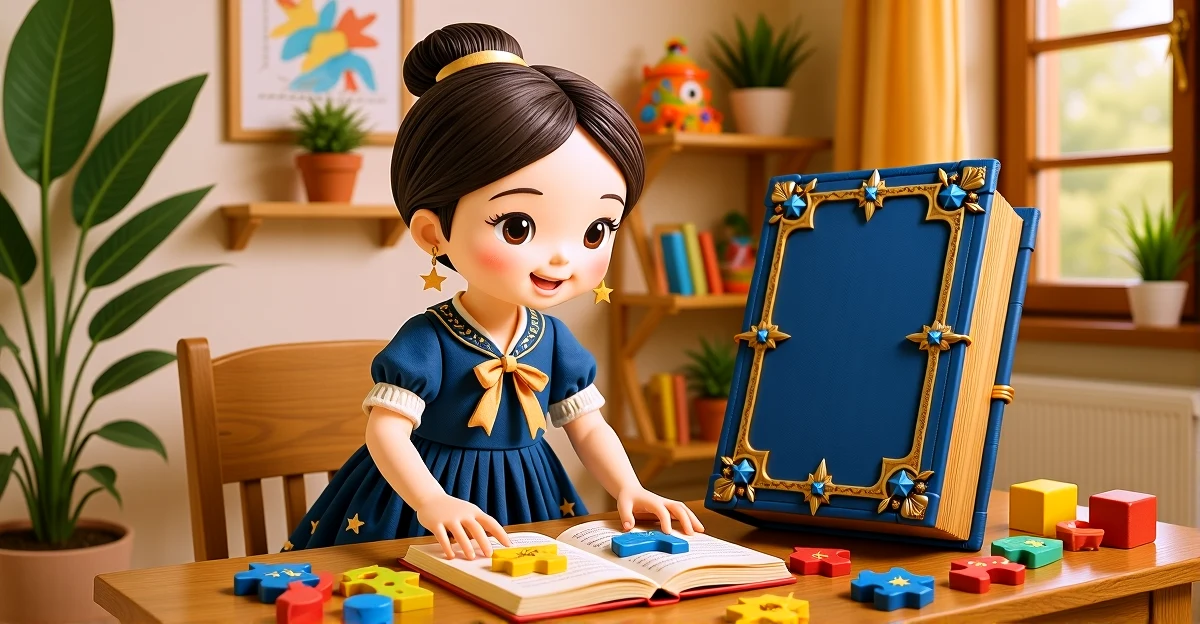

You hand your child a crayon and a simple worksheet. Draw a circle, the instructions say. Your child picks up the crayon, makes one wobbly attempt, and immediately throws it down. "I can't do it!" they declare, pushing the paper away. Your heart sinks a little. Is this laziness? Will they struggle in school? Why won't they even try?
If this sounds familiar, I want you to take a deep breath and know something really important: You are SO not alone in this. This is one of the most common experiences parents of four and five year olds face. And here's what's beautiful—what looks like giving up is actually a critical developmental moment, a window into your child's growing brain, and an opportunity to build skills that will serve them for life.
In this post, we're going to explore what's really happening when your child gives up on challenging tasks, what research tells us about building genuine persistence, and gentle strategies that actually work. Plus, I'll share a story from The Book of Inara that helps children see struggle in a completely new light.
What's Really Happening When Your Child Gives Up
When your four or five year old encounters a task that feels hard and immediately says "I can't," they are not being lazy. They are not lacking character. What's actually happening is SO much more interesting and hopeful than that.
Your child is in a critical developmental window right now. Their brain is literally building the neural pathways for persistence, for effort, for what researchers call learning resilience. And here's the thing that might surprise you: those pathways don't get built by succeeding easily. They get built through struggle. Through trying, making mistakes, feeling frustrated, and discovering that they can keep going anyway.
But—and this is SO important—those pathways only develop in the right conditions. Your child needs to feel safe enough to struggle. They need to know that mistakes won't lead to disappointment or immediate rescue. They need what researchers call "productive struggle," where the challenge is hard enough to stretch them but not so overwhelming that it breaks their spirit.
The Question Behind the Giving Up
When your child throws down that crayon and says "I can't do it," what they're really asking is: Will you let me struggle safely? Will you stay close without rescuing me? Will you believe I can figure this out, even when I don't believe it myself?
That's not laziness. That's your child reaching out for the exact kind of support that will help them grow.
What Research Tells Us About Persistence and Learning
The science on this is both fascinating and incredibly hopeful. Research from child development experts reveals that how we respond to our children's struggles shapes not just their immediate behavior, but their lifelong relationship with learning.
"When adults take over tasks too quickly, 4-5 year old children show reduced persistence on subsequent challenges."
— Society for Research in Child Development
Think about that for a moment. Our well-intentioned help, our desire to prevent our children from feeling frustrated, can actually undermine the very skill we're trying to build. When we jump in too quickly to solve the problem or show them how, we send an unintended message: "I don't think you can do this on your own."
Dr. Weiyun Chen and colleagues at the University of Michigan found that resilience—that capacity to bounce back from difficulty—is one of the strongest predictors of whether a child will persist through challenges. And resilience isn't something children are born with or without. It's something that develops through experience, through having adults who believe in them while they struggle.
The Power of Productive Struggle
Research on preschoolers' self-regulation shows that task persistence in these early years is a strong predictor of later academic success. But it's not about forcing children to stick with tasks they hate. It's about creating the conditions where persistence can naturally bloom:
- Psychological safety: Children need to know that mistakes are normal and expected, not failures
- Appropriate challenge level: Tasks should stretch abilities without overwhelming
- Supportive presence: Adults nearby who believe in them without taking over
- Emotional regulation support: Help naming feelings without fixing the problem
When these conditions are present, something magical happens. Children start to see challenges not as threats to avoid, but as puzzles to solve. They develop what psychologists call a growth mindset—the belief that their abilities can grow with effort and practice.
Gentle Strategies That Build Genuine Confidence
So what do we actually DO when our child gives up? Here are research-backed strategies that work beautifully:
1. Validate the Feeling, Not the Giving Up
When your child says "I can't do it," get down to their level. Take a breath. And say something like: "This feels really hard right now, doesn't it? I can see you're frustrated. That's okay. Hard things feel frustrating at first."
You're acknowledging their emotion without agreeing that they can't do it. You're teaching them that frustration is a normal part of learning, not a sign to quit.
2. Offer Presence, Not Solutions
Instead of jumping in to fix the problem, try this: "I'm right here if you need me, but I believe you can figure this out." Then wait. Stay present. Your calm, believing presence is the scaffolding they need to take risks.
You might say: "I wonder what would happen if you tried it a different way?" Notice you're not telling them HOW. You're inviting them to problem-solve.
3. Break It Down Without Taking Over
If the task truly is too overwhelming, you can offer to break it into smaller steps—but let THEM do each step. "Drawing a whole circle feels big. What if we just practiced the curve part first? You try, and I'll watch."
The key is that YOU are not doing it FOR them. You're supporting them while THEY do the work.
4. Celebrate Effort, Not Just Results
When your child tries, even if the result isn't perfect, celebrate the trying: "You worked SO hard at that! I saw you try three different ways. That's what learning looks like!"
This teaches them that effort matters, that the process is valuable, that their brain is growing even when the outcome isn't perfect yet.
5. Use the Power of "Yet"
That little word—yet—is SO powerful. When your child says "I can't draw a circle," you respond: "You can't draw a circle YET. But you're learning. Every try makes your brain stronger."
"Yet" transforms a fixed statement into a growth statement. It opens up possibility. It reminds your child that abilities develop over time.
A Story That Changes Everything
In The Book of Inara, there's a story that shows this concept so beautifully that children truly GET it in their hearts, not just their heads:
The Cathedral of Gentle Echoes
Perfect for: Ages 4-5
What makes it special: Kenji and Maeva are learning to play music in a magical cathedral, and they keep making mistakes. The notes come out wrong, they lose their rhythm, and they feel so frustrated. But then they discover something wonderful: every mistake they make creates a new kind of harmony in the cathedral. The echoes of their errors blend with their successes to create the most beautiful music they've ever heard.
Key lesson: Mistakes aren't failures—they're essential parts of creating something truly magical. Struggle and imperfection are not things to avoid but pathways to mastery.
How it helps: After reading this story, you can use it as a touchstone. When your child gets frustrated with schoolwork, you can say: "Remember how Kenji and Maeva's mistakes made beautiful music? Your brain is making beautiful connections right now, even when it feels hard. That's the magic of learning!"
When children see their own struggles reflected in a story where the struggle leads to something beautiful, something shifts. That wobbly circle they drew? It's not a failure. It's their brain learning. That puzzle piece that doesn't fit? It's teaching them spatial reasoning. Every attempt, every mistake, every moment of frustration is their mind growing stronger.
The Long-Term Gift You're Giving
Here's what the research makes SO clear: children who learn to persist through challenges in these early years don't just do better academically. They develop confidence, resilience, and the belief that effort matters. They learn that their abilities can grow, that hard doesn't mean impossible, that struggle is part of the journey to mastery.
And you know what else? The most important factor in whether a child develops this persistence isn't their natural ability or their temperament. It's whether they have adults in their lives who respond to their struggles with patience, encouragement, and strategic support rather than immediate rescue.
That's you. You're that person for your child.
Every time you resist the urge to jump in and fix it, every time you say "I believe you can figure this out," every time you celebrate effort instead of just results, you're building those neural pathways for persistence. You're teaching your child that they are capable, that challenges are opportunities, that their brain is always growing.
You're Doing Beautifully
I know it's hard to watch your child struggle. I know the instinct to help, to fix, to make it easier is SO strong. That instinct comes from love, and it's beautiful.
But here's what I want you to remember: by giving your child space to struggle safely, by staying present without rescuing, by believing in their capacity to figure things out, you're giving them something far more valuable than an easy path. You're giving them the confidence that comes from genuine accomplishment. You're teaching them that they can do hard things.
The Magic Book reminds us that every child is on their own timeline. Some children will persist naturally, others need more support and encouragement. Both are perfectly normal. Both are exactly where they need to be. Your job isn't to force persistence. It's to create the conditions where persistence can bloom.
So tonight, or tomorrow, when your child faces something challenging, try this: Take a breath. Resist the urge to rescue. Stay close. Believe in them. And watch what happens. You might be amazed at what they can do when given the space and support to try.
You're doing such beautiful work. Every moment you spend supporting your child's learning, every time you stay patient through their frustration, every story you share, you're giving them gifts that will last forever.
With love and starlight,
Inara
Related Articles
- Building Physical Confidence in Young Children: Gentle Movement Strategies for Ages 4-5
- When Your Child Gives Up Easily: Building Persistence in Ages 4-5
- Building Confidence in Young Performers: A Gentle Guide for Ages 4-5
- Teaching Your Preschooler Goal-Setting: The Science of Building Confidence Through Achievement
- Nurturing Academic Confidence and Love of Learning in Preschoolers
Show transcript
Hello, my wonderful friend! It's me, Inara, and I am SO happy you're here with me today!
You know, the Magic Book and I have been noticing something lately. So many parents are reaching out, feeling worried because their little ones give up the moment schoolwork or learning activities feel even a tiny bit challenging. And I want you to know something really important right now. You are not alone in this. This is one of the most common experiences parents of four and five year olds face, and there is so much beautiful understanding and help available!
So settle in with me, take a deep breath, and let's talk about what's really happening when your child says I can't do it and pushes that puzzle away, or throws down that crayon, or refuses to even try that new activity.
First, I want to validate something for you. When your child gives up immediately on tasks that feel hard, it can feel SO frustrating. You might worry, is my child going to struggle in school? Are they lazy? Will they ever learn to try? And those worries come from a place of deep love. You want your child to succeed, to feel confident, to know they can do hard things. That's beautiful, my friend. That's you being a wonderful parent.
But here's what the Magic Book taught me, and what research from child development experts confirms. When your four or five year old gives up quickly on challenging tasks, they are not being lazy. They are not lacking character or determination. What's actually happening is SO much more interesting and hopeful than that!
Your child is in a critical developmental window right now. Their brain is literally building the neural pathways for persistence, for effort, for what researchers call learning resilience. And here's the thing, those pathways don't get built by succeeding easily. They get built through struggle. Through trying, making mistakes, feeling frustrated, and discovering that they can keep going anyway.
But, and this is SO important, those pathways only develop in the right conditions. Your child needs to feel safe enough to struggle. They need to know that mistakes won't lead to disappointment or rescue. They need what researchers call productive struggle, where the challenge is hard enough to stretch them but not so overwhelming that it breaks their spirit.
Research from the Society for Research in Child Development discovered something fascinating. When adults take over tasks too quickly, four and five year old children actually show LESS persistence on future challenges. Think about that for a moment. Our well-intentioned help, our desire to prevent our children from feeling frustrated, can actually undermine the very skill we're trying to build!
Dr. Weiyun Chen and her colleagues at the University of Michigan found that resilience, that capacity to bounce back from difficulty, is one of the strongest predictors of whether a child will persist through challenges. And resilience isn't something children are born with or without. It's something that develops through experience, through having adults who believe in them while they struggle.
So when your child throws down that crayon and says I can't draw a circle, what they're really asking is, will you let me struggle safely? Will you stay close without rescuing me? Will you believe I can figure this out, even when I don't believe it myself?
Here's what the research tells us to do, and I promise you, this works beautifully. Instead of jumping in to fix the problem or show them how, try this. Get down to their level. Take a breath. And say something like, this feels really hard right now, doesn't it? I can see you're frustrated. That's okay. Hard things feel frustrating at first.
Then, and this is the magic part, you wait. You stay present. You might say, I wonder what would happen if you tried it a different way? Or, I'm right here if you need me, but I believe you can figure this out. And then you let them sit with that challenge for a moment.
Now, I know what you might be thinking. But Inara, what if they just give up completely? What if they never try? And that's where the beautiful balance comes in. You're not abandoning them to struggle alone. You're providing what researchers call scaffolding. You're the safety net that lets them take risks.
You might offer a tiny hint, not the whole solution. You might break the task into smaller steps. You might say, let's just try one more time together, and then you can decide if you want to keep going. The key is that YOU are not doing it FOR them. You're supporting them while THEY do the work.
And here's where I want to tell you about a story that shows this so beautifully. In The Book of Inara, there's a tale called The Cathedral of Gentle Echoes. In this story, Kenji and Maeva are learning to play music in a magical cathedral, and they keep making mistakes. The notes come out wrong, they lose their rhythm, and they feel so frustrated!
But then they discover something wonderful. Every mistake they make creates a new kind of harmony in the cathedral. The echoes of their errors blend with their successes to create the most beautiful music they've ever heard. And they realize that the mistakes weren't failures at all. They were essential parts of creating something truly magical.
When you read this story with your child, something shifts. They start to see their own struggles differently. That wobbly circle they drew? It's not a failure. It's their brain learning. That puzzle piece that doesn't fit? It's teaching them spatial reasoning. Every attempt, every mistake, every moment of frustration is their mind growing stronger.
After you read The Cathedral of Gentle Echoes together, you can use it as a touchstone. When your child gets frustrated, you can say, remember how Kenji and Maeva's mistakes made beautiful music? Your brain is making beautiful connections right now, even when it feels hard. That's the magic of learning!
The research is so clear on this, my friend. Children who learn to persist through challenges in these early years, who develop what psychologists call a growth mindset, they don't just do better academically. They develop confidence, resilience, and the belief that effort matters. They learn that their abilities can grow, that hard doesn't mean impossible, that struggle is part of the journey to mastery.
And you know what else the research shows? The most important factor in whether a child develops this persistence isn't their natural ability or their temperament. It's whether they have adults in their lives who respond to their struggles with patience, encouragement, and strategic support rather than immediate rescue.
That's you, my wonderful friend. You're that person for your child. Every time you resist the urge to jump in and fix it, every time you say I believe you can figure this out, every time you celebrate effort instead of just results, you're building those neural pathways for persistence.
Here are some beautiful phrases you can use. This is tricky, and you're working so hard at it. I can see your brain growing right now! Or, mistakes are how we learn. Let's see what this mistake can teach us. Or, you haven't figured it out YET, but you're getting closer with every try.
That little word, yet, is SO powerful. It transforms I can't do it into I can't do it YET. It opens up possibility. It reminds your child that abilities grow with practice and time.
And remember, my friend, this isn't about never helping. It's about helping in ways that build competence rather than dependence. It's about being present without being intrusive. It's about believing in your child's capacity to struggle and grow.
The Magic Book reminds us that every child is on their own timeline. Some children will persist naturally, others need more support and encouragement. Both are perfectly normal. Both are exactly where they need to be. Your job isn't to force persistence. It's to create the conditions where persistence can bloom.
So tonight, or tomorrow, when your child faces something challenging, try this. Take a breath. Resist the urge to rescue. Stay close. Believe in them. And watch what happens. You might be amazed at what they can do when given the space and support to try.
The Book of Inara is filled with stories like The Cathedral of Gentle Echoes, stories that help children see challenges as adventures, mistakes as teachers, and effort as something to celebrate. These stories plant seeds of resilience that will grow throughout your child's life.
You're doing such beautiful work, my friend. Every moment you spend supporting your child's learning, every time you stay patient through their frustration, every story you share, you're giving them gifts that will last forever.
The Magic Book and I are always here for you, cheering you on, believing in you and your wonderful child.
With love and starlight, Inara.