
Your five-year-old looks at their drawing and says, "I'm just not good at art." Your six-year-old watches a friend solve a puzzle quickly and declares, "They're naturally smarter than me." Your child tries something once, struggles, and immediately gives up, saying, "I can't do it."
If you've heard these words from your child, you're not alone. Many parents notice their young children starting to dismiss the importance of effort and practice, instead believing that abilities are fixed—you either have talent or you don't. And I want you to know something right away: this is actually a beautiful opportunity.
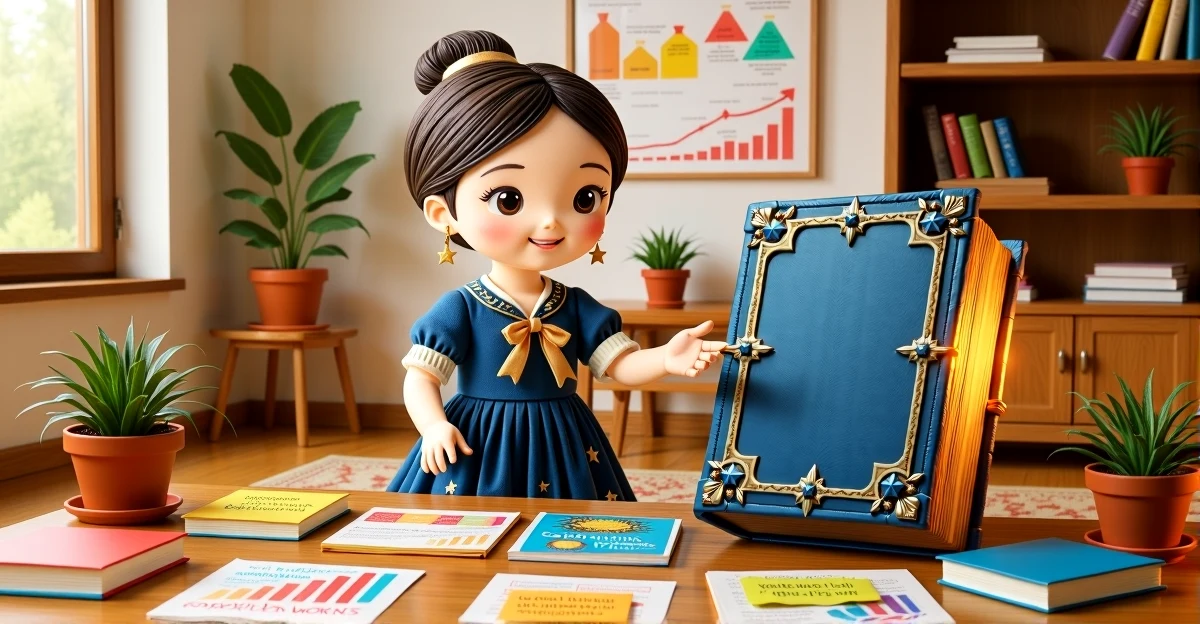
Hello, wonderful parent. I'm Inara, and the Magic Book and I have been exploring something absolutely fascinating about how children think about their abilities. What you're witnessing isn't a character flaw or a permanent mindset—it's a critical learning phase. And YOU get to be your child's guide in discovering one of life's most empowering truths: that our brains and abilities grow stronger with practice, just like muscles.
In this post, we'll explore why your child might be dismissing effort, what groundbreaking research tells us about growth mindset, and most importantly, gentle strategies you can use starting today to help your child discover the absolute MAGIC that happens when we practice, try, and keep going even when things feel hard.
Why Your Child Dismisses Effort (And Why It's Completely Normal)
When a five or six-year-old says things like "I'm just not good at this" or "They're better than me because they're naturally talented," what they're really doing is trying to make sense of the world around them. Their developing brain is noticing differences in abilities—some friends can read already, others can climb higher, some draw more detailed pictures—and they're creating a story to explain those differences.
Here's the beautiful part: this is completely normal development. Your child isn't being negative, pessimistic, or giving up too easily. They're actually in a critical learning phase about how abilities work. At this age, children are developing what psychologists call "implicit theories"—beliefs about whether human attributes are fixed or can change.
The Magic Book whispers this truth to me: every child goes through this phase of trying to understand why some things feel easy and others feel hard. Some children naturally lean toward believing abilities can grow (what researchers call an "incremental theory"), while others lean toward believing abilities are fixed (an "entity theory"). But here's what's WONDERFUL—these beliefs aren't permanent. They're shaped by experience, and parents play the most important role in that shaping.
What's Really Happening in Your Child's Brain
At ages five and six, your child's brain is making incredible connections. They're developing the ability to compare themselves to others, to notice patterns, and to form theories about how the world works. When they see a friend excel at something, their brain is asking: "Why can they do that and I can't?"
If they conclude "because they're naturally talented," they're developing what's called a fixed mindset. If they conclude "because they've practiced more," they're developing a growth mindset. And the beautiful truth? The answer they arrive at is profoundly influenced by the messages they receive from the adults around them—especially you.
The Science of Growth Mindset: What Research Reveals
Let me share something absolutely WONDERFUL from the research that will change how you think about praising your child. Dr. Carol Dweck at Stanford University has spent decades studying how children think about their abilities, and what she discovered is revolutionary.
She found that children with a growth mindset—those who believe abilities can be developed through dedication and hard work—have effort and strategy-oriented explanations for setbacks. They see challenges as opportunities to learn and grow. When something is difficult, they think "I need to try a different approach" or "I need more practice," not "I'm just not good at this."
"Children with a growth mindset have effort and strategy-oriented explanations for setbacks. They believe that abilities can be developed through dedication and hard work."
— Dr. Carol Dweck, Stanford University
But here's where it gets even more exciting. Dr. Elizabeth Gunderson's longitudinal research at the University of Chicago shows that the way we praise our children when they're very young actually predicts their beliefs about effort years later. Her team followed children from toddlerhood through elementary school and discovered something remarkable.
When parents praised effort, strategies, and actions—what researchers call "process praise"—children developed the belief that their abilities could grow and improve through practice and persistence. These children showed greater willingness to tackle challenging tasks, attributed their successes to hard work rather than fixed talent, and demonstrated resilience when facing setbacks.
"Children who hear a greater proportion of process praise come to believe that the sources of their accomplishments are effort and deliberate practice."
— Dr. Elizabeth Gunderson, University of Chicago
The research reveals that this pattern begins remarkably early—praise given to children as young as 14 months predicts their motivational frameworks five years later. That means the words you choose TODAY are literally shaping how your child will think about learning and growth for years to come.
Process Praise vs. Person Praise: The Critical Difference
So what exactly is the difference between process praise and person praise? Let me show you:
Person Praise (focuses on innate traits):
- "You're so smart!"
- "You're a natural at this!"
- "You're such a talented artist!"
- "You're the best at puzzles!"
Process Praise (focuses on effort, strategies, and actions):
- "I noticed how hard you worked on that puzzle!"
- "You tried three different ways to build that tower—that's creative thinking!"
- "Look at how much you've improved with practice!"
- "You kept going even when it was tricky. That's persistence!"
Person praise might seem like a good way to build self-esteem, but research shows it actually makes children vulnerable. When they're praised for being "smart" or "talented," they start to believe that's a fixed trait they need to protect. If something becomes difficult, they worry it means they're not actually smart after all, so they avoid challenges.
Process praise, on the other hand, teaches children that their actions create results. When something is hard, they don't question their worth—they simply know they need more practice or a different strategy.
Gentle Strategies to Help Your Child Embrace Effort
Now let's talk about practical ways you can help your child discover the magic of effort. These strategies are gentle, research-backed, and can start making a difference TODAY.
1. Become an Effort Detective
Start noticing and naming the specific strategies your child uses. Instead of "Good job!" try:
- "I saw you try three different ways to reach that toy!"
- "You kept practicing that jump even when it was tricky!"
- "You asked for help when you needed it—that's smart thinking!"
- "You didn't give up when the first attempt didn't work!"
This helps your child see that their actions—not some fixed ability—create results. They start to understand that they have POWER over their own learning and growth.
2. Share Your Own Learning Journey
Let your child see you practicing, making mistakes, and trying again. The Magic Book taught me that children learn more from what we DO than what we SAY. Try saying things like:
- "This recipe didn't turn out right, so I'm going to try a different approach tomorrow!"
- "I'm learning to play the guitar, and my fingers are still figuring out where to go. But I can already see improvement from last week!"
- "I made a mistake on this project, but mistakes help my brain learn!"
When your child sees you embracing challenges and learning from mistakes, they internalize that this is how growth happens.
3. Celebrate the Process, Not Just the Product
When your child shows you their artwork or tells you about their day, ask questions about their effort:
- "What was the most challenging part?"
- "What strategy did you use to figure that out?"
- "What would you try differently next time?"
- "What are you most proud of about how you worked on this?"
These questions help your child reflect on their learning process, not just the outcome. They start to value the journey of learning, not just the destination.
4. Reframe Challenges as Brain-Growing Adventures
The Magic Book loves this one! Help your child see challenges as opportunities for their brain to grow stronger. Try these reframes:
- Instead of "This is too hard" → "This is a great challenge for your growing brain!"
- Instead of "I can't do it" → "I can't do it YET, but I'm learning!"
- Instead of "I'm not good at this" → "I'm still practicing this skill!"
- Instead of "I made a mistake" → "Mistakes are how my brain learns!"
Language is SO powerful. These small shifts in how we talk about challenges literally reshape how children think about their own abilities.
5. Teach About the Growing Brain
At ages five and six, children can understand simple explanations about how their brain works. Try explaining:
"Your brain is like a muscle. Every time you practice something—even when it's hard, ESPECIALLY when it's hard—your brain grows new connections. That's why things that feel impossible at first become easier with practice. Your brain is actually changing and growing!"
This gives children a concrete understanding of why effort matters. It's not just about "trying hard"—it's about literally growing their brain's capabilities.
A Story That Brings This to Life
In The Book of Inara, we have a beautiful story that shows children the magic of effort and practice in a way that really resonates:
The Cathedral of Gentle Echoes
Perfect for: Ages 4-5 (also wonderful for 5-6 year-olds)
What makes it special: Kenji and Maeva visit a peaceful cathedral where they try to make music. At first, they make lots of mistakes—wrong notes, timing that's off, sounds that don't quite work. But here's the wonder of it: their musical mistakes create the most BEAUTIFUL harmonies! The cathedral's magic reveals that every error, every attempt, every moment of practice is actually a step toward something wonderful.
Key lesson: This story teaches children something profound—that effort and experimentation lead to magical discoveries that natural talent alone cannot achieve. When Kenji and Maeva discover that their mistakes create unexpected beauty, children learn that the journey of learning IS the magic, not just the final result.
After reading together: You can help your child notice how their own practice and effort—even the mistakes—create growth and beauty, just like Kenji and Maeva's musical journey. You might say, "Remember how Kenji and Maeva's mistakes made beautiful music? Your mistakes are helping your brain grow too!"
You're Doing Beautifully
Here's what I want you to remember, wonderful parent: when your child dismisses the importance of effort, they're not being difficult or developing a "bad attitude." They're in a critical learning moment, and you get to be their guide.
Through your words, your example, and the stories you share, you're teaching them one of life's most empowering truths—that they have the power to grow, learn, and become more capable through their own effort and persistence. That's not just beautiful, that's TRANSFORMATIVE.
The research is so clear on this: when children learn that effort matters more than natural talent, they develop confidence and persistence that serve as foundations for lifelong learning and growth. They become more willing to tackle challenging tasks, they attribute their successes to hard work rather than fixed talent, and they demonstrate resilience when facing setbacks.
And you know what else? This isn't just about academic skills. When children believe that abilities can grow with practice, they apply this to friendships, emotional regulation, creativity, and every aspect of their lives. They become people who see possibilities instead of limitations.
The Magic Book reminds me that every child is on their own unique journey of growth. Some children will grasp new skills quickly in some areas and need more practice in others. And that's not just okay, that's BEAUTIFUL. Because the goal isn't to be naturally talented at everything. The goal is to discover the joy and power of learning, trying, and growing.
You're doing such important work, and I'm so grateful you're here learning and growing alongside your little one. Keep celebrating effort, keep encouraging practice, and keep believing in the beautiful journey of growth.
With love and starlight,
Inara
Related Articles
- The Science of Growth Mindset: Why Your Child Avoids New Challenges (And How to Help Them Thrive)
- Why Your Child Melts Down Over Feedback (And How to Build Growth Mindset)
- Teaching Your Child to Value Effort and Hard Work: A Growth Mindset Guide for Parents
- When Your Child Values Talent Over Effort: A Growth Mindset Guide
- Understanding Personal Growth and Change: A Guide for Parents of 5-6 Year Olds
Show transcript
Hello, wonderful parent! It's me, Inara, and I am SO glad you're here today. You know, the Magic Book and I have been noticing something really interesting lately. Many parents are reaching out because their children seem to value natural talent over hard work and effort. And I want you to know something right away—you're not alone in this, and what you're experiencing is actually a beautiful opportunity for growth.
So settle in with me for a few minutes, and let's talk about why your child might be dismissing the importance of effort, and more importantly, how we can help them discover the absolute MAGIC that happens when we practice, try, and keep going even when things feel hard.
First, let me tell you what the Magic Book taught me about this. When a five or six-year-old says things like, "I'm just not good at this," or "They're better than me because they're naturally talented," what they're really doing is trying to make sense of the world. They're noticing differences in abilities, and their developing brain is creating a story to explain those differences.
And here's the beautiful part—this is completely normal development. Your child isn't being negative or giving up too easily. They're actually in a critical learning phase about how abilities work, and YOU get to be their guide in discovering one of life's most empowering truths—that our brains and abilities grow stronger with practice, just like muscles.
Now, let me share something absolutely WONDERFUL from the research. Dr. Carol Dweck at Stanford University has spent decades studying how children think about their abilities, and what she discovered will change everything. She found that children with a growth mindset—those who believe abilities can be developed through dedication and hard work—have effort and strategy-oriented explanations for setbacks. They see challenges as opportunities to learn and grow.
And here's the really exciting part. Dr. Elizabeth Gunderson's research at the University of Chicago shows that the way we praise our children when they're very young actually predicts their beliefs about effort years later. When parents praise effort, strategies, and actions—what researchers call process praise—children develop the belief that their abilities can grow and improve through practice and persistence.
So what does this mean for you and your wonderful child? It means that every time you notice and celebrate their EFFORT instead of just the outcome, you're literally shaping how they think about learning and growth. Instead of saying, "You're so smart," try saying, "I noticed how hard you worked on that puzzle!" Instead of, "You're a natural at this," try, "Look at how much you've improved with practice!"
The Magic Book whispers this truth to me all the time—mistakes aren't failures, they're your brain's experiments. Every time your child tries something and it doesn't work perfectly, their brain is actually growing new connections. That's not just beautiful, that's SCIENCE!
Now, I want to tell you about a story that shows this so perfectly. It's called "The Cathedral of Gentle Echoes," and it's about two friends, Kenji and Maeva, who discover something absolutely magical. They visit a peaceful cathedral where they try to make music, and at first, they make lots of mistakes. But here's the wonder of it—their musical mistakes create the most BEAUTIFUL harmonies!
This story teaches children something profound. It shows them that every error, every attempt, every moment of practice is actually a step toward something wonderful. When Kenji and Maeva discover that their mistakes create unexpected beauty, children learn that effort and experimentation lead to magical discoveries that natural talent alone cannot achieve.
After you read this story with your child, you can help them notice how their own practice and effort—even the mistakes—create growth and beauty, just like Kenji and Maeva's musical journey.
So let's talk about some practical ways you can help your child discover the magic of effort. First, become an effort detective. Start noticing and naming the specific strategies your child uses. "I saw you try three different ways to build that tower!" or "You kept practicing that jump even when it was tricky!" This helps them see that their actions, not some fixed ability, create results.
Second, share your own learning journey. Let your child see you practicing, making mistakes, and trying again. Say things like, "This recipe didn't turn out right, so I'm going to try a different approach tomorrow!" or "I'm learning to play the guitar, and my fingers are still figuring out where to go. But I can already see improvement from last week!"
Third, celebrate the process, not just the product. When your child shows you their artwork or tells you about their day, ask questions about their effort. "What was the most challenging part?" "What strategy did you use?" "What would you try differently next time?" These questions help them reflect on their learning process.
And here's something the Magic Book taught me that I absolutely LOVE—reframe challenges as adventures. Instead of "This is too hard," try "This is a great challenge for your growing brain!" Instead of "I can't do it," try "I can't do it YET, but I'm learning!"
The research is so clear on this, my friend. When children learn that effort matters more than natural talent, they develop confidence and persistence that serve as foundations for lifelong learning and growth. They become more willing to tackle challenging tasks, they attribute their successes to hard work rather than fixed talent, and they demonstrate resilience when facing setbacks.
And you know what else? This isn't just about academic skills. When children believe that abilities can grow with practice, they apply this to friendships, emotional regulation, creativity, and every aspect of their lives. They become people who see possibilities instead of limitations.
The Magic Book reminds me that every child is on their own unique journey of growth. Some children will grasp new skills quickly in some areas and need more practice in others. And that's not just okay, that's BEAUTIFUL. Because the goal isn't to be naturally talented at everything. The goal is to discover the joy and power of learning, trying, and growing.
So here's what I want you to remember, wonderful parent. When your child dismisses the importance of effort, they're not being difficult or negative. They're in a critical learning moment, and you get to be their guide. Through your words, your example, and the stories you share, you're teaching them one of life's most empowering truths—that they have the power to grow, learn, and become more capable through their own effort and persistence.
The Magic Book and I believe in you, and we believe in your wonderful child. You're doing such important work, and I'm so grateful you're here learning and growing alongside your little one.
Find "The Cathedral of Gentle Echoes" and many more stories about growth, learning, and the magic of practice in The Book of Inara app. Until our next adventure together, keep celebrating effort, keep encouraging practice, and keep believing in the beautiful journey of growth.
With love and starlight, Inara.