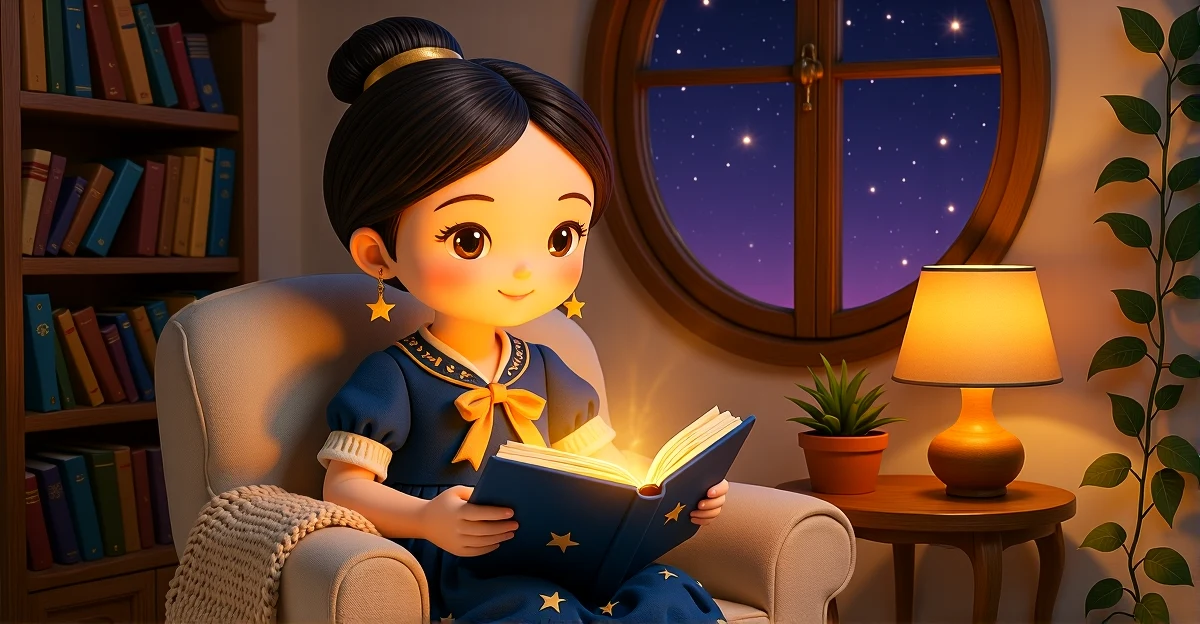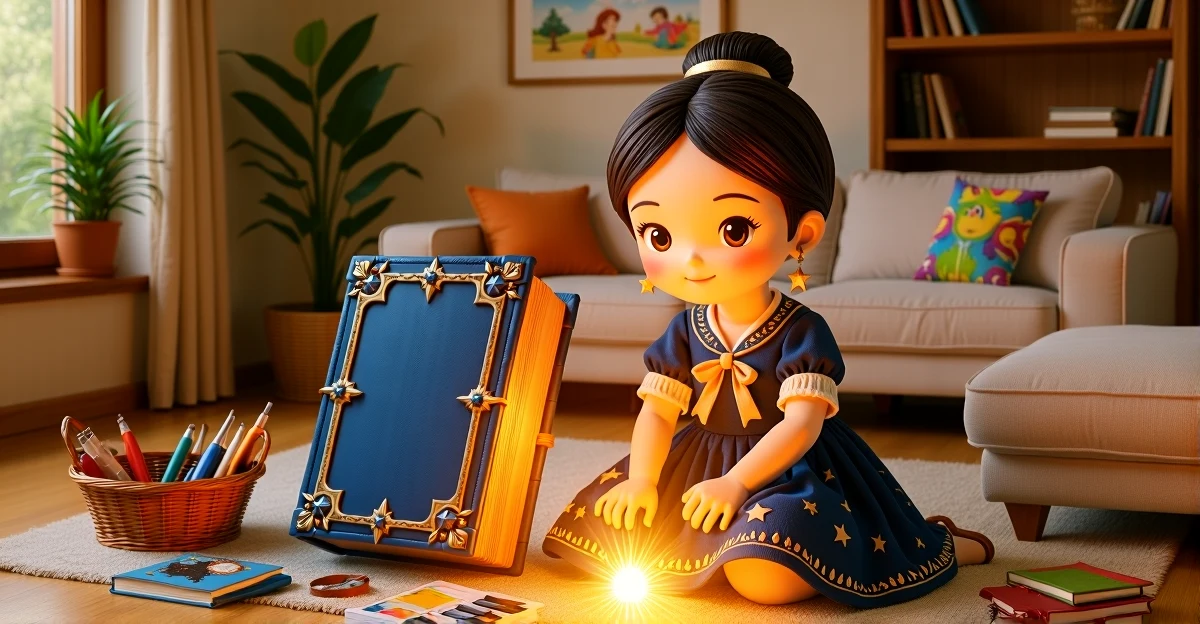

Hello, my wonderful friend! It is me, Inara, and I am SO happy you are here today.
Maybe you have noticed that your six or seven-year-old does not seem particularly interested in music lessons, art classes, theater performances, or cultural activities. Maybe you have watched other children light up at the museum while yours asks when you can leave. Maybe you have wondered if something is wrong, if you are somehow failing to cultivate appreciation for the beautiful things in life.
Let me tell you something WONDERFUL right now: Nothing is wrong. Absolutely nothing. Your child is exactly where they need to be on their own unique journey of discovery.
In this article, I am going to share what child development research tells us about cultural appreciation and aesthetic development in young children. The truth might surprise you and it will definitely bring you peace.
Understanding Cultural Appreciation Development
The Magic Book has shown me thousands of children over thousands of years, and here is what I have learned: Every single child discovers the world in their own way, at their own pace, following their own starlight.
Recent research from child development experts confirms what the Magic Book has whispered for ages. Children ages six and seven develop cultural and aesthetic appreciation at vastly different rates. This variation is not a problem to fix. It is a feature of healthy development.
Think about it this way. Your child's brain is like a garden of stars, and different constellations light up at different times. Right now, maybe their curiosity constellation is shining brightly for dinosaurs, or building blocks, or how clouds form. That is their brain doing exactly what it should be doing: following their natural interests and building neural pathways through genuine engagement.
The Research on Aesthetic Development
Studies from Frontiers in Education demonstrate that music training and arts engagement contribute significantly to cultural and aesthetic development in ages 6-7. But here is the key insight: these benefits emerge most powerfully when children engage with arts and culture through genuine interest, not obligation.
Arts engagement enhances executive function development in early elementary years, but forcing participation can actually create negative associations that hinder natural development.
— Frontiers in Education, 2024
What Child Development Experts Want You to Know
The National Association for the Education of Young Children, one of the most respected organizations in child development, emphasizes something crucial. They say that educators and parents should build on each child's existing interests and funds of knowledge rather than imposing external expectations.
This applies beautifully to arts and cultural appreciation. When we try to force interest in activities that do not naturally call to a child yet, we can actually create the opposite effect. We might accidentally teach them that arts and culture are obligations rather than joys.
But when we honor their current interests and gently, playfully expose them to different experiences without pressure, something magical happens. Their natural curiosity gets to lead the way.
The Butterfly Principle
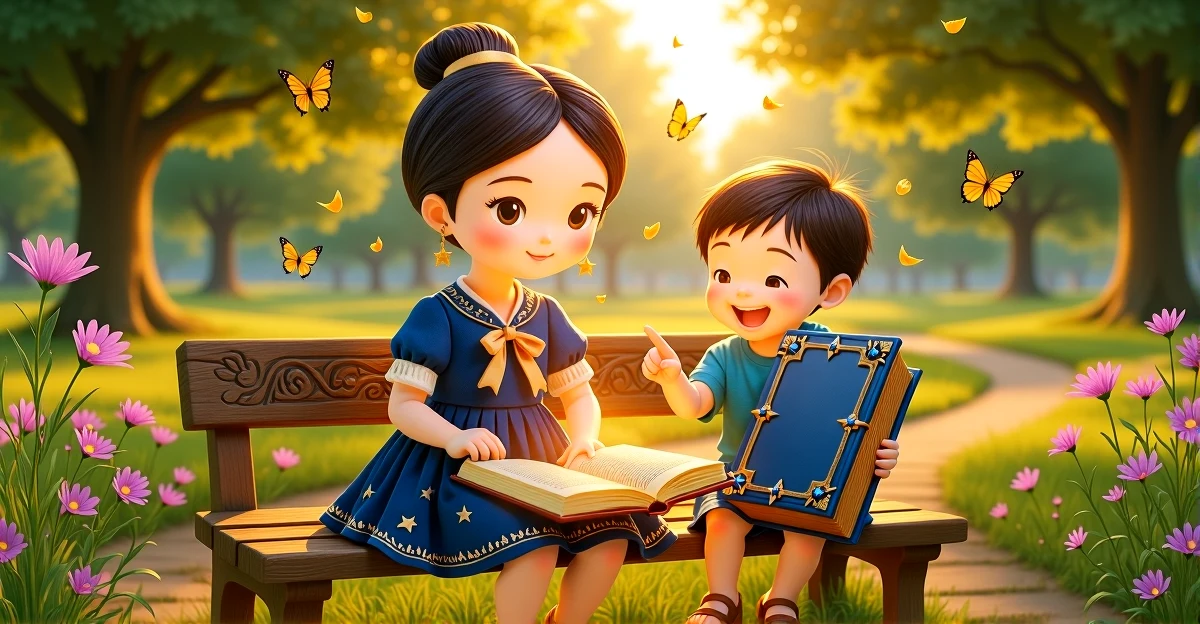
Let me share something the Magic Book taught me about curiosity. Curiosity is like a butterfly. If you chase it, it flies away. But if you create a beautiful garden and simply be present, the butterfly comes to you.
Your child might not be interested in a formal music class right now, but maybe they love making up silly songs in the bathtub. That is musical exploration. They might not want to sit through a theater performance, but maybe they create elaborate pretend play scenarios with their toys. That is theatrical imagination. They might not be drawn to an art museum, but maybe they spend hours arranging their rocks or sticks in patterns. That is aesthetic appreciation.
Do you see? The seeds are already there. They are just growing in your child's unique way.
The Science of Safe and Supported Development
Research from the International Symposium on Aesthetics Education confirms that aesthetic education supports social-emotional development in young children, and that cultural appreciation develops most naturally when children feel safe and supported.
Safe and supported. Not pushed. Not worried over. Safe and supported.
When children are given playful, pressure-free exposure to arts and cultural experiences that connect to their lives and interests, they naturally develop appreciation over time. The key word there is playful. Not scheduled. Not required. Not worried about. Playful.
The Long View
Here is something beautiful that research shows us. Children whose parents respond with patience and curiosity rather than worry develop stronger intrinsic motivation and deeper engagement with arts and culture as they mature.
Some children will circle back to arts and culture in middle school. Some in high school. Some as adults. And whenever it happens, it will be authentic and meaningful because it came from within, not from external pressure.
Gentle Strategies That Support Natural Development
So what can you do? How can you support your child's journey without pressure? Here are some gentle, research-backed approaches:
1. Follow Their Lead
If your child is fascinated by bugs, explore the art of scientific illustration together. If they love stories, notice the rhythm and music in language. If they are drawn to building, explore architecture from different cultures. Connect what they already love to the wider world of human creativity and expression.
2. Make Exposure Joyful and Low-Pressure
Put on different kinds of music while you cook dinner together. Not as a lesson, just as part of life. Visit museums or cultural events with zero expectations. If they want to spend three minutes looking at one thing and skip everything else, that is perfect. They are learning that these spaces are for them, not performances they have to endure.
3. Model Your Own Curiosity
When you notice something beautiful, share it. When you hear music that moves you, let them see your joy. Children learn more from watching us experience wonder than from any formal lesson.
4. Create a Rich Environment
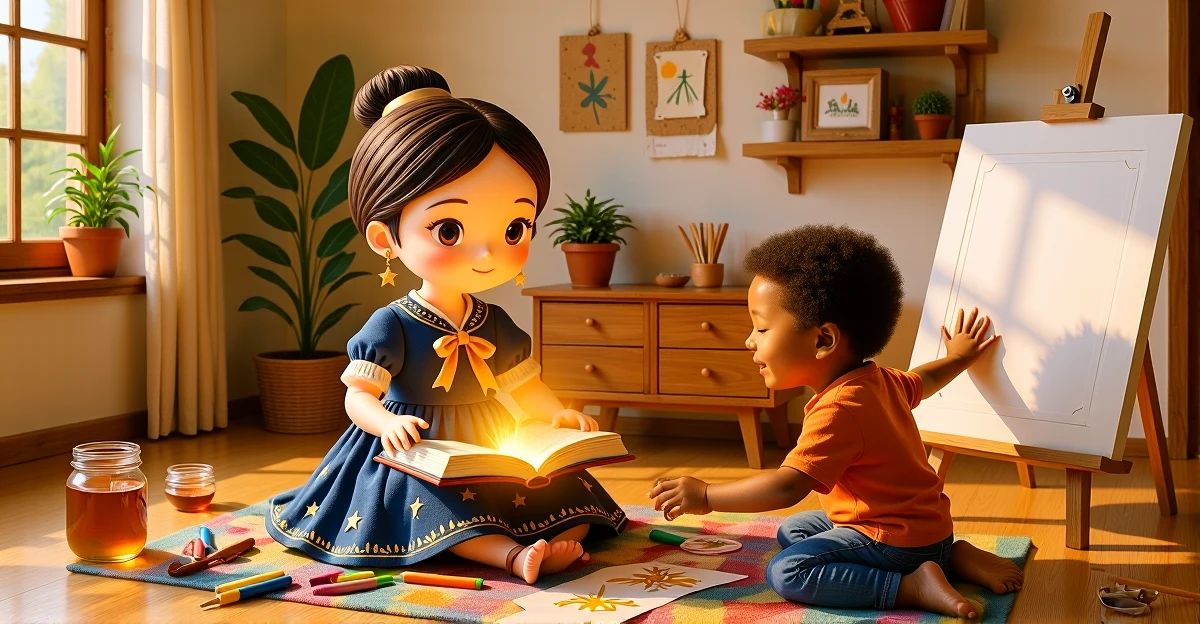
Have art supplies available without pressure to use them. Play different kinds of music in the background. Read books from diverse cultures. Create an environment where cultural experiences are simply part of the fabric of life, not special events that require performance.
5. Honor Their Timeline
Trust that your child will develop appreciation in their own time. Some children are drawn to arts and culture early. Others discover these treasures later. Both paths are absolutely, completely, beautifully normal.
A Story That Can Help
In The Book of Inara, we have a beautiful story that shows this perfectly. It is called The Giggling Gallery of Forgotten Questions, and it is about Lucas and Ella discovering a magical art gallery where old photographs come alive when you ask them the right questions.
The Giggling Gallery of Forgotten Questions
Perfect for: Ages 6-7
What makes it special: This story beautifully demonstrates how curiosity and wonder can naturally lead children to appreciate art and cultural artifacts. Lucas and Ella discover that cultural appreciation develops through playful exploration rather than forced exposure.
Key lesson: When Lucas and Ella discover that the old photographs giggle when asked the right questions, children learn that cultural artifacts become meaningful through curiosity and personal connection, not obligation.
After reading together: You might notice something wonderful. Maybe your child starts asking more questions about the photos in your home. Maybe they wonder about objects around them. That is their unique path to cultural appreciation beginning to unfold, in their own way, in their own time.
You Are Doing Beautifully
Here is what I want you to remember, my wonderful friend. Your child is not behind. They are not missing out. They are not going to somehow fail at life because they do not love violin lessons at age six.
They are discovering who they are. They are following their own interests. They are building the foundation of curiosity and wonder that will serve them for their entire life.
So tonight, when you tuck your child into bed, I want you to look at them with fresh eyes. See all the ways they are already creative, already curious, already appreciating beauty in their own unique way. Maybe it is the way they arrange their stuffed animals. Maybe it is the songs they make up. Maybe it is the questions they ask about the world.
That is their artistry. That is their culture. That is their path unfolding exactly as it should.
Trust your child's timeline. Honor their interests. Create a joyful, pressure-free environment where curiosity can bloom. And know that the Magic Book and I are cheering you on every single step of the way.
With love and starlight,
Inara
Related Articles
- How to Nurture Your Child's Empathy and World-Changing Impact (Ages 6-7)
- Nurturing Your Child Innovation Mindset: A Gentle Guide for Ages 6-7
- When Your Child Makes Insensitive Comments: A Gentle Guide to Teaching Cultural Awareness
- When Your Child Expresses Thoughts of Self-Harm: Getting Help Now
- Nurturing Purpose and Meaning in Young Children: A Gentle Guide for Parents
Show transcript
Hello, my wonderful friend! It's me, Inara, and I am SO happy you're here today!
You know, the Magic Book and I have been noticing something beautiful happening in families all around the world. Parents are reaching out, wondering about their children's interests, and today I want to talk about something that comes up quite often. Maybe you've noticed that your six or seven-year-old doesn't seem particularly interested in music, art, theater, or cultural activities. And maybe, just maybe, you're wondering if something is wrong.
Let me tell you something WONDERFUL right now. Nothing is wrong. Absolutely nothing.
Your child is exactly where they need to be on their own unique journey of discovery.
I want you to take a deep breath with me. Because what I'm about to share might just shift everything you're feeling right now.
The Magic Book has shown me thousands of children over thousands of years, and here's what I've learned. Every single child discovers the world in their own way, at their own pace, following their own starlight. Some children are drawn to paintbrushes and piano keys from the moment they can reach them. Others discover these treasures later, sometimes much later. And both paths are absolutely, completely, beautifully normal.
Recent research from child development experts confirms what the Magic Book has whispered for ages. Children ages six and seven develop cultural and aesthetic appreciation at vastly different rates. This variation isn't a problem to fix. It's a feature of healthy development.
Think about it this way. Your child's brain is like a garden of stars, and different constellations light up at different times. Right now, maybe their curiosity constellation is shining brightly for dinosaurs, or building blocks, or how clouds form. That's their brain doing exactly what it should be doing, following their natural interests and building neural pathways through genuine engagement.
The National Association for the Education of Young Children, one of the most respected organizations in child development, emphasizes something crucial. They say that educators and parents should build on each child's existing interests and funds of knowledge rather than imposing external expectations. This applies beautifully to arts and cultural appreciation.
When we try to force interest in activities that don't naturally call to a child yet, we can actually create the opposite effect. We might accidentally teach them that arts and culture are obligations rather than joys. But when we honor their current interests and gently, playfully expose them to different experiences without pressure, something magical happens. Their natural curiosity gets to lead the way.
Here's what the research shows. When children are given playful, pressure-free exposure to arts and cultural experiences that connect to their lives and interests, they naturally develop appreciation over time. The key word there is playful. Not scheduled. Not required. Not worried about. Playful.
Let me share something the Magic Book taught me about curiosity. Curiosity is like a butterfly. If you chase it, it flies away. But if you create a beautiful garden and simply be present, the butterfly comes to you.
Your child might not be interested in a formal music class right now, but maybe they love making up silly songs in the bathtub. That's musical exploration. They might not want to sit through a theater performance, but maybe they create elaborate pretend play scenarios with their toys. That's theatrical imagination. They might not be drawn to an art museum, but maybe they spend hours arranging their rocks or sticks in patterns. That's aesthetic appreciation.
Do you see? The seeds are already there. They're just growing in your child's unique way.
Research from the International Symposium on Aesthetics Education confirms that aesthetic education supports social-emotional development in young children, and that cultural appreciation develops most naturally when children feel safe and supported. Safe and supported. Not pushed. Not worried over. Safe and supported.
So what can you do? How can you support your child's journey without pressure?
First, follow their lead. If they're fascinated by bugs, explore the art of scientific illustration together. If they love stories, notice the rhythm and music in language. If they're drawn to building, explore architecture from different cultures. Connect what they already love to the wider world of human creativity and expression.
Second, make exposure joyful and low-pressure. Put on different kinds of music while you cook dinner together. Not as a lesson, just as part of life. Visit museums or cultural events with zero expectations. If they want to spend three minutes looking at one thing and skip everything else, that's perfect. They're learning that these spaces are for them, not performances they have to endure.
Third, and this is so important, model your own curiosity and appreciation. When you notice something beautiful, share it. When you hear music that moves you, let them see your joy. Children learn more from watching us experience wonder than from any formal lesson.
And here's something beautiful. The Magic Book and I have a story that shows this perfectly. It's called The Giggling Gallery of Forgotten Questions, and it's about Lucas and Ella discovering a magical art gallery where old photographs come alive when you ask them the right questions.
In this story, the children learn that cultural artifacts and art become meaningful through curiosity and personal connection, not through obligation. They discover that asking questions, wondering, exploring, that's how we truly appreciate the treasures of human creativity.
After you read this story with your child, you might notice something wonderful. Maybe they start asking more questions about the photos in your home. Maybe they wonder about objects around them. That's their unique path to cultural appreciation beginning to unfold, in their own way, in their own time.
The story is available in The Book of Inara app, and I think you'll find it speaks to exactly what we've been talking about today.
Here's what I want you to remember, my wonderful friend. Your child is not behind. They're not missing out. They're not going to somehow fail at life because they don't love violin lessons at age six.
They are discovering who they are. They are following their own interests. They are building the foundation of curiosity and wonder that will serve them for their entire life.
Some children will circle back to arts and culture in middle school. Some in high school. Some as adults. And whenever it happens, it will be authentic and meaningful because it came from within, not from external pressure.
The research is clear, and the Magic Book has shown me this truth across thousands of years. Children whose parents respond with patience and curiosity rather than worry develop stronger intrinsic motivation and deeper engagement with arts and culture as they mature.
So tonight, when you tuck your child into bed, I want you to look at them with fresh eyes. See all the ways they're already creative, already curious, already appreciating beauty in their own unique way. Maybe it's the way they arrange their stuffed animals. Maybe it's the songs they make up. Maybe it's the questions they ask about the world.
That's their artistry. That's their culture. That's their path unfolding exactly as it should.
You're doing beautifully, my friend. Trust your child's timeline. Honor their interests. Create a joyful, pressure-free environment where curiosity can bloom. And know that the Magic Book and I are cheering you on every single step of the way.
Sweet dreams, and until our next adventure together!
With love and starlight, Inara.