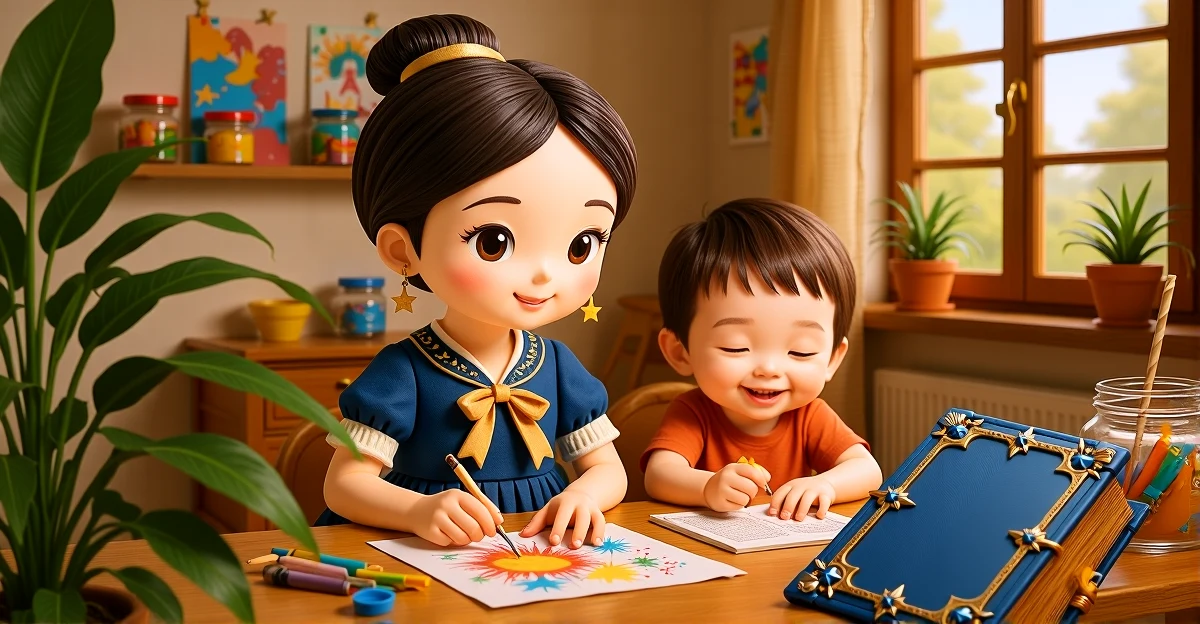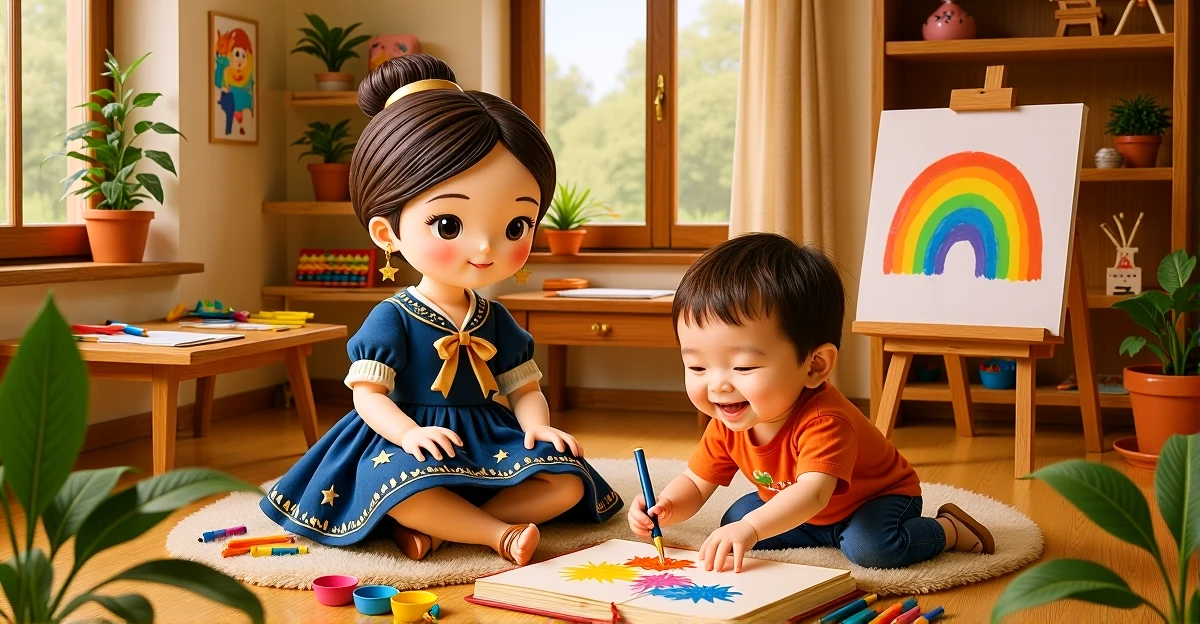

Your child picks up a crayon, makes one mark on the paper, and declares, "I'm not creative. I can't do this." Or maybe they refuse to join music class, saying they're "not good at singing." Perhaps they watch other children paint at preschool but won't try themselves. And your heart sinks a little, because you want SO much for them to experience the joy and wonder of creative expression.
First, let me tell you something IMPORTANT: You're not alone in this. What you're experiencing is one of the most common concerns parents share with me. And here's the beautiful truth—what's happening right now is completely, wonderfully, perfectly normal for your child's age and stage of development.
In this guide, we're going to explore why children ages 5-6 sometimes say they're not creative, what research tells us about creative confidence, and most importantly, gentle strategies that actually work to help your child rediscover the creative spirit that's already inside them, just waiting to bloom.
Why Your Child Says They're Not Creative
When your five or six-year-old says they're not creative, they're not actually telling you about their abilities. They're telling you about their feelings. And understanding this distinction changes everything.
At this magical age, something fascinating happens in children's developing brains. They're starting to become aware of themselves in relation to others. They begin to notice that some friends draw differently, or sing differently, or move differently than they do. And sometimes, that awareness can feel overwhelming.
It's like they're discovering that there are SO many ways to be creative, and they're not sure where they fit in that big, beautiful picture. They might be:
- Worried about making mistakes: They've tried something once and it didn't turn out the way they imagined, so now they're protecting their heart from that disappointment.
- Comparing themselves to others: They notice that a friend's painting looks different from theirs, and they interpret "different" as "better."
- Feeling uncertain about the process: They don't yet understand that creativity is about exploration, not perfection.
- Experiencing performance anxiety: They feel pressure to create something "good" or "right," which freezes their natural creative impulse.
Here's what the Magic Book taught me: This phase isn't a problem to fix. It's a developmental milestone to support. Your child is learning about self-expression, about trying new things, about the relationship between imagination and execution. And that learning process sometimes looks like resistance or self-doubt.
What Research Tells Us About Creative Confidence
The wonderful news is that researchers have spent decades studying how children develop creative confidence, and their findings are both reassuring and empowering.
Creativity Is Built, Not Born
Dr. Maite Garaigordobil from the University of the Basque Country spent twenty years studying how children develop creativity and social-emotional competencies. Her research reveals something BEAUTIFUL: creativity isn't a talent you're born with or without. It's a confidence you build, one gentle experience at a time.
"When children participate in playful, low-pressure creative experiences, their creative self-concept grows beautifully. Their emotional stability improves. Their willingness to try new things blossoms like flowers in spring."
— Dr. Maite Garaigordobil, University of the Basque Country
This means that when your child says they're not creative, they're not making a permanent statement about who they are. They're expressing how they feel right now, in this moment. And feelings can change with the right support.
Process Over Product
The National Association for the Education of Young Children emphasizes something that might surprise you: children develop creative confidence when adults focus on exploration rather than outcomes. When we celebrate the DOING instead of the final product, we give children permission to experiment, to make mistakes, to discover their own unique way of expressing themselves.
Think about it this way. When we say, "What is it supposed to be?" we're implying there's a right answer. But when we say, "Tell me about what you made," we're celebrating their process, their choices, their unique vision. Every word we choose either builds their confidence or chips away at it.
The Creativity-Curiosity Connection
Research from the Society for Research in Child Development shows us something WONDERFUL: creativity and curiosity are deeply connected in young children. When we support one, we naturally strengthen the other.
So when your child asks a million questions about how things work, or why the sky changes colors, or what happens when you mix all the paints together—that curiosity IS creativity in action. That's their creative mind exploring and wondering and discovering.
Gentle Strategies That Actually Work
Now that we understand what's happening and what research tells us, let's explore practical, gentle strategies you can use starting today to nurture your child's creative confidence.
1. Create a Judgment-Free Zone
Let your child know that in your home, there's no such thing as doing art wrong, or singing wrong, or moving wrong. There's only exploring and discovering and trying.
You might say something like: "In our family, we believe everyone is creative in their own special way. Let's discover YOUR way together."
This simple reframe shifts the focus from performance to exploration. It gives your child permission to be imperfect, to experiment, to find their own unique creative voice.
2. Join Them in the Mess
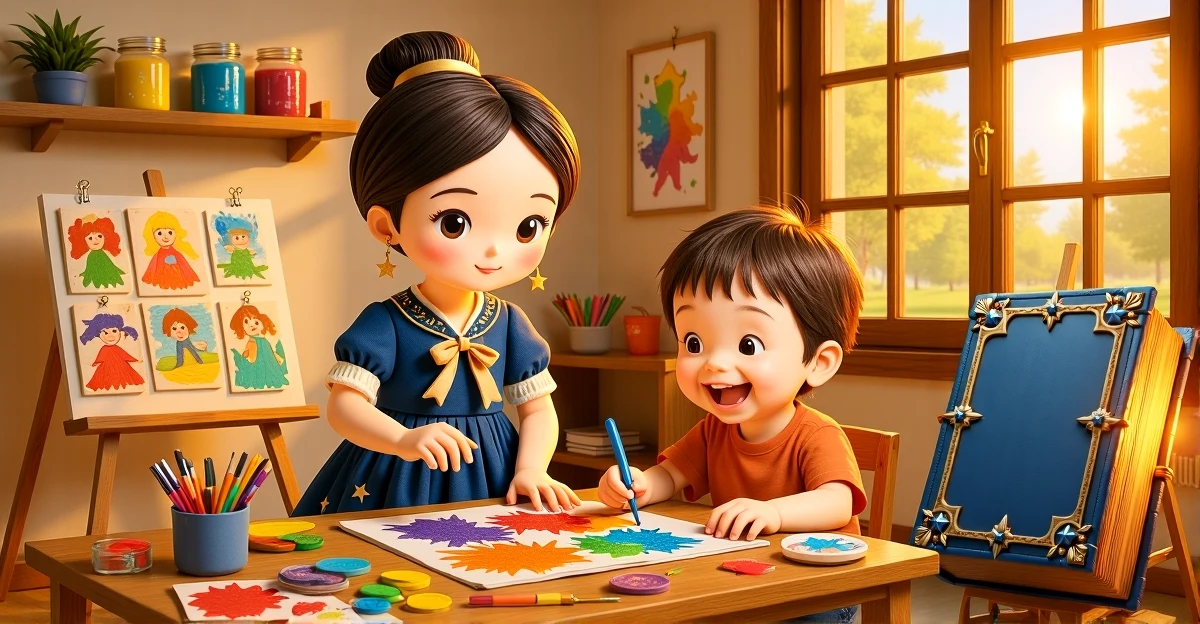
And I mean that literally! Get your hands in the paint. Sing the silly songs. Make up ridiculous stories together. When your child sees YOU being playful and imperfect, it gives them permission to be playful and imperfect too.
You're modeling that creativity is about joy, not judgment. You're showing them that adults make "mistakes" too, and that those mistakes are actually part of the creative process.
3. Offer Invitations, Not Demands
Instead of saying, "Let's do art now," try: "I'm going to be at the table with some art supplies if you'd like to join me."
Or: "I'm going to put on some music and dance around the kitchen. You're welcome to dance with me if you feel like it."
No pressure, just invitation. You're creating opportunities without forcing participation. This approach respects your child's autonomy while keeping the door to creativity open.
4. Celebrate the Process with Specific Observations
Instead of generic praise like "Good job," try:
- "I notice you used SO many different colors in this corner."
- "I heard you trying out different rhythms with that drum."
- "You really thought carefully about which crayon to choose."
- "I love how you're experimenting with mixing those colors together."
These specific observations show your child that you're paying attention to their exploration, not judging their results. You're celebrating their choices, their thinking, their process.
5. Expand Your Definition of Creativity
Here's something that might shift your perspective: creativity wears SO many different faces. Some children express creativity through:
- Building elaborate structures with blocks
- Making up stories and imaginary worlds
- Organizing toys in interesting patterns
- Asking deep questions about how the world works
- Creating dramatic play scenarios
- Experimenting with how things move or sound
Your child's creative expression might look different than you expected. And that's not just okay—that's WONDERFUL. When we expand our definition of creativity, we can see and celebrate the unique ways our children already express themselves.
6. Reframe "Mistakes" as Discoveries
When your child mixes colors and gets brown instead of the purple they wanted, that's not a mistake—it's a discovery! "Oh, look what happened when you mixed those colors! That's SO interesting. I wonder what would happen if you tried..."
This reframe teaches children that unexpected outcomes aren't failures. They're opportunities to learn, to experiment, to discover something new.
Stories That Can Help
You know what I absolutely LOVE? Stories can be such gentle helpers in this journey. When children see characters in stories trying new things, making mistakes, and discovering their own unique gifts, it opens up possibilities in their own hearts.
In The Book of Inara, we have a beautiful story that speaks directly to this challenge:
The Canvas That Remembered Dreams
Perfect for: Ages 6-7 (also wonderful for 5-year-olds)
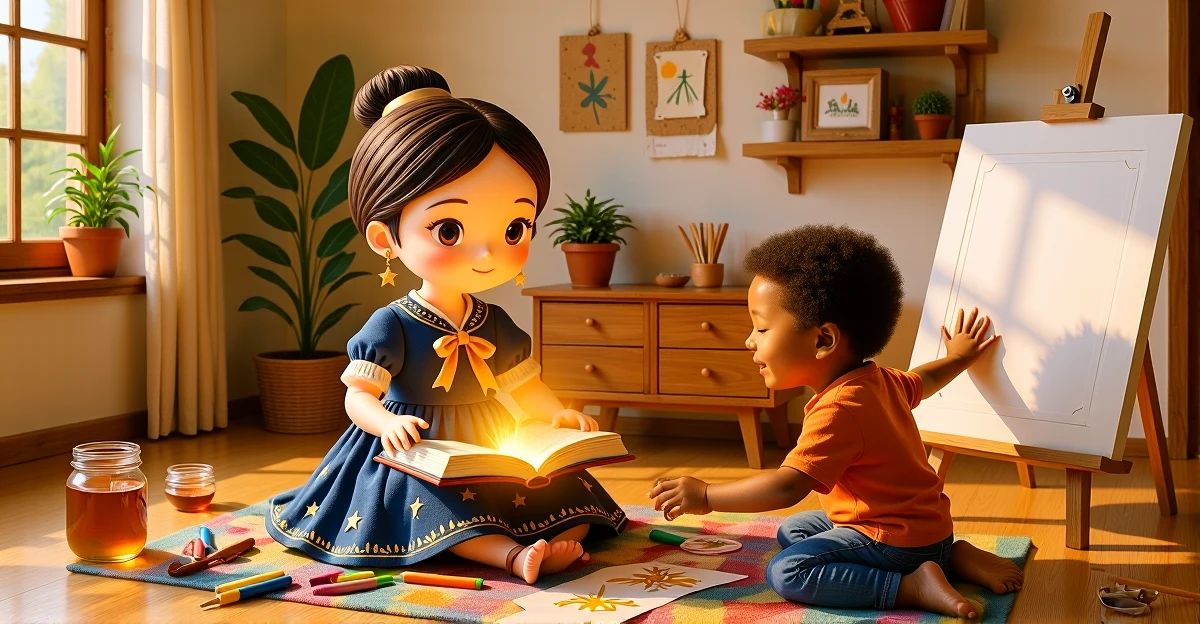
What makes it special: This story is about two friends, Theo and Miles, who discover a magical art studio where blank canvases show faint, shimmering images of dreams. What I love about this story is how it teaches that creativity comes from within. That everyone has their own unique way of seeing and expressing. That philosophical thinking and strategic thinking are BOTH creative gifts. That imagination is powerful and sacred.
Key lesson: When Theo and Miles touch the canvas and see those dreamlike images appear, children learn something beautiful: creativity is already inside them. It just needs the right environment to emerge. It needs safety. It needs playfulness. It needs someone who believes in them.
How to use it: After reading this story together, you might create your own exploration. Set up a simple art space with different materials and say, "I wonder what we'll discover today." Or have a silly song session where you make up ridiculous lyrics together. The goal isn't to create little artists—it's to help your child discover that they have a unique voice, a unique way of seeing the world, a unique way of expressing what's in their heart.
You're Doing Beautifully
Remember, this phase where your child is saying they're not creative? It's temporary. It's normal. It's part of them figuring out who they are and what they enjoy. Your job isn't to force them into creative activities. Your job is to keep the door open, keep the invitation warm, and keep believing in the creative spirit that lives in every child.
The Magic Book and I want you to know this: Your child IS creative. They're learning, they're growing, they're discovering. And with your gentle support, your playful invitation, and your unwavering belief in them, their creative confidence will bloom in its own perfect time.
Some children bloom early. Some bloom late. But every child blooms when they're given the right conditions: safety, playfulness, acceptance, and someone who believes in them unconditionally. You're providing those conditions. You're doing such important work.
You're not just raising a child. You're nurturing a spirit. You're helping a little person discover who they are and what they love. And that, my wonderful friend, is the most creative act of all.
The Book of Inara is here to support you on this journey. We have stories that celebrate different kinds of creativity, stories that show characters trying new things and discovering their gifts, stories that remind children and parents that everyone has something special to offer the world.
Sweet dreams, and may your days be filled with stardust and wonder.
With love and starlight,
Inara
Related Articles
- Supporting Your Child's Independence and Self-Advocacy: A Gentle Guide
- How to Help Your Child Discover Their Unique Strengths and Talents
- When Your Child Hesitates to Lead: Understanding Initiative and Confidence in Ages 5-6
- How to Raise a Creative Problem-Solver: Ages 5-6
- Understanding Your Child Fear of Failure: Gentle Strategies That Build Courage
Show transcript
Hello, my wonderful friend! It's me, Inara, and I am SO happy you're here today. You know, the Magic Book and I have been noticing something that's been weighing on many parents' hearts lately. Your little one says they're not creative. Maybe they won't pick up crayons, or they refuse to sing along, or they say no thank you to drama class. And I can feel how much this worries you, because you want your child to experience the joy and wonder of creative expression.
First, let me tell you something IMPORTANT. You are doing beautifully. Your child is doing beautifully. And what's happening right now? It's completely, wonderfully, perfectly normal.
Let me share what the Magic Book taught me about this magical age of five and six. This is such a fascinating time in your child's development. Their little brains are growing SO fast, and with that growth comes something unexpected. They're starting to compare themselves to others. They're beginning to notice that some friends draw differently, or sing differently, or move differently than they do. And sometimes, that awareness can feel overwhelming.
Here's the truth that research shows us, and it's so beautiful. When your child says they're not creative, they're not telling you about their abilities. They're telling you about their feelings. They might be feeling uncertain. They might be worried about making mistakes. They might have tried something once and it didn't turn out the way they imagined, and now they're protecting their heart from that disappointment.
The Magic Book whispers this wisdom. Creativity isn't a talent you're born with or without. It's a confidence you build, one gentle experience at a time. And right now, your child is in a critical learning phase about self-expression and what it means to try new things.
Dr. Maite Garaigordobil from the University of the Basque Country spent twenty years studying how children develop creative confidence. And you know what she discovered? When children participate in playful, low-pressure creative experiences, their creative self-concept grows beautifully. Their emotional stability improves. Their willingness to try new things blossoms like flowers in spring.
The key, my friend, is something the research calls process-oriented experiences. That means we celebrate the DOING, not the final product. We celebrate the exploration, the experimentation, the trying. We celebrate the purple mixed with the green, even if it makes brown. We celebrate the off-key singing, because singing is about joy, not perfection. We celebrate the silly dramatic voices, because play is where creativity lives.
The National Association for the Education of Young Children tells us something WONDERFUL. Children develop creative confidence when adults focus on exploration rather than outcomes. When we say, Tell me about what you made, instead of, What is it supposed to be? When we say, I love how you're experimenting with those colors, instead of, That doesn't look quite right. Every word we choose either builds their confidence or chips away at it.
And here's something that might surprise you. Creativity and curiosity are deeply connected in young children. When we support one, we naturally strengthen the other. So when your child is curious about how a bug walks, or why the sky changes colors, or what happens when you mix all the paints together, that curiosity IS creativity in action.
So what can you do, my wonderful friend? How can you help your child rediscover the creative confidence that's already inside them, just waiting to bloom?
First, create a judgment-free zone. Let them know that in your home, there's no such thing as doing art wrong, or singing wrong, or moving wrong. There's only exploring and discovering and trying. You might say something like, In our family, we believe everyone is creative in their own special way. Let's discover YOUR way together.
Second, join them in the mess. And I mean that literally! Get your hands in the paint. Sing the silly songs. Make up ridiculous stories together. When they see YOU being playful and imperfect, it gives them permission to be playful and imperfect too. You're modeling that creativity is about joy, not judgment.
Third, offer choices without pressure. Instead of saying, Let's do art now, you might say, I'm going to be at the table with some art supplies if you'd like to join me. Or, I'm going to put on some music and dance around the kitchen. You're welcome to dance with me if you feel like it. No pressure, just invitation.
Fourth, celebrate the process with specific observations. Instead of generic praise like, Good job, try, I notice you used SO many different colors in this corner, or, I heard you trying out different rhythms with that drum, or, You really thought carefully about which costume to choose. These specific observations show them you're paying attention to their exploration, not judging their results.
And here's something the Magic Book showed me that I absolutely LOVE. Stories can be such gentle helpers in this journey. When children see characters in stories trying new things, making mistakes, and discovering their own unique gifts, it opens up possibilities in their own hearts.
We have a story in The Book of Inara called The Canvas That Remembered Dreams. It's about two friends, Theo and Miles, who discover a magical art studio where blank canvases show faint, shimmering images of dreams. What I love about this story is how it teaches that creativity comes from within. That everyone has their own unique way of seeing and expressing. That philosophical thinking and strategic thinking are BOTH creative gifts. That imagination is powerful and sacred.
When Theo and Miles touch the canvas and see those dreamlike images appear, children watching learn something beautiful. Creativity is already inside them. It just needs the right environment to emerge. It needs safety. It needs playfulness. It needs someone who believes in them.
After you share this story with your child, you might create your own exploration together. Maybe you set up a simple art space with different materials and say, I wonder what we'll discover today. Maybe you have a silly song session where you make up ridiculous lyrics together. Maybe you put on a puppet show where the puppets can be as silly or serious as they want to be.
The goal isn't to create little artists or musicians or actors. The goal is to help your child discover that they have a unique voice, a unique way of seeing the world, a unique way of expressing what's in their heart. And THAT, my friend, is what creativity truly is.
Remember, this phase where they're saying they're not creative? It's temporary. It's normal. It's part of them figuring out who they are and what they enjoy. Your job isn't to force them into creative activities. Your job is to keep the door open, keep the invitation warm, and keep believing in the creative spirit that lives in every child.
Some children express creativity through building with blocks. Some through making up elaborate stories. Some through organizing their toys in interesting patterns. Some through asking deep questions about how the world works. Creativity wears SO many different faces, and your child's creative expression might look different than you expected. And that's not just okay, that's WONDERFUL.
The Magic Book and I want you to know this. Your child IS creative. They're learning, they're growing, they're discovering. And with your gentle support, your playful invitation, and your unwavering belief in them, their creative confidence will bloom in its own perfect time.
You're doing such important work, my friend. You're raising a human being. You're nurturing a spirit. You're helping a little person discover who they are and what they love. And that is the most creative act of all.
The Book of Inara is here to support you on this journey. We have stories that celebrate different kinds of creativity, stories that show characters trying new things and discovering their gifts, stories that remind children and parents that everyone has something special to offer the world.
Sweet dreams, my wonderful friend. Keep believing in your child's unique creative spirit. Keep offering gentle invitations. Keep celebrating the process. And watch as their confidence grows, one playful moment at a time.
With love and starlight, Inara.