
You spent hours planning the perfect birthday party. You wrapped the gift with care, imagining your child's delighted face. But when they opened it, they barely glanced at it before asking, "What else did I get?" Your heart sank a little. Or maybe it's the daily moments that sting more. You make their favorite meal, and there's no thank you. You help them with something they've been struggling with, and they move on without acknowledgment. It can feel like everything you do is just... taken for granted.
If this sounds familiar, I want you to know something really important. You're not alone in this. And even more importantly, your child isn't ungrateful. They're learning one of the most complex emotional skills humans ever develop. Isn't that WONDERFUL?
In this article, we're going to explore what's really happening in your child's developing brain, what research tells us about gratitude at ages 5-6, and gentle, effective ways to nurture this beautiful capacity. Plus, I'll share a story from The Book of Inara that makes gratitude feel magical and real for young children.
Understanding Why Gratitude Is So Complex
Here's something that might surprise you. Gratitude isn't something children are born knowing how to do. It's not like breathing or sleeping. Gratitude is actually a really sophisticated skill that requires your child's brain to do several amazing things all at once.
Think about what gratitude actually involves. Your child has to:
- Recognize that someone did something kind for them
- Understand that the person CHOSE to be kind, that it was intentional
- Connect a positive feeling to that person, not just to the gift or action
- Want to return that kindness someday
- Express appreciation in a socially appropriate way
That's a LOT for a five or six year old brain to coordinate! And research shows us that most children at this age are just beginning to understand some of these pieces. They're in this beautiful learning phase, like watching a flower slowly open its petals to the sun.
What's Happening in Your Child's Brain
When your child seems to take things for granted, they're not being selfish. Their brain is actually focused on something else entirely. They're learning about the world, about cause and effect, about how things work. That gift you gave them? They're fascinated by what it DOES, not yet by the love behind it. That's completely normal for their developmental stage.
The part of the brain that helps us understand other people's intentions and feelings is still developing throughout childhood. Your 5-6 year old is building the neural pathways they'll need for genuine gratitude, but those pathways aren't fully formed yet. They're under construction, and that's exactly where they should be.
What Research Shows About Gratitude Development
Dr. Jackie Nelson at the University of North Carolina conducted fascinating research on how young children develop gratitude understanding. Here's what she discovered that changed how I think about this whole topic.
Children who understood emotions well at age three were better at understanding gratitude by age five. Why? Because gratitude starts with feelings.
— Dr. Jackie Nelson, University of North Carolina at Greensboro
This is SO important. Your child has to learn to recognize and name positive emotions first, before they can connect those feelings to another person's kindness. Think about it like building a house. You can't put up the walls before you've laid the foundation. Your child is laying the foundation right now.
Every time they learn to identify a feeling, every time they notice someone else's emotions, every time they understand that people have thoughts and intentions, they're building the skills they'll need for genuine gratitude.
The Developmental Timeline
Research in positive psychology shows us that gratitude develops gradually over years, not days or weeks. Dr. Robert Emmons, a leading gratitude researcher, found that gratitude practice actually rewires the brain for more positive emotions. But here's the key: this rewiring takes time and consistent modeling.
At ages 5-6, most children are just beginning to understand that other people acted intentionally to help them. They might recognize that they feel happy about something, but connecting that happiness to someone else's choice to be kind? That's the sophisticated skill they're still developing.
Gentle Strategies That Actually Work
So what can we do to support this beautiful unfolding? The research gives us some WONDERFUL guidance that feels gentle and natural.
1. Model Gratitude Yourself (This Is the Most Powerful Thing You Can Do)
Psychologists Jeffrey Froh and Giacomo Bono, who study prosocial behaviors in children, remind us that our children want to be like us. We provide the blueprint for what to say and what to do. When your child sees YOU expressing genuine appreciation, when they hear you say thank you to the cashier, when they watch you pause and notice something beautiful, you're showing them what gratitude looks like in action.
This isn't about performing gratitude or forcing it. It's about authentic appreciation. Notice the sunset and share your wonder. Thank your partner for something specific. Express genuine appreciation for small kindnesses. Your child is watching and learning more powerfully than any lecture could ever teach.
2. Focus on the Positive
Instead of constantly reminding your child to say thank you, notice and celebrate when they DO show appreciation, even in small ways. Did they smile when you gave them a snack? That's appreciation! Did they bring you a flower they picked? That's gratitude in action!
When you notice these moments and reflect them back with warmth, you're helping your child see their own capacity for thankfulness. "I noticed how your whole face lit up when Grandma gave you that hug. You looked so happy!" This helps them connect their positive feelings to someone else's kindness.
3. Make Gratitude a Gentle Daily Practice
You might share one thing you're grateful for at dinner, not as a lesson, but as a genuine sharing. You might notice beautiful things together. "Look, the sunset is painting the sky pink and gold! Isn't that WONDERFUL?" This isn't about forcing your child to perform gratitude. It's about creating a family culture where appreciation flows naturally.
Research from gentle parenting experts shows that children thrive when they receive at least five positive statements for every negative correction. When we focus on noticing and appreciating the good, we're modeling the very skill we want our children to develop.
4. Be Patient with the Process
Remember, your child at five or six is right where they should be. Their capacity for gratitude is emerging, like a seedling pushing through soil toward the light. Some days you'll see it clearly. Other days it will seem hidden. But it's always growing, always developing, always moving toward that beautiful moment when they'll truly understand what it means to feel thankful.
Stories That Can Help
Here's where stories become such a beautiful helper. Stories give children a safe way to explore complex emotions like gratitude without any pressure. They can watch characters learn about appreciation, they can feel what it's like to be thankful, all while snuggled safely in your arms.
The Universe Whispers Thank You
Perfect for: Ages 4-5 (also wonderful for 5-6 year olds)
What makes it special: In this cosmic adventure, Ethan and Sofia visit a listening station where they discover something magical. When they bring grateful hearts to their work, they can suddenly hear the universe's most beautiful songs hidden in gravitational waves. The story shows children that gratitude isn't just about saying thank you. It's about opening your heart to connection and wonder.
Key lesson: Appreciation creates invisible connections that transform how we experience the world. Gratitude makes us able to hear and see beauty we might otherwise miss.
After reading together: You might create your own "gratitude listening" practice. Take quiet moments to notice and appreciate small wonders together. The way the leaves rustle. The warmth of the sun. The softness of a blanket. You're not demanding gratitude. You're inviting your child to experience the joy of noticing and appreciating.
You're Doing Beautifully
The next time your child seems to take something for granted, take a deep breath. Remember that their brain is doing exactly what it's supposed to be doing at this age. They're learning. They're growing. And with your gentle guidance, your warm modeling, and stories that show them the beauty of appreciation, they're developing a capacity for gratitude that will serve them their whole life long.
The research is so clear on this. Children who develop strong gratitude skills show better wellbeing, stronger friendships, and greater happiness. But these skills develop through patient modeling and practice, not through demands or corrections. You're planting seeds right now that will bloom for years to come.
Every time you model thankfulness, every time you notice their small moments of appreciation, every time you read them a story that opens their heart, you're nurturing this precious skill. You're teaching them that the world is full of kindness worth noticing, that people choose to be generous, and that appreciation creates connection.
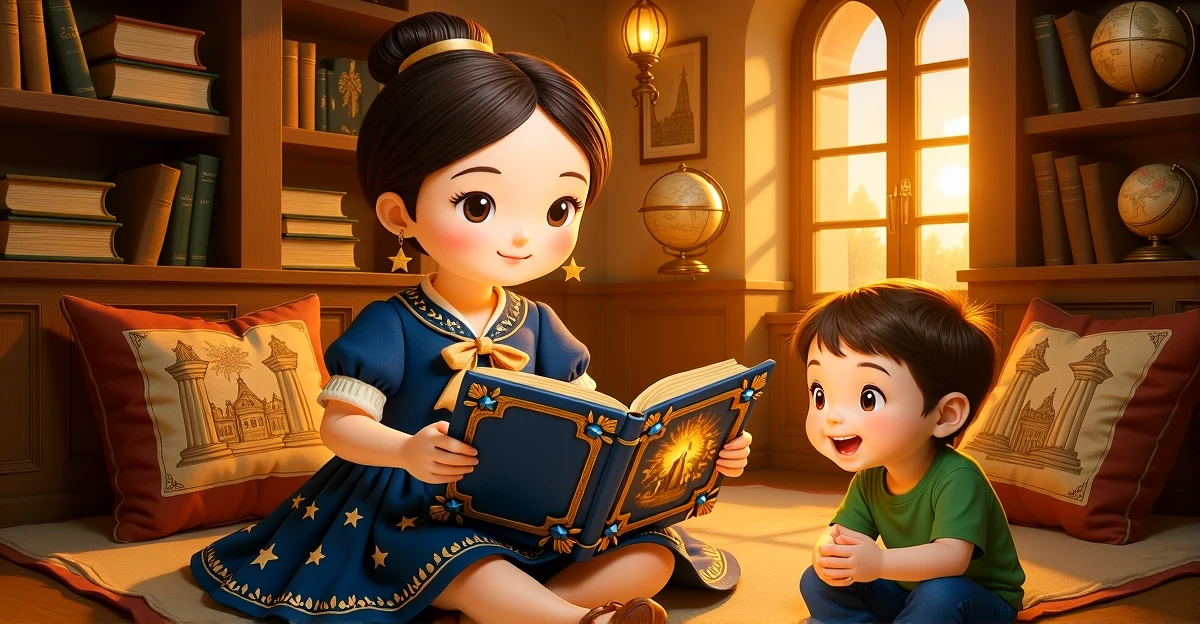
The Magic Book and I are always here for you, with stories and wisdom and so much love. You're doing such beautiful work, my wonderful friend.
With love and starlight,
Inara
Related Articles
- When Screen Time Ends in Meltdowns: Understanding Your Child's Brain and What Actually Helps (Ages 5-6)
- Understanding Your Child's Journey to Gratitude: Why 4-5 Year Olds Are Learning to Say Thank You (And How to Help)
- Teaching Financial Wisdom to Your 5-6 Year Old: A Gentle Guide to Money and Economics
- When Your Child Focuses on Negatives: Understanding Growing Minds (Ages 6-7)
Show transcript
Hello, my wonderful friend! It's me, Inara, and I am SO happy you're here today. You know, the Magic Book and I have been noticing something that so many parents are experiencing right now. Maybe you've felt it too. You give your child a gift, and they barely glance at it before moving on to the next thing. You make their favorite meal, and there's no thank you. You spend hours planning a special day, and it feels like they just... take it all for granted.
And I want you to know something really important. You're not alone in this. And even more importantly, your child isn't ungrateful. They're learning one of the most complex emotional skills humans ever develop. Isn't that WONDERFUL?
Let me share what the Magic Book taught me about this beautiful phase of growth.
You see, gratitude isn't something children are born knowing how to do. It's not like breathing or sleeping. Gratitude is actually a really sophisticated skill that requires your child's brain to do several amazing things all at once. They have to recognize that someone did something kind for them. They have to understand that person CHOSE to be kind, that it was intentional. They have to connect a positive feeling to that person, not just to the gift or the action. And they have to want to return that kindness someday.
That's a LOT for a five or six year old brain to coordinate! And research shows us that most children at this age are just beginning to understand some of these pieces. They're in this beautiful learning phase, like watching a flower slowly open its petals to the sun.
Dr. Jackie Nelson at the University of North Carolina studied this, and here's what she discovered. Children who understood emotions well at age three were better at understanding gratitude by age five. Why? Because gratitude starts with feelings. Your child has to learn to recognize and name positive emotions first, before they can connect those feelings to another person's kindness.
Think about it like building a house. You can't put up the walls before you've laid the foundation. Your child is laying the foundation right now. Every time they learn to identify a feeling, every time they notice someone else's emotions, every time they understand that people have thoughts and intentions, they're building the skills they'll need for genuine gratitude.
And here's something that might surprise you. When your child seems to take things for granted, they're not being selfish. Their brain is actually focused on something else entirely. They're learning about the world, about cause and effect, about how things work. That gift you gave them? They're fascinated by what it DOES, not yet by the love behind it. That's completely normal for their developmental stage.
The Magic Book showed me something beautiful about this. Gratitude is like starlight. It's always there, but sometimes we need the right conditions to see it shine. For young children, those conditions develop gradually, over years, not days or weeks.
So what can we do to support this beautiful unfolding? Well, the research gives us some WONDERFUL guidance.
First, and this is the most important thing, model gratitude yourself. Dr. Robert Emmons, who studies gratitude in positive psychology, found that gratitude actually rewires the brain for more positive emotions. When your child sees YOU expressing genuine appreciation, when they hear you say thank you to the cashier, when they watch you pause and notice something beautiful, you're showing them what gratitude looks like in action.
Psychologists Jeffrey Froh and Giacomo Bono remind us that our children want to be like us. We provide the blueprint for what to say and what to do. So every time you express authentic appreciation, you're teaching your child more powerfully than any lecture ever could.
Second, focus on the positive. Instead of constantly reminding your child to say thank you, notice and celebrate when they DO show appreciation, even in small ways. Did they smile when you gave them a snack? That's appreciation! Did they bring you a flower they picked? That's gratitude in action! When you notice these moments and reflect them back with warmth, you're helping your child see their own capacity for thankfulness.
Third, make gratitude a gentle daily practice, not a demand. You might share one thing you're grateful for at dinner, not as a lesson, but as a genuine sharing. You might notice beautiful things together. Look, the sunset is painting the sky pink and gold! Isn't that WONDERFUL? This isn't about forcing your child to perform gratitude. It's about creating a family culture where appreciation flows naturally.
And here's where stories become such a beautiful helper. Stories give children a safe way to explore complex emotions like gratitude without any pressure. They can watch characters learn about appreciation, they can feel what it's like to be thankful, all while snuggled safely in your arms.
In The Book of Inara, we have a story called The Universe Whispers Thank You. In this story, Ethan and Sofia visit a cosmic listening station where they discover something magical. When they bring grateful hearts to their work, they can suddenly hear the universe's most beautiful songs hidden in gravitational waves. The story shows children that gratitude isn't just about saying thank you. It's about opening your heart to connection and wonder.
What I love about this story is how it makes gratitude feel magical and real at the same time. Children learn that appreciation creates invisible connections, that thankfulness transforms how we experience the world. And they learn this through adventure and wonder, not through being told they should be grateful.
After you read this story together, you might create your own gratitude listening practice. Take quiet moments to notice and appreciate small wonders together. The way the leaves rustle. The warmth of the sun. The softness of a blanket. You're not demanding gratitude. You're inviting your child to experience the joy of noticing and appreciating.
Remember, my wonderful friend, your child at five or six is right where they should be. Their capacity for gratitude is emerging, like a seedling pushing through soil toward the light. Some days you'll see it clearly. Other days it will seem hidden. But it's always growing, always developing, always moving toward that beautiful moment when they'll truly understand what it means to feel thankful.
The research is so clear on this. Children who develop strong gratitude skills show better wellbeing, stronger friendships, and greater happiness. But these skills develop through patient modeling and practice, not through demands or corrections. You're planting seeds right now that will bloom for years to come.
So the next time your child seems to take something for granted, take a deep breath. Remember that their brain is doing exactly what it's supposed to be doing at this age. They're learning. They're growing. And with your gentle guidance, your warm modeling, and stories that show them the beauty of appreciation, they're developing a capacity for gratitude that will serve them their whole life long.
You're doing such beautiful work, my friend. Every time you model thankfulness, every time you notice their small moments of appreciation, every time you read them a story that opens their heart, you're nurturing this precious skill.
The Magic Book and I are always here for you, with stories and wisdom and so much love. Sweet dreams, my wonderful friend. With love and starlight, Inara.