
Have you noticed your five or six year old doesn't seem to think much about what they believe in or what matters to them? Maybe you've wondered if they should be more reflective about values, more thoughtful about right and wrong. If you're feeling this way, I want you to know something important: you're not alone, and what you're observing is actually perfectly, beautifully normal.
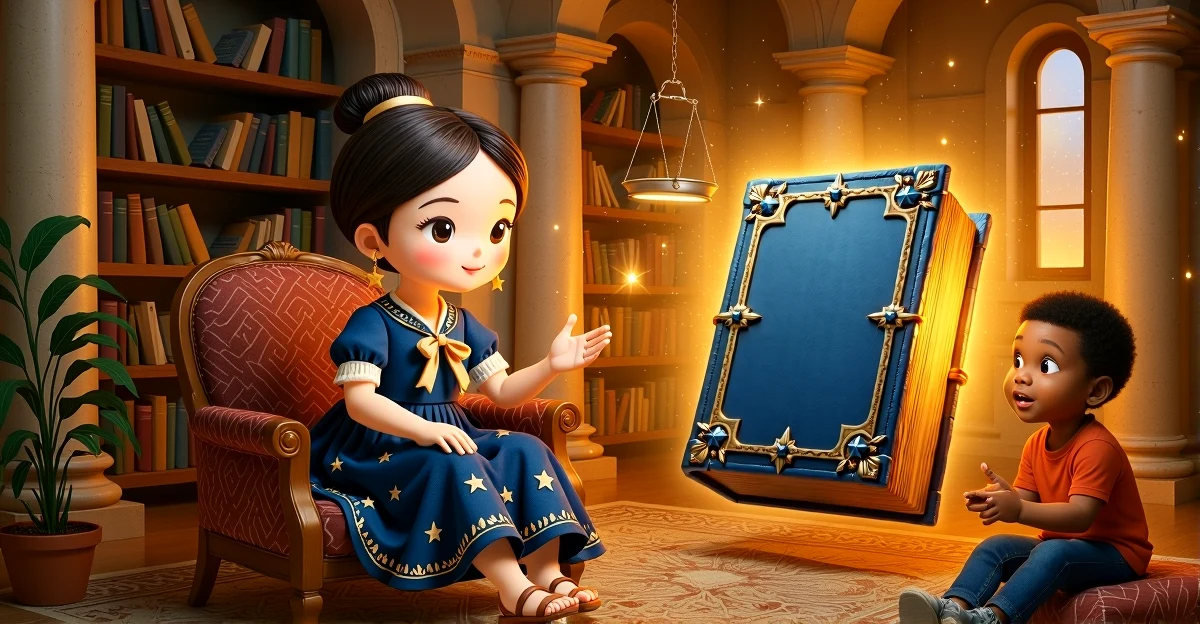
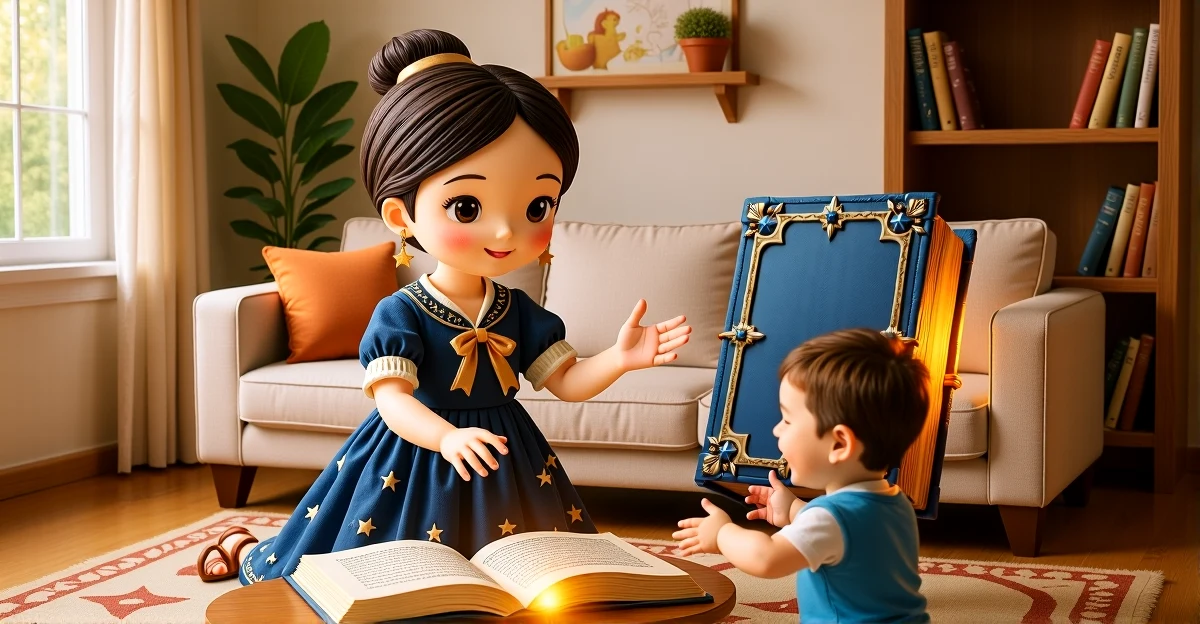
Hello, my wonderful friend! It's me, Inara, and I'm SO happy you're here. The Magic Book and I have been noticing something beautiful happening with children around ages five and six, and I want to share this with you because it might just change how you see your little one's development.
In this guide, we'll explore what research tells us about values development at this age, why this is such a pivotal time, and most importantly, how you can support your child on this gorgeous journey of discovering who they are and what matters to them.
The Beautiful Beginning: What's Happening at Ages 5-6
Right now, at five and six years old, your child is standing at the very beginning of one of the most WONDERFUL journeys of their life. They're starting to develop their personal values and beliefs. And here's the thing that might surprise you: this isn't something that happens all at once. It's not like flipping a light switch. It's more like watching the sunrise, slowly, gently, beautifully illuminating the sky.
Research shows us something fascinating. Starting around ages five to six, children begin to evaluate situations through a brand new lens. They start thinking about what feels right and what doesn't, not just because of rules or rewards, but because of something deeper. They're beginning to develop what researchers call an internal moral compass.
The Developmental Milestone You Might Be Missing
The Collaborative for Academic, Social, and Emotional Learning tells us that this is when children start developing healthy identities through self-awareness and relationship skills. Identity development, my friend, is integral to social and emotional learning in early childhood. Your child is literally building the foundation of who they will become.
And here's what makes this so beautiful: child development experts have found that children at this age aren't expected to have sophisticated value systems. They're not supposed to sit around pondering philosophy. Instead, they're in the gorgeous beginning stages of discovering who they are and what matters to them.
What Research Tells Us About Moral Development
The research on values development in young children is both fascinating and reassuring. Studies published by the National Center for Biotechnology Information demonstrate that starting around five to six years of age, children begin to evaluate group norms against their emerging moral considerations. Sometimes they'll even reject what everyone else is doing if it conflicts with what feels right to them. How AMAZING is that?
"Starting around 5-6 years of age, children begin to evaluate group norms against moral considerations, marking a critical developmental milestone in their journey toward forming personal values."
— National Center for Biotechnology Information, Moral Reasoning Research
Think about it this way: when your child chooses to share a toy even though they don't have to, when they stand up for a friend on the playground, when they tell you the truth even though they're worried about the consequences, they're not just making choices. They're discovering their values. They're learning what kind of person they want to be.
The Role of Self-Concept in Values Formation
Research on young children's self-concepts shows us that parenting behavior significantly influences children's self-concept development during these formative years. Child temperament and parent interactions shape how children understand themselves and their values. This means that every interaction you have with your child, every conversation, every moment of connection, is helping them build their sense of who they are.
The consensus among researchers is clear: children at this age are not expected to have sophisticated value systems, but rather are in the beautiful beginning stages of discovering who they are and what matters to them. When parents provide supportive environments that encourage reflection and model values authentically, children develop stronger foundations for lifelong identity formation and moral reasoning.
How Values Development Shows Up in Daily Life
You might be wondering what this values development actually looks like in your everyday life with your child. Here are some beautiful signs that your child's moral compass is awakening:
- Fairness Concerns: Your child might start noticing when things aren't fair, even when it doesn't directly affect them. This shows they're developing a sense of justice.
- Empathy in Action: They might express concern when someone is left out or hurt, showing their emerging value of compassion.
- Truth-Telling: Even when it's hard, they might choose honesty, demonstrating their developing integrity.
- Helping Behaviors: They might offer to help without being asked, showing their value of kindness and service.
- Standing Up for Others: They might defend a friend or speak up when something doesn't feel right, showing moral courage.
Each of these moments is a glimpse into your child's developing value system. They're not just behaviors, they're expressions of who your child is becoming.
Gentle Strategies to Support Values Development
Now, you might be wondering: how can I support this beautiful development? What can I do to help my child on this journey of discovering their values and beliefs? The Magic Book whispers this wisdom: your child learns values the same way they learn everything else, through relationships, through experiences, and through stories that show them possibilities.
1. Model Your Values Through Your Actions
Children at this age are watching you SO carefully. When you show kindness to a stranger, when you admit a mistake, when you stand up for what's right even when it's hard, your child is learning. They're seeing what it looks like to live according to values. This is the most powerful teaching tool you have.
2. Create Space for Reflection
Ask gentle questions like, "What do you think was the right thing to do?" or "How did that make you feel?" These aren't tests. They're invitations for your child to explore their own thoughts and feelings. Give them time to think, and honor whatever they share with you.
3. Validate Their Emerging Sense of Right and Wrong
When your child says something isn't fair, listen to them. When they express concern about someone being left out, honor that compassion. You're witnessing their value system taking shape, and your validation tells them that their moral instincts matter.
4. Notice and Name Values When You See Them
When your child shares without being asked, you might say, "I noticed you chose to share. That was kind." When they tell the truth even though it's hard, you might say, "You chose honesty even though you were worried. That took courage." This helps them connect their actions to deeper values.
5. Read Stories That Explore Values and Choices
Stories are one of the most powerful tools we have for helping children explore values and beliefs. Through stories, children can see characters facing choices, making decisions, and experiencing the consequences. They can explore what matters without any real-world risk.
Stories That Can Help
In The Book of Inara, we have beautiful stories that bring these concepts to life for your child. Let me share one that speaks directly to values development:
The Cosmic Traffic Controllers
Perfect for: Ages 6-7 (and advanced 5-6 year olds)
What makes it special: This story follows two friends, Theo and Miles, who discover cosmic traffic jams at the Wormhole Transit Authority. They have to choose between staying quiet, which would be easy, and speaking up to do the right thing, which feels scary. What makes this story so special is that it shows children what it looks like to have an internal moral compass.
Key lesson: Theo and Miles have to decide what matters more: being comfortable or being true to what they know is right. Through their journey, children can explore their own feelings about courage, integrity, and doing what's right even when it's hard.
How to use it: After experiencing this story with your child, you might ask them gentle questions: "What do you think Theo and Miles were feeling?" "What would you have done?" These conversations are where values come alive. They're where your child gets to practice thinking about what matters to them.
What This Looks Like in Everyday Life
So what does supporting values development look like in your everyday life? It means creating a home where it's safe to wonder, to question, to explore what feels right and what doesn't. It means having conversations about why people make different choices. It means being patient with this process.
Your child is not supposed to have everything figured out at five or six. They're supposed to be exactly where they are: at the beautiful beginning of a lifelong journey of discovering who they are and what they believe in.
The Magic Book reminds us that every child develops at their own pace. Some children might be very vocal about what they think is fair or right. Others might be quieter, processing internally. Both are perfect. Both are exactly as they should be.
What matters is that you're creating the conditions for this development to unfold naturally. You're providing love, support, guidance, and stories that illuminate possibilities. You're being the steady, caring presence that allows your child to explore safely.
You're Doing Beautifully
If you've been worried that your child doesn't think about what they believe in or what matters to them, I want you to take a deep breath and release that worry. Your child is right on track. They're in the perfect stage to begin this journey, and with your loving support, they're building a foundation that will serve them for their entire life.
Every conversation you have, every value you model, every story you share, you're helping your child discover who they are and who they want to become. And that? That's one of the most important gifts you can ever give.
The Magic Book and I are always here for you, cheering you on, supporting you on this journey. You're doing such beautiful work, my friend.
Sweet dreams, and until our next adventure together!
With love and starlight,
Inara
Related Articles
- When Screen Time Ends in Meltdowns: Understanding Your Child's Brain and What Actually Helps (Ages 5-6)
- When Your Child Feels Invisible: Understanding Social Isolation and the Gentle Path to Friendship
- Teaching Financial Wisdom to Your 5-6 Year Old: A Gentle Guide to Money and Economics
- How Children Ages 6-7 Develop Personal Values and Beliefs: A Parent's Guide
- Supporting Your Child's Social Awareness Development: A Gentle Guide
Show transcript
Hello, my wonderful friend! It's me, Inara, and I am SO happy you're here today. You know, the Magic Book and I have been noticing something beautiful happening with children around ages five and six, and I want to share this with you because it might just change how you see your little one's development.
Maybe you've noticed your child doesn't seem to think much about what they believe in, or what matters to them. Maybe you've wondered if they should be more reflective, more thoughtful about values and beliefs. And if you're feeling this way, I want you to know something important. You're not alone, and what you're observing? It's actually perfectly, beautifully normal.
Let me tell you what the Magic Book taught me about this magical age.
Right now, at five and six years old, your child is standing at the very beginning of one of the most WONDERFUL journeys of their life. They're starting to develop their personal values and beliefs. And here's the thing that might surprise you. This isn't something that happens all at once. It's not like flipping a light switch. It's more like watching the sunrise, slowly, gently, beautifully illuminating the sky.
Research shows us something fascinating. Starting around ages five to six, children begin to evaluate situations through a brand new lens. They start thinking about what feels right and what doesn't, not just because of rules or rewards, but because of something deeper. They're beginning to develop what researchers call an internal moral compass.
The Collaborative for Academic, Social, and Emotional Learning tells us that this is when children start developing healthy identities through self-awareness and relationship skills. Identity development, my friend, is integral to social and emotional learning in early childhood. Your child is literally building the foundation of who they will become.
And here's what makes this so beautiful. Child development experts have found that children at this age aren't expected to have sophisticated value systems. They're not supposed to sit around pondering philosophy. Instead, they're in the gorgeous beginning stages of discovering who they are and what matters to them.
Think about it this way. When your child chooses to share a toy even though they don't have to, when they stand up for a friend on the playground, when they tell you the truth even though they're worried about the consequences, they're not just making choices. They're discovering their values. They're learning what kind of person they want to be.
The research published by the National Center for Biotechnology Information shows us that starting around five to six years of age, children begin to evaluate group norms against their emerging moral considerations. Sometimes they'll even reject what everyone else is doing if it conflicts with what feels right to them. How AMAZING is that?
Now, you might be wondering, how can I support this beautiful development? What can I do to help my child on this journey of discovering their values and beliefs?
The Magic Book whispers this wisdom. Your child learns values the same way they learn everything else, through relationships, through experiences, and through stories that show them possibilities.
First, model your values through your actions. Children at this age are watching you so carefully. When you show kindness to a stranger, when you admit a mistake, when you stand up for what's right even when it's hard, your child is learning. They're seeing what it looks like to live according to values.
Second, create space for reflection. Ask gentle questions like, What do you think was the right thing to do? or How did that make you feel? These aren't tests. They're invitations for your child to explore their own thoughts and feelings.
Third, validate their emerging sense of right and wrong. When your child says something isn't fair, listen to them. When they express concern about someone being left out, honor that compassion. You're witnessing their value system taking shape.
And here's something the Magic Book showed me that I think you'll love. Stories are one of the most powerful tools we have for helping children explore values and beliefs. Through stories, children can see characters facing choices, making decisions, and experiencing the consequences. They can explore what matters without any real-world risk.
Let me tell you about a story that speaks to this beautifully. It's called The Cosmic Traffic Controllers, and it follows two friends named Theo and Miles who discover cosmic traffic jams at the Wormhole Transit Authority. They have to choose between staying quiet, which would be easy, and speaking up to do the right thing, which feels scary.
What makes this story so special is that it shows children what it looks like to have an internal moral compass. Theo and Miles have to decide what matters more, being comfortable or being true to what they know is right. And through their journey, children watching or listening can explore their own feelings about courage, integrity, and doing what's right even when it's hard.
After experiencing this story with your child, you might ask them gentle questions. What do you think Theo and Miles were feeling? What would you have done? These conversations are where values come alive. They're where your child gets to practice thinking about what matters to them.
The research is so clear on this, my friend. Parenting behavior significantly influences children's self-concept development during these formative years. When you provide supportive environments that encourage reflection and model values authentically, your child develops stronger foundations for lifelong identity formation and moral reasoning.
So what does this look like in everyday life? It means noticing and naming values when you see them. When your child shares without being asked, you might say, I noticed you chose to share. That was kind. When they tell the truth even though it's hard, you might say, You chose honesty even though you were worried. That took courage.
It means reading stories together that explore different values and beliefs. It means having conversations about why people make different choices. It means creating a home where it's safe to wonder, to question, to explore what feels right and what doesn't.
And most importantly, it means being patient with this process. Your child is not supposed to have everything figured out at five or six. They're supposed to be exactly where they are, at the beautiful beginning of a lifelong journey of discovering who they are and what they believe in.
The Magic Book reminds us that every child develops at their own pace. Some children might be very vocal about what they think is fair or right. Others might be quieter, processing internally. Both are perfect. Both are exactly as they should be.
What matters is that you're creating the conditions for this development to unfold naturally. You're providing love, support, guidance, and stories that illuminate possibilities. You're being the steady, caring presence that allows your child to explore safely.
So if you've been worried that your child doesn't think about what they believe in or what matters to them, I want you to take a deep breath and release that worry. Your child is right on track. They're in the perfect stage to begin this journey, and with your loving support, they're building a foundation that will serve them for their entire life.
The stories in The Book of Inara are here to help with this journey. Stories like The Cosmic Traffic Controllers show children what it looks like to make values-based decisions. They provide a safe space to explore big questions about right and wrong, about courage and kindness, about what it means to be true to yourself.
You're doing such beautiful work, my friend. Every conversation you have, every value you model, every story you share, you're helping your child discover who they are and who they want to become. And that? That's one of the most important gifts you can ever give.
The Magic Book and I are always here for you, cheering you on, supporting you on this journey. Sweet dreams, and until our next adventure together!