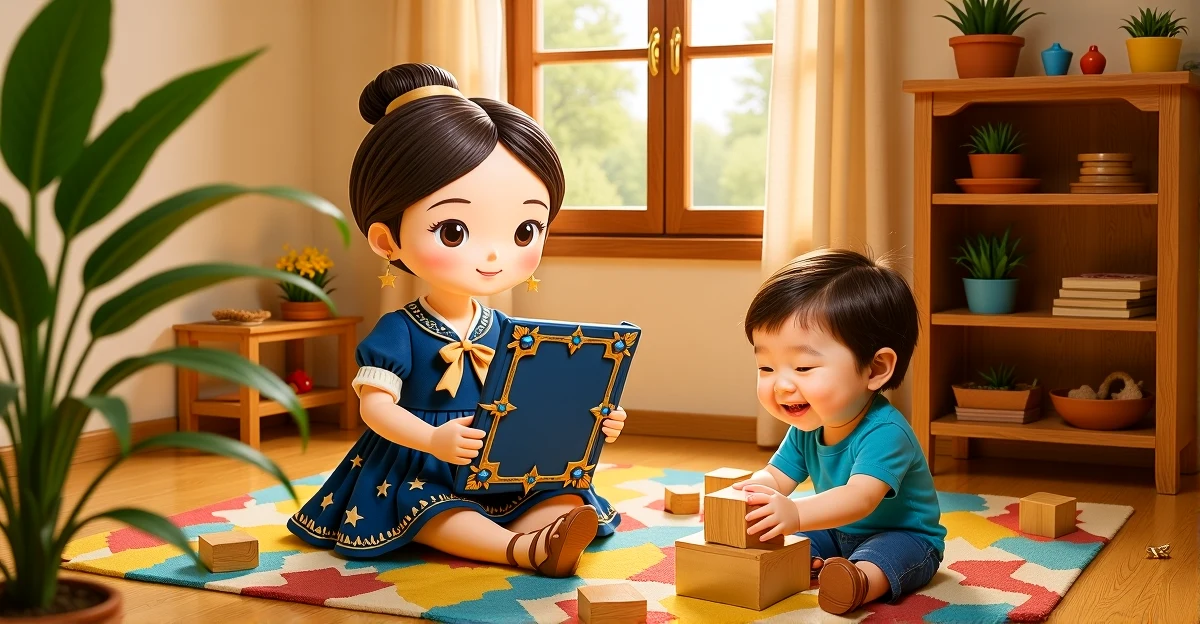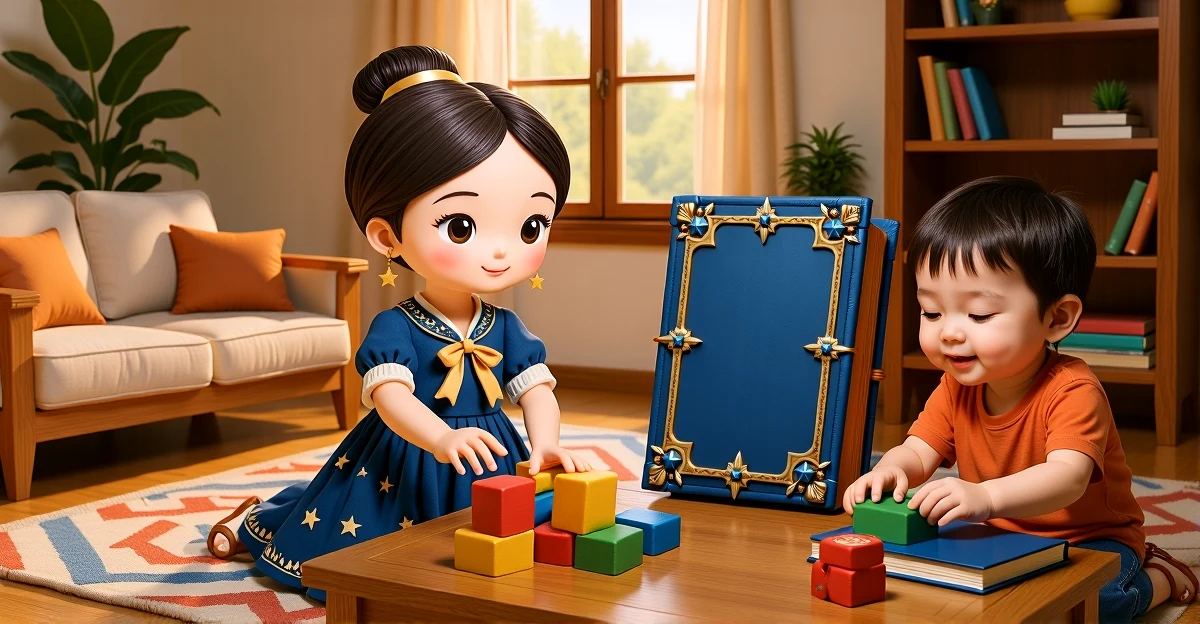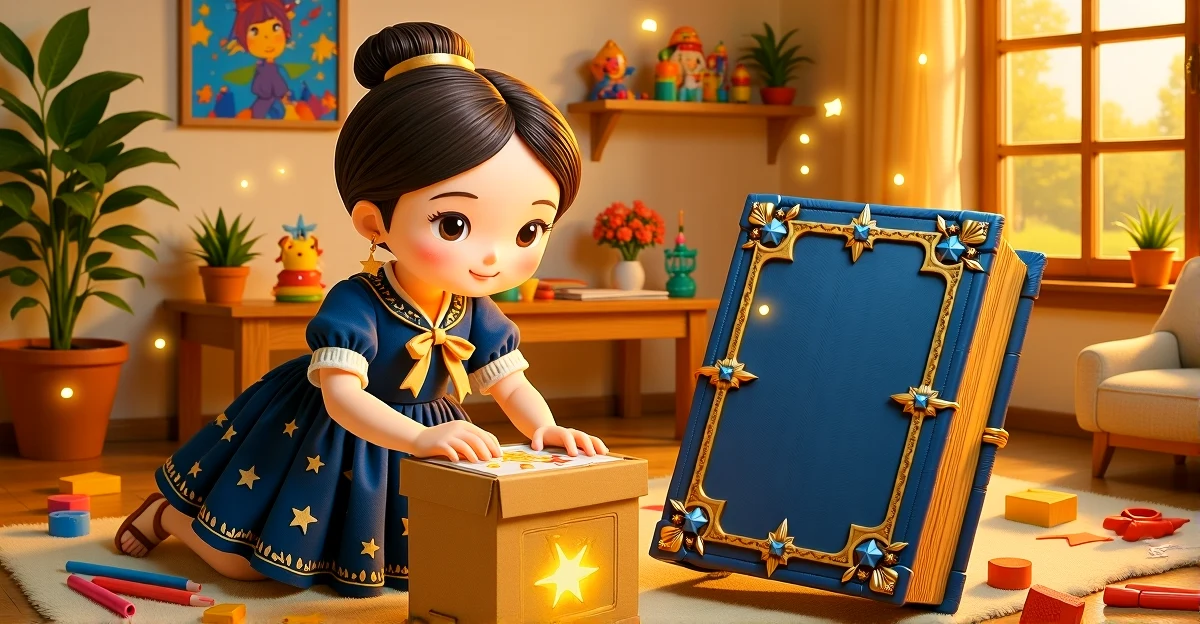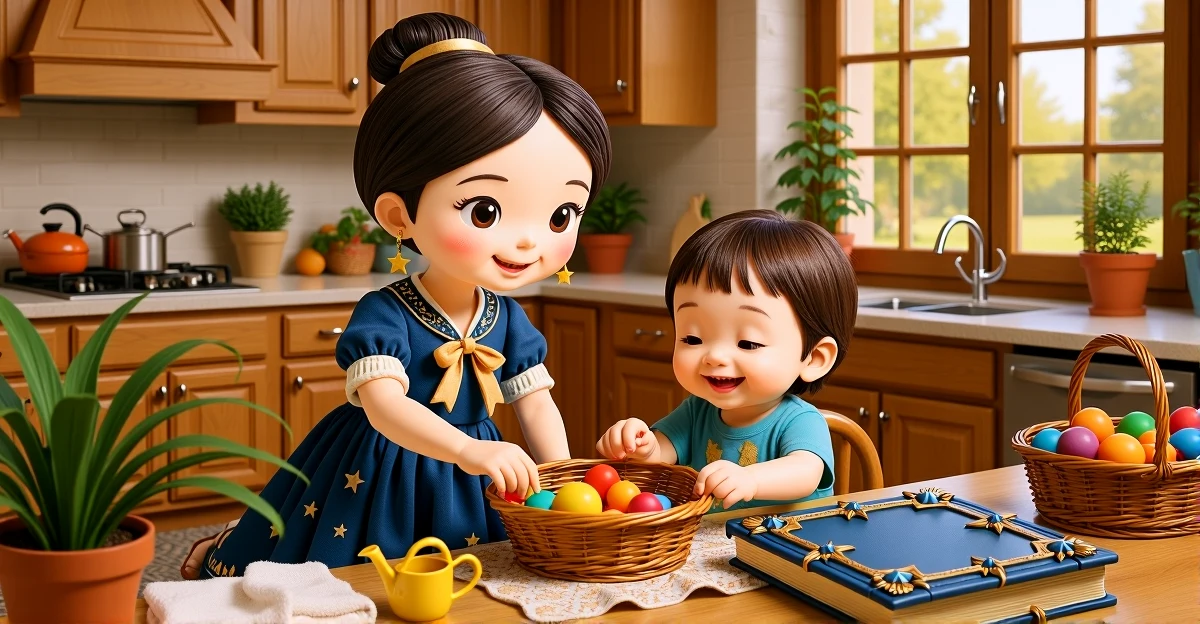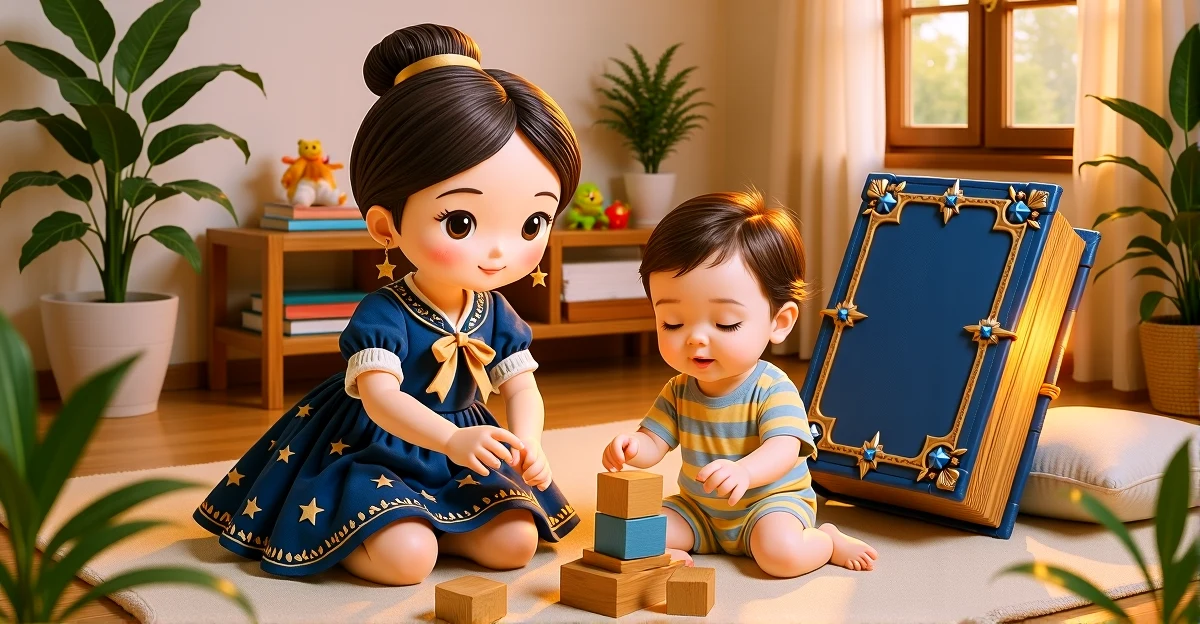

Your toddler picks up a cardboard box and declares it is a spaceship. They arrange their stuffed animals in a circle and serve them invisible tea. They hold a block to their ear and have a very serious conversation with grandma. And you might be wondering: Is this just play? Should I be doing something to encourage this? Am I supporting their imagination the right way?
Here is what I want you to know, my wonderful friend. What you are witnessing is not just play. It is brain development in action. It is creativity, empathy, problem-solving, and emotional regulation all wrapped up in the magical world of pretend. And yes, there are gentle, beautiful ways you can support this extraordinary stage of development.
In this article, we will explore why pretend play is SO important for toddlers ages 2-3, what child development research teaches us about imagination, and how you can create space for your child's creativity to bloom without pressure or performance. Plus, I will share a story from The Book of Inara that celebrates imagination in the most beautiful way.
Why Pretend Play Matters for Your Toddler's Brain
Between the ages of 24 and 36 months, something extraordinary happens in your child's developing brain. They enter what child development experts call the world of imagination. This is when symbolic thinking emerges, when your little one discovers they can use one object to represent another.
A stick becomes a magic wand. A blanket draped over chairs becomes a fort. A box becomes a rocket ship. And in those moments of transformation, neural pathways are forming that will support your child for the rest of their life.
The American Academy of Pediatrics states unequivocally that play is essential for healthy brain development. In their landmark 2018 report, they explain that pretend play combines playful discovery with the development of crucial social-emotional skills. This is not frivolous. This is foundational.
What Pretend Play Builds
When your toddler engages in pretend play, they are actively developing:
- Creativity and Innovation: Imagination is the birthplace of creative thinking. When children learn to see possibilities beyond what is immediately visible, they develop the cognitive flexibility that supports innovation throughout life.
- Problem-Solving Skills: Pretend play scenarios require children to navigate challenges. How do we build a fort that does not fall down? What happens if the teddy bear is hungry but we are out of pretend food? These are real cognitive puzzles.
- Empathy and Perspective-Taking: When your child pretends to be a doctor caring for a sick stuffed animal, or a parent feeding a baby doll, they are practicing empathy. They are stepping into another's experience, which is the foundation of emotional intelligence.
- Emotional Regulation: Pretend play provides a safe space for children to process emotions and experiences. If they are nervous about a doctor visit, they might play doctor. If they are excited about a new sibling, they might care for baby dolls. This is emotional work disguised as play.
- Language Development: Pretend play is rich with language. Children narrate their play, create dialogue for characters, and expand their vocabulary as they explore new scenarios.
- Executive Function: Planning a pretend scenario, staying in character, and following the rules of the imaginary world all require executive function skills like working memory, cognitive flexibility, and self-control.
Dr. Kathryn Keough from the Child Mind Institute explains that pretend play allows children to express their creativity and develop social and emotional skills. When playing pretend, kids get the chance to practice emotional skills and work through feelings in a way that feels safe and manageable.
What Research Shows About Imagination in Toddlers
Zero to Three, a leading organization in early childhood development, describes the period from 24 to 36 months as a time when children enter the world of imagination. This is when symbolic play emerges as a critical milestone in cognitive and social-emotional development.
Here is what makes this stage so special. Your toddler is discovering that objects can represent other things. This is called symbolic thinking, and it is the same cognitive skill that underlies language, mathematics, and abstract reasoning. When your child pretends a block is a phone, they are demonstrating that they understand symbols. That block stands for something else. This is HUGE.
Pretend play is not just about having fun. It is about building the neural architecture that supports learning, creativity, and emotional health throughout life.
— American Academy of Pediatrics
Research also shows us that pretend play is not something we need to teach children. It emerges naturally as part of typical development. Your job is not to force imagination or create elaborate scenarios. Your job is to create space for imagination to unfold in its own beautiful time.
Every Child Has Their Own Timeline
Some toddlers dive into elaborate pretend scenarios at 20 months. Others take their time, observing and exploring the world in their own way before imagination blossoms at 30 or 36 months. Both paths are completely normal. Both are beautiful.
If you are worried that your child is not engaging in pretend play as much as other children, take a deep breath. Development is not a race. Your child is learning exactly as they should. Trust the process, and trust your child.
Gentle Ways to Encourage Pretend Play
So how do we support our toddler's imagination without pressure? How do we create an environment where pretend play can flourish? Here are research-backed strategies delivered with warmth and practicality.
1. Provide Open-Ended Materials
You do not need fancy toys or expensive playsets. In fact, the simpler the better. When a toy does everything for your child, there is no room for creativity. But when a box is just a box, it can become anything.
Stock your play space with:
- Cardboard boxes of various sizes
- Building blocks
- Scarves and fabric pieces
- Pots, pans, and wooden spoons
- Stuffed animals and dolls
- Dress-up clothes (hats, capes, simple costumes)
- Natural materials (sticks, stones, pinecones)
These simple materials invite imagination. They do not dictate how to play. They wait for your child to transform them into whatever their heart desires.
2. Follow Your Child's Lead
This is SO important. When your little one starts pretending, resist the urge to direct or correct. If they say the block is a phone, it is a phone. If they decide the stuffed bear is hungry and needs seventeen snacks, then that bear is VERY hungry.
Your role is not to teach them the right way to pretend. Your role is to be a supportive play partner, joining their world with curiosity and delight. Ask questions like, What is your bear eating? or Where is your spaceship going? These gentle prompts show interest without taking over.
3. Model Pretend Play Gently
You can show your child how imagination works by engaging in simple pretend scenarios yourself. Pretend to drink from an empty cup and say, Mmm, delicious tea! Pretend to feed a stuffed animal and say, Here you go, little friend, time for lunch!
Your child watches you and learns, Oh, we can pretend things that are not really there. How magical! But keep it light and playful. This is not a lesson. This is an invitation to wonder.
4. Narrate Their Play
When you see your child engaging in pretend play, you can gently narrate what you observe. Oh, you are feeding your baby doll! She must be hungry. Or, I see you are building something with those blocks. Is it a tower?
This kind of narration validates their play and helps them develop language skills at the same time. It shows them that you see their imagination, and you think it is wonderful.
5. Create Unstructured Time
Imagination needs space to breathe. It needs unstructured time when your child is not rushed from one activity to another. Boredom is not the enemy. Boredom is often the birthplace of creativity.
Give your child time to simply be. Time to explore. Time to wonder. Time to transform a stick into a magic wand and a box into a castle. This is where imagination lives.
6. Be Patient
Imagination unfolds in its own time. Some days your child will be deeply engaged in pretend play. Other days they will prefer stacking blocks or running in circles. Both are valuable. Both are learning.
Trust the process, my friend. Your child's imagination is developing exactly as it should.
Stories That Celebrate Imagination
In The Book of Inara, we have beautiful stories that bring the magic of imagination to life for your child. Let me share one that is perfect for this stage:
The Magic Show Where Everything Says Hello
Perfect for: Ages 2-3
What makes it special: Anya and Noah discover a magical puppet theater where every prop giggles and introduces itself. The curtains whisper hello. The puppets wave. The stage lights twinkle with joy. Everything in this magical theater wants to be their friend.
Why it helps: This story perfectly models the essence of pretend play. It shows children that imagination can transform ordinary objects into magical friends. It demonstrates that when we use our imagination, the whole world becomes more alive, more connected, more wonderful.
After reading: Try a gentle prompt like, I wonder what your toys would say if they could talk? Or, Let us pretend this spoon is a magic wand. What spell should we cast? These open-ended invitations create space for imagination without pressure.
You Are Doing Beautifully
As you support your child's imagination, remember this. You are not just encouraging play. You are nurturing their creativity, their empathy, their problem-solving skills, their emotional intelligence. You are giving them tools they will use for the rest of their lives.
And here is the beautiful truth. You do not need to be perfect at this. You do not need to create elaborate play scenarios or buy expensive toys. You just need to be present. You just need to see your child's imagination as the gift it is, and create space for it to bloom.
The Magic Book and I believe in you. We see how much you love your child. We see how you show up every day, even when you are tired, even when you are unsure. And that love, that presence, that is what matters most.
When your toddler transforms a box into a spaceship, they are not just playing. They are building their brain. They are discovering the magic of possibility. They are learning that the world is full of wonder, and they have the power to create it.
Honor that. Celebrate that. Join them in that magical world whenever you can.
With love and starlight,
Inara
Related Articles
- Understanding Imaginative Play Development in Young Children (Ages 3-4)
- When Your Child Prefers Real Play: Understanding Concrete Development
- How Music and Movement Support Your Toddler's Brain Development
- How Your Everyday Conversations Build Your Toddler Memory Skills
- Building Independence Through Play: A Gentle Guide for Ages 2-3
Show transcript
Hello, my wonderful friend! It is me, Inara, and I am SO happy you are here today! You know, the Magic Book and I have been noticing something beautiful happening in homes all around the world. Parents are watching their little ones, ages two and three, and wondering, how can I help my child use their imagination? How can I encourage them to engage in pretend play? And I want you to know, you are not alone in this question. In fact, this curiosity shows just how much you care about your child's development, and that is WONDERFUL.
So grab a cozy cup of tea, settle in, and let us talk about the magical world of imagination, why pretend play is so important for your toddler, and how you can gently support this beautiful stage of development.
First, let me share something the Magic Book taught me that might surprise you. When your two or three year old picks up a block and pretends it is a car, or when they have a tea party with their stuffed animals, they are not just playing. They are doing something absolutely extraordinary. They are building their brain.
Research from organizations like the American Academy of Pediatrics and Zero to Three shows us that pretend play is essential for healthy brain development. Between twenty four and thirty six months, children enter what experts call the world of imagination. This is when symbolic thinking emerges, when your little one discovers they can use one object to represent another. A stick becomes a magic wand. A box becomes a spaceship. And in those moments, neural pathways are forming that support creativity, problem solving, empathy, and emotional regulation.
Dr. Kathryn Keough from the Child Mind Institute explains that pretend play allows children to express their creativity and develop social and emotional skills. When playing pretend, kids get the chance to practice emotional skills and work through feelings. Think about that for a moment. When your child pretends to be a doctor caring for their teddy bear, they are practicing empathy. When they build a fort and declare it their castle, they are developing spatial reasoning and planning skills. When they act out a scene from their day, they are processing their experiences and emotions.
The Magic Book whispers this truth to me. Imagination is not frivolous. It is foundational. It is how children make sense of their expanding world.
Now, I know some parents worry. They think, my child does not pretend play much. Am I doing something wrong? Should I be teaching them how to use their imagination? And here is what I want you to know, with all the love and starlight in my cosmic heart. Your child is learning exactly as they should. Pretend play emerges naturally, and every child has their own timeline.
Some toddlers dive into elaborate pretend scenarios at twenty months. Others take their time, observing and exploring the world in their own way before imagination blossoms. Both paths are beautiful. Both are normal. Your job is not to force imagination, but to create space for it to unfold.
So how do we do that? How do we gently encourage pretend play without pressure? Let me share some wisdom from the Magic Book, combined with what child development experts recommend.
First, provide open ended materials. You do not need fancy toys or expensive playsets. In fact, the simpler the better. Blocks, scarves, cardboard boxes, pots and pans, stuffed animals, dolls. These are the tools of imagination. When a toy does everything for your child, there is no room for creativity. But when a box is just a box, it can become anything. A house. A boat. A rocket ship. A hiding place. The possibilities are endless.
Second, follow your child's lead. This is SO important. When your little one starts pretending, resist the urge to direct or correct. If they say the block is a phone, it is a phone. If they decide the stuffed bear is hungry and needs seventeen snacks, then that bear is VERY hungry. Your role is not to teach them the right way to pretend. Your role is to be a supportive play partner, joining their world with curiosity and delight.
Third, model pretend play gently. You can show your child how imagination works by engaging in simple pretend scenarios yourself. Pretend to drink from an empty cup and say, mmm, delicious tea! Pretend to feed a stuffed animal and say, here you go, little friend, time for lunch! Your child watches you and learns, oh, we can pretend things that are not really there. How magical!
Fourth, narrate their play. When you see your child engaging in pretend play, you can gently narrate what you observe. Oh, you are feeding your baby doll! She must be hungry. Or, I see you are building something with those blocks. Is it a tower? This kind of narration validates their play and helps them develop language skills at the same time.
And fifth, be patient. Imagination unfolds in its own time. Some days your child will be deeply engaged in pretend play. Other days they will prefer stacking blocks or running in circles. Both are valuable. Both are learning. Trust the process, my friend.
Now, let me tell you about a story that shows this beautifully. It is called The Magic Show Where Everything Says Hello, and it is one of my favorite stories in The Book of Inara for children ages two to three.
In this story, Anya and Noah discover a magical puppet theater where every prop giggles and introduces itself. The curtains whisper hello. The puppets wave. The stage lights twinkle with joy. Everything in this magical theater wants to be their friend.
What I love about this story is how it models the very essence of pretend play. It shows children that imagination can transform ordinary objects into magical friends. It demonstrates that when we use our imagination, the whole world becomes more alive, more connected, more wonderful.
After reading this story with your child, you might try a gentle prompt. You could say, I wonder what your toys would say if they could talk? Or, let us pretend this spoon is a magic wand. What spell should we cast? These kinds of open ended invitations create space for imagination without pressure.
The Magic Book teaches us that stories are not just entertainment. They are teachers. They are mirrors. They are windows into new ways of seeing the world. When your child hears a story about characters using their imagination, they learn, oh, I can do that too. And that is powerful.
I also want to share something important. Pretend play is not just about cognitive development. It is about emotional health too. When children engage in pretend play, they create a safe space to process their experiences and feelings. If they are nervous about going to the doctor, they might play doctor with their stuffed animals, working through that anxiety in a way that feels manageable. If they are excited about a new sibling, they might pretend to be a parent caring for a baby doll, exploring what that relationship might feel like.
The American Academy of Pediatrics tells us that play based learning supports executive function, language, and early math skills. But it also supports something even more fundamental. It supports your child's sense of agency, their belief that they can create, explore, and make meaning in their world. And that belief, my friend, is the foundation of confidence and resilience.
So as you support your child's imagination, remember this. You are not just encouraging play. You are nurturing their creativity, their empathy, their problem solving skills, their emotional intelligence. You are giving them tools they will use for the rest of their lives.
And here is the beautiful truth. You do not need to be perfect at this. You do not need to create elaborate play scenarios or buy expensive toys. You just need to be present. You just need to see your child's imagination as the gift it is, and create space for it to bloom.
The Magic Book and I believe in you. We see how much you love your child. We see how you show up every day, even when you are tired, even when you are unsure. And that love, that presence, that is what matters most.
If you want more stories that celebrate imagination and creativity, I invite you to explore The Book of Inara. We have so many tales that show children the magic of pretend play, the joy of using their imagination, the wonder of transforming the ordinary into the extraordinary.
Thank you for being here today, my wonderful friend. Thank you for caring so deeply about your child's development. You are doing beautifully.
Until our next adventure together, with love and starlight, Inara.