
You watch other children at the playground creating elaborate fantasy worlds, complete with imaginary friends and intricate storylines. Meanwhile, your three-year-old seems more interested in lining up blocks or asking endless questions about how things work. You wonder: Is something wrong? Should my child be engaging in more pretend play by now?
Take a deep breath, my wonderful friend. Your child is developing exactly as they should be. And I want to share something with you that might just shift everything you thought you knew about imaginative play.
In this guide, we'll explore what research tells us about how imagination develops, why it looks different for every child, and most importantly, how you can create the perfect conditions for your child's creativity to flourish in its own beautiful way.
The Beautiful Truth About Imaginative Play Development
Here's what the Magic Book and I want you to know first: there is no single timeline for when imagination blooms. Research from the National Association for the Education of Young Children tells us something SO important. Imaginative play develops along a spectrum during the preschool years, with significant individual variation in timing and expression.
What does this mean for you? It means that some children engage in elaborate fantasy play very early, creating imaginary friends and acting out complex scenarios before they turn three. Others develop these skills more gradually through exploration, modeling, and gentle support. And here's the beautiful part: both paths are completely normal, completely healthy, and completely wonderful.
For children ages three to four, pretend play is entering a crucial developmental window. Their brains are expanding in the most magnificent ways. Symbolic thinking is growing, creativity is blossoming, and their capacity for imagination is building every single day. But this doesn't always look like what we expect.
How Imagination Shows Up Differently
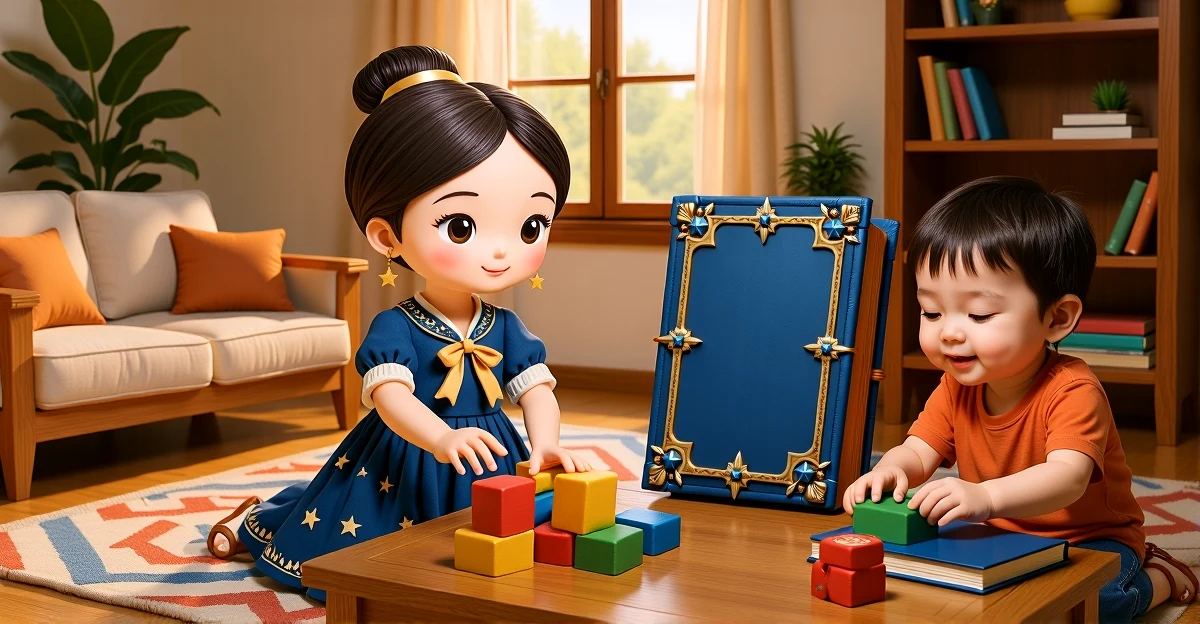
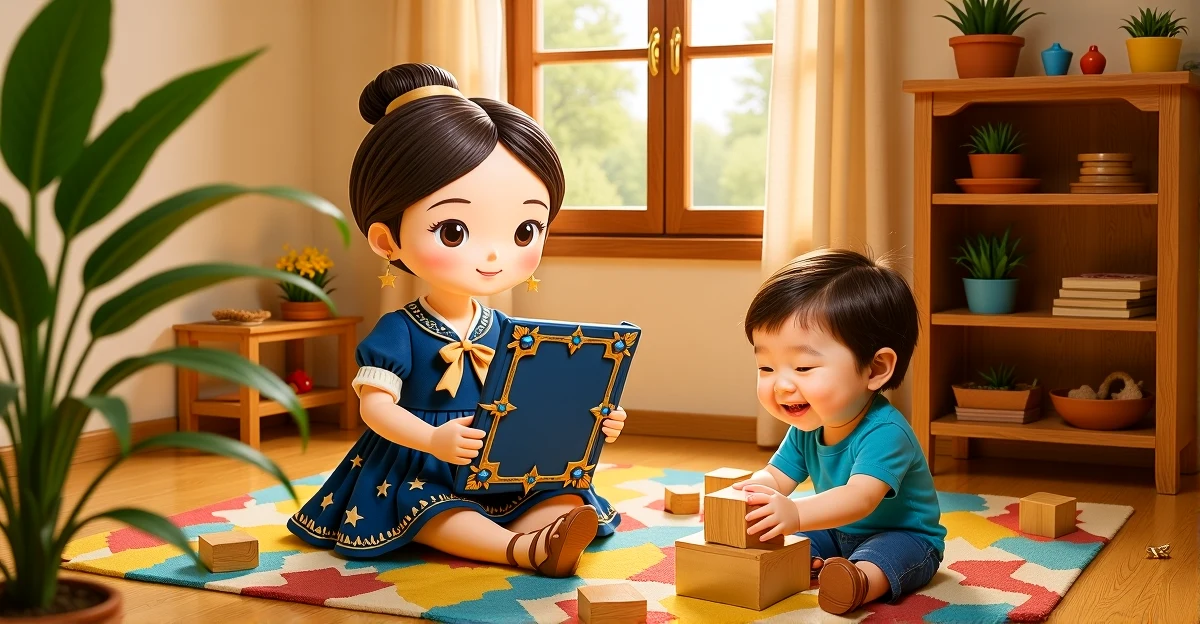
Some children express their imagination through building and construction, creating elaborate structures with blocks or natural materials. Others express it through movement and dance, their bodies becoming the canvas for creative expression. Some children show their imaginative thinking through asking endless questions about how things work, wondering about the world with deep curiosity.
All of these are imagination at play. All of these are your child's beautiful mind exploring possibilities, making connections, and creating meaning. The child who builds a tower and tells you it's a rocket ship is engaging in symbolic thinking just as much as the child who pretends to be an astronaut.
What Research Shows About Supporting Imagination
Dr. Kathy Hirsh-Pasek, a developmental psychologist at Temple University, shares something that changed how I think about supporting children's creativity. She notes that guided play, where we gently support children's exploration while leaving them in charge of discovery, creates the most beautiful conditions for imagination to flourish.
Guided play allows teachers and parents to focus children's exploration around specific learning goals while still leaving the child in charge of discovery.
— Dr. Kathy Hirsh-Pasek, Temple University
This is such an important distinction. We're not directing their play. We're not forcing performance. We're not creating elaborate scenarios and expecting them to follow our script. We're simply providing rich materials, modeling curiosity, and following their interests.
Research from the National Center for Biotechnology Information demonstrates that cooperative-creative play, the kind where children play alongside others or with gentle adult participation, supports development across multiple domains. It builds social competence, emotional regulation, problem-solving skills, and yes, imaginative thinking.
But here's what matters most, according to the research: children benefit most when parents provide rich materials, model curiosity, and follow the child's interests rather than directing play. Playful learning approaches that balance child agency with gentle guidance have been shown to enhance creativity, problem-solving, and social-emotional skills more effectively than structured instruction.
Creating Environments Where Imagination Flourishes
So what does this look like in your everyday life? How do you create the conditions for your child's imagination to grow without pressure or force? Let me share some gentle, research-backed strategies that work beautifully.
Offer Open-Ended Materials
The most magical play materials are the ones that can become anything in a child's hands. Think blocks, scarves, cardboard boxes, natural objects like pinecones and smooth stones. These materials don't tell children what to do with them. They invite exploration and possibility.
When you offer a toy that does everything on its own, pressing buttons and playing songs, there's less room for imagination. But when you offer a simple wooden block? That block can be a phone, a car, a piece of food, a building, a character. The possibilities are endless, and your child's mind gets to do the creating.
Model Wonder and Curiosity
Children learn SO much by watching us. When we ask what if questions, when we wonder aloud, when we see magic in everyday moments, we're showing our children that imagination is a gift to be celebrated.
Try wondering together: What do you think the clouds are dreaming about? I wonder what the tree outside our window sees every day? What if we could talk to the birds, what would they tell us? You're not forcing pretend play. You're simply opening doors and seeing which ones your child wants to walk through.
Give Time and Space
This is SUCH an important one. Imaginative play often needs quiet, unstructured moments to emerge. When we fill every minute with activities and screens, we don't leave room for that beautiful internal world to develop.
But when we offer spaciousness, when we allow what we might call boredom to spark creativity, magic happens. Your child might spend twenty minutes just watching ants on the sidewalk, creating stories about where they're going. That's imagination at work.
Follow Their Lead
When you play with your child, let them be the director. If they want to line up all their toy animals in a row, join them in that. Don't redirect them to make the animals talk or create a zoo. Instead, you might add one animal to the line and see what they do. You might wonder aloud what the animals are waiting for.
This gentle participation, where you're following their interests and adding small invitations without taking over, is exactly what research shows supports imaginative development.
Remove Pressure
Perhaps most importantly, release any expectation about what imaginative play should look like. When children feel pressure to perform or pretend in a specific way, it can actually inhibit their natural creativity.
Your child doesn't need to have an imaginary friend to have a healthy imagination. They don't need to act out elaborate scenarios. They just need the freedom to explore, create, and wonder in whatever way feels natural to them.
Stories That Nurture Wonder and Curiosity
In The Book of Inara, we have beautiful stories specifically designed to nurture the seeds of imagination. These stories don't teach children how to pretend. They simply celebrate curiosity, wonder, and the magic of asking questions. Let me tell you about one that's perfect for this stage:
The Garden of Whispering Questions
Perfect for: Ages 2-3 (and wonderful for 3-4 year olds too!)
What makes it special: This story beautifully models curiosity and wonder through Ayli and Igar's discovery of a magical garden where plants respond to questions. It demonstrates how asking questions and exploring with imagination opens doors to learning and connection.
Key lesson: When the children discover that their curious questions make the garden plants respond and grow, they learn that imagination and curiosity are powerful tools for discovery. It celebrates the idea that wondering about the world IS a form of creative thinking.
How to use it: After reading this story together, try creating your own whispering garden game. Maybe toys or plants in your home answer your child's imaginative questions. Maybe you wonder together about what different objects might be thinking or feeling. You're not forcing pretend play, you're simply opening doors to possibility.
The Magic Book and I have created this story, and so many others, with deep care and research-backed understanding of how children's minds grow. Each story is a gentle companion on your child's developmental journey, celebrating who they are right now while nurturing the skills that are emerging.
You're Doing Beautifully
I want you to know something important. The fact that you're here, reading this, asking thoughtful questions about your child's development, shows what a caring, dedicated parent you are. Your child is SO lucky to have someone who wants to understand and support their growing mind.
Imagination isn't something we can force or rush. It's something we nurture by creating the conditions for it to grow. Rich materials, time, space, modeling, and most importantly, freedom from pressure. When children feel safe to explore in their own way, at their own pace, their creativity blossoms.
Trust your child's timeline. Their imagination is developing beautifully, in exactly the way that's right for them. Some children will dive into elaborate fantasy play tomorrow. Others will develop these skills gradually over months and years. Both paths lead to creative, imaginative, wonderful humans.
And remember, you don't have to do this alone. The Magic Book and I are here for you, with stories that celebrate curiosity, wonder, and the beautiful unfolding of your child's unique mind.
With love and starlight, Inara
Related Articles
- Understanding Your Child's Fear of Monsters and Nightmares (Ages 3-4)
- Why Your Child Follows You Everywhere and How to Build Independent Play
- When Your Child Prefers Real Play: Understanding Concrete Development
- Nurturing Your Child's Creativity: The Science Behind Imaginative Play (Ages 3-4)
- How to Encourage Pretend Play in Toddlers: Brain Development Through Imagination
Show transcript
Hello, my wonderful friend! It's me, Inara, and I am so happy you're here today. You know, the Magic Book and I have been noticing something beautiful. So many thoughtful parents are asking questions about imaginative play, and I want to share something with you that might just shift everything.
If your little one isn't diving into elaborate pretend play scenarios, if they're not creating imaginary friends or acting out fantasy worlds, I want you to take a deep breath and hear this. Your child is developing exactly as they should be. There is no single timeline for when imagination blooms, and the beautiful truth is that every child's creativity unfolds in its own perfect way.
Let me tell you what the research shows. Studies from the National Association for the Education of Young Children tell us that imaginative play develops along a spectrum during the preschool years. Some children engage in elaborate fantasy play very early, while others develop these skills more gradually through exploration and gentle modeling. And here's what matters most. Both paths are completely normal, completely healthy, and completely wonderful.
For children ages three to four, pretend play is entering a crucial developmental window. Their brains are expanding in the most magnificent ways. Symbolic thinking is growing, creativity is blossoming, and their capacity for imagination is building every single day. But here's the thing. This doesn't always look like what we expect. Some children express their imagination through building and construction. Others through movement and dance. Some through asking endless questions about how things work. All of these are imagination at play.
Dr. Kathy Hirsh-Pasek, a developmental psychologist at Temple University, shares something so important. She notes that guided play, where we gently support children's exploration while leaving them in charge of discovery, creates the most beautiful conditions for imagination to flourish. We're not directing their play. We're not forcing performance. We're simply providing rich materials, modeling curiosity, and following their interests.
The Magic Book whispers this wisdom to me. What matters most is creating an environment where imagination feels safe, valued, and joyful. When we remove pressure and simply offer possibilities, children's natural creativity begins to shine.
So what does this look like in practice? It means offering open-ended materials. Blocks, scarves, cardboard boxes, natural objects. Things that can become anything in a child's hands. It means modeling wonder and curiosity ourselves. When we ask what if questions, when we wonder aloud, when we see magic in everyday moments, we're showing our children that imagination is a gift to be celebrated.
It also means giving time and space. Imaginative play often needs quiet, unstructured moments to emerge. When we fill every minute with activities and screens, we don't leave room for that beautiful internal world to develop. But when we offer spaciousness, when we allow boredom to spark creativity, magic happens.
And here's something else the research shows. Cooperative creative play, the kind where children play alongside others or with gentle adult participation, supports development across multiple domains. It builds social competence, emotional regulation, problem-solving skills, and yes, imaginative thinking. So playing with your child, following their lead, adding gentle ideas without taking over, this is powerful support.
Now, I want to tell you about a story that the Magic Book and I created specifically to nurture this kind of wonder and curiosity. It's called The Garden of Whispering Questions, and it's about two beautiful children, Ayli and Igar, who discover a magical garden where plants respond to their questions.
In this story, the children learn that asking questions, wondering about the world, exploring with curiosity, these are the seeds of imagination. When they discover that their curious questions make the garden plants respond and grow, they learn that imagination and curiosity are powerful tools for discovery and connection.
This story is perfect for children who are developing their imaginative capacities because it models what imagination looks like. It shows that wonder and asking what if are forms of creative thinking. And it celebrates the joy of exploration without any pressure to perform or pretend in a specific way.
After you read this story together, you might try creating your own whispering garden game. Maybe toys or plants in your home answer your child's imaginative questions. Maybe you wonder together about what the tree outside is thinking, or what the clouds are dreaming about. You're not forcing pretend play. You're simply opening doors and seeing which ones your child wants to walk through.
The beautiful truth is this. Imagination isn't something we can force or rush. It's something we nurture by creating the conditions for it to grow. Rich materials, time, space, modeling, and most importantly, freedom from pressure. When children feel safe to explore in their own way, at their own pace, their creativity blossoms.
Research from the National Center for Biotechnology Information demonstrates that play-based learning approaches, where children have agency and choice, show increased learning outcomes compared to direct instruction. This tells us something profound. Children learn best, including learning to use their imaginations, when they're in charge of their own discovery.
So if your child isn't engaging in pretend play the way you expected, I invite you to shift your lens. Look for the ways they are expressing creativity. Are they building elaborate structures? Are they asking endless questions? Are they moving their body in expressive ways? Are they noticing details in nature? All of these are imagination at work.
And then, gently offer invitations. Read stories that spark wonder. Provide materials that inspire exploration. Model curiosity and playfulness. Create space and time. And most importantly, trust your child's timeline. Their imagination is developing beautifully, in exactly the way that's right for them.
The Magic Book and I have so many stories designed to nurture wonder, curiosity, and creative thinking. Stories like The Garden of Whispering Questions are gentle companions on this journey. They don't teach children how to pretend. They simply celebrate the magic of curiosity and show that asking questions and wondering about the world are beautiful, valuable, important.
You're doing such a wonderful job, my friend. Your child is lucky to have a parent who cares so deeply about their development, who asks thoughtful questions, who wants to support their growing mind. Trust the process. Trust your child. And know that imagination, like all beautiful things, unfolds in its own perfect time.
You can find The Garden of Whispering Questions and so many other magical stories in The Book of Inara app. Each story is crafted with love to support your child's emotional, social, and creative development. And each one is a gift you can share together, creating connection while nurturing their beautiful, growing mind.
Thank you for being here, for caring so deeply, for doing this important work of parenting with such thoughtfulness and love. The Magic Book and I are always here for you.
With love and starlight, Inara.