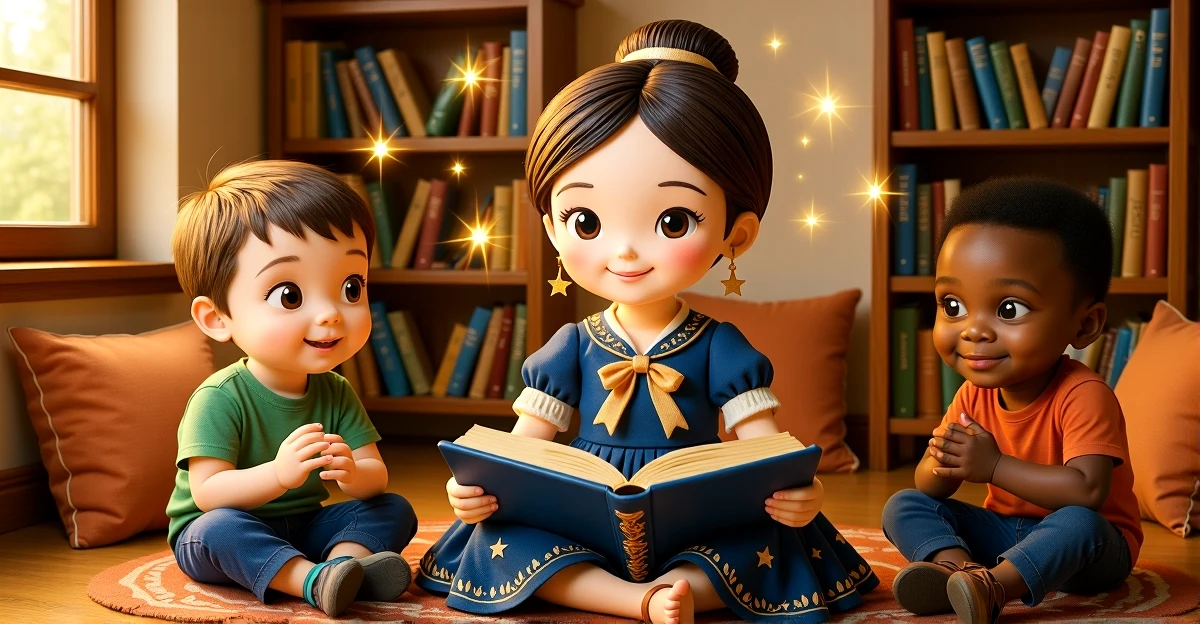
Your six or seven year old comes to you with questions that make your heart swell and your mind race. "Why do some people not have homes?" "Can we help the animals?" "Why are people sad in other countries?" And you find yourself wondering: How do I answer these big questions? Is my child too young to understand global issues? How can I help them see their role in making the world better without overwhelming them?
My dear friend, let me share something WONDERFUL with you. If your child is asking these questions, or if you're thinking about how to introduce these ideas, you are right on time. In fact, ages six and seven are PERFECT for beginning to nurture global citizenship and world awareness. And I'm going to show you exactly how to do it in a way that feels natural, joyful, and empowering for both of you.
In this guide, we'll explore what research tells us about child development and empathy at this age, discover three beautiful ways to nurture global awareness, and find stories that bring these concepts to life in the most magical way.
Why Ages 6-7 Are the Perfect Time for Global Citizenship
Here's what the Magic Book taught me, and what research beautifully confirms: when children are six or seven years old, something wonderful is happening in their hearts and minds. They're developing the ability to understand perspectives beyond their own. They're building empathy. They're starting to grasp cause and effect in social situations. And they're discovering that their actions have impact.
Research shows us that children at this age are at the ideal stage to begin understanding global citizenship. They're building foundational social and emotional competencies that enable them to feel and show empathy for others, understand different perspectives, and contribute to caring communities.
"Global citizenship nurtures respect and tolerance for others, global awareness and empathy."
— Ann Marie Borders, National Education Association
The Collaborative for Academic, Social, and Emotional Learning (CASEL) emphasizes that social and emotional learning helps children "develop healthy identities, manage emotions and achieve personal and collective goals, feel and show empathy for others, establish and maintain supportive relationships, and make responsible and caring decisions."
What does this mean for you as a parent? It means that your child's brain and heart are READY. They're ready to learn that people everywhere have feelings, dreams, and challenges. They're ready to understand that their caring actions matter. They're ready to discover their power to make the world a little bit better.
What Global Citizenship Means for Elementary-Age Children
Now, here's what I want you to know. Teaching global citizenship to a six or seven year old doesn't mean overwhelming them with news about world problems. It doesn't mean making them feel scared or helpless about issues they can't control. Instead, it means helping them discover something WONDERFUL: that their caring actions, right here, right now, in their own family and classroom and neighborhood, are already making the world better.
Global citizenship at this age is about:
- Empathy: Understanding that everyone has feelings, even people who are different from us
- Kindness: Recognizing that small acts of caring create ripples of positive change
- Perspective-taking: Learning to see situations from another person's point of view
- Community connection: Feeling part of something bigger than themselves
- Personal agency: Believing that their actions matter and can make a difference
Dr. Charis Lauren Price and Dr. Elizabeth A. Steed note in their research that "empathetic individuals apply interpersonal sensitivity to understand the experiences of others in order to provide support or assistance," and that children ages 6-7 can develop these skills through culturally responsive teaching that uses storybooks, music, and group discussions to highlight shared humanity across diverse communities.
Three Beautiful Ways to Nurture Global Awareness
Let me share three approaches that work beautifully with six and seven year olds. These aren't complicated programs or overwhelming commitments. They're gentle, natural ways to help your child's heart open to the wider world.
1. Help Your Child See That Kindness Creates Ripples
When your child shares with a friend, when they help a sibling, when they notice someone who needs encouragement and offer it, they're not just being nice. They're creating positive change that spreads outward like ripples in a pond.
You can talk about this at dinner. Ask: "What kind thing did you do today? How do you think that made the other person feel? Do you think they might be kinder to someone else because you were kind to them?"
This is how children begin to understand that their actions matter beyond the immediate moment. They start to see themselves as people who can create positive change in their community and, by extension, in the world.
2. Introduce Your Child to Diverse Cultures Through Stories, Music, and Art
The Magic Book showed me that when children engage with different ways of living, different traditions, different perspectives, they develop the cognitive and emotional capacity to see beyond their immediate environment.
You can:
- Read folktales from around the world together
- Listen to music from different cultures
- Try cooking a meal from another country and talk about the people who created these traditions
- Look at art from different parts of the world
- Learn a few words in another language
This isn't about making your child an expert on every culture. It's about opening their heart to the beautiful truth that people everywhere have wisdom, creativity, and love to share.
3. Teach That Caring About the World Starts With Caring About People Right in Front of Them
And this is SO important. Global citizenship isn't abstract. It's concrete. It's noticing when a classmate looks sad and asking if they're okay. It's standing up for someone being left out. It's taking care of the environment in your own backyard. It's being kind to the new student who doesn't speak English yet.
When children learn that world-changing begins with small acts of caring in their own community, they feel empowered instead of overwhelmed. They understand that they don't have to wait until they're grown up to make a difference. They can start right now, right where they are.
Stories That Can Help
In The Book of Inara, we have beautiful stories that help children understand these ideas in the most magical way. Let me share three stories that are PERFECT for nurturing global citizenship in six and seven year olds:
The Kindness Scoreboard
Perfect for: Ages 6-7
What makes it special: In this story, two thoughtful boys named Theo and Miles discover that their youth league scoreboard tracks acts of kindness and encouragement. Every time they offer caring words to a struggling teammate, the scoreboard glows with warm, golden light. They realize that their small acts of kindness create real, visible, positive change in their community.
Key lesson: Your caring actions aren't invisible. They matter. They create ripples.
After reading together: Ask your child, "What kind acts did you do today that might make our family scoreboard glow? Help them recognize that being kind to a sibling, helping a friend, or caring for a pet are all ways they make their world better."
The Museum of Small Beginnings
Perfect for: Ages 6-7
What makes it special: Theo and Miles visit a magical museum where they discover something that changes everything. Every famous person who changed the world started with small acts of caring. Through a magical viewing glass, they see young Abraham Lincoln sharing his lunch with a hungry classmate. They see that world-changing doesn't begin with being famous or powerful. It begins with noticing someone who needs help and choosing to care.
Key lesson: Every person who made the world better started by caring about someone right in front of them.
After reading together: Share with your child, "What can you do today to help someone in our family, classroom, or neighborhood?"
The Embassy of Hidden Hearts
Perfect for: Ages 6-7
What makes it special: In this story, two friends named Rumi and Freya visit a place where everyone must be extremely happy all the time. But they discover someone hiding tears behind forced smiles. They learn that true kindness means seeing past the surface and responding to real needs with quiet understanding.
Key lesson: Everyone carries invisible struggles. True global citizenship means responding with empathy even when we don't know exactly what someone is going through.
After reading together: Talk with your child about how people everywhere—in your neighborhood and around the world—sometimes struggle with things we cannot see. How can we show kindness even when we don't know exactly what someone is going through?
These three stories work together beautifully. The Kindness Scoreboard shows immediate community impact. The Museum of Small Beginnings connects to historical change-makers. And The Embassy of Hidden Hearts builds empathy across differences.
You're Doing Beautifully
My dear friend, I want to leave you with this. Your child is at a WONDERFUL age. Their heart is opening to the wider world. Their capacity for empathy is growing. And their desire to make a positive difference is real and beautiful.
You don't need to have all the answers about world issues. You don't need to explain everything that's happening globally. What you need to do is help your child see that they already have the power to create positive change through kindness, empathy, and caring action in their own community.
When children understand that their caring actions matter, they become world-changers. Not someday. Right now.
The Magic Book and I are here to support you on this beautiful journey. We have stories that nurture empathy, celebrate diversity, and empower children to see themselves as caring members of a global community.
You're doing something WONDERFUL by thinking about these questions. Your child is so lucky to have you.
With love and starlight,
Inara
Related Articles
- Building Your Child Executive Function: A Gentle Guide to Independence
- Teaching Financial Literacy to Young Children: Ages 6-7
- Nurturing Purpose and Meaning in Young Children: A Gentle Guide for Parents
- Understanding Your Child's Developing Future-Thinking Skills (Ages 6-7)
- Nurturing Environmental Awareness in Your 6-7 Year Old: A Gentle Guide
Show transcript
Hello, my wonderful friend! It's me, Inara, and I am SO happy you're here today!
You know, the Magic Book and I have been noticing something beautiful happening. More and more parents are coming to us saying, my child is asking about the world, about people in other places, about how things work beyond our neighborhood. And some parents are wondering, my child doesn't seem to understand their role as a global citizen yet. How do I help them see the bigger picture?
And I want to tell you something IMPORTANT. If your child is six or seven years old and you're thinking about these questions, you are right on time. In fact, this is the PERFECT age to begin nurturing global awareness, and I'm going to show you exactly how to do it in a way that feels natural, joyful, and empowering for both of you.
So grab a cozy cup of tea, settle in with me, and let's talk about helping your elementary-age child discover their power to make the world a little bit better.
First, let me share what the Magic Book taught me about this beautiful developmental stage. When children are six or seven years old, something wonderful is happening in their hearts and minds. They're developing the ability to understand perspectives beyond their own. They're building empathy. They're starting to grasp cause and effect in social situations. And they're discovering that their actions have impact.
Research shows us, and this is so beautiful, that children at this age are at the ideal stage to begin understanding global citizenship. They're building foundational social and emotional competencies that enable them to feel and show empathy for others, understand different perspectives, and contribute to caring communities.
The National Education Association tells us that global citizenship nurtures respect and tolerance for others, global awareness, and empathy. And experts in social and emotional learning emphasize that elementary-age children can acquire skills for responsible civic engagement when we provide age-appropriate experiences that highlight kindness, compassion, and shared humanity.
So if your child is asking questions about the world, or if they're NOT asking yet and you're wondering how to introduce these ideas, you're in exactly the right place.
Now, here's what I want you to know. Teaching global citizenship to a six or seven year old doesn't mean overwhelming them with news about world problems. It doesn't mean making them feel scared or helpless. Instead, it means helping them discover something WONDERFUL. That their caring actions, right here, right now, in their own family and classroom and neighborhood, are already making the world better.
Let me share three beautiful ways to nurture this understanding.
First, help your child see that kindness creates ripples. When they share with a friend, when they help a sibling, when they notice someone who needs encouragement and offer it, they're not just being nice. They're creating positive change that spreads outward. You can talk about this at dinner. What kind thing did you do today? How do you think that made the other person feel? Do you think they might be kinder to someone else because you were kind to them?
This is how children begin to understand that their actions matter beyond the immediate moment.
Second, introduce your child to diverse cultures through stories, music, and art. The Magic Book showed me that when children engage with different ways of living, different traditions, different perspectives, they develop the cognitive and emotional capacity to see beyond their immediate environment. You can read folktales from around the world. You can listen to music from different cultures. You can try cooking a meal from another country together and talk about the people who created these traditions.
This isn't about making your child an expert on every culture. It's about opening their heart to the beautiful truth that people everywhere have wisdom, creativity, and love to share.
Third, and this is so important, help your child understand that caring about the world starts with caring about the people right in front of them. Global citizenship isn't abstract. It's concrete. It's noticing when a classmate looks sad and asking if they're okay. It's standing up for someone being left out. It's taking care of the environment in your own backyard.
When children learn that world-changing begins with small acts of caring in their own community, they feel empowered instead of overwhelmed.
Now, the Magic Book and I want to share something WONDERFUL with you. We have stories that help children understand these ideas in the most beautiful way.
The first story I want to tell you about is called The Kindness Scoreboard. In this story, two thoughtful boys named Theo and Miles discover that their youth league scoreboard tracks acts of kindness and encouragement. Every time they offer caring words to a struggling teammate, the scoreboard glows with warm, golden light. And they realize that their small acts of kindness create real, visible, positive change in their community.
This story is PERFECT for helping your child understand that their caring actions aren't invisible. They matter. They create ripples. After you read this story together, you can ask your child, what kind acts did you do today that might make our family scoreboard glow? Help them recognize that being kind to a sibling, helping a friend, or caring for a pet are all ways they make their world better.
The second story is called The Museum of Small Beginnings. Theo and Miles visit a magical museum where they discover something that changes everything. Every famous person who changed the world started with small acts of caring. Through a magical viewing glass, they see young Abraham Lincoln sharing his lunch with a hungry classmate. They see that world-changing doesn't begin with being famous or powerful. It begins with noticing someone who needs help and choosing to care.
After reading this story, you can share with your child, every person who made the world better started by caring about someone right in front of them. What can you do today to help someone in our family, classroom, or neighborhood?
And the third story I want to share is called The Embassy of Hidden Hearts. In this story, two friends named Rumi and Freya visit a place where everyone must be extremely happy all the time. But they discover someone hiding tears behind forced smiles. And they learn that true kindness means seeing past the surface and responding to real needs with quiet understanding.
This story teaches the foundational skill of global citizenship, recognizing that everyone carries invisible struggles and responding with empathy. You can talk with your child about how people everywhere, in your neighborhood and around the world, sometimes struggle with things we cannot see. How can we show kindness even when we don't know exactly what someone is going through?
These three stories work together beautifully. The Kindness Scoreboard shows immediate community impact. The Museum of Small Beginnings connects to historical change-makers. And The Embassy of Hidden Hearts builds empathy across differences.
You can find all of these stories in The Book of Inara, and they're specifically designed for six and seven year olds who are ready to discover their power to make the world better.
Now, my dear friend, I want to leave you with this. Your child is at a WONDERFUL age. Their heart is opening to the wider world. Their capacity for empathy is growing. And their desire to make a positive difference is real and beautiful.
You don't need to have all the answers about world issues. You don't need to explain everything that's happening globally. What you need to do is help your child see that they already have the power to create positive change through kindness, empathy, and caring action in their own community.
When children understand that their caring actions matter, they become world-changers. Not someday. Right now.
The Magic Book and I are here to support you on this beautiful journey. We have stories that nurture empathy, celebrate diversity, and empower children to see themselves as caring members of a global community.
You're doing something WONDERFUL by thinking about these questions. Your child is so lucky to have you.
Sweet dreams, my wonderful friend. Until our next adventure together. With love and starlight, Inara.