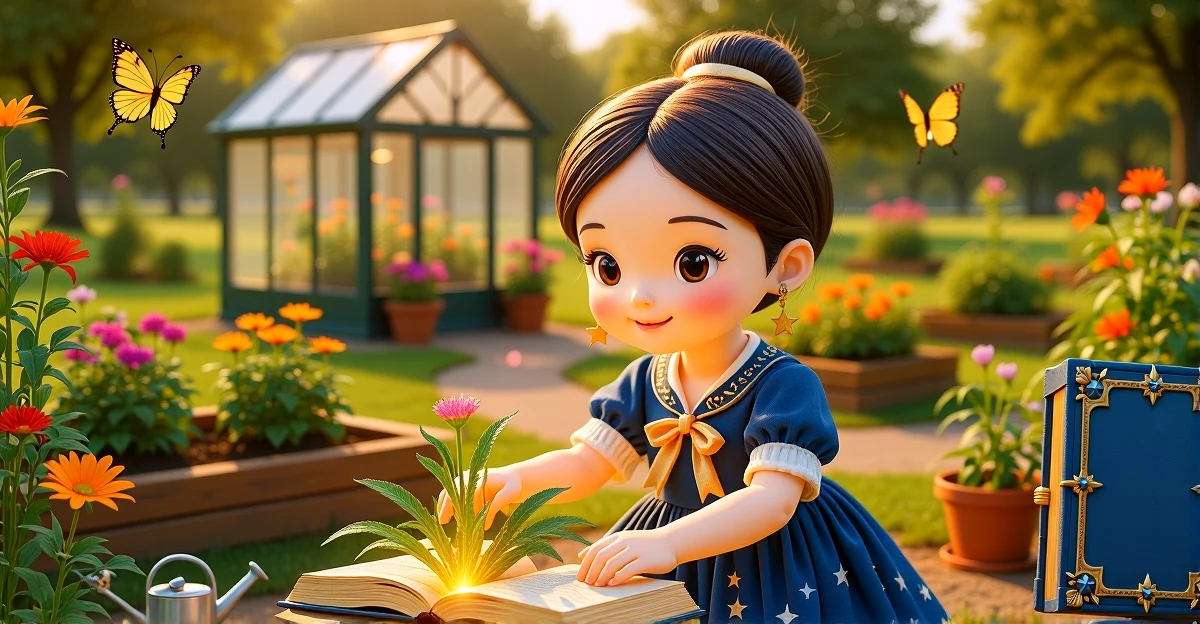

Hello, my wonderful friend! If you've found yourself thinking, "My child doesn't seem to care about environmental issues or sustainable practices," I want you to take a deep breath and know something beautiful: what you're experiencing is completely normal, and there's SO much possibility here.
You're not alone in this concern. Many parents of six and seven year olds wonder how to help their children develop environmental consciousness. But here's what the Magic Book and I discovered through research that will absolutely change how you see this: your child, right now, is in one of the most magical developmental windows for environmental awareness. Isn't that wonderful?
In this guide, we'll explore why ages six and seven are PRIME for environmental learning, what research tells us about nurturing environmental consciousness, and gentle, hands-on strategies that actually work. Plus, I'll share a beautiful story that teaches the very principle your child needs to understand about caring for our planet.
Understanding the Environmental Awareness Window
First, let me share something that might surprise you. If your child seems indifferent to environmental issues, they're not being uncaring or apathetic. Their beautiful brain is actually in a PRIME developmental stage for environmental consciousness. They're ready to become little Earth stewards - they just need the right kind of support and connection to help that awareness bloom.
Here's what makes ages six and seven so special for environmental learning. At this age, children's cognitive development has reached a point where they can grasp cause and effect relationships. They can understand that their individual actions create ripples of change in the world around them. They can feel genuine empathy for living things beyond just their immediate family. And they're developing the capacity to understand interconnectedness - how everything in nature is connected.
What might look like indifference is often just a need for hands-on experiences, nature connection, and age-appropriate ways to take action. Children at this age learn through doing, through touching, through experiencing the natural world directly. They don't respond as well to abstract concepts or fear-based messaging about environmental destruction. Instead, they respond to wonder, to discovery, to feeling like they can make a real difference.
What Research Says About Early Environmental Education
The research on environmental education for young children is absolutely fascinating, and it's filled with hope. Studies from Stanford University show that children ages six and seven are in a critical developmental window where environmental identity and values begin to form. This is the foundation that will stay with them throughout their lives.
"ECEE programs encourage young participants to connect affective elements with environmentally related knowledge, action orientation, and civic engagement, focused on the environment not only as an educational setting, but in its totality."
— Nicole M. Ardoin and Alison W. Bowers, Stanford University
What this means in everyday language is beautiful: when children participate in environmental education at this age, they're not just learning facts about nature. They're developing a deep, emotional connection to the natural world. They're learning that they have the power to take action. And they're beginning to see themselves as part of something bigger - as citizens who can make a difference.
Environmental education experts tell us something else that's SO important: when children participate in concrete environmental actions like caring for a garden, recycling, helping animals, or conserving water, they develop a sense of agency and environmental responsibility that stays with them as they grow. This isn't about lecturing them on climate change or making them feel scared about the future. This is about nurturing their natural curiosity, their innate connection to living things, and their desire to help and care for others.
Research also shows us that environmental education at this age should focus on building sensitivity, appreciation, and respect for the environment, not on fear or guilt. We don't want to overwhelm children with scary messages. Instead, we want to nurture their natural love for living things, their sense of wonder at the natural world, and their desire to be helpers and protectors.
Gentle Strategies That Nurture Environmental Consciousness
So what does this look like in real life? Let me share some gentle, research-backed approaches that the Magic Book and I have seen work beautifully with children ages six and seven.
1. Bring Nature Into Your Everyday Life
Take walks together and notice the small wonders: the way leaves change color, how birds build nests, where insects live, the patterns in tree bark. Let your child touch, collect, observe. This direct experience with nature builds what researchers call environmental sensitivity - a deep appreciation and respect for the natural world. When children feel connected to nature, they naturally want to protect it.
You don't need to live near a forest or beach to do this. Even in urban environments, you can notice the resilience of plants growing through sidewalk cracks, watch clouds drift by, observe how rain nourishes the earth. Every interaction with the natural world counts.
2. Give Age-Appropriate Ways to Take Action
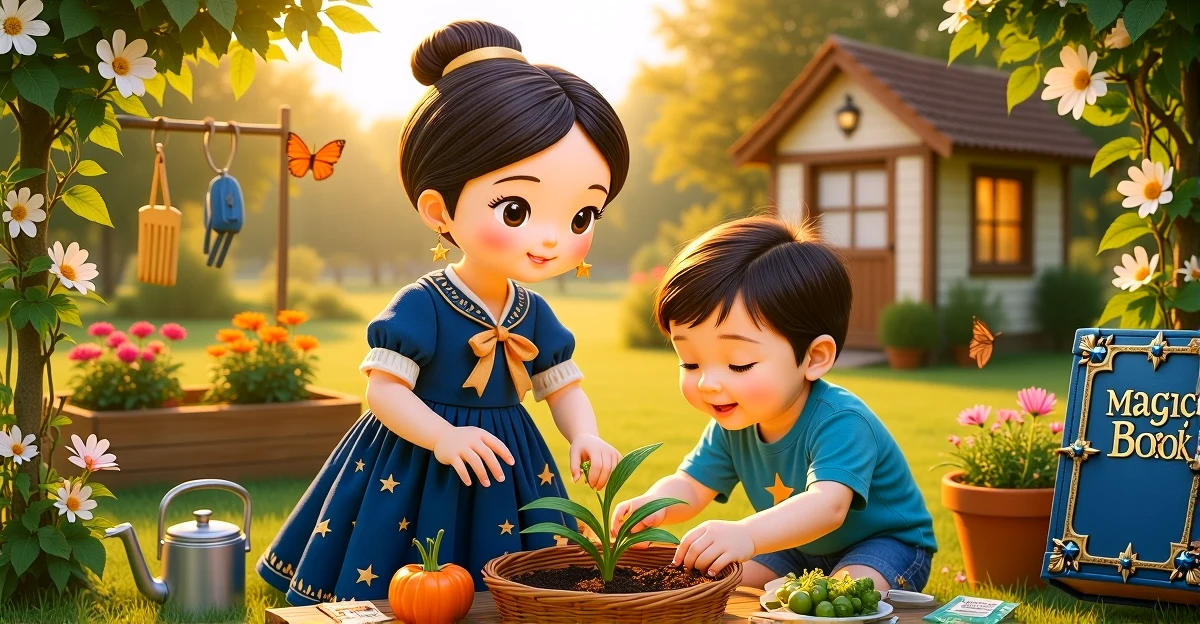
This is SO important. Let your child help sort recycling and explain where different materials go. Let them water plants and see how their care helps living things grow. Let them turn off lights and understand that they're helping conserve energy. Let them help choose reusable items instead of disposable ones.
These small actions teach them that their choices matter, that they have the power to make positive change. And that feeling of agency? That's what builds lifelong environmental consciousness. When children see that their actions create real results - the plant grows taller, the recycling bin gets sorted, energy is saved - they develop confidence in their ability to make a difference.
3. Model Environmental Care in Your Daily Choices
Children learn SO much from watching the adults they love. When you bring reusable bags to the store, mention that you're helping reduce waste. When you choose to walk instead of drive, talk about how it's good for the Earth and for your bodies. When you compost food scraps, explain how you're helping create healthy soil for plants.
You don't need to be perfect. You don't need to do everything. But when you make environmental choices visible and explain your thinking in simple terms, your child learns that caring for the environment is something valuable and important.
4. Connect Environmental Care to Empathy and Kindness
This connection is powerful for children at this age. Help your child understand that caring for the Earth is like caring for a friend. Just as we help people who need us, we help the Earth stay healthy. Just as we're gentle with living creatures, we're gentle with our planet.
When you frame environmental care as an extension of the kindness and empathy your child already feels, it becomes something natural and meaningful, not a burden or a set of rules to follow.
5. Focus on Wonder, Not Fear
Research is clear on this: environmental education for young children should emphasize wonder, discovery, and possibility, not fear or doom. Instead of talking about environmental destruction, talk about the amazing ways nature works. Instead of focusing on what's being lost, focus on what we can protect and nurture.
When children participate in hands-on environmental projects like planting a garden, creating a bird feeder, or helping clean up a park, they develop stronger environmental consciousness, better critical thinking skills, and a deeper sense of civic engagement. These experiences teach them that they're not powerless, that they can make a real difference, and that caring for the environment is something joyful and meaningful.
A Story That Teaches Caring Actions Create Change
In The Book of Inara, we have a beautiful story that teaches the very principle your child needs to understand about environmental stewardship:
The Vision Keepers of Clarity Lane
Perfect for: Ages 6-7
What makes it special: Lucas and Ella discover that an eye doctor office holds magical memories of everyone who learned to see clearly. When they help a scared child feel safe, they learn something profound: that caring actions create ripples of positive change in the world.
Key lesson: This story teaches that individual acts of kindness matter and create lasting impact. The same principle applies to caring for our planet. Just as Lucas and Ella's caring actions helped someone feel better, your child's caring actions can help the Earth feel healthier.
How to use this story: After reading together, talk about how caring for our planet is another way of creating those beautiful ripples of positive change. Ask your child: what caring actions can we take to help the Earth? Then listen to their ideas, because children at this age have such creative, wonderful thoughts!
The Beautiful Truth About Environmental Consciousness
Here's something the Magic Book shared with me that I want you to know: environmental consciousness isn't something children either have or don't have. It's something that grows and develops over time, nurtured by experiences, modeled by caring adults, and strengthened by opportunities to make a difference.
Your child is on that journey right now, and you're their guide. Every nature walk, every recycling lesson, every conversation about caring for living things is planting seeds that will grow throughout your child's life. Research shows us that children whose environmental interests are nurtured during ages six and seven demonstrate stronger environmental consciousness, better critical thinking skills, and deeper civic engagement as they mature.
This is the foundation you're building right now. And you're doing it beautifully.
You're Doing Beautifully
If you're feeling discouraged because your child doesn't seem to care about environmental issues, I want you to reframe that thought. Your child is in a PRIME developmental stage for environmental learning. They're ready. They're capable. They just need you to guide them with hands-on experiences, nature connection, and age-appropriate ways to take action.
And you're already doing this beautifully by seeking out information and caring about their development. That matters SO much.
Start small. Start with wonder. Start with hands-on experiences. Let your child help, touch, explore, and take action in ways that feel meaningful to them. Connect environmental care to the empathy and kindness they already feel. And watch as their natural curiosity and compassion blossom into genuine environmental consciousness.
The Magic Book and I believe in you, and we believe in your child's beautiful capacity to become a caring steward of our planet. You've got this, my wonderful friend.
With love and starlight,
Inara
Related Articles
- Helping Your Child Discover Their Power to Make the World Better: A Guide to Nurturing Global Citizenship in Ages 6-7
- Building Your Child Executive Function: A Gentle Guide to Independence
- Nurturing Environmental Awareness in Young Children: A Guide for Parents of 4-5 Year Olds
- Teaching Financial Literacy to Young Children: Ages 6-7
- Understanding Your Child's Developing Future-Thinking Skills (Ages 6-7)
Show transcript
Hello, my wonderful friend! It's me, Inara, and I am SO happy you're here today! You know, the Magic Book and I have been noticing something really interesting lately. Many parents are reaching out with a concern that sounds something like this: my child doesn't seem to care about environmental issues or sustainable practices. And I want you to know, if this resonates with you, you're not alone in this. In fact, this is such a common experience, and there's so much beautiful possibility here!
So grab a cozy cup of tea, settle in, and let's talk about something WONDERFUL. Your child, right now, at ages six or seven, is in one of the most magical developmental windows for environmental consciousness. Isn't that amazing? The Magic Book showed me research that will absolutely change how you see this, and I cannot wait to share it with you!
First, let me say this. If you're worried that your child doesn't care about the environment, I want you to take a deep breath and know that what you're seeing is completely normal. Your child isn't indifferent or uncaring. Their beautiful brain is actually in a PRIME stage for developing environmental awareness, and they're ready to become little stewards of our planet. They just need the right kind of support and connection to help that awareness bloom.
Here's what the research tells us, and this is so fascinating. Studies from Stanford University show that children ages six and seven are in a critical developmental window where environmental identity and values begin to form. This is the age when children start to understand that their individual actions can create ripples of change in the world around them. Their cognitive development has reached a point where they can grasp cause and effect, they can understand interconnectedness, and they can feel genuine empathy for living things beyond just their immediate family.
The Magic Book whispers this truth: your child is developmentally READY to care about the Earth. What might look like indifference is often just a need for hands-on experiences, nature connection, and age-appropriate ways to take action. Children at this age learn through doing, through touching, through experiencing the natural world directly. They don't respond as well to abstract concepts or fear-based messaging. They respond to wonder, to discovery, to feeling like they can make a real difference.
Environmental education experts tell us something beautiful. When children participate in concrete environmental actions, like caring for a garden, recycling, helping animals, or conserving water, they develop a sense of agency and environmental responsibility that stays with them as they grow. This isn't about lecturing them on climate change or making them feel scared about the future. This is about nurturing their natural curiosity, their innate connection to living things, and their desire to help and care for others.
So what does this look like in real life? Let me share some gentle, research-backed approaches that the Magic Book and I have seen work beautifully.
First, bring nature into your everyday life. Take walks together and notice the small wonders: the way leaves change color, how birds build nests, where insects live. Let your child touch bark, collect interesting rocks, watch clouds drift by. This direct experience with nature builds what researchers call environmental sensitivity, a deep appreciation and respect for the natural world. When children feel connected to nature, they naturally want to protect it.
Second, give your child age-appropriate ways to take action. This is SO important. Let them help sort recycling and explain where different materials go. Let them water plants and see how their care helps living things grow. Let them turn off lights and understand that they're helping conserve energy. These small actions teach them that their choices matter, that they have the power to make positive change. And that feeling of agency? That's what builds lifelong environmental consciousness.
Third, model caring for the environment in your own daily choices, and talk about why you're making those choices. When you bring reusable bags to the store, mention that you're helping reduce waste. When you choose to walk instead of drive, talk about how it's good for the Earth and for your bodies. Children learn so much from watching the adults they love, and when they see you caring for the environment, they learn that this is something valuable and important.
Fourth, and this is beautiful, connect environmental care to empathy and kindness. Help your child understand that caring for the Earth is like caring for a friend. Just as we help people who need us, we help the Earth stay healthy. Just as we're gentle with living creatures, we're gentle with our planet. This connection between caring for people and caring for the environment is so powerful for children at this age.
Now, let me tell you about a story that shows this principle so beautifully. In The Book of Inara, we have a story called The Vision Keepers of Clarity Lane. In this story, Lucas and Ella discover something magical: that caring actions create ripples of positive change. When they help a scared child feel safe, they learn that their individual acts of kindness matter and create lasting impact in the world.
This story teaches the same principle that applies to environmental stewardship. Just as Lucas and Ella's caring actions helped someone feel better, your child's caring actions can help the Earth feel healthier. After you read this story together, you can talk about how caring for our planet is another way of creating those beautiful ripples of positive change. You can ask your child: what caring actions can we take to help the Earth? And then listen to their ideas, because children at this age have such creative, wonderful thoughts!
The Magic Book also reminds us of something crucial. Environmental education at this age should focus on building sensitivity, appreciation, and respect, not on fear or guilt. We don't want to overwhelm children with scary messages about environmental destruction. Instead, we want to nurture their natural love for living things, their sense of wonder at the natural world, and their desire to be helpers and protectors.
Research shows us that when children participate in hands-on environmental projects, like planting a garden, creating a bird feeder, or helping clean up a park, they develop stronger environmental consciousness, better critical thinking skills, and a deeper sense of civic engagement. These experiences teach them that they're not powerless, that they can make a real difference, and that caring for the environment is something joyful and meaningful, not burdensome or scary.
Here's another beautiful truth the Magic Book shared with me. Children whose environmental interests are nurtured during ages six and seven demonstrate stronger environmental consciousness as they mature. This is the foundation you're building right now. Every nature walk, every recycling lesson, every conversation about caring for living things, is planting seeds that will grow throughout your child's life.
So if you're feeling discouraged because your child doesn't seem to care about environmental issues, I want you to reframe that thought. Your child is in a PRIME developmental stage for environmental learning. They're ready. They're capable. They just need you to guide them with hands-on experiences, nature connection, and age-appropriate ways to take action. And you're already doing this beautifully by seeking out information and caring about their development.
Remember, environmental consciousness isn't something children either have or don't have. It's something that grows and develops over time, nurtured by experiences, modeled by caring adults, and strengthened by opportunities to make a difference. Your child is on that journey right now, and you're their guide.
The Magic Book and I believe in you, and we believe in your child's beautiful capacity to become a caring steward of our planet. Start small. Start with wonder. Start with hands-on experiences. And watch as your child's natural empathy and curiosity blossom into genuine environmental consciousness.
Thank you so much for being here today, my wonderful friend. If you'd like more stories that teach caring, empathy, and the power of individual actions to create positive change, you'll find them in The Book of Inara. We're here to support you and your child on this beautiful journey.
With love and starlight, Inara.