
Have you ever watched your child and wondered, how can I help them see what makes them special? Maybe you've noticed them struggling to recognize their own abilities, or perhaps they've said those heartbreaking words: "I'm not good at anything."
If this sounds familiar, I want you to know something important. You're not alone in this question, and the fact that you're asking it shows how deeply you care about your child's heart and development. This is one of the most loving questions a parent can ask.
Today, I want to share something WONDERFUL with you. We're going to explore the research-backed approach to helping children ages five to six develop self-awareness and confidence in their unique strengths. And I promise you, by the end of this, you'll have practical strategies you can use starting today.
Understanding the Critical Window: Ages 5-6
Here's something beautiful that research tells us. Children ages five to six are in a critical developmental window for building self-awareness and recognizing their unique strengths. This isn't just a nice idea—it's backed by developmental psychology and neuroscience.
During this tender age, children are forming core beliefs about themselves and their abilities. The National Association for the Education of Young Children emphasizes that young children develop self-confidence through understanding that their actions matter. When children connect their unique abilities to meaningful outcomes, they begin to see themselves as capable and valuable.
But here's the thing that might surprise you. Children don't discover their strengths by being told what they're good at. They discover them by being SEEN. By having a loving adult notice what lights them up, what makes them curious, what they return to again and again.
And that loving adult? That's you.
What Research Says About Strength-Based Parenting
Let me share what the research community has discovered about helping children recognize their gifts. It's truly fascinating.
The Collaborative for Academic, Social, and Emotional Learning, known as CASEL, identifies self-awareness as one of five core social-emotional competencies for children. And here's what's important: self-awareness includes recognizing one's strengths AND areas for growth. This isn't something children are born knowing—it's something they learn through supportive relationships and guided reflection.
"Strength-based parenting interventions enhance children's positive emotions and self-efficacy, with measurable improvements in how children perceive their own capabilities."
— Frontiers in Psychology Research
What does this mean in everyday language? When parents intentionally notice and nurture their children's natural abilities, children develop greater confidence in their capabilities. They start to see themselves as capable, talented, and valuable. Isn't that beautiful?
Research shows that strength-based parenting—an approach that intentionally identifies and nurtures children's natural abilities—significantly enhances self-efficacy and positive self-concept. When parents focus on what children do well rather than solely addressing challenges, children develop greater confidence in their capabilities and a more accurate understanding of their unique gifts.
Becoming a Strength Detective: Practical Strategies
Now, let's talk about how you can support your child's journey of self-discovery. These are gentle, loving approaches that honor where your child is right now.
1. Notice What Lights Them Up
Pay attention to what your child gravitates toward naturally. Do they love building things? Do they notice when someone is sad? Are they always asking questions about how things work? Do they create elaborate imaginary worlds? Do they move their body in creative ways?
These natural interests and tendencies are clues to their unique gifts. Your child's curiosity is a compass pointing toward their strengths.
2. Offer Specific Observations Instead of General Praise
Instead of saying "you're so smart," try saying, "I noticed you figured out how to stack those blocks so they wouldn't fall. You tried three different ways until you found one that worked."
Or instead of "you're such a good artist," try, "I love how you chose those colors. The way you mixed blue and yellow to make green shows you're really thinking about how colors work together."
This helps children understand exactly what they did well, and it teaches them that their efforts and strategies matter just as much as the outcome.
3. Create Opportunities for Success
If your child loves music, let them explore different instruments. If they're drawn to helping others, involve them in age-appropriate acts of kindness. If they love stories, encourage them to create their own. If they're fascinated by how things work, provide safe opportunities to take things apart and put them back together.
When children experience success in areas that genuinely interest them, they begin to recognize their own capabilities. They start to think, "I can do this. I'm good at this." And that recognition is the seed of self-awareness.
4. Ask Curiosity Questions
Instead of asking "what are you good at," which can feel overwhelming or even scary for a young child, try asking:
- What do you love to do?
- What makes you feel happy?
- What do you want to learn more about?
- If you could do anything tomorrow, what would you choose?
These questions help children connect with their authentic interests, which is where their strengths often live. And there's no wrong answer, which makes it safe for children to explore.
5. Model Your Own Journey
Share with your child what you're learning about yourself. You might say, "I realized today that I really love helping people solve problems. It makes me feel good inside." Or, "I noticed that I feel happiest when I'm creating something with my hands."
When children see that adults are also on a journey of understanding their own gifts, it normalizes the process and makes it feel less pressured.
When Your Child Says "I'm Not Good at Anything"
Let me give you a gentle hug through these words if your child has said this. That feeling is SO hard, I know. But here's the truth: your child absolutely has interests and strengths. Sometimes they're just hidden beneath the surface, waiting to be discovered. And sometimes children need help recognizing what's already there.
Remember, ages five to six are such a tender time for self-concept development. Research indicates that this developmental phase is particularly important because these early beliefs can shape how children see themselves for years to come.
So the work you're doing right now—helping your child recognize their gifts—this is some of the most important work you'll ever do. And you're doing it beautifully.
Stories That Can Help
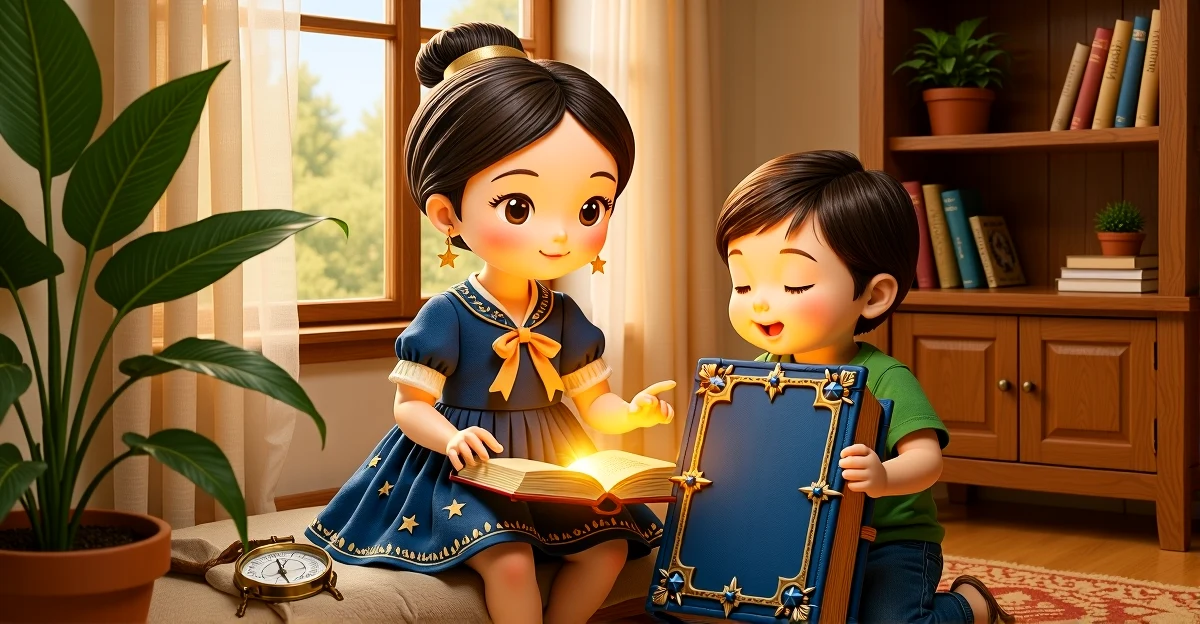
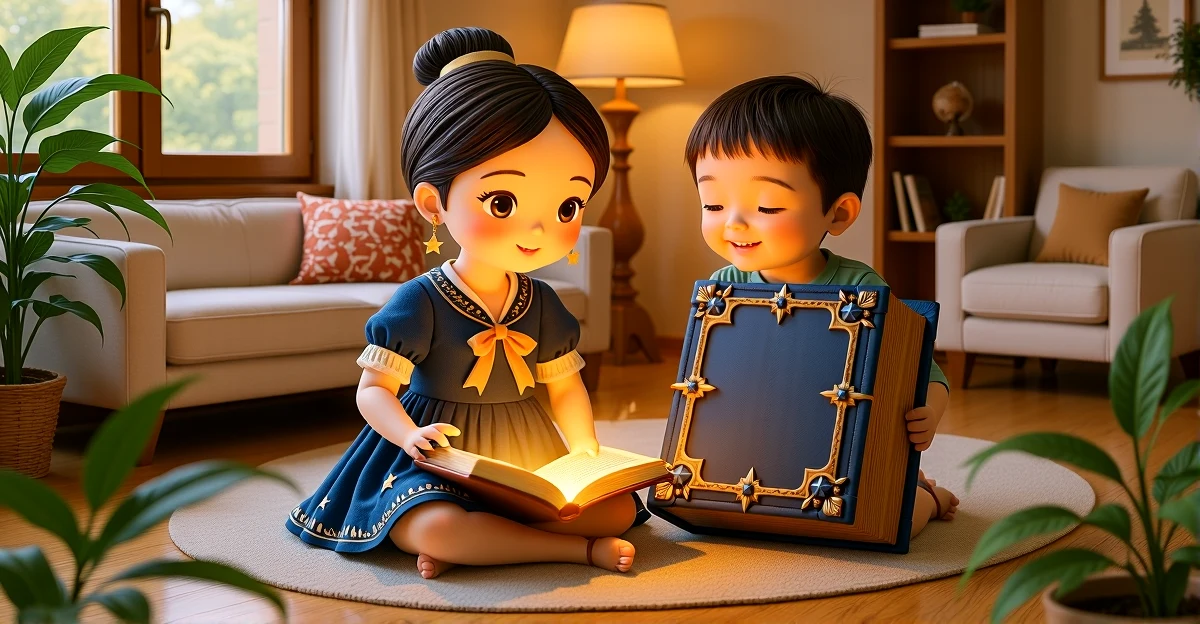
In The Book of Inara, we have beautiful stories that bring these concepts to life for your child. Let me tell you about one that's particularly special for this journey:
The Heart-Light Library
Perfect for: Ages 6-7 (also wonderful for advanced 5-year-olds)
What makes it special: This story is about two friends, Theo and Miles, who wonder what makes them special. They're sitting in their school courtyard one day, and Theo says something so honest: "I wonder what makes us special. Everyone seems to know exactly what they're good at, but I'm not sure about us."
Can you imagine how many children feel exactly this way?
Well, Theo and Miles discover a magical library where ancient books glow when touched with genuine curiosity, revealing glimpses of their unique gifts. In the story, they learn that Theo's gift is his thoughtful, philosophical way of seeing the world—he helps younger children understand their feelings through gentle questions. And Miles discovers that his strategic thinking helps organize community projects and bring people together.
Key lesson: Self-discovery is a journey, not a destination. Everyone has different gifts, and that's what makes the world so wonderful. Our strengths become clearest when we're genuinely curious and open to learning about ourselves. And our gifts are often meant to be shared, to help others and make the world a little brighter.
You're Doing Beautifully
I want to leave you with something important. Your child is discovering their strengths right now, even if it doesn't always look that way. Every time they try something new, every time they persist through a challenge, every time they show kindness or curiosity or creativity, they're building their understanding of who they are and what they can do.
When your child asks "why" for the hundredth time, they're developing their analytical thinking. When they notice that their friend is sad, they're developing empathy. When they build a tower and it falls and they build it again, they're developing persistence. When they create an imaginary world, they're developing creativity.
All of these moments are your child discovering their strengths, even if they can't name them yet.
And you, my wonderful friend, you're doing something beautiful by supporting this journey. By asking these questions, by seeking ways to help your child see their own light, you're giving them one of the greatest gifts a parent can give. You're helping them build a foundation of self-awareness and confidence that will serve them for their entire life.
The Magic Book and I believe in you. We believe in your child. And we're here to support you every step of the way.
With love and starlight, Inara
Related Articles
- Understanding Your 5-6 Year Old's Complex Emotions: A Parent's Guide to Emotional Intelligence
- Understanding Creative Confidence in Young Children (Ages 5-6)
- Supporting Your Child's Independence and Self-Advocacy: A Gentle Guide
- Understanding How Children Learn Empathy: A Guide for Parents of 5-6 Year Olds
- Why Your Child Says Good or Bad for Every Feeling (And How to Help Them Express the Full Rainbow of Emotions)
Show transcript
Hello, my wonderful friend! It's me, Inara, and I am so happy you're here today. You know, the Magic Book and I have been noticing something beautiful happening in homes all around the world. Parents like you are asking such thoughtful questions about how to help your children discover their unique gifts and strengths. And I want you to know, this question alone shows how deeply you care.
If you've ever watched your child and wondered, how can I help them see what makes them special, you're not alone. This is one of the most loving questions a parent can ask. And today, I want to share something WONDERFUL with you.
First, let me say this. Your child has unique gifts. They absolutely do. Every single child is born with their own constellation of strengths, talents, and abilities. But here's the thing, children ages five to six are just beginning to develop the self-awareness to recognize these gifts in themselves. And that's completely normal. In fact, it's exactly where they're supposed to be developmentally.
The Magic Book taught me something beautiful about this. Children don't discover their strengths by being told what they're good at. They discover them by being seen. By having a loving adult notice what lights them up, what makes them curious, what they return to again and again. And that loving adult? That's you.
Let me share what the research tells us, because I think you'll find this as fascinating as I do. The Collaborative for Academic, Social, and Emotional Learning, also known as CASEL, emphasizes that self-awareness includes recognizing one's strengths and areas for growth as a core developmental competency for young children. This isn't something children are born knowing. It's something they learn through supportive relationships and guided reflection.
And here's something even more wonderful. Research published in Frontiers in Psychology demonstrates that strength-based parenting interventions enhance children's positive emotions and self-efficacy. What does that mean in everyday language? It means when parents intentionally notice and nurture their children's natural abilities, children develop greater confidence in their capabilities. They start to see themselves as capable, talented, and valuable. Isn't that beautiful?
The National Association for the Education of Young Children notes that young children develop self-confidence through understanding that their actions matter. So when you help your child connect their unique abilities to meaningful outcomes, when you show them that what they do makes a difference, you're building the foundation for lifelong confidence and self-understanding.
Now, you might be wondering, but Inara, what if my child doesn't seem interested in anything? What if they say they're not good at anything? First, let me give you a gentle hug through these words. That feeling is so hard, I know. But here's the truth. Your child absolutely has interests and strengths. Sometimes they're just hidden beneath the surface, waiting to be discovered. And sometimes children need help recognizing what's already there.
Ages five to six are such a tender time for self-concept development. Children are forming core beliefs about themselves and their abilities. Research indicates that this developmental phase is particularly important because these early beliefs can shape how children see themselves for years to come. So the work you're doing right now, helping your child recognize their gifts, this is some of the most important work you'll ever do.
Let me share some practical ways you can support your child's journey of self-discovery. These are gentle, loving approaches that honor where your child is right now.
First, become a strength detective. Pay attention to what your child gravitates toward naturally. Do they love building things? Do they notice when someone is sad? Are they always asking questions about how things work? Do they create elaborate imaginary worlds? Do they move their body in creative ways? Do they remember details that others miss? These natural interests and tendencies are clues to their unique gifts. The Magic Book whispers this, your child's curiosity is a compass pointing toward their strengths.
Second, offer specific observations instead of general praise. Instead of saying, you're so smart, try saying, I noticed you figured out how to stack those blocks so they wouldn't fall. You tried three different ways until you found one that worked. Or instead of, you're such a good artist, try, I love how you chose those colors. The way you mixed blue and yellow to make green shows you're really thinking about how colors work together. This helps children understand exactly what they did well, and it teaches them that their efforts and strategies matter just as much as the outcome.
Third, create opportunities for success in areas that interest them. If your child loves music, let them explore different instruments. If they're drawn to helping others, involve them in age-appropriate acts of kindness. If they love stories, encourage them to create their own. If they're fascinated by how things work, provide safe opportunities to take things apart and put them back together. When children experience success in areas that genuinely interest them, they begin to recognize their own capabilities. They start to think, I can do this. I'm good at this. And that recognition is the seed of self-awareness.
Fourth, ask curiosity questions that open doors instead of creating pressure. Instead of asking, what are you good at, which can feel overwhelming or even scary for a young child, try asking, what do you love to do? What makes you feel happy? What do you want to learn more about? If you could do anything tomorrow, what would you choose? These questions help children connect with their authentic interests, which is where their strengths often live. And there's no wrong answer, which makes it safe for children to explore.
Fifth, model your own journey of self-discovery. Share with your child what you're learning about yourself. You might say, I realized today that I really love helping people solve problems. It makes me feel good inside. Or, I noticed that I feel happiest when I'm creating something with my hands. When children see that adults are also on a journey of understanding their own gifts, it normalizes the process and makes it feel less pressured.
And sixth, share stories that mirror this journey of self-discovery. Stories are such powerful teachers, my friend. They show children that everyone has unique gifts, and that discovering those gifts is a beautiful adventure, not a test to pass.
Speaking of stories, let me tell you about one that the Magic Book and I created specifically for this journey. It's called The Heart-Light Library, and it's about two friends named Theo and Miles who wonder what makes them special. They're sitting in their school courtyard one day, and Theo says something so honest. He says, I wonder what makes us special. Everyone seems to know exactly what they're good at, but I'm not sure about us.
Can you imagine how many children feel exactly this way? How many children wonder if they have something special to offer the world?
Well, Theo and Miles discover a magical library where ancient books glow when touched with genuine curiosity, revealing glimpses of their unique gifts. In the story, they learn that Theo's gift is his thoughtful, philosophical way of seeing the world. He helps younger children understand their feelings through gentle questions. And Miles discovers that his strategic thinking helps organize community projects and bring people together.
They learn that their combined analytical and strategic thinking can serve their community in beautiful ways. They discover that their purpose isn't about being the best at something, it's about understanding what lights them up and how their unique abilities can help others.
This story is so SPECIAL because it shows children that self-discovery is a journey, not a destination. It teaches them that everyone has different gifts, and that's what makes the world so wonderful. It demonstrates that sometimes our strengths become clearest when we're genuinely curious and open to learning about ourselves. And it shows that our gifts are often meant to be shared, to help others and make the world a little brighter.
You can find The Heart-Light Library in The Book of Inara app, along with hundreds of other stories designed to support your child's emotional and social development. Each story is crafted with love and backed by research to help children navigate the beautiful, sometimes challenging journey of growing up.
Now, I want to leave you with something important. Your child is discovering their strengths right now, even if it doesn't always look that way. Every time they try something new, every time they persist through a challenge, every time they show kindness or curiosity or creativity, they're building their understanding of who they are and what they can do.
When your child asks why for the hundredth time, they're developing their analytical thinking. When they notice that their friend is sad, they're developing empathy. When they build a tower and it falls and they build it again, they're developing persistence. When they create an imaginary world, they're developing creativity. All of these moments are your child discovering their strengths, even if they can't name them yet.
And you, my wonderful friend, you're doing something beautiful by supporting this journey. By asking these questions, by seeking ways to help your child see their own light, you're giving them one of the greatest gifts a parent can give. You're helping them build a foundation of self-awareness and confidence that will serve them for their entire life.
The Magic Book and I believe in you. We believe in your child. And we're here to support you every step of the way.
Thank you for being here today. Thank you for caring so deeply about your child's heart and development. And remember, you're not just raising a child. You're nurturing a unique constellation of gifts that the world needs.
Until our next adventure together, with love and starlight, Inara.