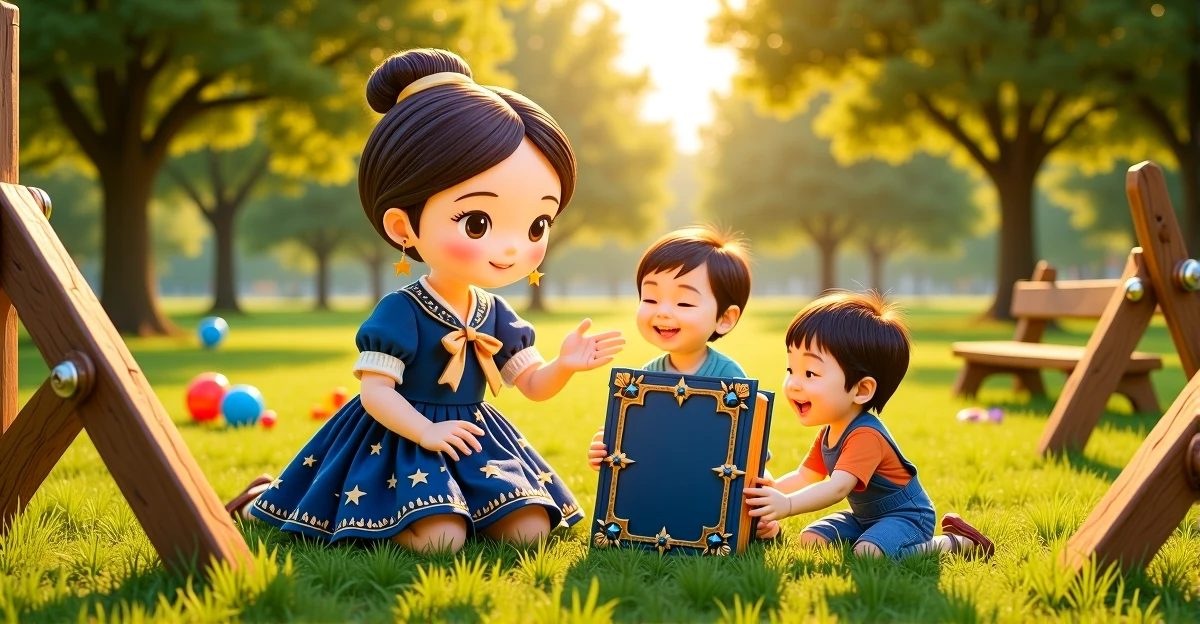
You're at the playground, and your two-year-old has been playing with a toy truck for the last ten minutes. Another child approaches, wanting a turn. You gently suggest sharing, and suddenly your sweet toddler transforms into a tiny tornado of resistance. Sound familiar?
If you've found yourself feeling frustrated, embarrassed, or even worried because your toddler doesn't seem to understand waiting for their turn, I want you to know something really important. You are not alone in this. Not even a little bit! In fact, this is one of the MOST common challenges parents of two and three year olds face.
And here's the beautiful truth that the Magic Book taught me: Your child isn't being difficult or stubborn. Their amazing little brain is right on track, learning one of life's most complex social skills. In this post, we'll explore what's really happening when your toddler struggles with turn-taking, what the research tells us, and most importantly, gentle strategies that actually work.
What's Really Happening in Your Toddler's Brain
When your two or three year old doesn't want to wait for their turn, they're not being selfish. They're showing you exactly where they are in their development. And that place? It's perfectly normal.
Here's what the research tells us. Children around age two are just beginning to develop something called theory of mind. That's a fancy way of saying they're starting to understand that other people have different thoughts and feelings than they do. But here's the thing - they're just STARTING this journey.
Two-year-olds are just beginning to develop theory of mind - an understanding that other people have different thoughts and feelings than their own. They aren't yet capable of seeing things from another person's perspective, which is a foundational skill for both taking turns and sharing.
— Lovevery Child Development Team
Think about what turn-taking actually requires. Your child needs to understand that another person wants something, that their want is just as valid, that waiting doesn't mean losing forever, and that they'll get another chance. That's a LOT of complex thinking for a brain that's still learning to understand that other people even HAVE different perspectives!
The Role of Impulse Control
The American Academy of Pediatrics reminds us that impulse control and self-regulation are still developing during these years. So when your child grabs a toy from their friend or melts down when it's time to give something back, they're not being willful. They're genuinely struggling with a skill their brain isn't quite ready for yet.
And you know what I find BEAUTIFUL about this? Your child's struggle with waiting is actually proof that their brain is growing and learning. Every time they practice turn-taking, even when it's hard, they're building neural pathways that will serve them for their entire life.
What Child Development Research Tells Us
Now, let me tell you what child development experts have discovered. Two year olds ARE capable of sharing and taking turns, but they typically need two things. First, they need an adult to guide them through it. And second, they usually only share when they're truly finished with something.
Expecting them to share a favorite toy in the middle of playing? That's asking a lot from a brain that's still learning to understand time, fairness, and other people's feelings.
Research consistently shows that turn-taking and patience are emerging skills for children ages 2-3, representing a critical developmental window where children are just beginning to understand social cooperation. Studies indicate that while 2-year-olds may be cognitively ready to start taking turns, they require substantial adult guidance and support throughout the process.
Parents should praise them for being patient while you were gone and use reassurance as a teaching tool during this developmental phase.
— American Academy of Pediatrics
The evidence is clear that this is normal development, and children benefit most from parents who offer gentle guidance, realistic expectations, and plenty of practice opportunities in low-pressure situations.
Gentle Strategies That Actually Work
So what can you do to help? I'm so glad you asked! Here are research-backed strategies that honor your child's developmental stage while gently teaching this important skill.
1. Anticipate the Challenges
Before a playdate, let your child choose a few special toys to put away. These are their treasures, and it's okay to protect them. If you have multiples of some toys, make those available so there's less pressure to take turns with everything. This simple step can prevent SO many conflicts before they even start.
2. Narrate What's Happening
Your child is learning to understand the world through your words. When two children both want the same toy, you might say something like: "You're playing with the truck now. When you're done, it will be Maria's turn, and she'll get to play with it for a while. Then you'll have another turn."
This helps them understand that turns have a beginning and an end, and that waiting doesn't mean losing forever. You're literally teaching them the concept of turn-taking through your narration!
3. Use Visual Timers
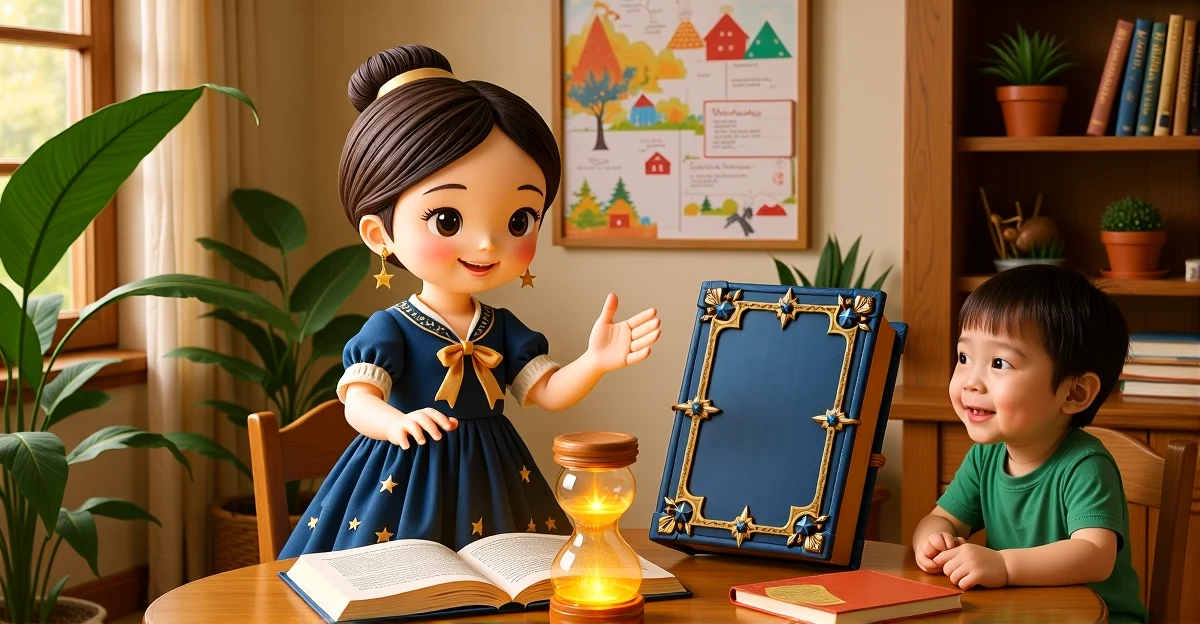
This is SUCH a helpful tool! Educational experts at Edutopia highlight that visual supports and timers help young children understand waiting and turn-taking. A sand timer or a color timer helps children SEE time passing.
You can say, "When all the sand is at the bottom, it will be your friend's turn. When they're done, you can have another turn." This makes the abstract concept of waiting much more concrete and manageable for their developing brain.
4. Model Turn-Taking in Everyday Life
Here's something else the Magic Book whispers to me: Model turn-taking in your everyday life. When you're playing together, narrate your own turn-taking. "Now it's my turn to stack a block. Now it's your turn!" This playful practice in a low-pressure situation helps them understand the rhythm of taking turns.
5. Celebrate Small Victories
When your child DOES take turns, even if it's with your gentle guidance, celebrate it! "You waited for your turn! That was SO patient of you!" This positive reinforcement helps them connect the behavior with good feelings, making them more likely to try again.
6. Keep Expectations Realistic
Remember, my wonderful friend, patience is something we're teaching, not something we should expect them to already have. And teaching requires time, repetition, and SO much grace. Some days will be easier than others, and that's perfectly normal.
Stories That Can Help
In The Book of Inara, we have beautiful stories that bring these concepts to life for your child. Stories are such a powerful way to teach social skills because they show cooperation in action without any pressure or shame.
Sweet Bear Shares His Honey
Perfect for: Ages 2-3
What makes it special: This gentle folktale directly addresses sharing and cooperation, which are foundational skills closely connected to turn-taking. Sweet Bear discovers something magical - when he shares his sweet honey with his forest friends, everything tastes even sweeter. It's such a beautiful way to show children that cooperation and generosity create wonderful feelings for everyone involved.
Key lesson: When Sweet Bear discovers that sharing makes experiences sweeter, children learn that cooperation creates positive feelings for everyone. What I love about this story is how it models sharing without any pressure. Sweet Bear isn't forced to share - he discovers the joy of it naturally. And that's exactly the energy we want to bring to turn-taking with our little ones.
How to use it: After you read this story together, you can reference Sweet Bear when your child is learning to take turns. You might say, "Remember how Sweet Bear felt happy when he shared? You can feel that happy feeling too when you take turns with your friend." This gentle connection helps them link the story's lesson to their own experience.
You're Doing Beautifully
Here's what I want you to remember, my wonderful friend. Your child's struggle with turn-taking isn't a behavior problem. It's a learning opportunity. And you are exactly the right person to guide them through it.
When you approach turn-taking with realistic expectations, when you offer patient guidance instead of frustration, when you celebrate small victories, you're not just teaching a social skill. You're showing your child that learning is safe, that mistakes are okay, and that you'll be there to support them every step of the way.
The Magic Book reminds me that every child learns at their own pace. Some children will grasp turn-taking quickly. Others will need more time and practice. Both paths are perfectly normal. Your job isn't to rush them or compare them to other children. Your job is to meet them exactly where they are and offer loving support as they grow.
And on those hard days, when it feels like you've explained turn-taking a thousand times and they still don't get it? Take a deep breath. Remember that their brain is still developing. Remember that this is temporary. Remember that you're doing a BEAUTIFUL job.
The research is so clear on this: Children whose parents respond with patience and understanding during this developmental phase develop better emotional regulation skills as they grow. Your gentle approach isn't just easier in the moment - it's building the foundation for your child's lifelong social and emotional health.
So be patient with yourself, be patient with your child, and trust the process. Turn-taking will come. Sharing will come. And in the meantime, every moment of practice is helping their amazing brain grow stronger.
The Magic Book and I are always here for you, cheering you on, believing in you and your child. You've got this, my wonderful friend.
With love and starlight,
Inara
Related Articles
- Why Your Toddler Says Mine to Everything (And Why That is Beautiful)
- The Beautiful Science of Toddler Empathy: Supporting Your Child's Caring Heart (Ages 2-3)
- Understanding Parallel Play: Why Your Toddler Plays Near (Not With) Other Kids
- Helping Your Toddler Develop Patience: What Research Says
- Why Your Toddler Cannot Wait (And How to Gently Help)
Show transcript
Hello, my wonderful friend! It's me, Inara, and I am SO happy you're here with me today!
You know, the Magic Book and I have been noticing something lately. So many parents are reaching out, feeling frustrated and sometimes even a little embarrassed because their toddler doesn't seem to understand waiting for their turn. And I want you to know something really important right from the start. You are not alone in this. Not even a little bit!
In fact, this is one of the MOST common challenges parents of two and three year olds face. And here's the beautiful truth. Your child isn't being difficult or stubborn. Their amazing little brain is right on track, learning one of life's most complex social skills.
So grab a cozy cup of tea, settle in with me, and let's talk about what's really happening when your toddler struggles with turn-taking, and more importantly, how you can support them with patience and love.
First, let me share something the Magic Book taught me that changed everything. When your two or three year old doesn't want to wait for their turn, they're not being selfish. They're showing you exactly where they are in their development. And that place? It's perfectly normal.
Here's what the research tells us. Children around age two are just beginning to develop something called theory of mind. That's a fancy way of saying they're starting to understand that other people have different thoughts and feelings than they do. But here's the thing. They're just STARTING this journey. They can't yet see things from another person's perspective, and that ability is absolutely foundational for turn-taking and sharing.
The American Academy of Pediatrics reminds us that impulse control and self-regulation are still developing during these years. So when your child grabs a toy from their friend or melts down when it's time to give something back, they're not being willful. They're genuinely struggling with a skill their brain isn't quite ready for yet.
And you know what I find BEAUTIFUL about this? Your child's struggle with waiting is actually proof that their brain is growing and learning. Every time they practice turn-taking, even when it's hard, they're building neural pathways that will serve them for their entire life.
Now, let me tell you what child development experts have discovered. Two year olds ARE capable of sharing and taking turns, but they typically need two things. First, they need an adult to guide them through it. And second, they usually only share when they're truly finished with something. Expecting them to share a favorite toy in the middle of playing? That's asking a lot from a brain that's still learning to understand time, fairness, and other people's feelings.
So what can you do to help? I'm so glad you asked!
First, anticipate the challenges. Before a playdate, let your child choose a few special toys to put away. These are their treasures, and it's okay to protect them. If you have multiples of some toys, make those available so there's less pressure to take turns with everything.
Second, narrate what's happening. Your child is learning to understand the world through your words. When two children both want the same toy, you might say something like, You're playing with the truck now. When you're done, it will be Maria's turn, and she'll get to play with it for a while. Then you'll have another turn. This helps them understand that turns have a beginning and an end, and that waiting doesn't mean losing forever.
Third, use visual timers. This is SUCH a helpful tool! A sand timer or a color timer helps children SEE time passing. You can say, When all the sand is at the bottom, it will be your friend's turn. When they're done, you can have another turn. This makes the abstract concept of waiting much more concrete and manageable for their developing brain.
And here's something else the Magic Book whispers to me. Model turn-taking in your everyday life. When you're playing together, narrate your own turn-taking. Now it's my turn to stack a block. Now it's your turn! This playful practice in a low-pressure situation helps them understand the rhythm of taking turns.
Remember, my friend, patience is something we're teaching, not something we should expect them to already have. And teaching requires time, repetition, and SO much grace.
Now, I want to tell you about a story that might help. It's called Sweet Bear Shares His Honey, and it's one of my favorites for this exact situation.
In this gentle tale, a kind bear discovers something magical. When he shares his sweet honey with his forest friends, everything tastes even sweeter. It's such a beautiful way to show children that cooperation and generosity create wonderful feelings for everyone involved.
What I love about this story is how it models sharing without any pressure or shame. Sweet Bear isn't forced to share. He discovers the joy of it naturally. And that's exactly the energy we want to bring to turn-taking with our little ones.
After you read this story together, you can reference Sweet Bear when your child is learning to take turns. You might say, Remember how Sweet Bear felt happy when he shared? You can feel that happy feeling too when you take turns with your friend. This gentle connection helps them link the story's lesson to their own experience.
You can find Sweet Bear Shares His Honey in The Book of Inara app, along with so many other stories that support your child's social and emotional learning.
Here's what I want you to remember, my wonderful friend. Your child's struggle with turn-taking isn't a behavior problem. It's a learning opportunity. And you are exactly the right person to guide them through it.
When you approach turn-taking with realistic expectations, when you offer patient guidance instead of frustration, when you celebrate small victories, you're not just teaching a social skill. You're showing your child that learning is safe, that mistakes are okay, and that you'll be there to support them every step of the way.
The Magic Book reminds me that every child learns at their own pace. Some children will grasp turn-taking quickly. Others will need more time and practice. Both paths are perfectly normal. Your job isn't to rush them or compare them to other children. Your job is to meet them exactly where they are and offer loving support as they grow.
And on those hard days, when it feels like you've explained turn-taking a thousand times and they still don't get it? Take a deep breath. Remember that their brain is still developing. Remember that this is temporary. Remember that you're doing a BEAUTIFUL job.
The research is so clear on this. Children whose parents respond with patience and understanding during this developmental phase develop better emotional regulation skills as they grow. Your gentle approach isn't just easier in the moment. It's building the foundation for your child's lifelong social and emotional health.
So be patient with yourself, be patient with your child, and trust the process. Turn-taking will come. Sharing will come. And in the meantime, every moment of practice is helping their amazing brain grow stronger.
The Magic Book and I are always here for you, cheering you on, believing in you and your child. You've got this, my wonderful friend.
Until our next adventure together, with love and starlight, Inara.