
You're getting ready to leave the house, and you tell your four-year-old, "We're leaving in ten minutes." You think you've given them fair warning, time to finish their activity and prepare for the transition. But two minutes later, they're melting down because they thought "ten minutes" meant right now. Or maybe they're still playing happily when you announce it's time to go, completely shocked that ten minutes has passed.
If this sounds familiar, take a deep breath. You are not alone, and your child is developing exactly as they should. Time is one of the most abstract, magical concepts in the universe, and for young children between ages four and five, it's like trying to hold stardust in their hands. It shimmers, it's beautiful, but they can't quite grasp it yet.
In this guide, we'll explore why time concepts are SO challenging for preschoolers, what the research tells us about how children learn to understand time, and most importantly, gentle strategies that actually help. Plus, I'll share a beautiful story from The Book of Inara that teaches children about patience and finding their own rhythm.
Why Time Is Abstract Magic for Preschoolers
Here's what's happening in that beautiful, growing brain. Young children live primarily in the present moment. Their cognitive development focuses on immediate experiences rather than future planning. When you say "in ten minutes," they hear words, but those words don't connect to an actual feeling of time passing.
Think about it from their perspective. Time is invisible. You can't touch it, you can't see it, you can't hold it. For a child who is still learning that objects exist even when they can't see them, understanding that something will happen in an abstract measurement called "ten minutes" is incredibly complex.
Dr. Meng Zhang and Dr. Judith A Hudson from Rutgers University conducted wonderful research on how children learn about time. They discovered something fascinating: while preschoolers begin using time-related words like "yesterday," "tomorrow," and "in a few minutes," their actual comprehension of these abstract concepts remains limited until around age five and a half years.
"Understanding temporal relations coded by temporal adverbs is not achieved until age 5.5 years, much later than basic tense comprehension."
— Dr. Meng Zhang and Dr. Judith A Hudson, Rutgers University
This means your four or five year old is right in the middle of this learning journey. They're working on it every single day, but their brain simply isn't ready yet to fully grasp abstract time measurements.
What Children CAN Understand About Time
Now, here's the beautiful part. While preschoolers struggle with abstract time concepts, they ARE developing important time-related skills. Research shows that children at this age can grasp basic sequences. They understand that first we brush teeth, then we read a story, then we go to sleep. They're learning that morning comes before afternoon, and that bedtime follows dinner.
These are the building blocks of time awareness, and your child is working on them constantly. They can understand:
- Order and sequence: What happens first, next, and last
- Daily rhythms: Morning, afternoon, evening, nighttime
- Routine patterns: The predictable flow of their day
- Before and after: Simple temporal relationships
But here's where it gets tricky. Understanding that things happen in order is different from understanding how long something takes. When you say "we'll leave in ten minutes," your child might understand that leaving comes after right now, but ten minutes feels like forever to them. Or it feels like right now. Because they're still learning to measure time, to feel its rhythm.
The Gap Between Words and Understanding
Young children are incredible language learners. They pick up new words constantly, repeating phrases they hear from parents, teachers, and stories. So when they start saying "yesterday" and "tomorrow" and "in five minutes," it's easy to assume they understand what these words mean.
But research from Rutgers University shows us that children ages three to five begin using temporal adverbs like "yesterday" and "tomorrow," but their actual temporal references may be inaccurate. They might call something that happened this morning "yesterday," or refer to something happening later today as "tomorrow."
This isn't a problem to fix. It's completely normal development. Your child is learning the vocabulary of time before they fully understand the concepts. It's like learning to sing a song in a language you're just beginning to study. You can repeat the words beautifully, but the meaning is still forming, still growing, like a seed that needs time to bloom.
Gentle Strategies That Actually Help
Educational experts emphasize that when children understand time, even in its simplest form, they can wait better and manage their emotions more effectively. And THIS is where we can help them. This is where the magic happens.
1. Make Time Visible with Visual Timers
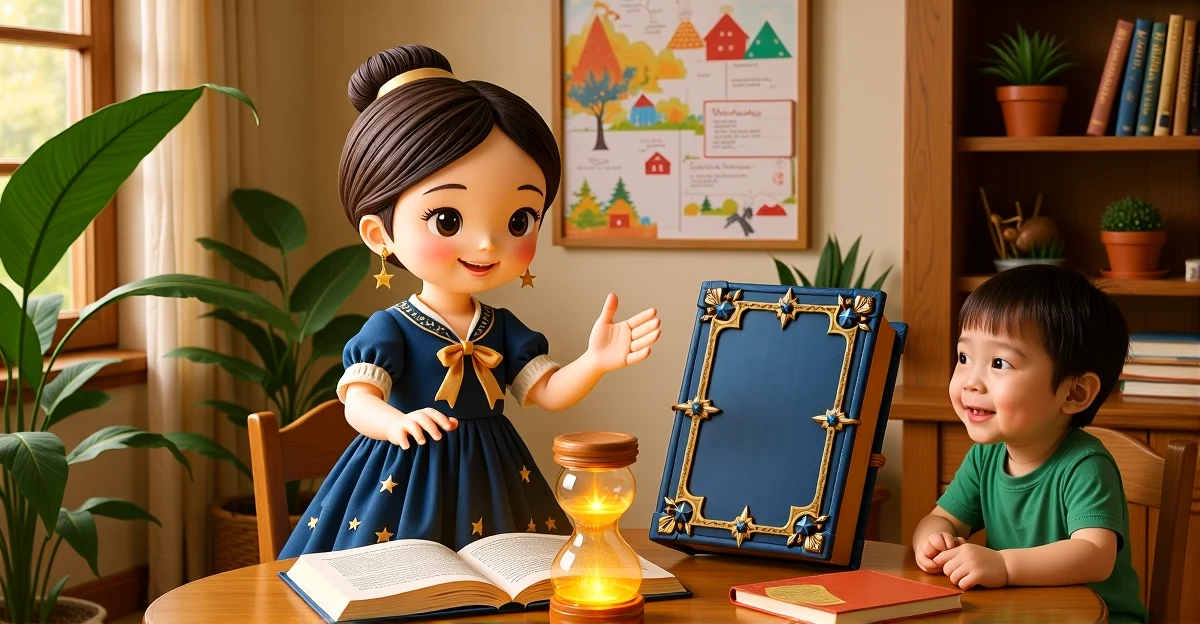
Visual supports are like bridges between the abstract world of time and the concrete world your child lives in. A sand timer is something your child can watch. They can see the sand flowing from top to bottom, and suddenly, five minutes has a shape, a movement, a visible ending.
You can use:
- Sand timers in different durations (1 minute, 5 minutes, 10 minutes)
- Visual countdown timers with colored sections that disappear
- Simple analog clocks where you point to where the big hand will be
- Timer apps designed for children with visual countdowns
The key is making time something they can SEE, not just hear about.
2. Create Picture Schedules
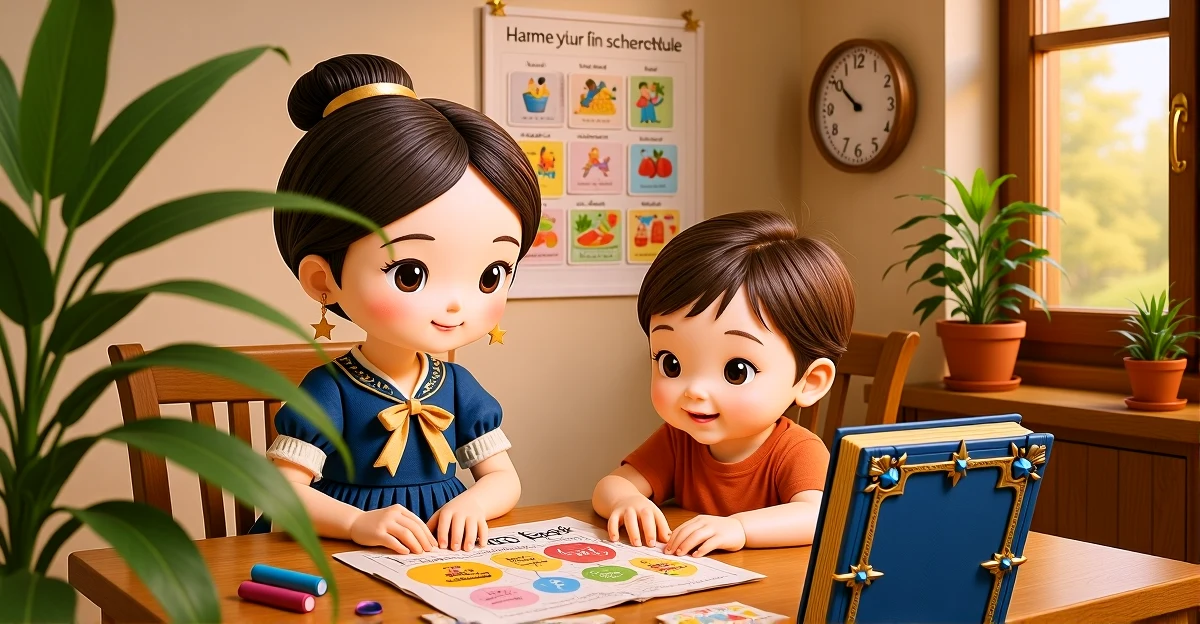
Picture schedules work the same way as visual timers. When you create a visual schedule with pictures of your daily routine—breakfast, playtime, naptime, dinner, bath, bedtime—your child can see the rhythm of the day. They can point to where they are now and where they're going next.
This gives them a sense of control and understanding that words alone cannot provide. Research from developmental organizations shows that consistent routines help preschoolers feel more in control and better able to wait, because they can anticipate what comes next.
3. Use Countdowns Before Transitions
Instead of saying "we're leaving in five minutes" and then disappearing, stay present. Say, "we're leaving in five minutes, let's set the timer together." Then give a two-minute warning, then a one-minute warning. Each warning helps your child prepare, helps their brain shift from what they're doing now to what comes next.
This isn't about being rigid or controlling. It's about honoring the fact that transitions are HARD for young children, and giving them the support they need to navigate those transitions successfully.
4. Build Predictable Daily Routines
When every night follows the same gentle pattern—dinner, bath, story, song, sleep—your child's brain starts to internalize that rhythm. They begin to feel time, even if they can't measure it yet. Familiar routines and predictable sequences help children develop temporal frameworks and time awareness.
This doesn't mean every day has to be identical. But having consistent anchors throughout the day helps children understand the flow of time in a way that abstract measurements simply can't.
5. Honor Their Unique Rhythm
Some children need more time to transition than others. Some children need more warnings, more preparation. This isn't a flaw. It's their unique rhythm, and when you honor it, you're teaching them that their needs matter, that they're worthy of patience and understanding.
Pay attention to your child's patterns. Do they need ten minutes to finish an activity, or do they do better with five minutes and more frequent check-ins? There's no one right answer. The right answer is what works for YOUR child.
Stories That Can Help
In The Book of Inara, we have beautiful stories that bring these concepts to life for your child. Stories are such powerful teachers because they show children, through characters they love, that time is something we all learn to understand, that patience is a skill we build together.
The Dream-Rhythm Marathon
Perfect for: Ages 4-5
What makes it special: Kenji and Maeva discover that a children's marathon course holds the dreams of every runner. With help from their friend Celeste, they learn to find their own dream-rhythm, their own pace. This story beautifully addresses patience and understanding that meaningful things take time.
Key lesson: When Kenji and Maeva discover their own rhythm and learn that everyone moves at their own pace, children understand something profound: waiting is natural. Taking time is okay. We all have our own rhythm, our own way of moving through the world.
Parent talking point: After reading this story, you can talk with your child about their own rhythm for different activities. Just like in the marathon, some things take longer, and that's perfectly fine. You can create a visual schedule together showing the rhythm of your day.
You're Doing Beautifully
Your child isn't being difficult when they don't understand "in ten minutes." They're being four, or five. They're being exactly who they're supposed to be at this stage of their beautiful journey. And you, my wonderful friend, you're doing beautifully too.
You're here, learning, seeking to understand your child better. That's love in action. That's what matters most.
The research consensus is clear and hopeful: preschoolers benefit tremendously from visual supports and predictable routines that make abstract time concepts concrete. Rather than expecting children to intuitively grasp time, we can support this developmental milestone through patient teaching, through visual timers, picture schedules, and consistent daily structures that help children see and feel the passage of time.
Some days will be smooth, and some days will be hard. That's the rhythm of parenting, and it's beautiful in its own way. Keep honoring your child's rhythm. Keep using those visual supports. Keep building those predictable routines. And remember, time is just another form of magic we're all learning to understand.
With love and starlight,
Inara
Related Articles
- Building Physical Confidence in Young Children: Gentle Movement Strategies for Ages 4-5
- Teaching Your 4-5 Year Old Peaceful Conflict Resolution: A Gentle Parenting Guide
- Why Your 4-Year-Old Won't Share Toys: The Developmental Truth Every Parent Needs to Know
- Building Confidence in Young Performers: A Gentle Guide for Ages 4-5
- Understanding Your Child's Impulse Control: Why Waiting is So Hard at Age 4-5
Show transcript
Hello, my wonderful friend! It's me, Inara, and I am so happy you're here today. You know, the Magic Book and I have been noticing something that so many parents are experiencing. You tell your little one, we're leaving in ten minutes, or after we finish this, we'll have lunch, and they look at you with those big eyes, completely confused. Or maybe they melt down two minutes later because they thought ten minutes meant right now. If this sounds familiar, I want you to take a deep breath and know that you are not alone, and your child is developing exactly as they should.
Time is one of the most abstract, magical concepts in the universe, and for young children, especially those between ages four and five, it's like trying to hold stardust in their hands. It shimmers, it's beautiful, but they can't quite grasp it yet. And there's a beautiful reason for this that I want to share with you today.
Dr. Meng Zhang and Dr. Judith A Hudson from Rutgers University have done wonderful research on how children learn about time. They discovered something fascinating. While preschoolers begin using time-related words like yesterday, tomorrow, and in a few minutes, their actual comprehension of these abstract concepts remains limited until around age five and a half years. Five and a half! That means your four or five year old is right in the middle of this learning journey.
Here's what's happening in that beautiful, growing brain. Young children live primarily in the present moment. Their cognitive development focuses on immediate experiences rather than future planning. When you say in ten minutes, they hear words, but those words don't connect to an actual feeling of time passing. It's like speaking a language they're just beginning to learn. They can repeat the words, but the meaning is still forming, still growing, like a seed that needs time to bloom.
The research shows that children at this age can grasp basic sequences. They understand that first we brush teeth, then we read a story, then we go to sleep. They're learning that morning comes before afternoon, and that bedtime follows dinner. These are the building blocks of time awareness, and your child is working on them every single day.
But here's where it gets tricky. Understanding that things happen in order is different from understanding how long something takes. When you say we'll leave in ten minutes, your child might understand that leaving comes after right now, but ten minutes feels like forever to them. Or it feels like right now. Because they're still learning to measure time, to feel its rhythm.
Educational experts emphasize that when children understand time, even in its simplest form, they can wait better and manage their emotions more effectively. And this is where we can help them, my friend. This is where the magic happens.
Visual supports are like bridges between the abstract world of time and the concrete world your child lives in. Think about it. Time is invisible. You can't touch it, you can't see it, you can't hold it. But a sand timer? That's something your child can watch. They can see the sand flowing from top to bottom, and suddenly, five minutes has a shape, a movement, a visible ending.
Picture schedules work the same way. When you create a visual schedule with pictures of your daily routine, breakfast, playtime, naptime, dinner, bath, bedtime, your child can see the rhythm of the day. They can point to where they are now and where they're going next. It gives them a sense of control and understanding that words alone cannot provide.
Predictable routines are another gift you can give your child. Research from developmental organizations shows that consistent routines help preschoolers feel more in control and better able to wait, because they can anticipate what comes next. When every night follows the same gentle pattern, dinner, bath, story, song, sleep, your child's brain starts to internalize that rhythm. They begin to feel time, even if they can't measure it yet.
Now, let me tell you about a story that captures this beautiful truth so perfectly. In The Book of Inara, there's a tale called The Dream-Rhythm Marathon. It's about Kenji and Maeva, two wonderful friends who discover that a children's marathon course holds the dreams of every runner. With help from their friend Celeste, they learn to find their own dream-rhythm, their own pace.
This story is so special because it teaches children that persistence and dreams work together, that progress happens step by step, not all at once. When Kenji and Maeva discover their own rhythm and learn that everyone moves at their own pace, children watching or listening understand something profound. Waiting is natural. Taking time is okay. We all have our own rhythm, our own way of moving through the world.
After you share this story with your child, you can talk about their own rhythm for different activities. Just like in the marathon, some things take longer, and that's perfectly fine. You can create a visual schedule together showing the rhythm of your day. You can use a timer and say, let's watch the sand fall together, and when it's done, we'll go. You're not just teaching time, my friend. You're teaching patience, self-regulation, and trust.
Here are some gentle, practical ways to support your child's growing time awareness. First, use countdowns before transitions. Instead of saying we're leaving in five minutes and then disappearing, stay present. Say, we're leaving in five minutes, let's set the timer together. Then give a two-minute warning, then a one-minute warning. Each warning helps your child prepare, helps their brain shift from what they're doing now to what comes next.
Second, make waiting visible. Use visual timers, sand timers, or even a simple clock where you point to where the big hand will be when it's time to go. The more your child can see time, the more they can understand it.
Third, honor their rhythm. Some children need more time to transition than others. Some children need more warnings, more preparation. This isn't a flaw, my friend. It's their unique rhythm, and when you honor it, you're teaching them that their needs matter, that they're worthy of patience and understanding.
Fourth, use stories as gentle teachers. The Dream-Rhythm Marathon and other stories in The Book of Inara show children, through characters they love, that time is something we all learn to understand, that patience is a skill we build together, that waiting doesn't mean we're forgotten or unloved.
And finally, be patient with yourself. You're learning too. You're learning your child's rhythm, their needs, their unique way of experiencing the world. Some days will be smooth, and some days will be hard. That's the rhythm of parenting, and it's beautiful in its own way.
The research consensus is clear, and it's hopeful. Preschoolers benefit tremendously from visual supports and predictable routines that make abstract time concepts concrete. Rather than expecting children to intuitively grasp time, we can support this developmental milestone through patient teaching, through visual timers, picture schedules, and consistent daily structures that help children see and feel the passage of time.
Your child isn't being difficult when they don't understand in ten minutes. They're being four, or five, or six. They're being exactly who they're supposed to be at this stage of their beautiful journey. And you, my wonderful friend, you're doing beautifully. You're here, learning, seeking to understand your child better. That's love in action.
The Magic Book and I are always here for you, with stories that help, with wisdom that supports, with love that never wavers. Find The Dream-Rhythm Marathon and so many other beautiful stories in The Book of Inara. Let's walk this journey together, one gentle step at a time, honoring your child's rhythm and your own.
Sweet dreams, and remember, time is just another form of magic we're all learning to understand. With love and starlight, Inara.