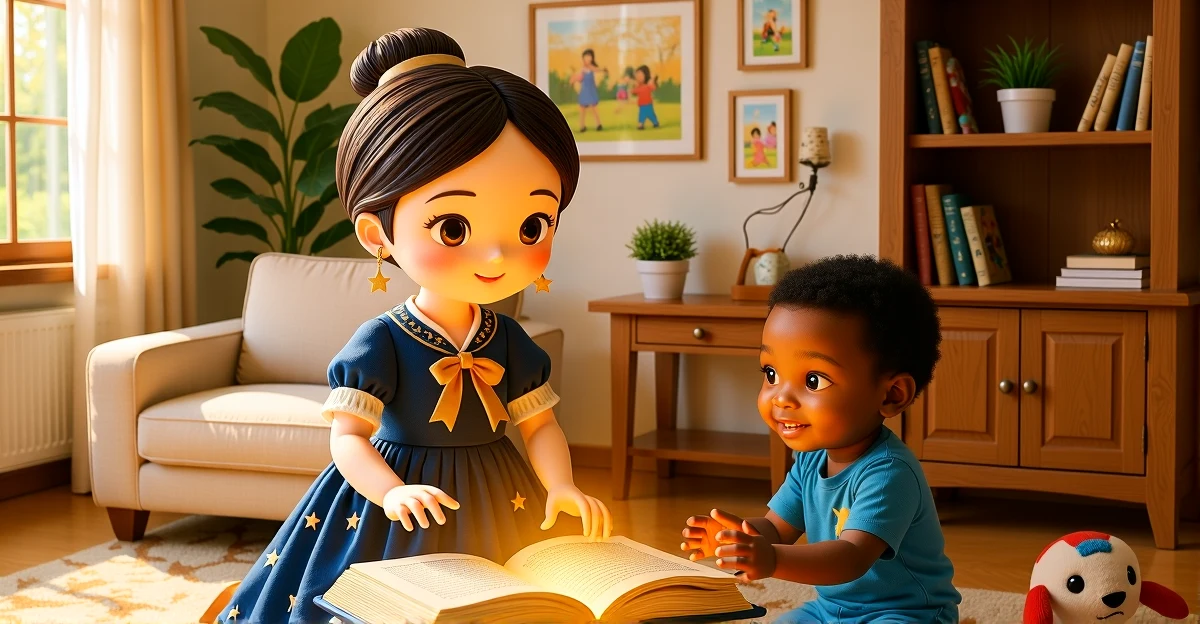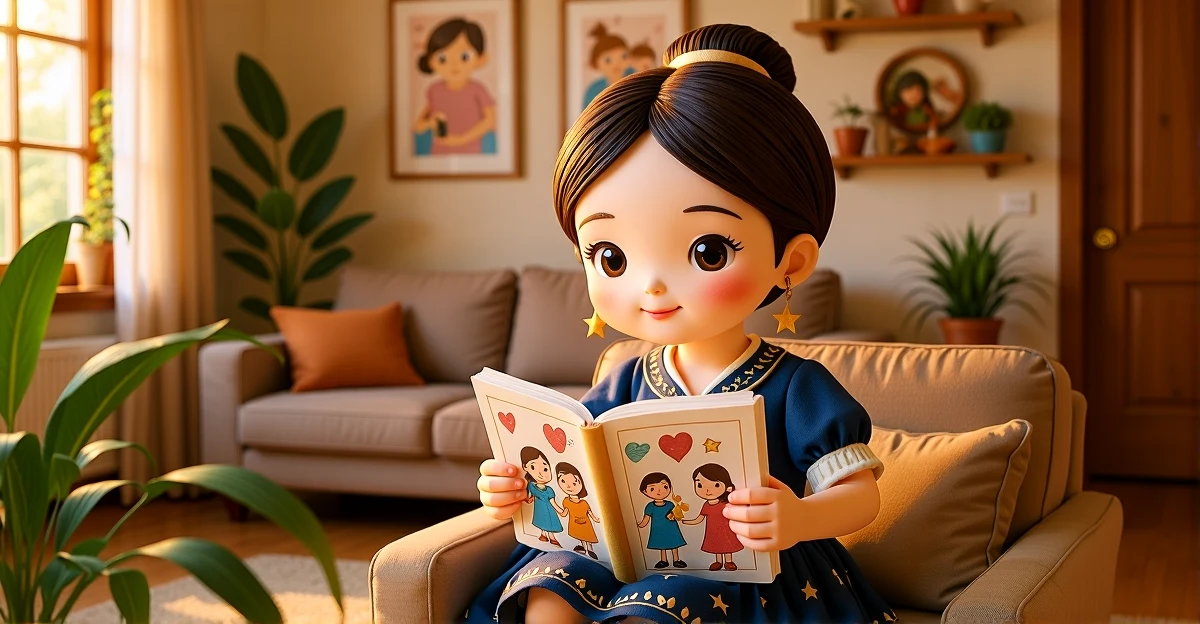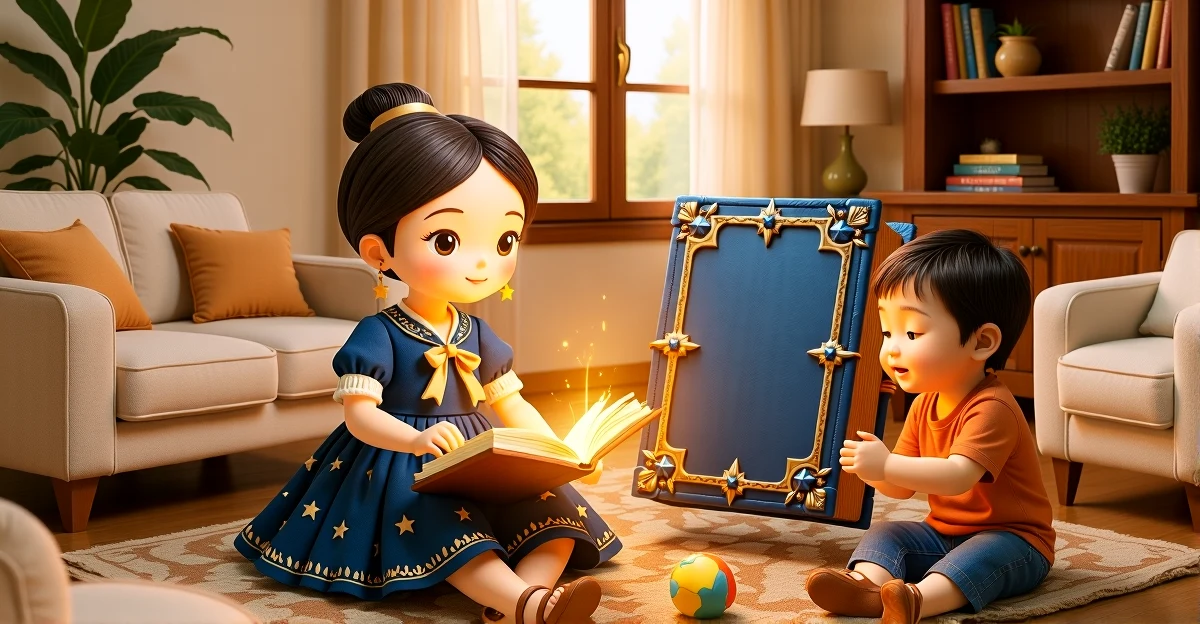

You're at the playground, and another child falls and starts crying. Your three-year-old keeps playing, seemingly oblivious to the tears just a few feet away. Or maybe you're at home, and when their sibling gets upset, your child doesn't even look up from their toys. You might be wondering: Does my child care about others? Why don't they notice when someone is hurting?
If this sounds familiar, let me share something that might bring you peace: You're not alone, and your child isn't cold or uncaring. What you're witnessing is development in action - your little one is right in the middle of one of the most beautiful and complex learning journeys of early childhood.
In this guide, I'll share the research-backed truth about how empathy develops in 3-4 year olds, why this stage looks the way it does, and most importantly, the gentle strategies that help your child's natural empathy bloom. By the end, you'll understand exactly what's happening in your child's growing brain and heart - and how to nurture this crucial skill with love and patience.
The Beautiful Truth About Empathy Development
Here's what the research shows us: Empathy isn't a single skill that children either have or don't have. It's actually THREE interconnected abilities that develop at different speeds, like seeds planted at the same time but sprouting on their own schedules.
The Three Dimensions of Empathy
Affective Empathy is the ability to FEEL what others feel. When you see someone crying and feel a tug in your own heart, that's affective empathy. For 3-4 year olds, this is just beginning to emerge. They might feel something when they see tears, but that feeling is often vague and confusing to them.
Cognitive Empathy is the ability to UNDERSTAND why someone feels the way they do. This requires perspective-taking - the capacity to step outside your own experience and imagine what's happening in someone else's mind and heart. And here's the key: This skill is still actively developing in preschoolers. Their brains are literally building the neural pathways that make perspective-taking possible.
Behavioral Empathy is knowing HOW to help when someone is upset. Even if a child feels something and understands why someone is sad, they might not know what to do about it. Should they hug? Get a grown-up? Offer a toy? This is learned through modeling and practice.
Research from UCLouvain's Psychological Sciences Research Institute found that for behavioral empathy specifically, three-year-old children showed measurably different responses than four-year-olds, demonstrating clear developmental progression even within this single year.
Why Your Child Seems Not to Notice
When your 3-4 year old doesn't react to another child's distress, it's not because they don't care. Here's what's really happening:
Their Attention is Still Developing
Young children have what researchers call "spotlight attention" - they can focus intensely on one thing, but shifting that spotlight to notice something else (like another child's emotions) requires executive function skills that are still maturing. If your child is engaged in play, their brain might literally not register the emotional cues happening around them yet.
They're Learning Their Own Feelings First
Think of emotional development like learning to read. Before children can understand stories, they need to learn letters. Before they can recognize emotions in others, they need to understand their own feelings. Your child is still building that internal emotional vocabulary - learning what "sad" feels like in their own body, what "frustrated" means, what "excited" is.
Only after they have a solid grasp of their own emotional experiences can they start recognizing those same feelings in other people.
Perspective-Taking is Genuinely Hard
The ability to understand that other people have thoughts, feelings, and experiences different from your own is called "theory of mind," and it develops gradually throughout the preschool years. At 3-4, children are just beginning to grasp that what they know isn't the same as what someone else knows, and that what they feel isn't automatically what everyone else feels.
This is cognitively complex work. Your child's brain is actively constructing these understandings through thousands of daily interactions and experiences.
What the Research Tells Us (And Why It's Hopeful)
Dr. Shauna Tominey from Oregon State University and Dr. Susan Rivers from the Yale Center for Emotional Intelligence have conducted extensive research on emotional intelligence in young children. Their findings are beautifully hopeful:
"Children with higher emotional intelligence are better able to pay attention, are more engaged in school, have more positive relationships, and are more empathic."
— Tominey & Rivers, 2017
But here's the key: Emotional intelligence isn't something children are born with fully formed. It's something we help them BUILD through responsive, emotionally attuned interactions.
Their research on the RULER approach (Recognize, Understand, Label, Express, and Regulate emotions) shows that when we teach children these five skills systematically, their empathy grows naturally as a result.
Even more encouraging, research from UCLouvain confirms that "children with empathic difficulties can be helped through intervention to prevent social problems." In other words, when children struggle with empathy at this age, it's not a fixed trait - it's a developing skill that responds beautifully to support.
Gentle Strategies That Nurture Empathy
Now that you understand what's happening developmentally, here are the research-backed strategies that actually work to help your child's empathy bloom:
1. Name Feelings Everywhere You See Them
Become a feelings narrator. When you're reading books together, pause at faces and say, "Look at their eyebrows - they're scrunched down. They look frustrated." When you're at the park, point out, "That child is smiling SO big - they look really happy about going down the slide."
When your own child experiences emotions, name them: "You look disappointed that we can't go to the park right now." "Your face is all lit up - you seem excited about this!"
You're building their emotional vocabulary and teaching them to notice emotional cues in faces, body language, and situations.
2. Model Empathy Out Loud
Let your child hear your empathic thinking. When you see someone who needs help, narrate your thought process: "Oh, that person dropped their groceries. I bet they feel frustrated. Should we help them?"
When your child is upset, model empathy for them: "I see you're really angry that your tower fell. That's so frustrating when you worked hard on something."
You're showing them what noticing and caring looks like in action.
3. Create Gentle Noticing Moments
When your child doesn't notice someone's distress, you can gently redirect their attention without scolding: "Look, your friend is crying. I wonder how they feel." Then pause and let them process.
You might ask, "What do you think would help them feel better?" This invites them to practice perspective-taking in a supportive way.
The key is curiosity, not correction. You're not saying "You should have noticed!" You're saying "Let's notice together."
4. Validate Their Own Emotions Consistently
This might seem counterintuitive, but one of the best ways to build empathy for others is to show empathy TO your child. When you consistently validate their feelings - "That really hurt your feelings," "You're so disappointed," "You feel worried about that" - you're teaching them that feelings matter and deserve attention.
Children who feel seen and understood in their own emotions develop stronger capacity to see and understand others.
5. Use Stories as Empathy Teachers
Stories are magical empathy-building tools because they let children practice perspective-taking in a safe, engaging way. When children follow a character's emotional journey, they're literally exercising their empathy muscles.
Look for stories that make emotions visible and concrete for young children.
A Story That Makes Empathy Glow
One story I absolutely love for this developmental stage is The Heart-Compass Playground. In this gentle tale, two friends named Ayli and Igar discover a magical practice arena where something wonderful happens: their hearts actually GLOW when they make kind choices. Rainbow paths appear to guide them toward friendship and understanding.
What makes this story so perfect for 3-4 year olds learning about empathy is that it makes the invisible visible. Your child can't see empathy happening in their own heart, but they CAN see Ayli and Igar's hearts glowing. They can understand that caring about others creates something beautiful inside us.
After reading this story together, you can help your child notice their own "heart-glow" moments:
- "Did you see how happy that made your friend? I bet your heart is glowing right now."
- "You noticed they were sad and you helped them feel better. That's your heart-compass working!"
- "When we care about others, it makes our hearts feel warm and glowy, just like in the story."
You're giving them concrete language and imagery for an abstract concept, making empathy something they can understand and practice.
What to Remember on Hard Days
Some days, it might feel like your child isn't making progress. They'll walk past a crying friend, or seem completely oblivious to a sibling's distress, and you'll wonder if anything is sinking in.
On those days, remember this: Empathy development isn't linear. It's not a straight line from "doesn't notice" to "always caring." It's more like a spiral - your child will show beautiful empathy one day, seem to forget it all the next day, then surprise you with even deeper caring the day after that.
This is NORMAL. This is HEALTHY. This is exactly how development works.
Research shows us that individual differences in empathy development are significant at this age. Some children's empathy blooms early and obviously. Others take more time, and that doesn't predict anything about who they'll become. What matters is the environment you're creating - one where feelings are named, validated, and honored.
The Long View: What You're Really Building
When you gently point out another child's tears, when you name your child's own feelings, when you read empathy-building stories together, you're not just teaching a skill. You're building something much bigger.
You're teaching your child that other people's feelings matter. That noticing someone's pain is important. That we have the power to help each other feel better. That caring about others makes OUR hearts feel good too.
You're raising a human who will grow up believing that empathy is valuable, that emotional awareness is a strength, that we're all connected in our feelings.
And that, wonderful parent, is some of the most important work you'll ever do.
Your Child's Empathy is Growing
Right now, even if you can't see it clearly yet, your child's capacity for empathy is expanding. Every time you name a feeling, every time you model caring, every time you gently redirect their attention to someone else's emotions, you're watering seeds that are growing beneath the surface.
Some children's empathy blooms early and obviously, like spring flowers. Others take more time, like trees that grow slowly but strong. Both are beautiful. Both are exactly right.
What you're seeing - or not seeing - at age 3 or 4 is just the beginning of a lifelong journey. And you're giving your child exactly what they need: patient guidance, emotional vocabulary, and a safe space to learn that feelings - theirs and others' - matter.
Keep going, wonderful parent. Keep naming those feelings. Keep modeling that care. Keep sharing those stories. Your child's empathy is blooming, one gentle moment at a time.
With love and starlight,
Inara
Research Sources
- Simon, P., & Nader-Grosbois, N. (2023). Empathy in Preschoolers: Exploring Profiles and Age- and Gender-Related Differences. UCLouvain Psychological Sciences Research Institute. https://pmc.ncbi.nlm.nih.gov/articles/PMC10741930/
- Tominey, S. L., & Rivers, S. E. (2017). Teaching Emotional Intelligence in Early Childhood. Young Children, National Association for the Education of Young Children. https://www.naeyc.org/resources/pubs/yc/mar2017/teaching-emotional-intelligence
- Bulgarelli, C., & Jones, E. J. H. (2023). The typical and atypical development of empathy: How big is the gap from lab to field? JCPP Advances. https://pmc.ncbi.nlm.nih.gov/articles/PMC10241450/
Related Articles
- Understanding Your Child's Social Development: Why Playing Alone is Normal (Ages 3-4)
- Teaching Your Preschooler to Celebrate Others' Success: A Gentle Guide
- Understanding Your Child's Rough Play: A Gentle Guide to Teaching Empathy
- How Young Children Learn Empathy and Kindness: A Gentle Guide for Parents
- Teaching Gentle Touch: Understanding Your Child's Tight Hugs (Ages 3-4)
Show transcript
Hello, wonderful parent. I see you. I see you watching your little one play alongside other children, and you notice something that makes your heart wonder. When another child falls and cries, your child keeps playing. When a friend looks sad, your child doesn't seem to notice. And you might be thinking, does my child care about others? Let me share something that might bring you peace. What you're seeing is not a lack of caring. It's development in action. Your three or four year old is right in the middle of one of the most beautiful learning journeys - they're learning to see the world through someone else's eyes. And that skill? It takes time to bloom. Research from child development experts shows us something wonderful. Empathy has three parts, like three seeds growing at different speeds. There's affective empathy, feeling what others feel. There's cognitive empathy, understanding why someone feels that way. And there's behavioral empathy, knowing how to help. For your little one, affective empathy is just beginning to sprout. They might feel something when they see tears, but connecting those feelings to what's happening in someone else's heart? That's cognitive empathy, and it requires a skill called perspective-taking that's still developing in their growing brain. Think of it this way. Your child is learning to notice their own feelings first. When they feel happy, sad, or frustrated, they're building an internal library of emotions. Only after they understand their own feelings can they start recognizing those same feelings in others. It's like learning to read. First you learn letters, then words, then sentences, then stories. Your child is still learning the letters of empathy. And here's what the research tells us that I find so hopeful. Dr. Shauna Tominey and Dr. Susan Rivers from the Yale Center for Emotional Intelligence found that children with higher emotional intelligence are better able to pay attention, have more positive relationships, and yes, are more empathic. But emotional intelligence isn't something children are born with fully formed. It's something we help them build, one gentle moment at a time. So what helps? Three beautiful things. First, name feelings everywhere. When you see a character in a book looking sad, pause and say, look at their face, they look sad. I wonder what happened. When your child is upset, name it. You look frustrated. That tower kept falling down. You're teaching them the vocabulary of emotions. Second, model empathy yourself. When you see someone who needs help, narrate your thinking out loud. Oh, that person dropped their groceries. I bet they feel worried. Should we help them? You're showing your child what noticing and caring looks like. Third, and this is where the magic happens, share stories that make empathy visible. There's a story I love called The Heart-Compass Playground. In this story, two friends named Ayli and Igar discover a magical practice arena where their hearts actually glow when they make kind choices. Rainbow paths appear to guide them toward friendship and understanding. What I love about this story is that it makes the invisible visible. Your child can't see empathy happening in their own heart, but they can see Ayli and Igar's hearts glowing. They can understand that caring about others creates something beautiful inside us. After you read this story together, you can help your child notice their own heart-glow moments. When they share a toy, you might say, did you see how happy that made your friend? I bet your heart is glowing right now. When they comfort someone, you can say, you noticed they were sad and you helped them feel better. That's your heart-compass working. You're making empathy tangible. You're giving them language for something they're just beginning to feel. And here's what I want you to know, wonderful parent. Your child's empathy is growing. Every single day, their capacity to notice, understand, and care about others is expanding. Some children's empathy blooms early and obviously. Others take more time, and that's completely normal. What matters is that you're here, learning how to nurture this beautiful skill. You're not trying to fix something broken. You're watering a seed that's already growing. The research is clear. Children whose parents respond to their emotions with warmth and validation, children who hear feelings named and validated, children who see empathy modeled, they develop stronger empathic skills. And that's exactly what you're doing. So the next time you notice your child playing while another child cries, take a gentle breath. This is not coldness. This is a three or four year old brain still learning to shift attention from their own experience to someone else's. And you can help. You can gently say, look, your friend is crying. I wonder how they feel. You're not scolding. You're teaching. You're pointing out something their developing brain might not notice on its own yet. You're building that bridge between their world and someone else's world. And one day, maybe tomorrow, maybe next month, maybe next year, you'll see it. You'll see your child notice someone's tears without prompting. You'll see them offer a toy to a sad friend. You'll see their empathy blooming. And you'll know that all those gentle moments of teaching, all those story times, all that patient naming of feelings, it was all growing something beautiful. Your child is learning to care. They're learning to notice. They're learning that other people have feelings just as real and important as their own. And with your gentle guidance, they're learning that caring about others makes their own heart glow. The Magic Book and I, we believe in your child's growing heart. We believe in your patient, loving guidance. And we're here, with stories that help make the invisible visible, the abstract concrete, the developing skill something your child can understand and practice. You're doing beautifully, wonderful parent. Keep naming those feelings. Keep modeling that care. Keep sharing those stories. Your child's empathy is blooming, one gentle moment at a time. With love and starlight, Inara.