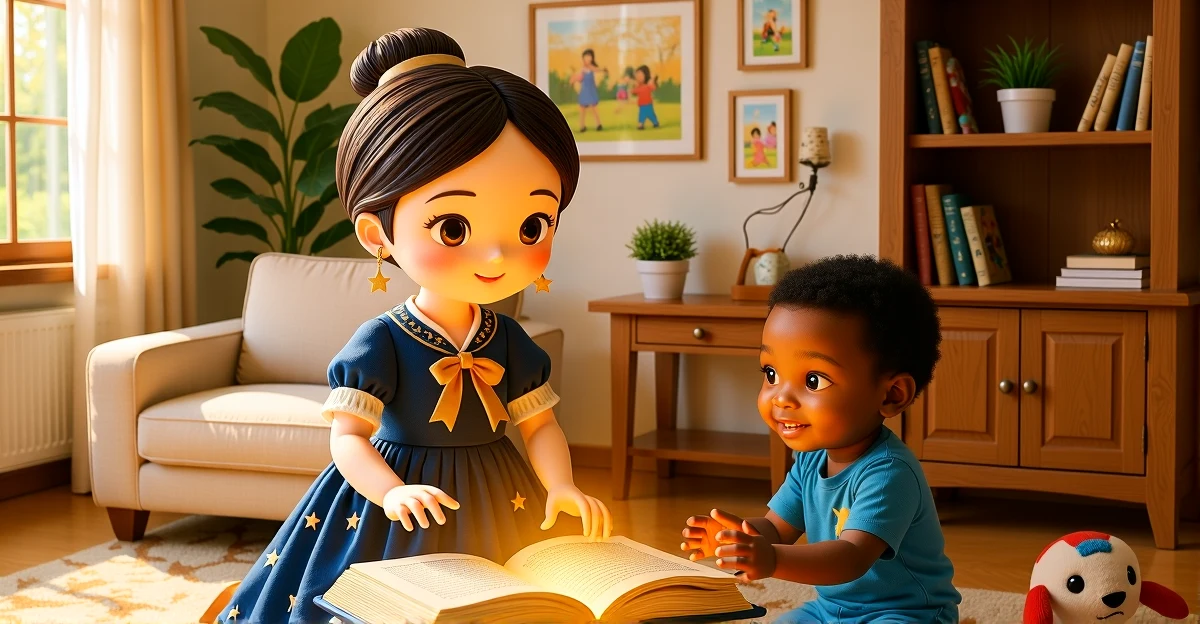

I see you, dear parent. Maybe you have watched your little one stop in the middle of a walk to examine a ladybug, their eyes wide with wonder. Or perhaps they have asked you, with genuine concern in their voice, why a flower is drooping. These moments are not just sweet—they are profound. They are the very foundation of environmental awareness, and you, by honoring these moments, are planting seeds that will grow for a lifetime.
You are not alone in wondering how to nurture your child connection to our beautiful planet. More and more parents are asking how they can help their young children develop a caring relationship with nature, with the living world around us. And I want to tell you something that might surprise you: if you have a three or four-year-old, you are in the MOST magical window for nurturing this kind of awareness.
In this post, we will explore why this age is so perfect for environmental education, what the research tells us, and most importantly, how you can support your child natural curiosity in simple, joyful ways. Plus, I will share a beautiful story from The Book of Inara that brings these concepts to life for your child.
Why Ages 3-4 Are Perfect for Environmental Awareness
Here is the beautiful truth: your three or four-year-old is developmentally primed for environmental awareness. This is not about teaching them complex concepts like climate change or pollution. At this age, environmental awareness is about something much more fundamental and much more powerful—connection.
During these years, your child is developing the capacity for empathy that extends beyond people to include living things and natural spaces. They are naturally curious about the world around them. They want to touch, observe, and understand. And their brains are making connections at an incredible rate, forming neural pathways that will influence how they see and interact with the world for the rest of their lives.
The Developmental Magic of This Age
At ages three and four, children are:
- Developing empathy: They are learning to understand that other beings have feelings and needs, and this empathy can extend to plants, animals, and the natural world.
- Learning cause and effect: When they water a plant and see it perk up, they are making powerful connections about how their actions matter.
- Building their sense of self: Understanding that they can be helpers, that they can make a positive difference, becomes part of their identity.
- Absorbing values: The attitudes you model about nature—whether you stop to observe a butterfly or rush past it—become their attitudes.
This is not just theory. This is backed by research from organizations like the Children and Nature Network and the National Association for the Education of Young Children. And it is SO hopeful.
What Research Tells Us About Early Environmental Awareness
Let me share what the research tells us, because it is truly beautiful. The Children and Nature Network has studied this extensively, and they have found that positive experiences in nature during early childhood lead to increased connection to nature, which then leads to increased environmental responsibility. It is a clear pathway, my friend. The wonder your child feels today becomes the care they show tomorrow.
Positive experiences in nature can lead to increased connection to nature which can lead to increased environmental responsibility.
— Children & Nature Network, Research Digest: Pathways to Environmental Stewardship
And here is something even more beautiful. Research from early childhood education experts shows us that environmental education and social-emotional learning actually reinforce each other. When your child learns to care for a plant, they are not just learning about plants. They are developing empathy. They are learning responsibility. They are discovering that their actions matter, that they can help living things thrive.
The SEED Framework, which integrates early childhood education with environmental education, emphasizes that this integration addresses the interrelated nature of child development. When you nurture your child connection to nature, you are supporting their emotional development, their cognitive development, their social development. Everything is connected, just like in nature itself.
The Key: Connection, Not Lectures
The National Association for the Education of Young Children reminds us that young children learn through active exploration and meaningful experiences. Not lectures. Not abstract concepts. But hands-on, sensory-rich experiences that engage their natural curiosity.
And that is exactly what environmental awareness looks like at ages three and four. It is touching soil. It is watering plants. It is watching butterflies. It is gentle, joyful, wonder-filled exploration.
A Story That Can Help
In The Book of Inara, we have a beautiful story that brings environmental awareness to life in a way that is perfect for ages three and four:
The Gentle Garden of Griffin Castle
Perfect for: Ages 2-3 (and wonderful for 3-4 as well!)
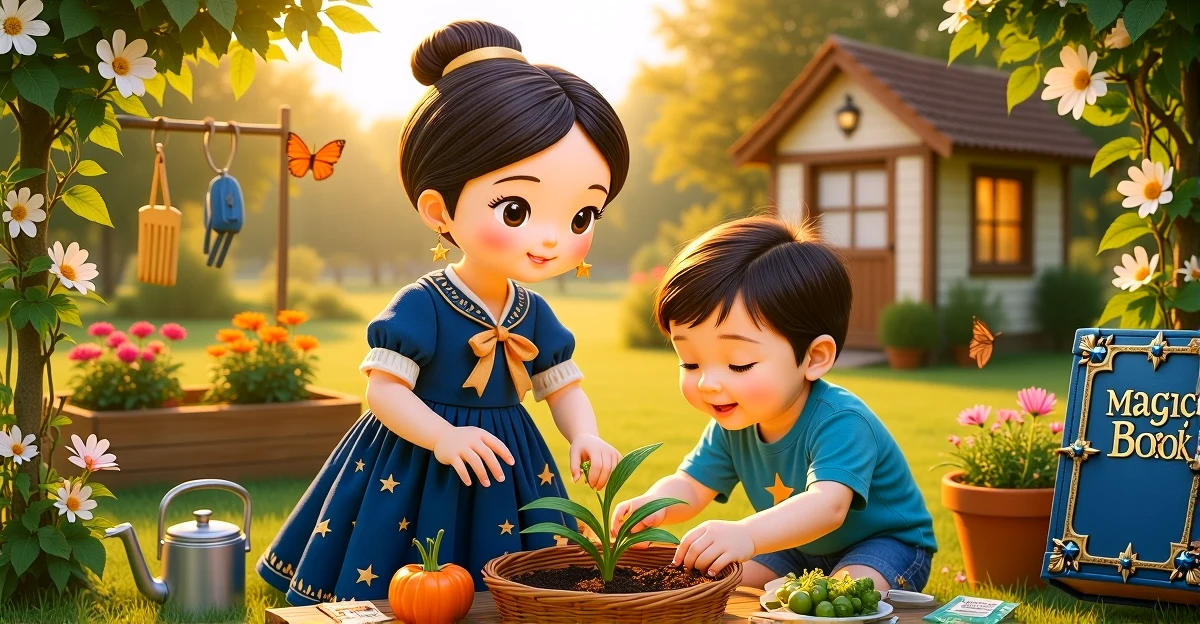
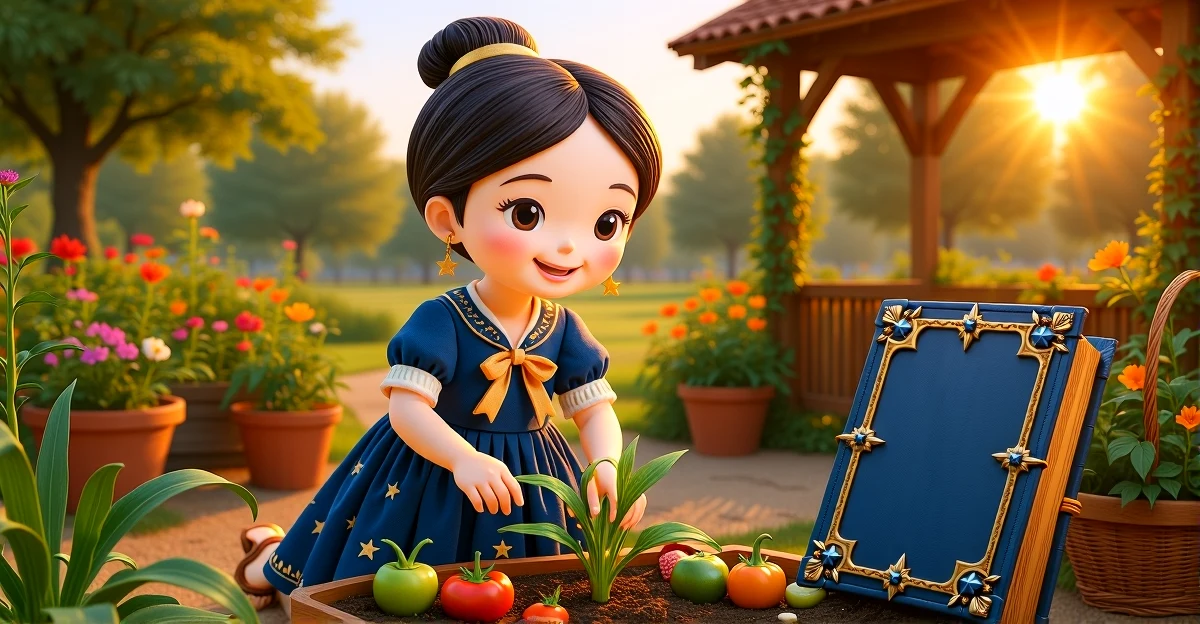
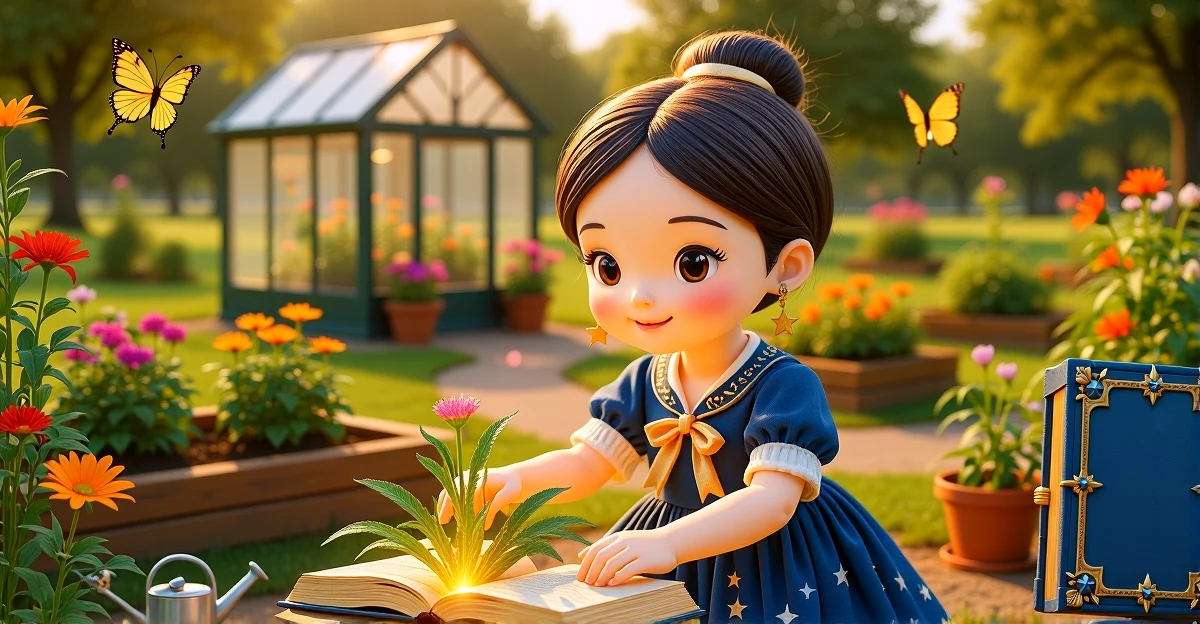
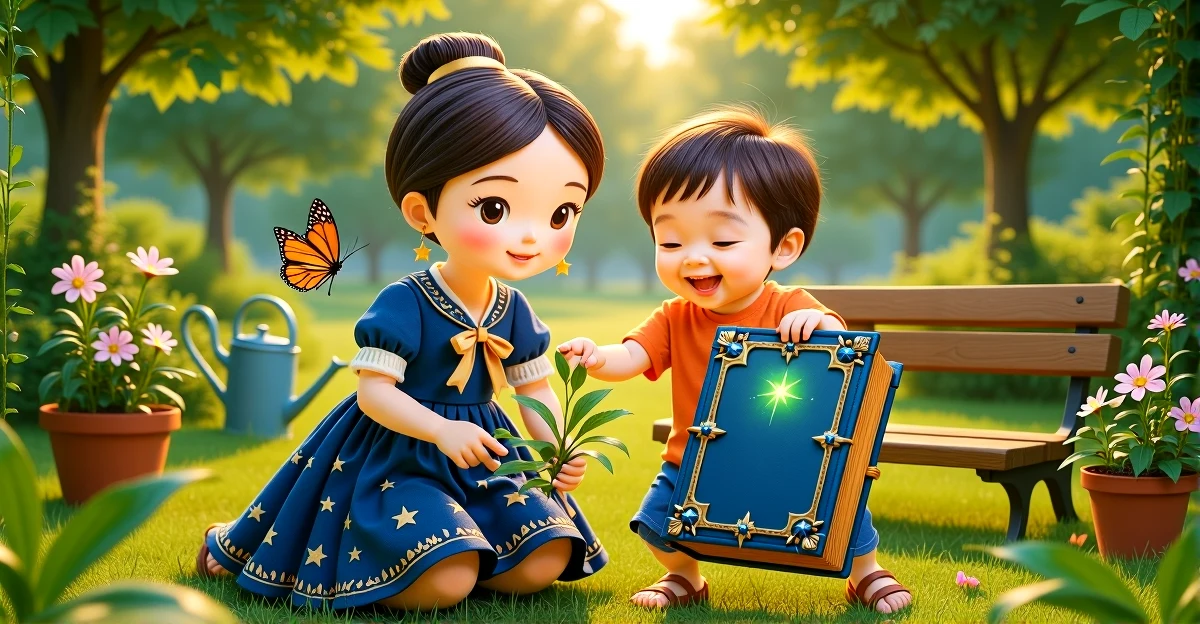
What makes it special: In this story, Anya and Noah discover a drooping plant in a magical garden. With their grandmother gentle guidance, they learn that plants need water, sunlight, and care—just like quiet friends who grow slowly toward the light. What I love about this story is how it makes the abstract concrete. Your child sees Anya and Noah checking the soil, discovering it is dry, and understanding that the plant is thirsty. They see the plant respond to care, perking up when it gets what it needs.
Key lesson: Plants are living beings who communicate their needs, and we can learn to understand and respond to those needs with gentle care.
After reading: You might create your own little ritual. Maybe you and your child become the plant helpers in your home. You check the soil together. You water together. You talk to your plants, thanking them for growing and making your home beautiful. This is not just cute—this is environmental awareness in action.
You Are Doing Beautifully
Here is what I hope you will take away from our time together today. Your three or four-year-old natural curiosity about the world is not just a phase. It is a developmental gift. When you honor that curiosity, when you slow down to observe a caterpillar or care for a plant together, you are teaching your child that the natural world matters. That living things deserve our gentle care. That we are all connected.
And these lessons, learned through joy and wonder rather than fear or pressure, become part of who your child is. They become the foundation for a lifetime of environmental care and responsibility. Not because they were lectured, but because they experienced the beauty of connection. Because they felt the satisfaction of helping something grow. Because they learned that they belong to this beautiful, living world.
The Magic Book whispers this wisdom to me often: The seeds we plant in childhood, both literal and metaphorical, grow in ways we cannot always predict. But when those seeds are planted with love, with patience, with gentle care, they grow strong and true.
So keep honoring those moments of wonder. Keep slowing down when your child wants to watch a bug. Keep inviting them to help care for living things. Keep reading stories that show children being gentle with nature. You are doing something SO important. You are raising a child who knows they are part of something larger, something beautiful, something worth protecting.
The Book of Inara is here to support you on this journey. We have stories that show children caring for plants, being gentle with animals, discovering the wonder of the natural world. Stories that make these lessons feel magical and meaningful. Because that is what they are.
With love and starlight, Inara
Related Articles
- Why Your Child Doesn't Understand Consequences Yet (And How to Help)
- Nurturing Environmental Awareness in Young Children: A Guide for Parents of 4-5 Year Olds
- Why Your Child Resists Helping with Tasks (And How to Build Cooperation)
- Teaching Time Management to Preschoolers: Visual Schedules That Work
- Nurturing Helpfulness in Young Children: A Gentle Parenting Guide
Show transcript
Hello, my wonderful friend! It's me, Inara, and I am so happy you're here today. You know, the Magic Book and I have been noticing something truly beautiful. More and more parents are asking how they can help their young children develop a caring relationship with our planet, with nature, with the living world around us. And I want to tell you something that might surprise you. If you have a three or four-year-old, you are in the MOST magical window for nurturing this kind of awareness.
I see you, dear parent. Maybe you've watched your little one stop to examine a ladybug on the sidewalk, their eyes wide with wonder. Or perhaps they've asked you why a flower is drooping, genuine concern in their voice. These moments, these beautiful moments of curiosity and care, are not just sweet. They are the very foundation of environmental awareness. And you, by honoring these moments, are planting seeds that will grow for a lifetime.
Let me share what the research tells us, because it's so hopeful. The Children and Nature Network has studied this extensively, and they've found that positive experiences in nature during early childhood lead to increased connection to nature, which then leads to increased environmental responsibility. It's a clear pathway, my friend. The wonder your child feels today becomes the care they show tomorrow.
And here's something even more beautiful. Research from early childhood education experts shows us that environmental education and social-emotional learning actually reinforce each other. When your child learns to care for a plant, they're not just learning about plants. They're developing empathy. They're learning responsibility. They're discovering that their actions matter, that they can help living things thrive. This is holistic development at its finest.
The National Association for the Education of Young Children reminds us that young children learn through active exploration and meaningful experiences. Not lectures. Not abstract concepts. But hands-on, sensory-rich experiences that engage their natural curiosity. And that's exactly what environmental awareness looks like at ages three and four. It's touching soil. It's watering plants. It's watching butterflies. It's gentle, joyful, wonder-filled exploration.
Now, I want to address something important. You might be wondering, is my child too young for this? Should I be teaching them about climate change or pollution? And my answer is this. At ages three and four, environmental awareness is not about fear or overwhelming information. It's about connection. It's about helping your child see that plants are living friends who need water and sunlight. That animals have feelings and needs. That we can be gentle helpers in the natural world.
Think about it this way. When your child learns that a plant needs water to be happy and healthy, they're learning cause and effect. They're learning that living things have needs. They're learning that they have the power to help. These are profound lessons, my friend, and they're developmentally perfect for this age.
So what does this look like in everyday life? It can be so simple. It might be letting your child help water a houseplant and checking the soil together to see if it's thirsty. It might be taking a slow walk where you stop to observe insects and talk about what they might be doing. It might be planting seeds together and watching them grow, day by day. It might be talking about how we can be gentle with flowers, touching them softly so we don't hurt them.
The key is to follow your child's natural curiosity. When they stop to watch an ant, stop with them. Get down on their level. Wonder aloud together. Where do you think that ant is going? What do you think it's carrying? Look how hard it's working! This kind of gentle observation teaches your child that the natural world is worthy of attention, of respect, of care.
And here's where stories can be such beautiful helpers. In The Book of Inara, we have a story called The Gentle Garden of Griffin Castle. In this story, Anya and Noah discover a drooping plant in a magical garden. With their grandmother's gentle guidance, they learn that plants need water, sunlight, and care, just like quiet friends who grow slowly toward the light.
What I love about this story is how it makes the abstract concrete. Your child sees Anya and Noah checking the soil, discovering it's dry, and understanding that the plant is thirsty. They see the plant respond to care, perking up when it gets what it needs. This teaches children that plants are living beings who communicate their needs, and that we can learn to understand and respond to those needs.
After reading this story, you might create your own little ritual. Maybe you and your child become the plant helpers in your home. You check the soil together. You water together. You talk to your plants, thanking them for growing and making your home beautiful. This isn't just cute, my friend. This is environmental awareness in action. This is your child learning that they are connected to the living world, and that their care makes a difference.
The research is so clear on this. The SEED Framework, which integrates early childhood education with environmental education, emphasizes that this integration addresses the interrelated nature of child development. When you nurture your child's connection to nature, you're supporting their emotional development, their cognitive development, their social development. Everything is connected, just like in nature itself.
And I want you to know something important. You don't need a big backyard or access to wilderness to do this. A single houseplant can be a teacher. A patch of grass with dandelions can be a classroom. A bird feeder outside a window can be a daily source of wonder. Environmental awareness at this age is not about the scale of the experience. It's about the quality of attention you bring to it.
Here's what I hope you'll take away from our time together today. Your three or four-year-old's natural curiosity about the world is not just a phase. It's a developmental gift. When you honor that curiosity, when you slow down to observe a caterpillar or care for a plant together, you are teaching your child that the natural world matters. That living things deserve our gentle care. That we are all connected.
And these lessons, learned through joy and wonder rather than fear or pressure, become part of who your child is. They become the foundation for a lifetime of environmental care and responsibility. Not because they were lectured, but because they experienced the beauty of connection. Because they felt the satisfaction of helping something grow. Because they learned that they belong to this beautiful, living world.
The Magic Book whispers this wisdom to me often. The seeds we plant in childhood, both literal and metaphorical, grow in ways we cannot always predict. But when those seeds are planted with love, with patience, with gentle care, they grow strong and true. Your child is learning to be a gentle helper in the world. And you, dear parent, are their first and most important teacher.
So keep honoring those moments of wonder. Keep slowing down when your child wants to watch a bug. Keep inviting them to help care for living things. Keep reading stories that show children being gentle with nature. You are doing something so important, my friend. You are raising a child who knows they are part of something larger, something beautiful, something worth protecting.
The Book of Inara is here to support you on this journey. We have stories that show children caring for plants, being gentle with animals, discovering the wonder of the natural world. Stories that make these lessons feel magical and meaningful. Because that's what they are.
Thank you for being here today. Thank you for caring about your child's relationship with our beautiful planet. The Magic Book and I are always here for you, cheering you on, believing in you. You are doing beautifully. With love and starlight, Inara.