
Hello, my wonderful friend! Has your five or six year old recently asked you a question that made your heart absolutely glow? Something like, "How can I help make the world better?" or "What can I do to help people who are sad?" If so, I want you to take a deep breath and celebrate this beautiful moment. You're witnessing something truly SPECIAL.
The fact that your child is thinking about their positive impact on the world, wondering how they can contribute, asking how they can help others, this is not just sweet. It's actually a sign of wonderful, healthy development. And the fact that you're here, seeking to understand how to nurture this emerging sense of purpose, tells me everything I need to know about the kind of parent you are. You're thoughtful, you're intentional, and you're raising a child who is going to make this world more beautiful.
In this post, I'm going to share what the Magic Book and child development research have taught me about this remarkable developmental window your child is entering. We'll explore why ages five and six are so special for purpose development, what the research tells us about prosocial behavior, and most importantly, how you can nurture your child's emerging sense of purpose with warmth, encouragement, and practical strategies that actually work.
The Beautiful Developmental Window of Ages 5-6
Let me share something WONDERFUL with you. Ages five and six represent this magical window where children naturally begin to think about their impact beyond themselves. This is when they start discovering something profound: their actions matter, they can help, they can make things better.
During this stage, children are developing what psychologists call initiative and purpose. They're learning that their actions can make a positive difference in the world around them. They're beginning to understand that the future exists, and that their choices today can shape tomorrow. This is not about pressuring young children with adult concepts of legacy. It's about nurturing their natural desire to help, create, and make their corner of the world a little brighter.
The Magic Book whispers this truth to me all the time: when we support young children's natural desire to contribute, when we help them see the positive impact of their actions, we're not just teaching them to be kind. We're building the foundation for a lifetime of purposeful, meaningful engagement with the world.
What This Looks Like in Real Life
You might notice your child:
- Asking how they can help when they see someone struggling
- Wanting to share their toys or snacks with friends who don't have any
- Expressing concern about people or animals who are hurting
- Coming up with ideas for making things better in their classroom or neighborhood
- Asking questions about fairness, kindness, and helping others
- Showing pride when they've done something helpful or kind
All of these behaviors are signs that your child's sense of purpose is emerging beautifully. And here's what's SO important to understand: this is exactly what should be happening at this age.
What Research Tells Us About Purpose and Prosocial Behavior
Now, let me share some research that I find absolutely fascinating. Dr. Damon Jones from Penn State's Bennett Pierce Prevention Research Center conducted this beautiful study that followed children for nearly twenty years. And you know what they found? The social and emotional skills that children develop during the kindergarten years, things like helping others, sharing, and contributing to their communities, these skills became powerful predictors of lifelong success and fulfillment.
Children who demonstrated better prosocial behavior during kindergarten were twice as likely to graduate from college and almost fifty percent more likely to have meaningful employment by age twenty five.
— Dr. Damon Jones, Penn State University
But here's what I love MOST about this research. It's not just about success in the traditional sense. It's about purpose. It's about contribution. It's about living a life that feels meaningful. When children develop these prosocial behaviors early, they're not just learning to be nice. They're discovering that they have the power to make a difference, and that discovery shapes everything that comes after.
The National Association for the Education of Young Children tells us something equally beautiful: children's motivation to learn increases when their learning environment fosters their sense of belonging, purpose, and agency. Agency means your child feels like they have the power to make choices and take actions that matter. When you give your child opportunities to contribute, when you acknowledge their kindness, when you help them see the positive impact of their actions, you're building that sense of agency.
And here's the beautiful truth, my friend: this isn't about creating pressure or expectations. Research shows that children at this age are READY for this. They're naturally curious about their impact. They WANT to help. They're discovering that they can make people feel happy or sad, that they can help or hurt, that they can make things better or worse. That's the foundation. That's where legacy thinking begins.
Five Gentle Ways to Nurture Your Child's Sense of Purpose
So how do we support this beautiful emerging sense of purpose? Let me share some WONDERFUL strategies that the Magic Book and the research both agree on.
1. Help Your Child See the Ripples of Their Kindness
You know how when you drop a pebble in a pond, those ripples spread out in all directions? That's exactly what happens with acts of kindness. When your child helps a friend, shares a toy, or shows compassion to someone who's sad, those actions create ripples that extend far beyond that moment.
Talk with your child about this. Say things like, "When you helped your friend find their lost toy, you made their whole day brighter. And you know what? They probably went home and were kinder to their little brother because they felt so happy. That's how kindness works, it spreads like starlight."
Make it visual. Draw ripples together. Tell stories about how one kind act led to another. Help your child see that their actions don't just disappear, they create waves of goodness that keep spreading.
2. Give Your Child Meaningful Opportunities to Contribute
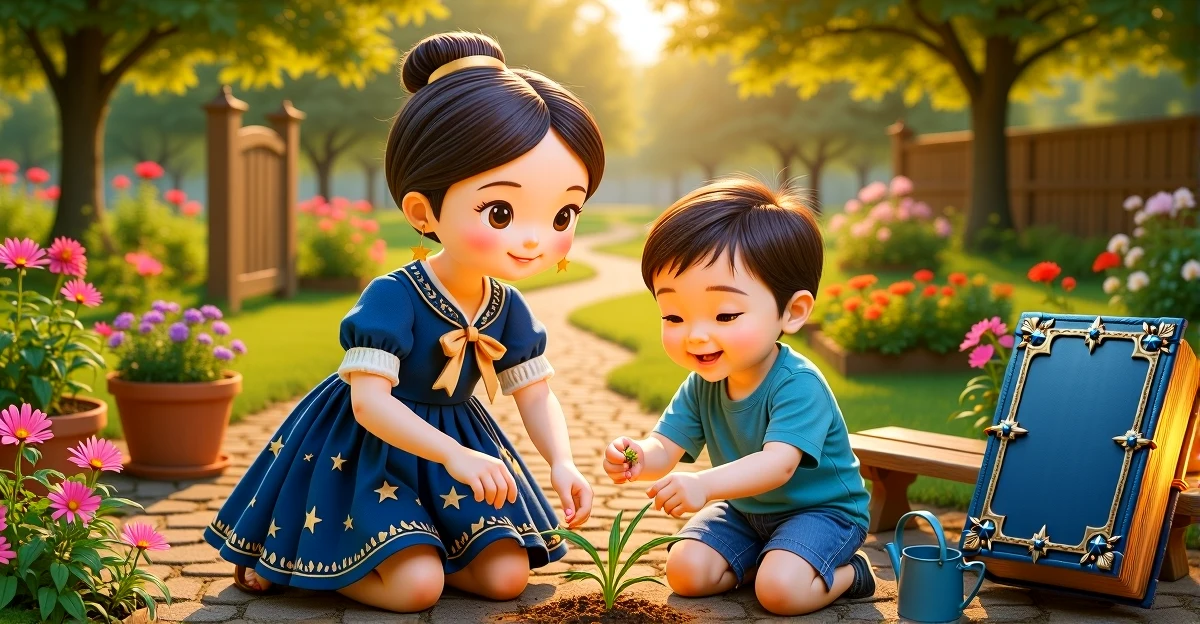
And I'm not talking about chores, although those are important too. I'm talking about real contributions where your child can see that their actions make a genuine difference. Maybe they help you bake cookies for a neighbor who's been sick. Maybe they draw a picture to cheer up grandma. Maybe they help you plant flowers in the community garden.
The key is that these contributions are real, not pretend. Your child's developing brain can tell the difference between busy work and meaningful contribution, and meaningful contribution is what builds that sense of purpose.
Some beautiful ideas:
- Let them choose a toy to donate and talk about the child who will receive it
- Have them help prepare a meal for someone who needs support
- Include them in caring for a pet or plant, emphasizing how their care helps something grow
- Let them be the "kindness helper" who notices when someone needs support
- Create a family tradition of doing one kind thing for the community each month
3. Talk About the Future in Hopeful, Possibility-Filled Ways
Five and six year olds are just beginning to understand that the future exists, that their actions today can shape tomorrow. You can nurture this by asking questions like, "What kind of world do you want to help create?" or "What makes you feel happy when you help others?" or "If you could make one thing better in our neighborhood, what would it be?"
These conversations don't need to be heavy or serious. Keep them light, keep them playful, but let your child's imagination soar. When they share their ideas, celebrate them. Say things like, "That's such a beautiful idea! How do you think we could start making that happen?"
4. Celebrate the Small Acts
You don't need to wait for your child to do something grand to acknowledge their positive impact. When they hold the door for someone, when they share their snack, when they comfort a crying friend, these are the moments that matter. These are the seeds of legacy.
Say things like, "You know what I noticed? When you shared your crayons with your friend, their whole face lit up. You made their day more colorful, literally and figuratively. That's the kind of person you are, someone who makes the world more beautiful."
The Magic Book has taught me that it's these small, everyday acts of kindness that change the world. Not the big, dramatic gestures. The quiet moments of compassion. The gentle choices to help. The simple acts of sharing. THESE are what build a legacy of love.
5. Model Purposeful Living Yourself
Your child is watching you, learning from you, absorbing your values like a little sponge soaking up starlight. When you talk about why you help others, when you explain your own desire to make a difference, when you show them that contributing to the world brings you joy, you're teaching them that purposeful living is not just possible, it's beautiful.
Share your own "helping moments" with your child. Say things like, "I helped my coworker today because they were feeling overwhelmed, and it made me feel so good to support them." Or "I picked up that litter in the park because I want our community to be beautiful for everyone."
You don't need to be perfect. You just need to be authentic. Show your child that making a difference is part of everyday life, not something reserved for special occasions.
Stories That Can Help
In The Book of Inara, we have beautiful stories that bring these concepts to life for your child. Let me tell you about one that's PERFECT for this stage:
The Mushroom Memory Keepers
Perfect for: Ages 6-7 (also wonderful for advanced 5-6 year olds)
What makes it special: This story directly addresses legacy thinking and future impact by showing how small acts of kindness grow into world-changing movements. Theo and Miles discover mushrooms that hold memories of kindness that transformed the world, perfectly aligning with your child's emerging understanding of purpose and contribution.
Key lesson: Every kind action you take today is like planting a seed that will grow into something beautiful in the future. Your small acts of kindness create ripples that extend far beyond what you can see.
How to use it: After reading this story with your child, talk about the kind things they do each day. Help them see that those actions are like the mushrooms in the story, holding memories that will grow and spread. You can even create your own family tradition of sharing one kind thing each person did that day at dinner time.
The Magic Book is filled with stories like this, stories that help children understand their power to make the world more loving, more kind, more beautiful. Each story is crafted with care to support your child's development while sparking their imagination and nurturing their heart.
You're Doing Beautifully
My wonderful friend, I want you to know something. The fact that you're here, reading this, asking these questions, seeking to understand how to nurture your child's sense of purpose, it means you're already doing this beautifully. You're the kind of parent who sees the magic in your child's questions. You're the kind of parent who wants to support their growth with warmth and intention. You're the kind of parent who is raising a child who will make this world more beautiful.
Your child is in this remarkable developmental window where they're discovering that they can make a difference. Support that discovery with warmth and encouragement. Give them opportunities to contribute. Help them see the ripples of their kindness. Read stories that show them how small acts grow into lasting legacies. And most importantly, trust that you're building something profound.
You're not just teaching your child to be kind. You're showing them that their life can have meaning, that their actions matter, that they have the power to create ripples of goodness that will spread like starlight across the world. And THAT, my friend, is one of the most beautiful gifts you can give.
The Magic Book and I are always here for you, cheering you on every step of the way. Until our next adventure together, with love and starlight, Inara.
Related Articles
- When Screen Time Ends in Meltdowns: Understanding Your Child's Brain and What Actually Helps (Ages 5-6)
- When Your Child Feels Invisible: Understanding Social Isolation and the Gentle Path to Friendship
- Teaching Financial Wisdom to Your 5-6 Year Old: A Gentle Guide to Money and Economics
- Nurturing Your Child's Sense of Purpose: A Guide to Spiritual Development (Ages 5-6)
- Supporting Your Child's Social Awareness Development: A Gentle Guide
Show transcript
Hello, my wonderful friend! It's me, Inara, and I am SO happy you're here today! You know, the Magic Book and I have been noticing something absolutely BEAUTIFUL happening in homes all around the world. More and more parents are coming to us with questions like yours, asking how to help their children think about the positive legacy they want to leave in the world. And can I tell you something? The fact that you're even asking this question tells me everything I need to know about the kind of parent you are. You're thoughtful, you're intentional, and you're raising a child who is going to make this world more beautiful.
So let's talk about this together, shall we? Grab a cozy cup of tea, settle in, and let me share what the Magic Book has taught me about this remarkable developmental window your five or six year old is entering right now.
First, I want you to know that your child asking about their impact on the world, or showing interest in helping others, or wondering how they can make things better, this is not just sweet, it's actually a sign of WONDERFUL, healthy development. Research from some of the most respected child development centers in the world shows us that ages five and six represent this magical window where children naturally begin to think about their impact beyond themselves. They're discovering something profound, that their actions matter, that they can help, that they can make things better.
Dr. Damon Jones from Penn State's Bennett Pierce Prevention Research Center conducted this beautiful study that followed children for nearly twenty years. And you know what they found? The social and emotional skills that children develop during the kindergarten years, things like helping others, sharing, contributing to their communities, these skills became powerful predictors of lifelong success and fulfillment. Children who developed these prosocial behaviors were twice as likely to graduate from college and almost fifty percent more likely to have meaningful employment by age twenty five. But here's what I love most about this research, it's not just about success in the traditional sense. It's about purpose. It's about contribution. It's about living a life that feels meaningful.
The Magic Book whispers this truth to me all the time. When we support young children's natural desire to contribute, when we help them see the positive impact of their actions, we're not just teaching them to be kind. We're building the foundation for a lifetime of purposeful, meaningful engagement with the world.
So how do we nurture this beautiful emerging sense of purpose in our five and six year olds? Let me share some WONDERFUL strategies that the Magic Book and the research both agree on.
First, help your child see the ripples of their kindness. You know how when you drop a pebble in a pond, those ripples spread out in all directions? That's exactly what happens with acts of kindness. When your child helps a friend, shares a toy, or shows compassion to someone who's sad, those actions create ripples that extend far beyond that moment. Talk with your child about this. Say things like, when you helped your friend find their lost toy, you made their whole day brighter. And you know what? They probably went home and were kinder to their little brother because they felt so happy. That's how kindness works, it spreads like starlight.
Second, give your child meaningful opportunities to contribute. And I'm not talking about chores, although those are important too. I'm talking about real contributions where your child can see that their actions make a genuine difference. Maybe they help you bake cookies for a neighbor who's been sick. Maybe they draw a picture to cheer up grandma. Maybe they help you plant flowers in the community garden. The key is that these contributions are real, not pretend. Your child's developing brain can tell the difference between busy work and meaningful contribution, and meaningful contribution is what builds that sense of purpose.
Third, talk about the future in hopeful, possibility filled ways. Five and six year olds are just beginning to understand that the future exists, that their actions today can shape tomorrow. You can nurture this by asking questions like, what kind of world do you want to help create? What makes you feel happy when you help others? If you could make one thing better in our neighborhood, what would it be? These conversations don't need to be heavy or serious. Keep them light, keep them playful, but let your child's imagination soar.
Fourth, and this is SO important, celebrate the small acts. You don't need to wait for your child to do something grand to acknowledge their positive impact. When they hold the door for someone, when they share their snack, when they comfort a crying friend, these are the moments that matter. These are the seeds of legacy. Say things like, you know what I noticed? When you shared your crayons with your friend, their whole face lit up. You made their day more colorful, literally and figuratively. That's the kind of person you are, someone who makes the world more beautiful.
Now, let me tell you about a story from The Book of Inara that shows this so perfectly. It's called The Mushroom Memory Keepers, and it's about two friends named Theo and Miles who discover this magical mushroom grove. Each mushroom holds a memory of a small act of kindness that grew into something world changing. The children learn that every kind action they take today is like planting a seed that will grow into something beautiful in the future. It's such a SPECIAL story because it helps children understand that they don't have to do big, dramatic things to make a difference. The small, everyday acts of kindness, those are the ones that change the world.
After you read this story with your child, you can talk about the kind things they do each day. You can help them see that those actions are like the mushrooms in the story, holding memories that will grow and spread. You can even create your own family tradition of sharing one kind thing each person did that day at dinner time. Make it playful, make it fun, but help your child see that their actions are creating a legacy of kindness.
Here's something else the Magic Book taught me that I think you'll find comforting. You don't need to pressure your child with adult concepts of legacy. You don't need to have serious, heavy conversations about changing the world. Your five or six year old is not developmentally ready for that kind of abstract thinking, and that's perfectly okay. What they ARE ready for is understanding that their actions make people feel happy or sad, that they can help or hurt, that they can make things better or worse. That's the foundation. That's where legacy thinking begins.
The National Association for the Education of Young Children tells us that children's motivation to learn increases when their learning environment fosters their sense of belonging, purpose, and agency. Agency means your child feels like they have the power to make choices and take actions that matter. When you give your child opportunities to contribute, when you acknowledge their kindness, when you help them see the positive impact of their actions, you're building that sense of agency. You're showing them that they matter, that their actions matter, that they can make a difference.
And here's the beautiful truth, my friend. You're already doing this. The fact that you're here, listening to this, asking these questions, it means you're the kind of parent who is nurturing your child's sense of purpose every single day. You're doing WONDERFULLY.
So let me leave you with this. Your child is in this remarkable developmental window where they're discovering that they can make the world more beautiful. Support that discovery with warmth and encouragement. Give them opportunities to contribute. Help them see the ripples of their kindness. Read stories like The Mushroom Memory Keepers that show them how small acts grow into lasting legacies. And most importantly, trust that you're building something profound. You're raising a child who will make this world more loving, more kind, more beautiful.
The Magic Book and I are always here for you, cheering you on every step of the way. Until our next adventure together, with love and starlight, Inara.