
Hello, wonderful parent! Let me paint a picture that might feel familiar. You have explained to your three or four year old, very clearly, that they need to stop at the curb before crossing the street. They nod. They repeat the rule back to you. They understand. And then, the very next moment, they see a butterfly across the street and off they go, running right into danger.
Your heart stops. You feel frustrated, scared, maybe even angry. Why would they do that when they KNOW the rule? Are they being defiant? Are they testing you? And here is what I want you to know, from the bottom of my heart: You are not alone in this. This is one of the MOST common challenges parents face with children ages three to four. And there is a beautiful, developmental reason why it happens.
In this post, we are going to explore why your child struggles to follow safety rules even when they understand them, what research tells us about their developing brain, and most importantly, gentle strategies that actually work. Plus, I will share a story from The Book of Inara that teaches impulse control in the most magical way. So take a deep breath, settle in, and let us talk about what is really happening in your child beautiful, growing brain.
Understanding the Knowing-Doing Gap
Here is something that might surprise you. When your child runs toward the street after you have told them not to, they are not being defiant. They are not ignoring you on purpose. They are experiencing something that child development experts call the knowing doing gap.
Your child brain at ages three to four is absolutely AMAZING. They can understand complex ideas. They can remember rules. They can explain why something is dangerous. But here is the thing. The part of their brain that helps them STOP themselves in an exciting moment, that is called the prefrontal cortex, and it is still very much under construction.
Think of it this way. Your child has a really smart computer that knows all the right answers. But the pause button? That is not quite installed yet. So when they see something exciting, a ball rolling toward the street, a fascinating climbing structure, their impulse system lights up like fireworks. And that beautiful developing pause button is still learning how to work.
What Research Shows Us
Studies in child development demonstrate that children ages three to four are in a critical phase for learning impulse control. During this period, the prefrontal cortex is developing rapidly, but it will not be fully mature until they are in their mid twenties. Yes, you read that right. The part of the brain responsible for stopping impulsive actions is a work in progress for YEARS.
Research shows that behavioral skills training with active practice is significantly more effective than simply telling children what not to do. Children this age need repeated rehearsal in realistic situations to build automatic safe responses.
— Behavior Analysis in Practice Journal, 2022
This is not about your parenting. This is not about your child being difficult. This is about normal, healthy brain development. And understanding this changes everything.
Why Safety Rules Feel So Hard Right Now
Let me share what is happening in your child brain when they struggle with safety rules. When your little one sees something exciting, their brain releases a flood of chemicals that say GO! EXPLORE! DISCOVER! This is actually wonderful. This curiosity and drive to explore is how they learn about the world.
But here is where it gets tricky. To follow a safety rule in that exciting moment, their brain needs to do several complex things all at once. They need to remember the rule. They need to override the exciting impulse. They need to stop their body mid motion. And they need to make a different choice. For an adult with a fully developed prefrontal cortex, this happens almost automatically. For a three or four year old? This is like asking them to solve a complex puzzle while riding a bicycle for the first time.
The Three Challenges Your Child Faces
First, their working memory is still developing. They might genuinely forget the rule in the excitement of the moment. Second, their impulse control is limited. Even when they remember the rule, stopping themselves feels almost impossible. Third, their ability to shift attention is still growing. When they are focused on that butterfly, shifting their attention to your voice and the safety rule requires enormous mental effort.
And here is what is SO important to understand. They are not choosing to ignore you. Their brain is literally learning how to coordinate all these skills together. Every time they struggle, every time they make a mistake, their brain is building the neural pathways they need. This is learning in action.
Gentle Strategies That Actually Work
Now that we understand what is happening in your child brain, let us talk about what actually helps. These strategies are based on research in child development and behavioral skills training, and they work WITH your child developing brain, not against it.
Strategy 1: Practice in Calm Moments
The MOST effective way to teach safety skills is to practice when everyone is calm and there is no real danger. If you are working on street safety, practice stopping at the curb during a peaceful walk when there is no traffic and no excitement. Make it a game. Let us see if we can freeze like statues when we get to the curb! Ready? Go!
When they do it successfully, celebrate! You did it! You stopped your body! That is such an important skill! This builds the neural pathway in a low stress environment. Then, when they encounter the real situation, their brain has a pattern to follow.
Strategy 2: Use Positive Language
Instead of telling your child what NOT to do, tell them what TO do. Their developing brain responds so much better to clear, positive direction. Instead of do not run into the street, try, we stop at the curb and hold hands. Instead of do not climb that, try, let us find something safe to climb together.
This gives their brain a clear action to take, rather than asking them to inhibit an impulse, which is much harder for their developing prefrontal cortex.
Strategy 3: Stay Close and Supervise Actively
I know this is exhausting, wonderful parent. But at this age, children genuinely need us nearby because that pause button is still developing. Think of yourself as their external prefrontal cortex for now. You are lending them your impulse control until theirs is fully developed.
This is not helicoptering. This is developmentally appropriate support. You would not expect a child who is just learning to walk to navigate stairs alone. Similarly, a child who is just learning impulse control needs your physical presence to stay safe.
Strategy 4: Connect Before You Redirect
When you see your child about to do something unsafe, get down to their level, use their name, wait for eye contact, and then give the instruction. This helps their brain shift from whatever they were focused on to listening to you. Sweetie, look at me. Good. We stop at the curb, remember? Let us practice together.
This connection moment gives their developing brain the support it needs to shift attention and access the safety rule.
Strategy 5: Celebrate Progress, Not Perfection
Did your child pause for even one second before running? That is progress! Did they look back at you before climbing? That is their pause button starting to work! Acknowledge these tiny victories because they are building the neural pathways for impulse control.
You paused! I saw you think about it! Your pause button is getting stronger every day! This positive reinforcement helps their brain recognize and repeat the successful pattern.
Stories That Can Help
In The Book of Inara, we have beautiful stories that bring these concepts to life for your child. Let me tell you about one that is PERFECT for teaching impulse control and the magic of pausing to listen.
The Harmony Arcade Adventure
Perfect for: Ages 4-5 (also wonderful for advanced 3 year olds)
What makes it special: Leo and Mia discover magical arcade games that only work when they pause, listen carefully to each other, and cooperate. The games create beautiful light patterns, but only when the children practice that essential skill of pausing and listening before acting.
Key lesson: This story teaches that pausing to listen leads to wonderful outcomes. It makes impulse control feel magical, not like a chore. Children learn that when they take a moment to pause and pay attention, beautiful things happen.
How to use it: After reading this story together, you can play listening games with your child. You can practice pausing together. You can make it fun and connected, which is exactly how children this age learn best. When your child successfully pauses before acting, you can say, Just like Leo and Mia in the arcade! You paused and listened!
You Are Doing Beautifully
Wonderful parent, I want you to know something. Your child is not being difficult. They are not ignoring you on purpose. They are not trying to make your life harder. They are learning one of the most complex skills in human development, and they are doing it with a brain that is still under construction.
And you? You are doing beautifully. Every time you stay calm, every time you practice together, every time you celebrate small progress, you are building their safety awareness and their impulse control. You are teaching them that they are capable, that learning takes time, and that you are their safe place while they grow.
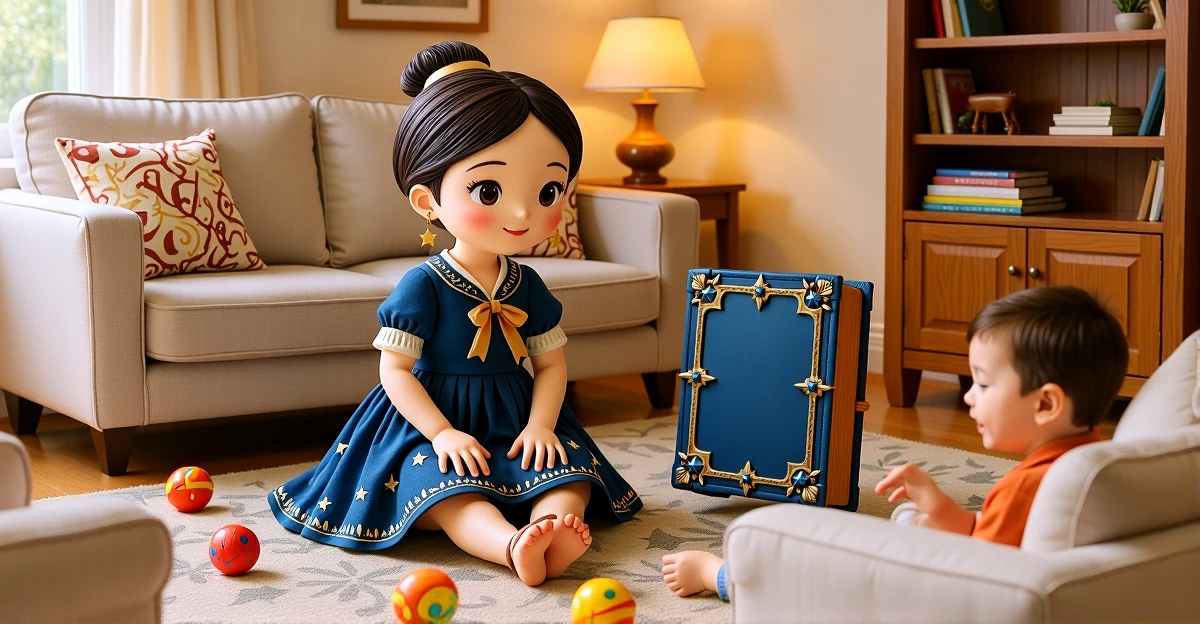
The Magic Book and I, we see you. We see how hard you are working. We see how much you love your child. And we want you to know that this phase is temporary. That pause button is developing every single day. And with your patient, loving guidance, your child is learning skills that will keep them safe for their whole life.
So be gentle with yourself. Be patient with your little one. Practice together. Celebrate progress. And know that you are exactly the parent your child needs.
With love and starlight, Inara
Related Articles
- Understanding Your Child's Rough Play: A Gentle Guide to Teaching Empathy
- Understanding Your Child's Climbing Urge: The Science Behind Risk-Taking (Ages 3-4)
- Understanding Aggressive Behavior in Young Children: A Gentle Parenting Guide
- Why Morning Routines Feel Like Battles (And the Gentle Approach That Works)
Show transcript
Hello, wonderful parent! It is me, Inara, and I am so happy you are here today. You know, the Magic Book and I have been noticing something that so many parents are experiencing right now. Your little one, your beautiful three or four year old, seems to understand safety rules perfectly when you explain them, but then, in the very next moment, they are running toward the street, or climbing something dangerous, or doing exactly what you just asked them not to do. And I want you to know something really important. You are not alone in this, and this is not about your parenting. This is about something absolutely WONDERFUL happening in your child's developing brain. So take a deep breath, maybe grab a cozy cup of tea, and let us talk about what is really going on, and more importantly, how we can support our little ones through this completely normal phase of development. Here is what the Magic Book taught me, and what research shows us so clearly. When your child is three or four years old, their brain is in this absolutely fascinating stage of development. They can understand rules cognitively. They can tell you, do not run into the street. They can explain why it is dangerous. But here is the thing. The part of their brain that helps them STOP themselves in the moment, that is called the prefrontal cortex, and it is still growing. It is like having a really smart computer that knows all the right answers, but the pause button is not quite installed yet. So when your child sees something exciting, a ball rolling toward the street, a fascinating climbing structure, their impulse system lights up like fireworks, and that beautiful developing pause button, it is still learning how to work. This is not defiance, wonderful parent. This is development. And understanding this changes everything. Research in child development shows us that children this age are learning to bridge what scientists call the knowing doing gap. They KNOW the rule, but their brain is still practicing how to follow it when they are excited, or curious, or overwhelmed. And this takes time. It takes practice. It takes patience. And it takes us, as their loving guides, understanding that they are not choosing to ignore us. They are learning one of the most complex skills humans ever develop, impulse control. Now, here is where it gets really beautiful. The research shows us that the most effective way to teach safety skills is not through lectures or consequences. It is through something called behavioral skills training. And what that means in everyday language is this. We practice together. We model safe behavior. We rehearse in calm moments. We celebrate small successes. We make it playful and connected, not scary and punitive. So let me share some gentle strategies that actually work. First, practice safety skills when everyone is calm. If you are working on street safety, practice stopping at the curb during a peaceful walk, not in a moment of danger. Make it a game. Let's see if we can freeze like statues when we get to the curb. Ready? Go! And then celebrate when they do it. You did it! You stopped your body! That is such an important skill! Second, use positive language that tells them what TO do, not just what NOT to do. Instead of do not run into the street, try, we stop at the curb and hold hands. Instead of do not climb that, try, let's find something safe to climb together. Their developing brains respond so much better to clear, positive direction. Third, stay close and supervise actively. I know this is exhausting, wonderful parent. But at this age, they genuinely need us nearby because that pause button is still developing. Think of yourself as their external prefrontal cortex for now. You are lending them your impulse control until theirs is fully developed. And that is not helicoptering. That is developmentally appropriate support. Fourth, connect before you redirect. When you see them about to do something unsafe, get down to their level, use their name, wait for eye contact, and then give the instruction. This helps their brain shift from whatever they were focused on to listening to you. And finally, celebrate progress, not perfection. Did they pause for even one second before running? That is progress! Did they look back at you before climbing? That is their pause button starting to work! Acknowledge these tiny victories because they are building the neural pathways for impulse control. Now, let me tell you about a story in The Book of Inara that might help. It is called The Harmony Arcade Adventure, and it is about two friends, Leo and Mia, who discover magical arcade games that only work when they pause, listen carefully, and cooperate with each other. The games create these beautiful light patterns, but only when the children practice that essential skill of pausing and listening before acting. And what I love about this story is that it makes impulse control feel magical, not like a chore. It shows children that pausing to listen leads to wonderful outcomes. After you read this story together, you can play listening games. You can practice pausing together. You can make it fun and connected, which is exactly how children this age learn best. And here is what I want you to remember, wonderful parent. Your child is not being difficult. They are not ignoring you on purpose. They are not trying to make your life harder. They are learning one of the most complex skills in human development, and they are doing it with a brain that is still under construction. And you, you are doing beautifully. Every time you stay calm, every time you practice together, every time you celebrate small progress, you are building their safety awareness and their impulse control. You are teaching them that they are capable, that learning takes time, and that you are their safe place while they grow. The Magic Book and I, we see you. We see how hard you are working. We see how much you love your child. And we want you to know that this phase, it is temporary. That pause button is developing every single day. And with your patient, loving guidance, your child is learning skills that will keep them safe for their whole life. So be gentle with yourself. Be patient with your little one. Practice together. Celebrate progress. And know that you are exactly the parent your child needs. Find The Harmony Arcade Adventure and so many other beautiful stories in The Book of Inara app. We are here to support you, every step of the way. With love and starlight, Inara.