
Your heart races as you watch your three-year-old scale the bookshelf for the third time today. You've anchored the furniture, you've said "be careful" a hundred times, and yet there they go again, climbing higher and higher with what seems like absolutely no understanding of danger. You're exhausted, worried, and wondering if something is wrong.
Let me tell you something wonderful. You're not alone in this, and what you're seeing isn't recklessness. It's actually something BEAUTIFUL happening in your child's developing brain.
In this guide, we'll explore the fascinating science behind why children ages three to four climb everything in sight, what their brains are actually learning through this behavior, and most importantly, how you can support this crucial developmental phase safely. Plus, I'll share a magical story that helps children understand climbing with awareness and confidence.
Why Your Child Climbs: Understanding the Developmental Drive
When your child climbs, they're not ignoring your warnings or trying to give you a heart attack. They're responding to a powerful developmental drive that's absolutely essential for their growth.
Between ages three and four, children are in a critical period for developing what researchers call executive function and self-regulation. These are the mental skills that help us assess situations, make decisions, control our impulses, and navigate the world safely. And here's what's magical about this: these skills don't develop from adults telling children what's dangerous. They develop from children experiencing manageable challenges and learning to assess risk themselves.
The Science of Risky Play
The Canadian Paediatric Society published groundbreaking research in 2024 that defines risky play as "thrilling and exciting forms of free play that involve uncertainty of outcome and a possibility of physical injury." Climbing is one of the most important types of risky play, and it serves crucial developmental purposes.
When children climb, they're building what experts call physical literacy. This means they're developing the skills, confidence, and motivation to stay physically active for life. But it goes SO much deeper than that. Every time your child reaches for the next hold, decides how high feels comfortable, or figures out how to get back down, they're strengthening neural pathways for risk assessment, decision-making, and impulse control.
"Children engaging in risky play develop risk-assessment and fundamental movement skills through repeated movements, which are components of physical literacy. The ability to recognize and test limits helps children develop socio-emotional skills, sense of belonging, and capacity to communicate, cooperate, and compromise."
— Dr. Emilie Beaulieu and Dr. Suzanne Beno, Canadian Paediatric Society
Risk vs. Hazard: What Parents Need to Know
Here's where things get really interesting. Child development experts make a crucial distinction between risk and hazard, and understanding this difference will change how you see your child's climbing.
A risk is a situation where your child can recognize and evaluate the challenge based on their own skill level and decide what to do. When your child climbs the playground structure and pauses to assess whether they can reach the next bar, that's risk assessment in action.
A hazard is a danger that's beyond your child's capacity to recognize or manage. An unsecured bookshelf that could tip over is a hazard because your child can't see or understand that danger.
Our job as parents isn't to eliminate all risk. It's to eliminate hazards while supporting the risk-taking that helps our children learn. This is such an important shift in perspective!
What This Looks Like in Real Life
Eliminating hazards means anchoring furniture to walls, removing sharp objects from climbing areas, and ensuring surfaces are safe. Supporting healthy risk-taking means allowing your child to climb the sturdy playground equipment even if it makes your heart race a little, staying close enough to intervene if needed but far enough back that they can test their own limits.
The Beautiful Truth About Impulse Control
You know how it sometimes feels like your child just acts without thinking? Like they see something climbable and immediately start scaling it before you can even say "wait"? There's a beautiful developmental reason for this.
The part of the brain that controls impulses, called the prefrontal cortex, is still developing. It won't be fully mature until your child is in their twenties! Right now, at age three or four, they're in the early stages of building these crucial self-regulation skills.
And here's what's magical: every time your child climbs and has to make decisions, they're actually strengthening those impulse control pathways. When they pause to figure out which hold to grab next, when they assess how high feels comfortable, when they decide it's time to climb down, they're practicing the pause-assess-choose sequence that is the foundation of impulse control.
Research from the National Center for Biotechnology Information confirms that emotional regulation and impulse control may determine later success in life more than IQ. These early experiences with manageable risk aren't just about physical development. They're building the foundation for lifelong emotional health and decision-making skills.
The Surprising Benefits of Risky Play
Research shows that children who engage in age-appropriate risky play actually develop BETTER safety awareness over time. This might seem counterintuitive, but it makes perfect sense when you understand what's happening.
Children who are allowed to test their limits in safe ways learn to:
- Assess situations independently - They develop an internal sense of what they can and can't do safely
- Build confidence in their abilities - They learn to trust their own judgment and physical skills
- Develop physical literacy - They gain the movement skills and body awareness that keep them safe
- Reduce anxiety - They learn they can handle uncertainty and challenge, which significantly reduces fear
- Strengthen resilience - They experience small challenges and learn they can overcome them
One fascinating study found that children who engage in risky play show significantly reduced anxiety because they've learned that they can handle uncertainty and develop coping strategies for fear-provoking situations.
Gentle Strategies for Supporting Safe Climbing
So how do we support this crucial developmental phase while keeping our children safe? Here are research-backed strategies that work:
1. Create Safe Climbing Opportunities
Instead of constantly saying "no" to climbing, create YES spaces. This might mean setting up cushions around furniture they love to climb, taking them to playgrounds with age-appropriate equipment, or even creating a safe indoor climbing area. When children have appropriate outlets for their climbing urge, they're less likely to seek out dangerous alternatives.
2. Replace "Be Careful" with Questions
The phrase "be careful" doesn't actually teach children anything. Instead, try asking questions that help them develop their own risk assessment skills:
- "Do you feel stable there?"
- "Can you see where you'll put your foot next?"
- "What's your plan for getting down?"
- "How does your body feel right now?"
These questions help children tune into their own bodies and develop internal safety awareness rather than just following external rules.
3. Stay Close But Not Too Close
Your child needs to know you're there if they need help, but they also need space to test their own limits. Position yourself where you can intervene quickly if needed, but resist the urge to hover or constantly warn. This balance allows them to build confidence while staying safe.
4. Celebrate Awareness, Not Just Achievement
When you see your child pause before climbing higher, or when they choose to climb down because something feels too high, acknowledge that! "You're listening to your body! That's SO important." This reinforces the internal decision-making process that keeps them safe.
5. Eliminate Hazards Systematically
Go through your home and outdoor spaces looking for hazards, not risks. Anchor furniture, remove sharp objects from climbing areas, ensure climbing structures are stable, and create soft landing zones. This allows you to say yes to climbing more often.
A Story That Can Help
In The Book of Inara, we have a beautiful story that brings these concepts to life for your child in the most magical way:
The Rainbow Climbing Adventure
Perfect for: Ages 2-3 (and wonderful for 3-4 year olds too!)
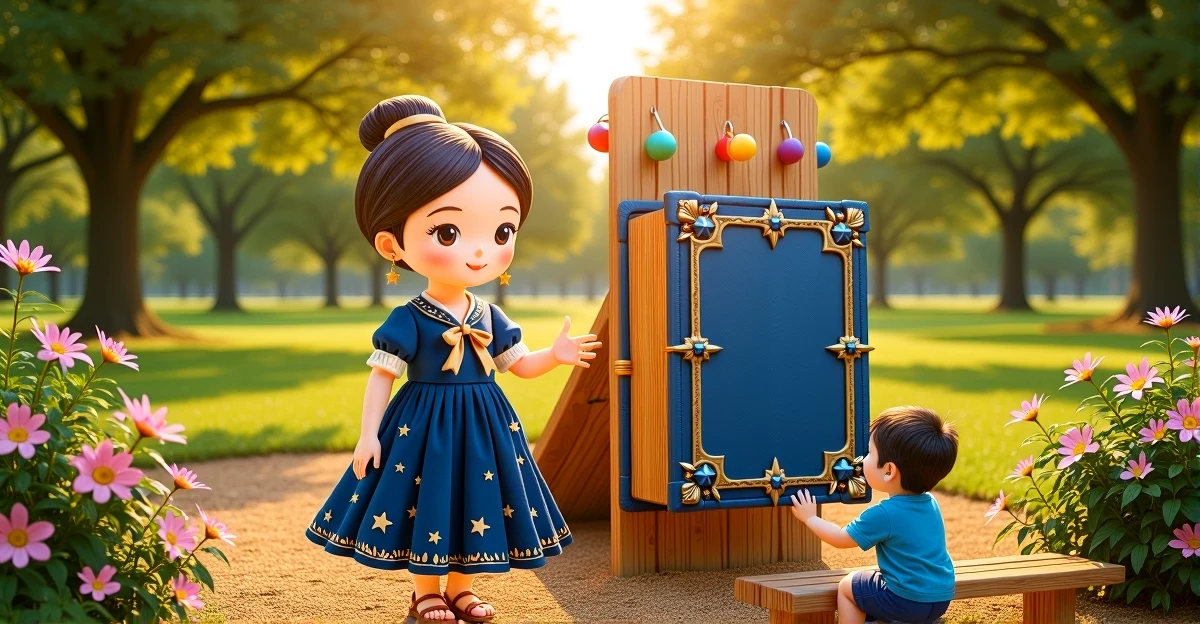
What makes it special: Ayli and Igar discover magical climbing holds that glow in rainbow colors. Each hold gives them special powers and helps them climb higher together with confidence and awareness. This story shows children that climbing isn't about being reckless—it's about being aware of your body, making thoughtful choices, and celebrating what you can do.
Key lesson: When Ayli and Igar learn that each colorful climbing hold helps them reach higher together, children understand that climbing can be done thoughtfully and safely with awareness of their bodies and environment.
How to use it: After reading this story, you can create your own "climbing adventure" at home or at the playground. Name different holds or steps together, celebrate when your child pauses to assess before reaching for the next spot, and turn climbing into a mindful activity where they're learning to listen to their body and make safe choices.
You're Doing Beautifully
I want you to take a deep breath right now. Your concern for your child's safety shows how much you love them. And now you have the knowledge to channel that love into support that helps them grow.
When you see your child climbing, try to shift your perspective. Instead of seeing danger, see development. Instead of seeing recklessness, see learning. Your child is building crucial skills that will serve them for their entire life. They're learning to assess risk, control their impulses, and trust their own abilities. And that's not something to stop—that's something to support safely.
The research is clear: children who are allowed to engage in age-appropriate risky play develop better safety awareness, stronger impulse control, reduced anxiety, and greater confidence. You're not being careless by allowing climbing. You're being wise by supporting your child's natural developmental drive in safe ways.
The Magic Book and I are here with you every step of the way. We have stories that celebrate courage, awareness, and growing confidence. Stories that show children that trying new things is wonderful, and that listening to your body is wise.
Every time your child climbs, they're not just reaching higher. They're building the foundation for a lifetime of confidence, safety awareness, and trust in themselves. And you're giving them the gift of learning through experience, which is the most powerful teacher of all.
With love and starlight, Inara
Related Articles
- Understanding Your Child's Rough Play: A Gentle Guide to Teaching Empathy
- Understanding Your Child's Active Learning Style: Why Movement Helps Focus (Ages 3-4)
- Understanding Aggressive Behavior in Young Children: A Gentle Parenting Guide
- Why Your 3-4 Year Old Struggles with Safety Rules (And What Actually Works)
Show transcript
Hello, wonderful parent! It's me, Inara, and I am so happy you're here today. You know, the Magic Book and I have been noticing something that many parents are experiencing right now. Your little one is climbing everything. The furniture, the counters, the playground equipment, and it feels like they don't understand danger at all. And I want you to know something really important. You're not alone in this, and what you're seeing? It's actually something BEAUTIFUL happening in your child's brain.
I know that might sound surprising when you're watching your three or four-year-old scale the bookshelf for the third time today. Your heart is racing, you're worried about safety, and you might be wondering if something is wrong. But here's what the Magic Book taught me, and what the latest research from child development experts confirms. When your child climbs, they're not being reckless. They're not ignoring danger. They're actually in one of the most important developmental phases for building safety awareness, impulse control, and something called physical literacy.
Let me explain what's happening in that amazing little brain. Between ages three and four, children are developing what researchers call executive function and self-regulation. These are the skills that help us assess situations, make decisions, and control our impulses. And here's the magical part. These skills don't develop from us telling children what's dangerous. They develop from children experiencing manageable challenges and learning to assess risk themselves.
The Canadian Paediatric Society just published research in twenty twenty-four that explains this beautifully. They talk about something called risky play, which is defined as thrilling and exciting forms of free play that involve uncertainty and a possibility of physical injury. And climbing? That's one of the most important types of risky play. When children climb, they're learning to recognize their own limits, evaluate challenges, and make decisions based on their own skill level. They're building what experts call risk assessment skills, and these skills are absolutely crucial for lifelong safety awareness.
Now, I know what you might be thinking. But Inara, my child climbs too high! They don't seem to understand when to stop! And that's where the research gets really interesting. Experts make a crucial distinction between risk and hazard. A risk is a situation where your child can recognize and evaluate the challenge and decide what to do based on their own abilities. A hazard is a danger that's beyond their capacity to recognize or manage. Our job as parents isn't to eliminate all risk. It's to eliminate hazards while supporting the risk-taking that helps our children learn.
So what does this look like in real life? It means making sure the bookshelf is anchored to the wall, that's eliminating a hazard. But then allowing your child to climb the sturdy playground structure, even if it makes your heart race a little, that's supporting healthy risk-taking. It means staying close enough to intervene if needed, but far enough back that your child can test their own limits and build confidence.
And here's something that might surprise you. Research shows that children who engage in age-appropriate risky play actually develop BETTER safety awareness over time. They learn to assess situations independently. They build confidence in their own abilities. And they develop something called physical literacy, which means they have the skills and confidence to stay active for life. One study even found that children who engage in risky play show significantly reduced anxiety because they've learned that they can handle uncertainty and challenge.
The research also tells us something really important about impulse control. You know how it sometimes feels like your child just acts without thinking? That's because the part of the brain that controls impulses, the prefrontal cortex, is still developing. It won't be fully mature until they're in their twenties! But here's the beautiful part. Every time your child climbs and has to make decisions, like which hold to grab next or how high feels comfortable, they're actually strengthening those impulse control pathways. They're learning to pause, assess, and choose. And that's exactly what we want.
Now, let me share something from the Magic Book that I think will help you see this differently. We have a story called The Rainbow Climbing Adventure, and it's about two friends, Ayli and Igar, who discover magical climbing holds that glow in rainbow colors. Each hold gives them special powers and helps them climb higher together with confidence and awareness. And what I love about this story is how it shows children that climbing isn't about being reckless. It's about being aware of your body, making thoughtful choices, and celebrating what you can do.
After you read this story with your child, you can create your own climbing adventure at home or at the playground. You can name different holds or steps together. You can celebrate when your child pauses to assess before reaching for the next spot. You can turn climbing into a mindful activity where they're learning to listen to their body and make safe choices.
Here are some practical ways you can support your child's climbing phase while keeping them safe. First, create safe spaces for climbing. This might mean setting up cushions around furniture they love to climb, or taking them to playgrounds with age-appropriate equipment. Second, instead of saying be careful, which doesn't actually teach them anything, try asking questions. Do you feel stable? Can you see where you'll put your foot next? What's your plan for getting down? These questions help them develop their own risk assessment skills.
Third, stay close but not too close. Your child needs to know you're there if they need help, but they also need space to test their own limits. And fourth, celebrate their awareness. When you see them pause before climbing higher, or when they choose to climb down because something feels too high, acknowledge that. You're listening to your body! That's so important!
The research is really clear on this. Dr. Emilie Beaulieu and Dr. Suzanne Beno, who are leading experts in child development, emphasize that adults should eliminate hazards while supporting risk-taking that is chosen and controlled by the child. They note that risky play helps children develop the ability to experiment with uncertainty and coping strategies, which significantly reduces anxiety. And national research confirms that emotional regulation and impulse control, the very skills your child is building when they climb, may determine later success in life more than IQ.
So when you see your child climbing, try to shift your perspective. Instead of seeing danger, see development. Instead of seeing recklessness, see learning. Your child is building crucial skills that will serve them for their entire life. They're learning to assess risk, control their impulses, and trust their own abilities. And that's not something to stop. That's something to support safely.
I want you to take a deep breath right now. You're doing beautifully. Your concern for your child's safety shows how much you love them. And now you have the knowledge to channel that love into support that helps them grow. The Magic Book and I are here with you every step of the way. We have stories that celebrate courage, awareness, and growing confidence. Stories that show children that trying new things is wonderful, and that listening to your body is wise.
Find The Rainbow Climbing Adventure and other stories in The Book of Inara app. Let these stories be gentle guides as your child navigates this exciting phase of development. And remember, every time your child climbs, they're not just reaching higher. They're building the foundation for a lifetime of confidence, safety awareness, and trust in themselves.
With love and starlight, Inara.