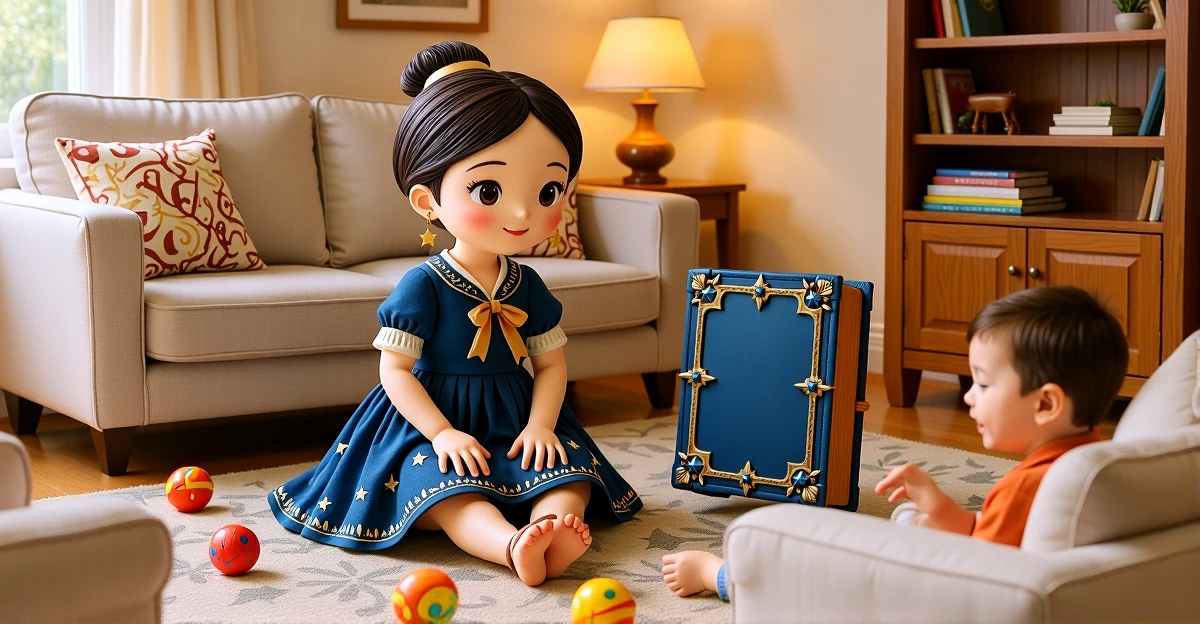

You call your toddler's name from across the room. Nothing. You ask them to put their cup on the table. They keep playing. You give a simple direction, and it's like you're speaking a language they don't understand. By the fifth time, you're wondering: Why does my toddler ignore me?
Here's what I want you to know, wonderful parent: You are not alone in this. The Magic Book and I hear from SO many parents who feel frustrated, exhausted, and sometimes even hurt when their little ones seem to tune them out. And here's the beautiful truth that might change everything: your child isn't ignoring you to be difficult. What's happening is actually a sign that their brain is developing exactly as it should.
In this guide, we're going to explore why toddlers seem to ignore directions, what research tells us about their developing attention spans, and gentle strategies that actually work. Plus, I'll share a story from The Book of Inara that can help your child develop the empathy and awareness that makes cooperation possible.
Understanding Your Toddler's Developing Brain
Let me share something the Magic Book taught me that completely transformed how I understand toddler listening. When your two or three year old seems to ignore you, they're navigating one of the most incredible phases of brain development, where their attention span is naturally very short and their ability to shift focus is still emerging.
The Centers for Disease Control tells us something SO important: toddlers and preschoolers ages 2-3 can typically handle only ONE simple direction at a time. Just one! And even that depends heavily on how the direction is given.
Think about it this way. Your little one's brain is like a tiny computer that's still learning how to run multiple programs. When you call out from across the room, their brain might be so focused on the block tower they're building that your words literally don't register. It's not that they're choosing to ignore you. It's that their developing brain can only process one thing at a time, and right now, those blocks are taking up all their attention.
The Science of Attention Spans
Here's what research shows us about toddler attention spans, and this is WONDERFUL information: children ages 2-3 typically have attention spans of just 3-5 minutes for a single activity. That's it! Their prefrontal cortex, the part of the brain responsible for attention, impulse control, and following directions, won't be fully developed until they're in their twenties.
So when your two year old can't hold their attention for more than a few minutes, that's not a problem to fix. That's normal development to support with patience and understanding.
What Research Says About Toddler Cooperation
Dr. Vasco Lopes from the Child Mind Institute shares something that really opened my eyes. He observes that many parents have gotten in a pattern where they're paying attention to their child's misbehavior and ignoring positive behavior. And I see this happening all the time! We notice when our children don't listen, but we might miss the dozens of times each day when they DO cooperate, when they DO follow through, when they DO try their best.
Toddlers and preschoolers have a very short attention span. If you tell your child to do more than one thing, they may not be able to remember all of the instructions.
— Centers for Disease Control and Prevention
This developmental reality means we need to adjust our expectations rather than viewing limited attention as willful disobedience. What often appears as defiance is actually a combination of limited attention capacity, still-developing language comprehension, and the natural testing of boundaries that helps young children understand their world.
The American Academy of Pediatrics has done beautiful research showing that cooperative skills develop through playful interactions and positive reinforcement, not through punishment or frustration. When we catch our children being cooperative and we celebrate that, we're actually building the neural pathways that make listening easier next time.
Four Gentle Strategies That Actually Work
So what can we do to help our toddlers listen and cooperate? Here are four research-backed strategies that work WITH your child's development, not against it:
1. Give One Direction at a Time
If you're giving your two year old three directions in a row, that's probably too many. Their working memory just isn't there yet. Give one direction, wait for them to complete it, then give the next one. Yes, it takes more time. But it actually works, which saves time and frustration in the long run.
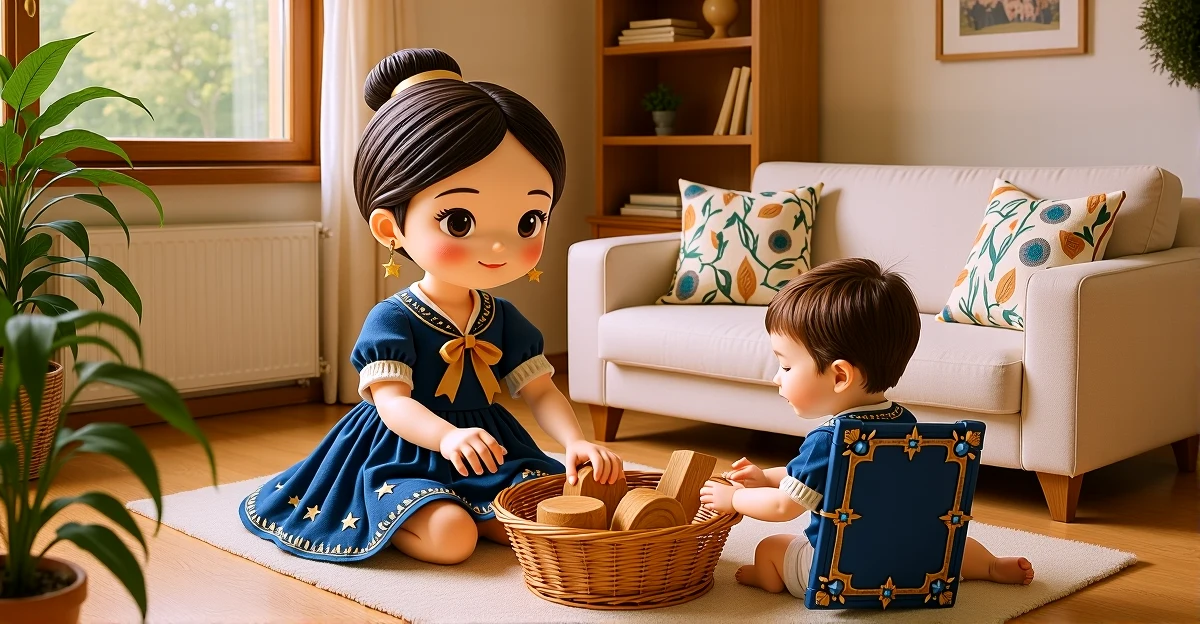
Instead of: "Put your toys away, wash your hands, and come to the table," try: "Please put the blocks in the basket." Wait. Then: "Now let's wash hands together."
2. Get Close and Make Eye Contact
This is SO important. Walk over to your child, get down to their eye level, gently touch their shoulder, and say their name. Wait for them to look at you. Then give your direction. This physical proximity and eye contact helps their brain shift attention from what they were doing to what you're saying.
The CDC emphasizes that getting your child's attention through eye contact and proximity is essential before giving directions. When you're across the room, your words are just background noise to their focused brain.
3. Make Directions Specific and Clear
Vague directions like "Be good" or "Clean up" are too abstract for toddler brains to process. Instead, give specific, concrete directions that describe exactly what you want them to do.
- Instead of "Clean up," try "Please put the crayons in the red box."
- Instead of "Get ready for bed," try "Please put your pajamas on."
- Instead of "Be careful," try "Please walk slowly."
One clear action they can picture and complete makes all the difference.
4. Celebrate Cooperation
When your child DOES listen, even if it takes a minute, acknowledge it! "You listened! You put the crayons away! Thank you!" This positive attention is like sunshine for their developing brain. It helps them want to cooperate more.
Research consistently shows that catching children being cooperative and offering specific praise builds listening skills far more effectively than repeated corrections or punishment. You're literally building the brain pathways that make cooperation feel good.
Reframing "Ignoring" as Development
Here's something else the Magic Book showed me that I think is beautiful. Sometimes what looks like not listening is actually your child learning to balance their own ideas with your guidance. This is such an important developmental step! They're discovering that they have thoughts and preferences, and they're learning how to navigate between what they want and what you're asking them to do.
That's not defiance, wonderful parent. That's the beginning of independence and self-awareness. Your child is learning that they are a separate person with their own will, and that's a crucial part of healthy development.
When we understand this, we can respond with patience instead of frustration. We can see our child's growing independence as something to celebrate and gently guide, not something to squash.
Stories That Can Help
In The Book of Inara, we have beautiful stories that bring these concepts to life for your child. Stories are such powerful teachers because they show children how actions affect others in ways that feel magical rather than like lessons.
The Candy Jar Apology
Perfect for: Ages 2-3
What makes it special: This story teaches empathy, understanding consequences, and making amends - all foundational skills for cooperation. When Milo and Nana visit a corner store, Milo accidentally knocks over Nana's favorite gummy bears. The magical candy jars dim until Milo learns that his actions affect others and that saying sorry can make everything bright again.
Key lesson: When children understand that their actions have impact, when they see that what they do affects the people around them, they start developing the emotional awareness that makes cooperation possible. Just as Milo learns that his actions made the candy jars dim and his apology made them bright again, your child is learning that listening and cooperating makes everyone feel happy and connected.
How to use it: After you read this story together, you can help your child make that connection. "Remember how Milo's sorry made the candy jars glow? When you listen and help, it makes Mommy's heart glow too!" This kind of gentle connection between the story and real life helps children understand why cooperation matters.
You're Doing Beautifully
I want you to hear this, wonderful parent. You are doing beautifully. The fact that you're here, learning about your child's development, seeking to understand rather than just react - that shows such love and dedication. Your child is so lucky to have you.
Some days will be harder than others. Some days you'll give a direction five times and it still won't happen. That's okay. That's part of the journey. On those days, take a deep breath, remember that your child's brain is still growing, and try again with patience and connection.
The research is so clear on this: children whose parents respond with patience, clear communication, and positive attention for cooperation develop stronger listening skills and better emotional regulation over time. You're not just teaching your child to follow directions. You're building the foundation for lifelong learning, healthy relationships, and emotional well-being.
Your toddler isn't ignoring you to be difficult. They're learning to navigate a world where their attention is pulled in a million directions and their brain can only handle one thing at a time. When you get close, make eye contact, give one clear direction, and celebrate cooperation, you're working WITH their development, not against it.
The Magic Book and I are always here for you, wonderful parent. You've got this. With love and starlight, Inara.
Related Articles
- Understanding Parallel Play: Why Your Toddler Plays Near (Not With) Other Kids
- Understanding Public Meltdowns: Why Your Toddler Isn't Trying to Embarrass You
- When Your Toddler Hurts Themselves During Big Feelings: Understanding and Gentle Support
- When Your Toddler Wanders Off in Public: Understanding and Gentle Strategies
- Understanding Why Toddlers Hit and Bite (And Gentle Ways to Help)
Show transcript
Hello, wonderful parent! It's me, Inara, and I am so happy you're here today. You know, the Magic Book and I have been hearing from so many parents who are feeling frustrated because their toddler seems to ignore them when they ask them to do something. And I want you to know something really important right from the start. You are not alone in this, and your child is not being difficult. What's happening is actually a beautiful sign that their brain is developing exactly as it should.
Let me share something the Magic Book taught me that might change how you see this whole situation. When your two or three year old seems to ignore you, they're not being defiant. They're navigating one of the most incredible phases of brain development, where their attention span is naturally very short and their ability to shift focus is still emerging. The Centers for Disease Control tells us that toddlers this age can typically hold only ONE simple direction at a time. Just one! And even that depends so much on how the direction is given.
Think about it this way. Your little one's brain is like a tiny computer that's still learning how to run multiple programs. When you call out from across the room, Hey, put your toys away, their brain might be so focused on the block tower they're building that your words literally don't register. It's not that they're choosing to ignore you. It's that their developing brain can only process one thing at a time, and right now, those blocks are taking up all their attention.
Dr. Vasco Lopes from the Child Mind Institute shares something so important. He says that many parents have gotten in a pattern where they're paying attention to their child's misbehavior and ignoring positive behavior. And I see this happening all the time! We notice when our children don't listen, but we might miss the dozens of times each day when they DO cooperate, when they DO follow through, when they DO try their best.
Here's what the research shows us, and this is so WONDERFUL. When parents get down to their child's level, make eye contact, use their child's name, and give one clear, specific direction, everything changes. Instead of saying, Be good, which is so vague, we can say, Please put the red block in the basket. That's specific. That's something a toddler brain can actually process and act on.
The American Academy of Pediatrics has done beautiful research showing that cooperative skills develop through playful interactions and positive reinforcement, not through punishment or frustration. When we catch our children being cooperative and we celebrate that, Oh, you put your cup on the table! Thank you for listening!, we're actually building the neural pathways that make listening easier next time.
Now, I want to share something else the Magic Book showed me. Sometimes what looks like not listening is actually your child learning to balance their own ideas with your guidance. This is such an important developmental step! They're discovering that they have thoughts and preferences, and they're learning how to navigate between what they want and what you're asking them to do. That's not defiance, wonderful parent. That's the beginning of independence and self-awareness.
So what can we do to help? First, adjust your expectations. If you're giving your two year old three directions in a row, that's probably too many. Their working memory just isn't there yet. Give one direction, wait for them to complete it, then give the next one. Yes, it takes more time. But it actually works, which saves time in the long run.
Second, get close. Walk over to your child, get down to their eye level, gently touch their shoulder, and say their name. Wait for them to look at you. Then give your direction. This physical proximity and eye contact helps their brain shift attention from what they were doing to what you're saying.
Third, make it specific. Instead of, Clean up, try, Please put the crayons in the red box. Instead of, Get ready for bed, try, Please put your pajamas on. One clear action they can picture and complete.
And fourth, celebrate cooperation! When they DO listen, even if it takes a minute, acknowledge it. You listened! You put the crayons away! Thank you! This positive attention is like sunshine for their developing brain. It helps them want to cooperate more.
Now, let me tell you about a story that might help with this. In The Book of Inara, we have a beautiful tale called The Candy Jar Apology. It's about Milo and Nana visiting a corner store, and when Milo accidentally knocks over Nana's favorite gummy bears, the magical candy jars dim until he learns that his actions affect others and that saying sorry can make everything bright again.
Why does this story help with listening and cooperation? Because it teaches something foundational. When children understand that their actions have impact, when they see that what they do affects the people around them, they start developing the emotional awareness that makes cooperation possible. Just as Milo learns that his actions made the candy jars dim and his apology made them bright again, your child is learning that listening and cooperating makes everyone feel happy and connected.
After you read this story together, you can help your child make that connection. Remember how Milo's sorry made the candy jars glow? When you listen and help, it makes Mommy's heart glow too! This kind of gentle connection between the story and real life helps children understand why cooperation matters.
The Magic Book also reminds me that patience is so important here. Your child's prefrontal cortex, the part of the brain responsible for attention and impulse control, won't be fully developed until they're in their twenties! So when your two year old can't hold their attention for more than a few minutes, that's not a problem to fix. That's normal development to support.
I want you to hear this, wonderful parent. You are doing beautifully. The fact that you're here, learning about your child's development, seeking to understand rather than just react, that shows such love and dedication. Your child is so lucky to have you.
Some days will be harder than others. Some days you'll give a direction five times and it still won't happen. That's okay. That's part of the journey. On those days, take a deep breath, remember that your child's brain is still growing, and try again with patience and connection.
The research is so clear on this. Children whose parents respond with patience, clear communication, and positive attention for cooperation develop stronger listening skills and better emotional regulation over time. You're not just teaching your child to follow directions. You're building the foundation for lifelong learning, healthy relationships, and emotional well-being.
So here's what I want you to remember. Your toddler isn't ignoring you to be difficult. They're learning to navigate a world where their attention is pulled in a million directions and their brain can only handle one thing at a time. When you get close, make eye contact, give one clear direction, and celebrate cooperation, you're working WITH their development, not against it.
And stories like The Candy Jar Apology can be such gentle helpers in this journey, teaching empathy and connection in ways that feel magical rather than like lessons.
The Magic Book and I are always here for you, wonderful parent. You've got this. With love and starlight, Inara.