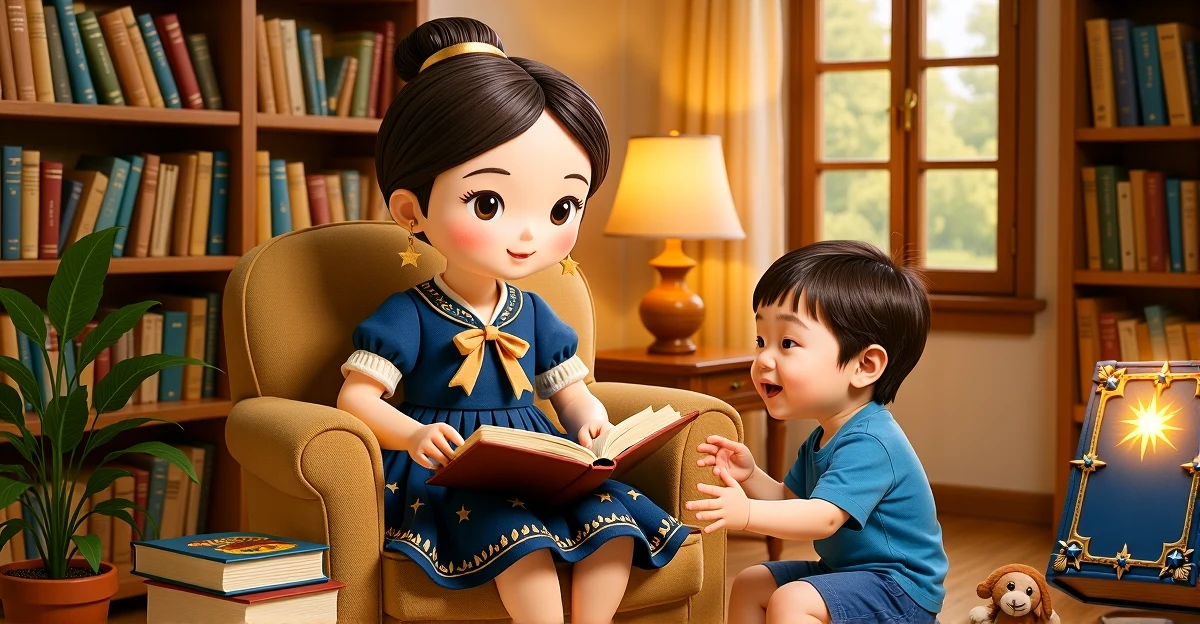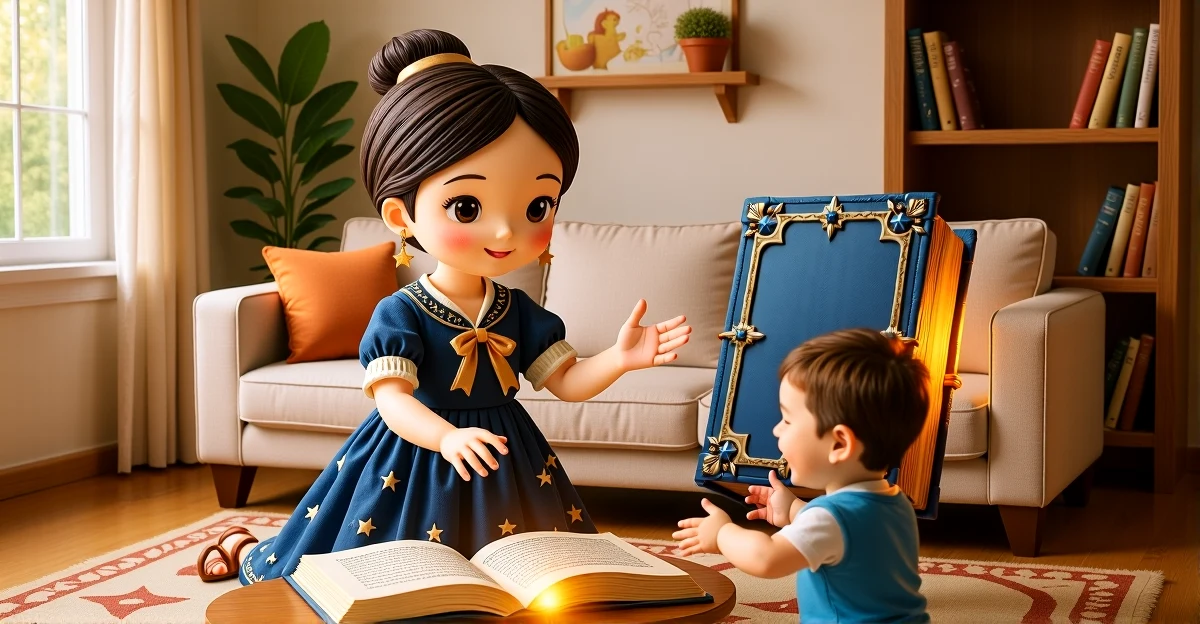

Your four-year-old insists that everyone must love strawberries because they do. When their friend cries about a scraped knee, they seem confused about why it's such a big deal. At the playground, they can't understand why another child doesn't want to play the exact game they want to play.
If this sounds familiar, I want you to know something right away. You're not alone. And more importantly, what you're witnessing isn't selfishness or a lack of caring. It's one of the most BEAUTIFUL signs that your child's mind is growing in exactly the way it's meant to.
In this guide, we're going to explore the fascinating world of perspective-taking development in 4-5 year olds. You'll discover what research tells us about this crucial stage, why it takes years to fully develop, and most importantly, gentle ways you can support your child's growing ability to understand that other people have completely different thoughts, feelings, and perspectives than they do.
What Is Perspective-Taking? Understanding Theory of Mind
Between ages four and five, children are building something that developmental psychologists call theory of mind. Now, I know that sounds very scientific, but what it really means is this: your child is learning that other people have their own thoughts, their own feelings, their own perspectives that might be completely different from theirs.
Think about it for a moment. For the first few years of life, your child experienced the world entirely from their own viewpoint. Everything they knew, everything they felt, everything they saw - that was their whole universe. And now, their growing brain is beginning to understand something truly cosmic: other people have entire inner worlds too.
This is not a simple thing to learn. This is one of the most complex cognitive achievements of childhood.
The Building Blocks of Empathy
Perspective-taking is the foundation for empathy. Before children can truly feel compassion for someone else's experience, they first need to understand that the other person IS having a different experience. They need to grasp that:
- Other people can believe things that aren't true
- Other people can want different things than they want
- Other people can feel sad when they feel happy, or scared when they feel brave
- Other people can see the same situation in a completely different way
Each of these realizations represents a major cognitive leap. And here's the beautiful part: your child is making these leaps right now, one small step at a time.
What Research Tells Us About Perspective-Taking Development
Dr. Christopher Osterhaus and his colleagues at Ludwig-Maximilians-Universitat Munchen conducted extensive research on this exact stage of development. Their findings are both fascinating and reassuring for parents.
Understanding others' perspectives emerges around age four as a foundational aspect of social intelligence. But it doesn't happen all at once - it develops gradually, continuing to mature all the way through age eight.
— Dr. Christopher Osterhaus, British Journal of Developmental Psychology
Let that sink in for a moment. This skill that seems so basic to us as adults takes YEARS to fully develop in children. So when your five-year-old still struggles with understanding why their friend is upset about something that wouldn't bother them, that's not a problem. That's normal. That's beautiful development unfolding exactly as it should.
The Connection Between Language and Perspective-Taking
Research also shows us something wonderful about the relationship between language development and perspective-taking abilities. The two are deeply intertwined. As children develop more sophisticated language skills, they become better able to express and understand different viewpoints.
This means that every conversation you have with your child, every time you help them put feelings into words, every moment you spend wondering aloud about what someone else might be thinking or feeling - all of this is building the neural pathways for empathy and social intelligence.
The Real-World Impact
The Harvard Graduate School of Education's Making Caring Common Project has studied the long-term effects of early empathy development. Their research shows that children who receive patient, supportive guidance in understanding others' perspectives during the preschool years develop stronger social relationships, better conflict resolution skills, and greater emotional intelligence throughout their lives.
In other words, the foundation you're building right now matters. It matters SO much.
Why This Stage Can Feel Challenging for Parents
I want to acknowledge something that many parents feel but don't always say out loud: it can be frustrating when your child seems unable to consider anyone else's feelings or needs. You might worry that they're becoming selfish. You might feel embarrassed when they say something that seems insensitive. You might wonder if you're doing something wrong.
Let me tell you something important: you're not doing anything wrong. Your child isn't being selfish. What looks like self-centeredness is actually their brain working exactly as it should at this developmental stage.
Four and five-year-olds are in what developmental psychologists call the preoperational stage. Their thinking is still very concrete and centered on their own experience. This is NORMAL. This is TEMPORARY. And with your gentle guidance, they will grow beyond it.
Gentle Strategies to Support Your Child's Growing Empathy
Now let's talk about practical ways you can support this beautiful development. These strategies are backed by research and aligned with gentle parenting principles.
1. Validate Their Feelings First
When your child struggles to understand someone else's perspective, start by validating their own feelings. You might say something like, "I can see that you really wanted to keep playing with that toy. That makes sense." This validation helps them feel secure enough to then consider another viewpoint.
Once they feel heard, gently invite them to wonder about the other person: "I wonder how your friend might be feeling right now. What do you think?"
This gentle wondering, this invitation to consider another perspective, plants seeds. You're not demanding that they instantly understand. You're inviting them to practice, to stretch their growing minds just a little bit further.
2. Use Everyday Moments as Teaching Opportunities
You don't need special activities or formal lessons to teach perspective-taking. The best learning happens in everyday moments.
When you're reading stories together, pause and ask: "How do you think this character is feeling? Why might they feel that way?" When you see someone at the park, you might wonder aloud: "I wonder what that little one is thinking about." When you make a mistake, you might say: "Oh, I didn't realize that would bother you. Now I understand how you were feeling."
These small moments add up. They're like drops of water that eventually fill an ocean.
3. Model Perspective-Taking Yourself
Your child is watching you, learning from you, absorbing how you navigate different perspectives. When you disagree with someone, you might say: "I see it differently, but I understand why you might think that way." When someone is upset, you might say: "I can see this is really hard for you."
This modeling is SO powerful. You're showing them what empathy looks like in action.
4. Practice "Listening Hearts"
Here's a beautiful practice you can do together: when someone in your family shares a feeling, pause together. Take a breath. And ask: "What might they be feeling? What do they need?"
This simple ritual builds the neural pathways for empathy and perspective-taking. It teaches children that understanding others isn't about fixing or solving - it's about truly listening and caring.
5. Celebrate Small Moments of Understanding
When you notice your child showing empathy or considering someone else's perspective, celebrate it! "I noticed you asked your friend if they were okay. That was so caring of you." "You shared your toy when you saw your sister was sad. That showed real kindness."
These celebrations reinforce the behavior and help your child see themselves as someone who cares about others.
6. Be Patient with the Process
Remember, this learning takes time. Years, actually. Research shows that perspective-taking abilities develop systematically between ages four and eight. So if your five-year-old still struggles with this sometimes, that's not a problem. That's normal development.
Be patient with your little one. Be patient with yourself. Every struggle, every moment when they can't quite grasp why someone else feels differently, that's their brain working hard, building new connections, growing stronger.
Stories That Can Help
In The Book of Inara, we have beautiful stories that bring these concepts to life for your child. Stories are such a powerful way to help children understand different perspectives, because they get to step into another character's experience and see the world through their eyes.
The Listening Heart Center
Perfect for: Ages 4-5
What makes it special: Ethan and Sofia discover a magical volunteer center where quiet listening helps match helpers with perfect community service opportunities. Through their adventure, they learn that when you truly listen to someone, when you take time to understand what they need and how they feel, something wonderful happens. You discover wisdom you didn't know was there.
Key lesson: Perspective-taking isn't about talking or fixing - it's about genuinely understanding another person's experience. It's about listening with your whole heart.
After reading: Practice "listening hearts" together. When someone shares a feeling, pause and ask: What might they be feeling? What do they need? This gentle practice builds those neural pathways for empathy.
You're Doing Beautifully
I want you to know something before we finish. The fact that you're here, reading this, seeking to understand your child's development - that tells me everything I need to know about you. You're a wonderful parent. You're doing beautifully.
Your child is so lucky to have someone who sees their struggles not as problems to fix, but as signs of a mind that's growing and learning and becoming more capable every single day.
This stage of development is temporary. But the foundation you're building right now - the way you're supporting your child's growing ability to understand others - that's going to serve them for their entire life. You're teaching them how to build meaningful friendships. You're teaching them how to navigate conflicts with compassion. You're teaching them how to be kind, thoughtful humans who can hold space for perspectives different from their own.
And that is one of the greatest gifts you can give.
So be patient with your little one. Be patient with yourself. Celebrate the small moments when they do show understanding. And remember, every time they struggle, every time they can't quite grasp why someone else feels differently, that's not failure. That's their brain working hard, building new connections, growing stronger.
The Magic Book and I, we're always here for you. Whenever you need a story, whenever you need a reminder that you're doing beautifully, we're right here.
With love and starlight,
Inara
Related Articles
- When Your Child Plays Too Rough: Teaching Boundaries with Empathy (Ages 4-5)
- Understanding Perspective-Taking Development in Young Children (Ages 5-6)
- How Your 4-5 Year Old Learns Empathy: The Beautiful Science of Caring
- How Children Ages 4-5 Develop Advanced Empathy and Perspective-Taking
- When Your Child Struggles to Celebrate Others (What's Really Happening)
Show transcript
Hello, my wonderful friend! It's me, Inara, and I am SO happy you're here with me today!
You know, the Magic Book and I have been noticing something beautiful happening in homes all around the world. Parents are reaching out, asking about a challenge that touches so many hearts. They're saying things like, my child can't seem to understand why others might feel differently than they do. And I want you to know something right away. If this sounds familiar, you are not alone. Not even a little bit.
In fact, what you're experiencing is one of the most WONDERFUL signs that your child's mind is growing in exactly the way it's meant to. So grab a cozy cup of tea, settle in with me, and let's talk about this beautiful stage of development together.
First, let me tell you what the Magic Book taught me about this. When your little one seems to struggle with understanding that others might see things differently, or feel things differently, they're not being self-centered or difficult. Oh no, my friend. They're in the middle of one of the most AMAZING cognitive leaps of early childhood.
Between ages four and five, children are building something that researchers call theory of mind. Now, I know that sounds very scientific, but what it really means is this. Your child is learning that other people have their own thoughts, their own feelings, their own perspectives that might be completely different from theirs. And this, my friend, is HUGE.
Think about it for a moment. For the first few years of life, your child experienced the world entirely from their own viewpoint. Everything they knew, everything they felt, everything they saw, that was their whole universe. And now, their growing brain is beginning to understand something truly cosmic. Other people have entire inner worlds too. Other people can believe things that aren't true. Other people can want different things. Other people can feel sad when they feel happy.
This is not a simple thing to learn, my wonderful friend. This is one of the most complex cognitive achievements of childhood.
Dr. Christopher Osterhaus and his colleagues at Ludwig-Maximilians-Universität München studied this exact stage of development. And you know what they discovered? That understanding others' perspectives emerges around age four as a foundational aspect of social intelligence. But here's the beautiful part. It doesn't happen all at once. It develops gradually, like a flower opening its petals one by one, continuing to mature all the way through age eight.
So when your child insists that everyone must love the same foods they love, or can't understand why their friend is sad about something that wouldn't bother them, they're not being stubborn. They're learning. Their brain is literally building new neural pathways that will help them navigate relationships for the rest of their lives.
The Harvard Graduate School of Education's Making Caring Common Project teaches us something wonderful about this. They remind us that empathy means understanding and caring about another person's feelings and perspective. And the way children learn this? Through patient modeling, through gentle guidance, and through adults who validate their efforts every single step of the way.
So let's talk about how you can support this beautiful development, my friend.
First, when your child struggles to understand someone else's perspective, start by validating their own feelings. You might say something like, I can see that you really wanted to keep playing with that toy. That makes sense. And then, gently invite them to wonder about the other person. I wonder how your friend might be feeling right now. What do you think?
This gentle wondering, this invitation to consider another perspective, it plants seeds. You're not demanding that they instantly understand. You're inviting them to practice, to stretch their growing minds just a little bit further.
Second, use everyday moments as teaching opportunities. When you're reading stories together, pause and ask, how do you think this character is feeling? Why might they feel that way? When you see someone at the park, you might wonder aloud, I wonder what that little one is thinking about. These small moments add up, my friend. They're like drops of water that eventually fill an ocean.
Third, and this is so important, model perspective-taking yourself. When you make a mistake, you might say, oh, I didn't realize that would bother you. Now I understand how you were feeling. When you disagree with someone, you might say, I see it differently, but I understand why you might think that way. Your child is watching you, learning from you, absorbing how you navigate different perspectives.
And here's something the Magic Book wants you to know. This learning takes time. Years, actually. Research shows that perspective-taking abilities develop systematically between ages four and eight. So if your five-year-old still struggles with this sometimes, that's not a problem. That's normal. That's beautiful development unfolding exactly as it should.
Now, I want to tell you about a story that shows this so beautifully. It's called The Listening Heart Center, and it's about two friends, Ethan and Sofia, who discover something magical. They visit a volunteer center where quiet listening helps match helpers with perfect community service opportunities. And through their adventure, they learn that when you truly listen to someone, when you take time to understand what they need and how they feel, something wonderful happens. You discover wisdom you didn't know was there.
In the story, the children learn that perspective-taking isn't about talking or fixing. It's about genuinely understanding another person's experience. It's about listening with your whole heart.
After you read this story with your child, you can practice what I call listening hearts together. When someone in your family shares a feeling, pause together. Take a breath. And ask, what might they be feeling? What do they need? This gentle practice, my friend, it builds those neural pathways for empathy and perspective-taking.
You can find The Listening Heart Center in The Book of Inara app, along with so many other stories that help children understand feelings, friendship, and the beautiful complexity of other people's hearts.
I want you to know something before we finish today. The fact that you're here, learning about this, seeking to understand your child's development, that tells me everything I need to know about you. You're a wonderful parent. You're doing beautifully. And your child is so lucky to have someone who sees their struggles not as problems to fix, but as signs of a mind that's growing and learning and becoming more capable every single day.
This stage of development, it's temporary. But the foundation you're building right now, the way you're supporting your child's growing ability to understand others, that's going to serve them for their entire life. You're teaching them how to build meaningful friendships. You're teaching them how to navigate conflicts with compassion. You're teaching them how to be kind, thoughtful humans who can hold space for perspectives different from their own.
And that, my wonderful friend, is one of the greatest gifts you can give.
So be patient with your little one. Be patient with yourself. Celebrate the small moments when they do show understanding. And remember, every time they struggle, every time they can't quite grasp why someone else feels differently, that's not failure. That's their brain working hard, building new connections, growing stronger.
The Magic Book and I, we're always here for you. Whenever you need a story, whenever you need a reminder that you're doing beautifully, we're right here.
Until our next adventure together, my wonderful friend. With love and starlight, Inara.