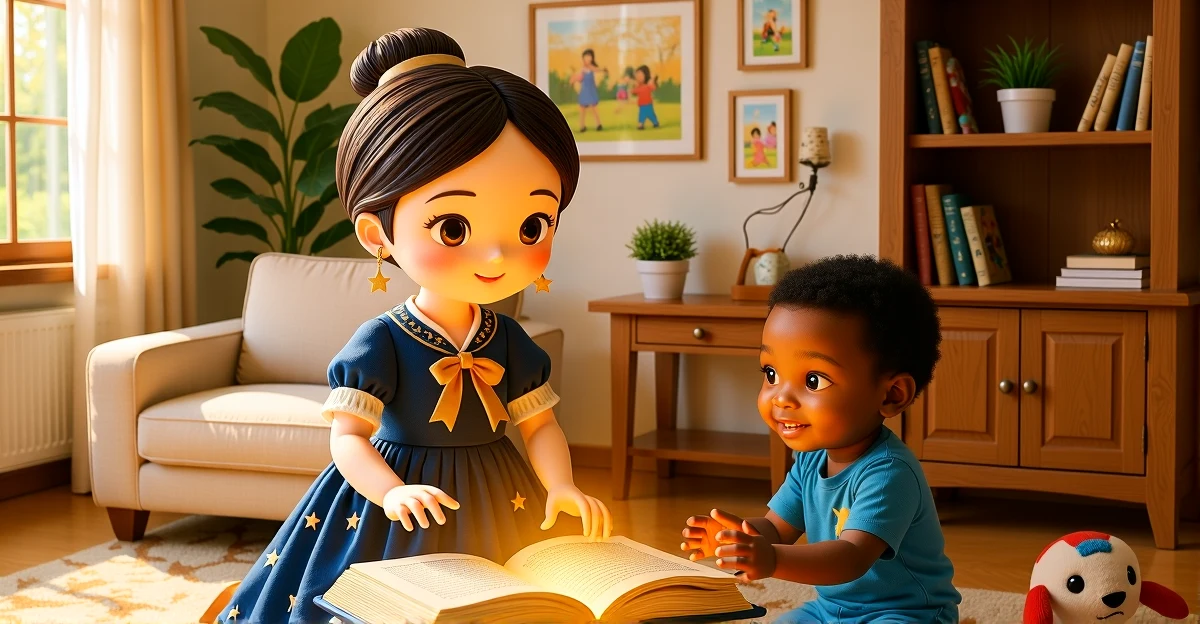

Hello, my wonderful friend! Let me guess. Your four or five year old just pushed back on a suggestion you made, and you are wondering if this is normal. Or maybe every time you offer a gentle correction, they get upset or defensive. You might be thinking, why is this so hard? Am I doing something wrong?
First, let me tell you something IMPORTANT. You are not alone in this, and you are not doing anything wrong. What you are experiencing is completely normal development, and it is actually a sign that something beautiful is happening in your child's growing brain.
In this guide, we are going to explore why children ages four and five sometimes resist feedback, what research tells us about this developmental stage, and most importantly, gentle strategies that really work to help your child learn to give and receive feedback gracefully. Plus, I will share a story from The Book of Inara that teaches this skill in the most magical way.
Understanding Why Your Child Resists Feedback
Around age four and five, children are discovering something magical. They are realizing they have their own ideas, their own preferences, their own way of seeing the world. This is the beginning of independence, and it is BEAUTIFUL.
But here is what makes this stage challenging. Your child is learning to balance their own thoughts with guidance from others, and that is not easy. Think about it from their perspective. For the first few years of life, they looked to you for everything. You were their guide, their teacher, their compass. Now, they are starting to develop their own internal compass, and sometimes it points in a different direction than yours.
The Magic Book taught me something profound about this. When a child resists feedback, they are not being defiant. They are navigating one of the most complex social skills humans ever learn. Accepting feedback requires your child to hold two ideas at once. First, I tried my best. And second, there is room to grow. That is sophisticated thinking for a little brain that is still developing.
The Developmental Psychology Behind Feedback Resistance
During the preschool years, children are developing what psychologists call a sense of self. They are figuring out who they are as individuals, separate from you. This is healthy and necessary. But it also means they are more likely to assert their own ideas and resist input that feels like it is challenging their emerging identity.
At the same time, their prefrontal cortex, the part of the brain responsible for emotional regulation and flexible thinking, is still very much under construction. This means they do not yet have the cognitive tools to easily shift perspectives or manage the uncomfortable feeling that comes with being corrected.
So when your child pushes back on feedback, they are not trying to be difficult. They are doing exactly what their brain is designed to do at this stage: assert independence while still learning how to integrate guidance from others.
What Research Says About Feedback and Growth Mindset
Here is where things get really interesting. Research from the National Association for the Education of Young Children tells us something wonderful. When we give children specific, descriptive feedback rather than generic praise, we help them develop self-evaluation skills.
Educators give specific feedback rather than generic praise to help children evaluate their own learning. With frequent, timely, specific feedback, educators help children develop agency and self-assessment skills.
— National Association for the Education of Young Children
Instead of saying good job, we might say, you used three different colors in your painting, and I notice you made the sky blue just like we saw this morning. That kind of feedback helps children see their own progress and understand what makes something work well.
The National Academies of Sciences discovered that performance feedback significantly impacts children's learning trajectories during these early years. The quality and specificity of feedback matters enormously. When feedback is warm, specific, and focused on effort rather than outcome, children learn to see it as helpful information rather than judgment.
The Power of Growth Mindset in Early Childhood
Educational researchers building on Carol Dweck's growth mindset work have found something beautiful. Preschoolers can successfully learn to view feedback as helpful information rather than criticism. But here is the key. They learn this by watching us.
When your child sees you accept a suggestion gracefully, when they hear you say, oh, that is a good idea, I had not thought of that, or thank you for pointing that out, I can try it differently next time, they are learning that feedback is normal, safe, and even valuable.
The Magic Book whispers this truth. Children do not learn communication skills from lectures. They learn them from living alongside people who model gracious communication every single day.
Gentle Strategies That Really Work
So how do we help our little ones develop this beautiful skill? Let me share some gentle strategies that are backed by research and aligned with your child's developmental stage.
1. Start with Validation
When your child creates something or tries something new, notice their effort first. You worked so hard on that tower. You tried a new way to tie your shoes. This builds their confidence and shows them you see their initiative. Only after you have validated their effort should you offer any suggestions.
2. Frame Feedback as Wondering Together
Instead of saying, you should put the big blocks on the bottom, try saying, I am wondering what might happen if we put the big blocks on the bottom. What do you think? This invites them into the process rather than making them feel corrected. It positions you as partners in discovery rather than expert and novice.
3. Ask Permission Before Offering Suggestions
This is SO powerful. Would you like to hear an idea I have? Or, I noticed something that might help. Would you like to know? This respects their autonomy while keeping the door open for guidance. When children feel they have a choice about receiving feedback, they are much more open to it.
4. Celebrate Mistakes as Learning Opportunities
When your child makes an error, you might say, oh, interesting! That did not work the way we expected. What do you think we could try differently? This teaches them that mistakes are not failures, they are information. They are stepping stones to understanding.
5. Use Specific, Process-Focused Feedback
Instead of you are so smart, try, you kept trying different ways until you figured it out. Instead of that is wrong, try, I see you are working on this. Let me show you another way to think about it. The more specific and process-focused your feedback, the more helpful it is.
6. Create Opportunities for Peer Learning
Children ages four and five learn SO much from each other. When you create opportunities for your child to play and work with peers, they naturally practice giving and receiving feedback in low-stakes situations. They learn to say, maybe we could try it this way, and to hear, I have a different idea, without it feeling like criticism.
7. Model Gracious Feedback Acceptance
This might be the most important strategy of all. Let your child see you accept feedback gracefully. When your partner makes a suggestion, say, that is a great idea, thank you. When you make a mistake, say, oops, I will try that differently next time. Your child is watching and learning from every interaction.
A Story That Teaches This Beautifully
In The Book of Inara, we have a story that shows this concept in the most magical way. It is called The Cathedral of Gentle Echoes, and it is perfect for children ages four and five who are learning about feedback and growth.
The Cathedral of Gentle Echoes
Perfect for: Ages 4-5
What makes it special: This story beautifully demonstrates that mistakes and corrections are not failures but steps toward creating something wonderful. When Kenji and Maeva discover their musical errors create the most beautiful harmonies, children learn that feedback and adjustments are part of the creative process.
Key lesson: When the children realize their mistakes in the cathedral create unexpected beauty, they learn that being corrected or trying again is not something to fear but an opportunity to discover something even better.
How to use this story: After reading, you can remind your child, just like Kenji and Maeva's musical mistakes created beautiful echoes, your willingness to listen to suggestions helps you create something wonderful too.
This story does something magical. It reframes mistakes and corrections as opportunities for beauty and discovery. It helps children see that feedback is not about being wrong, it is about creating something even more wonderful than they imagined.
The Long-Term Benefits of This Skill
Teaching your child to give and receive feedback gracefully is not about making them compliant. It is about helping them become confident communicators who can collaborate, learn, and grow throughout their lives.
This skill will serve them in friendships, where they will need to navigate different perspectives and work through conflicts. It will serve them in school, where they will receive feedback from teachers and peers. It will serve them in creative pursuits, where iteration and improvement are essential. And it will serve them in every relationship they build throughout their lives.
Research is clear. Children who learn to accept feedback with grace develop better emotional regulation, stronger peer relationships, and more resilience in the face of challenges. They become lifelong learners who see every interaction as an opportunity to grow.
And here is something else that is beautiful. When you approach this with warmth and patience, when you validate your child's feelings while gently guiding them toward openness, you are also strengthening your relationship with them. They learn that you are not trying to control them, you are trying to help them. And that trust is everything.
You Are Doing Beautifully
My wonderful friend, I want you to know something. The fact that you are here, reading this, thinking about how to support your child's development with gentleness and wisdom, that tells me everything I need to know about the kind of parent you are.
Be patient with your little one as they navigate this complex skill. Celebrate small victories. Notice when they accept a suggestion without resistance. Acknowledge when they offer helpful feedback to a friend. These moments matter.
And be patient with yourself too. Some days will be easier than others. Some days your child will be open and flexible, and other days they will resist every suggestion. That is normal. That is childhood. That is learning.
The Magic Book and I are here for you, every step of the way. We have stories that help, wisdom to share, and most of all, we believe in you and your beautiful child.
You are giving your child a gift that will last a lifetime. The ability to learn from others, to grow from feedback, to see corrections as opportunities rather than criticisms. That is a foundation for success, happiness, and meaningful relationships.
Keep going, wonderful parent. You are doing something truly IMPORTANT.
With love and starlight, Inara
Related Articles
- Building Confidence in Young Performers: A Gentle Guide for Ages 4-5
- When Children Seek Attention Through Dangerous Acts: What They Really Need
- When Your Child Blurs Fantasy and Reality: A Gentle Guide to Nurturing Honesty
- Helping Your 4-5 Year Old Build Friendship Skills: A Gentle Guide
- When Your Child Can't Speak Outside Home: Understanding Selective Mutism
Show transcript
Hello, my wonderful friend! It's me, Inara, and I am so happy you're here today. You know, the Magic Book and I have been noticing something beautiful happening in homes all around the world. Parents like you are asking such thoughtful questions about helping their children learn to give and receive feedback gracefully. And I want you to know, this is one of the MOST important skills you can nurture in your little one.
So grab a cozy cup of tea, settle in, and let's talk about why this matters so much, and more importantly, how we can help our children embrace feedback as a gift rather than a criticism.
First, let me say this. If your four or five year old pushes back when you offer a suggestion, or gets upset when someone points out a mistake, you are not alone. This is completely normal development, and it's actually a sign that something wonderful is happening in their growing brain.
You see, around age four and five, children are discovering something magical. They're realizing they have their own ideas, their own preferences, their own way of seeing the world. This is the beginning of independence, and it's BEAUTIFUL. But it also means they're learning to balance their own thoughts with guidance from others, and that's not easy.
The Magic Book taught me something profound about this. When a child resists feedback, they're not being defiant. They're navigating one of the most complex social skills humans ever learn. Think about it. Accepting feedback requires your child to hold two ideas at once. First, I tried my best. And second, there's room to grow. That's sophisticated thinking for a little brain that's still developing.
Research from the National Association for the Education of Young Children tells us something wonderful. When we give children specific, descriptive feedback rather than generic praise, we help them develop self-evaluation skills. Instead of saying good job, we might say, you used three different colors in your painting, and I notice you made the sky blue just like we saw this morning. That kind of feedback helps children see their own progress and understand what makes something work well.
And here's what the National Academies of Sciences discovered. Performance feedback significantly impacts children's learning trajectories during these early years. The quality and specificity of feedback matters enormously. When feedback is warm, specific, and focused on effort rather than outcome, children learn to see it as helpful information rather than judgment.
Now, let me share something that might shift how you think about this. Educational researchers building on Carol Dweck's growth mindset work have found that preschoolers can successfully learn to view feedback as helpful information rather than criticism. But here's the key. They learn this by watching us.
When your child sees you accept a suggestion gracefully, when they hear you say, oh, that's a good idea, I hadn't thought of that, or thank you for pointing that out, I can try it differently next time, they're learning that feedback is normal, safe, and even valuable.
The Magic Book whispers this truth. Children don't learn communication skills from lectures. They learn them from living alongside people who model gracious communication every single day.
So how do we help our little ones develop this beautiful skill? Let me share some gentle strategies that really work.
First, start with validation. When your child creates something or tries something new, notice their effort first. You worked so hard on that tower. You tried a new way to tie your shoes. This builds their confidence and shows them you see their initiative.
Then, when you offer feedback, frame it as wondering together. I'm wondering what might happen if we put the big blocks on the bottom. What do you think? This invites them into the process rather than making them feel corrected.
Another beautiful approach is to ask permission before offering suggestions. Would you like to hear an idea I have? Or, I noticed something that might help. Would you like to know? This respects their autonomy while keeping the door open for guidance.
And here's something powerful. Celebrate mistakes as learning opportunities. When your child makes an error, you might say, oh, interesting! That didn't work the way we expected. What do you think we could try differently? This teaches them that mistakes aren't failures, they're information.
The Magic Book also taught me about the power of peer learning. Children ages four and five learn SO much from each other. When you create opportunities for your child to play and work with peers, they naturally practice giving and receiving feedback in low-stakes situations. They learn to say, maybe we could try it this way, and to hear, I have a different idea, without it feeling like criticism.
Now, let me tell you about a story that shows this beautifully. It's called The Cathedral of Gentle Echoes, and it's about two friends, Kenji and Maeva, who discover something magical about mistakes.
In this story, Kenji and Maeva are making music in a peaceful cathedral, and they keep making mistakes. But here's the wonder of it. Every time they play a wrong note or miss a beat, the cathedral transforms their mistakes into the most beautiful harmonies. They learn that their errors aren't something to fear or hide, they're actually steps toward creating something even more wonderful than they imagined.
This story teaches children, and parents, that feedback and corrections aren't about being wrong. They're about discovering new possibilities. When Kenji and Maeva realize their mistakes create unexpected beauty, they stop being afraid of trying new things. They start to see every suggestion, every adjustment, as a chance to discover something magical.
After you read this story with your child, you can remind them, just like Kenji and Maeva's musical mistakes created beautiful echoes, your willingness to listen to suggestions helps you create something wonderful too.
You can find The Cathedral of Gentle Echoes in The Book of Inara, along with many other stories that help children develop these important social and emotional skills.
Here's what I want you to remember, my wonderful friend. Teaching your child to give and receive feedback gracefully isn't about making them compliant. It's about helping them become confident communicators who can collaborate, learn, and grow throughout their lives.
This skill will serve them in friendships, in school, in creative pursuits, and in every relationship they build. And you're giving them this gift right now, in these early years, through your patience, your modeling, and your gentle guidance.
The research is clear. Children who learn to accept feedback with grace develop better emotional regulation, stronger peer relationships, and more resilience in the face of challenges. They become lifelong learners who see every interaction as an opportunity to grow.
And you know what else? When you approach this with warmth and patience, when you validate your child's feelings while gently guiding them toward openness, you're also strengthening your relationship with them. They learn that you're not trying to control them, you're trying to help them. And that trust is everything.
So be patient with your little one as they navigate this complex skill. Celebrate small victories. Notice when they accept a suggestion without resistance. Acknowledge when they offer helpful feedback to a friend. These moments matter.
And be patient with yourself too. Some days will be easier than others. Some days your child will be open and flexible, and other days they'll resist every suggestion. That's normal. That's childhood. That's learning.
The Magic Book and I are here for you, every step of the way. We have stories that help, wisdom to share, and most of all, we believe in you and your beautiful child.
You're doing something WONDERFUL by thinking about these things, by seeking to understand your child's development, by wanting to support them with gentleness and wisdom. That's what great parenting looks like.
Until our next adventure together, sweet dreams, my wonderful friend. With love and starlight, Inara.