
Hello, my wonderful friend. If you are reading this, your heart might be hurting right now. Perhaps your kindergartener has said things like I hate myself, or you have noticed them hurting themselves when they are upset. Maybe you are lying awake at night wondering what you did wrong, feeling scared and alone.
I want you to know something IMPORTANT right now. You are not alone. This is not your fault. And there is so much hope ahead.
The Magic Book and I have been learning from some of the wisest experts in child development, and today I want to share what we have discovered about emotional pain in young children. More importantly, I want to show you how we can help these precious little hearts learn to love themselves and develop healthy ways to manage overwhelming feelings.
What Is Really Happening When Your Child Hurts Themselves
First, let me tell you what the research shows us. According to the American Academy of Pediatrics, when young children engage in self-harming behaviors or express intense negative self-talk, they are experiencing overwhelming emotional pain they have not yet learned to manage in healthy ways.
Dr. Alia McKean and Dr. Maria Rahmandar, who are experts in child mental health, explain that children who hurt themselves when upset often feel lonely, worthless, or empty inside. But here is what is BEAUTIFUL about this, even though it is heartbreaking. These behaviors are actually their way of asking for help. Their little bodies are saying, I need support learning how to handle these big feelings.
This is not about being a bad child. This is not about you being a bad parent. This is about being a child whose emotion regulation skills are still developing, and who needs gentle guidance to build healthier coping strategies.
The Science of Emotional Overwhelm
When a kindergarten-age child experiences emotional pain so intense that they hurt themselves, their nervous system is flooded with feelings that feel too big to hold. They are searching for any way to find relief, even if that relief comes from physical pain.
The Child Mind Institute has taught me something that changed everything. Self-regulation is a teachable skill. Let me say that again. Self-regulation is a teachable skill. Your child can learn to manage these overwhelming feelings with your patient, loving support.
What Research Tells Us About Emotion Regulation in Young Children
Research on kindergarten-age children shows that emotion regulation skills are foundational for lifelong well-being. And the beautiful truth is that these skills develop through coaching, breaking challenging moments into manageable steps, and consistent practice with supportive adults like you.
When parents respond with empathy and validation rather than fear or frustration, children learn that their emotions are manageable and that they are not alone in their struggles.
— Child Mind Institute
Dr. Sarah Bren, a clinical psychologist who specializes in childhood emotional development, explains that when children say I hate myself, they are expressing emotions they have not yet learned to process. And here is what helps. When parents stay calm, validate those feelings, and teach children that emotions are temporary and manageable, children begin to develop self-compassion and healthier internal dialogue.
Why Early Intervention Matters
The American Academy of Pediatrics emphasizes that early intervention with pediatric support, therapy, and family involvement creates powerful protective factors. Your child's doctor can help you create a safety plan and connect you with the right therapeutic support.
This is SO important. If your child is hurting themselves or expressing intense emotional pain, please reach out to your pediatrician immediately. This is not something to wait out or handle alone. Professional support makes all the difference.
Five Things You Can Do Right Now to Help Your Child
So what can you do today, right now, to help your precious child? Here are five evidence-based strategies that experts recommend:
1. Reach Out to Your Pediatrician Immediately
This is the most important step. Early intervention with pediatric support, therapy, and family involvement creates powerful protective factors. Your child's doctor can help you create a safety plan and connect you with the right therapeutic support. Do not wait. Make that call today.
2. Respond with Empathy and Validation
When your child expresses emotional pain, get down to their level, look into their eyes with love, and say something like, I hear you. Those feelings are so big right now. I am here with you, and we are going to get through this together.
The experts are clear on this. When parents respond with empathy instead of panic, children learn that their emotions are manageable and that they are not alone in their struggles.
3. Help Your Child Build an Emotional Vocabulary
Young children often do not have words for what they are feeling, so everything becomes I am bad or I hate myself. You can gently teach them. It sounds like you are feeling really frustrated right now. Or, I wonder if you are feeling sad and lonely. Naming emotions helps children understand them.
Try creating an emotion chart together with pictures of different feelings. When your child is calm, practice identifying emotions. This builds the vocabulary they need when big feelings hit.
4. Create a Safer Home Environment
If your child is hurting themselves, work with your pediatrician to remove items that could cause harm during difficult moments. This is not about living in fear. It is about creating a cocoon of safety while your child learns healthier coping skills.
Talk with your doctor about establishing a safety plan. This will include practical ways to reorganize your home and get emergency care in any crisis.
5. Strengthen Your Parent-Child Relationship
The American Academy of Pediatrics emphasizes that a supportive parent-child relationship serves as a powerful buffer against these struggles. Spend special one-on-one time together. Let your child know they are loved unconditionally, not for what they do but for who they are.
This might look like fifteen minutes of special time each day where your child chooses the activity and has your full, undivided attention. No phones, no distractions, just connection.
A Story That Can Help
The Magic Book has a story I want to share with you. It is called The Garden of Growing Hearts, and it teaches children something BEAUTIFUL about emotions.
The Garden of Growing Hearts
Perfect for: Ages 4-5 (also appropriate for 5-6)
What makes it special: In this story, two friends named Kenji and Maeva discover a magical community garden where seeds whisper their dreams and flowers bloom in response to feelings. The children learn that every emotion carries important wisdom for growth. The magical garden teaches them that difficult feelings are part of healthy development, not signs of being broken or bad.
Key lesson: When Kenji and Maeva discover that emotions are sacred messages deserving gentle attention rather than harsh judgment, they learn to treat their feelings with kindness.
How to use this story: After you read this story together, you can help your child create their own emotional garden. Every feeling gets a special place and gentle care. You might say, In our garden, angry feelings get the red flowers. They are strong and important. Sad feelings get the blue flowers. They need extra water and love. Happy feelings get the yellow flowers. They help everything else grow.
This teaches your child that all emotions deserve respect and understanding. Nothing is bad or wrong. Everything is part of being beautifully human.
Building Self-Love from the Inside Out
Here is something the Magic Book whispers across the cosmos. Your child is not broken. Your child is learning. And learning takes time, patience, and gentle guidance.
Building self-love in a child who is experiencing emotional pain is like tending a garden. You cannot force flowers to bloom, but you can create the conditions where blooming becomes possible. You provide the soil of safety, the water of validation, the sunlight of unconditional love, and the gentle care of consistent support.
Daily Practices for Building Self-Love
- Morning affirmations: Start each day by telling your child one thing you love about who they are, not what they do. I love your kind heart. I love how curious you are. I love your beautiful laugh.
- Emotion check-ins: Ask how they are feeling in their body. Where do you feel that feeling? What color is it? This builds body awareness and emotional literacy.
- Gratitude practice: Before bed, share three things you are each grateful for. This builds positive neural pathways.
- Mistake celebrations: When your child makes a mistake, celebrate it as a learning opportunity. Mistakes help our brains grow! What did we learn?
- Unconditional presence: Spend time together where your child does not have to earn your attention or approval. Just be together.
You Are Not Alone in This Journey
My wonderful friend, I know this journey feels overwhelming right now. But please hear this. With patient, empathetic support and evidence-based strategies, children can develop the self-love and emotional regulation skills needed for healthy development. The experts promise this. The research shows this. And the Magic Book whispers this truth across the cosmos.
Your child is not broken. Your child is learning. And you are exactly the parent they need to guide them through this.
Please do not walk this path alone. Reach out to your pediatrician. Connect with a child therapist who specializes in emotional regulation. Join support groups with other parents. Let yourself be held by a community of care.
And remember, every single day, to tell your child: You are loved. You are safe. You are learning. And I am here with you, always.
The Magic Book and I believe in you. We believe in your precious child. And we are sending you both so much love and starlight.
With warmth and hope,
Inara
Related Articles
- When Screen Time Ends in Meltdowns: Understanding Your Child's Brain and What Actually Helps (Ages 5-6)
- Teaching Financial Wisdom to Your 5-6 Year Old: A Gentle Guide to Money and Economics
- When Your Child Expresses Thoughts of Self-Harm: Getting Help Now
- Building Physical Confidence in Children Who Avoid Sports | Ages 5-6
- Why Your Child Either Brags or Dismisses Their Achievements (And How to Build Humble Confidence)
Show transcript
Hello, my wonderful friend. It is me, Inara, and I am wrapping you in the warmest cosmic hug right now, because I know if you are watching this, your heart might be hurting.
If your child is experiencing such overwhelming feelings that they hurt themselves or say things like I hate myself, I want you to know something IMPORTANT. You are not alone. This is not your fault. And there is so much hope ahead.
The Magic Book and I have been learning from some of the wisest experts in child development, and today I want to share what we have discovered about emotional pain in young children, and more importantly, how we can help these precious little hearts learn to love themselves.
First, let me tell you what is really happening when a kindergarten-age child hurts themselves or speaks harshly about themselves. According to the American Academy of Pediatrics, when young children engage in these behaviors, they are experiencing overwhelming emotional pain they have not yet learned to manage in healthy ways. Their nervous system is flooded with feelings that feel too big to hold, and they are searching for any way to find relief.
Dr. Alia McKean and Dr. Maria Rahmandar, who are experts in child mental health, explain that children who hurt themselves when upset often feel lonely, worthless, or empty inside. But here is what is BEAUTIFUL about this, even though it is heartbreaking. These behaviors are actually their way of asking for help. Their little bodies are saying, I need support learning how to handle these big feelings.
This is not about being a bad child. This is not about you being a bad parent. This is about being a child whose emotion regulation skills are still developing, and who needs gentle guidance to build healthier coping strategies.
Now, the Child Mind Institute has taught me something that changed everything. Self-regulation is a teachable skill. Let me say that again. Self-regulation is a teachable skill. Your child can learn to manage these overwhelming feelings with your patient, loving support.
Research on kindergarten-age children shows that emotion regulation skills are foundational for lifelong well-being. And the beautiful truth is that these skills develop through coaching, breaking challenging moments into manageable steps, and consistent practice with supportive adults like you.
Dr. Sarah Bren, a clinical psychologist who specializes in childhood emotional development, explains that when children say I hate myself, they are expressing emotions they have not yet learned to process. And here is what helps. When parents stay calm, validate those feelings, and teach children that emotions are temporary and manageable, children begin to develop self-compassion and healthier internal dialogue.
Let me share something else that is SO important. When your child is in the middle of these overwhelming feelings, their brain is actually in a state that neuroscientists call emotional flooding. The thinking part of their brain, the prefrontal cortex, goes offline. The emotional part, the amygdala, takes over. This is why reasoning with them in that moment does not work. They literally cannot access the part of their brain that thinks logically.
What they need in that moment is your calm presence. Your regulated nervous system helps regulate theirs. When you stay calm, when you breathe slowly, when you speak gently, you are literally lending them your nervous system until theirs can calm down.
This is not about fixing them. This is about being with them. And that makes all the difference.
So what can you do right now, today, to help your precious child?
First, please reach out to your pediatrician immediately. This is so important. Early intervention with pediatric support, therapy, and family involvement creates powerful protective factors. Your child's doctor can help you create a safety plan and connect you with the right therapeutic support.
I know it can feel scary to make that call. You might worry about being judged or about your child being labeled. But here is the truth. Reaching out for help is the bravest, most loving thing you can do. Your pediatrician has seen this before. They have resources. They have support. And they want to help your family.
Second, respond with empathy and validation rather than fear or frustration. When your child expresses emotional pain, get down to their level, look into their eyes with love, and say something like, I hear you. Those feelings are so big right now. I am here with you, and we are going to get through this together.
The experts are clear on this. When parents respond with empathy instead of panic, children learn that their emotions are manageable and that they are not alone in their struggles.
You might also try reflecting back what you see. I can see your body is feeling really big feelings right now. Or, It looks like something is hurting inside. This helps your child feel seen and understood, which is SO healing.
Third, help your child build an emotional vocabulary. Young children often do not have words for what they are feeling, so everything becomes I am bad or I hate myself. You can gently teach them. It sounds like you are feeling really frustrated right now. Or, I wonder if you are feeling sad and lonely. Naming emotions helps children understand them.
You can create an emotion chart together with pictures of different feelings. When your child is calm, practice identifying emotions. What does angry feel like in your body? Where do you feel it? What does sad feel like? This builds the vocabulary and body awareness they need when big feelings hit.
The Magic Book has taught me that emotions are like weather. They come, they change, they pass. Teaching your child this truth is SO powerful. Right now you are feeling stormy. And storms always pass. The sun always comes back.
Fourth, create a safer home environment. If your child is hurting themselves, work with your pediatrician to remove items that could cause harm during difficult moments. This is not about living in fear. It is about creating a cocoon of safety while your child learns healthier coping skills.
You might also create a calm-down corner together. A cozy space with soft pillows, favorite stuffed animals, calming sensory items like stress balls or fidget toys, and pictures of people who love them. When big feelings come, they have a safe place to go.
And fifth, strengthen your parent-child relationship. The American Academy of Pediatrics emphasizes that a supportive parent-child relationship serves as a powerful buffer against these struggles. Spend special one-on-one time together. Let your child know they are loved unconditionally, not for what they do but for who they are.
This might look like fifteen minutes of special time each day where your child chooses the activity and has your full, undivided attention. No phones, no distractions, just connection. During this time, follow their lead. Let them be in charge. This builds their sense of autonomy and worth.
You can also use this time to fill their emotional cup with affirmations. I love spending time with you. I am so glad you are my child. You make my heart happy. These messages sink deep into their developing sense of self.
Now, the Magic Book has a story I want to share with you. It is called The Garden of Growing Hearts, and it is about two friends named Kenji and Maeva who discover a magical community garden where seeds whisper their dreams and flowers bloom in response to feelings.
In this story, the children learn that every emotion carries important wisdom for growth. The magical garden teaches them that difficult feelings are part of healthy development, not signs of being broken or bad. When Kenji and Maeva discover that emotions are sacred messages deserving gentle attention rather than harsh judgment, they learn to treat their feelings with kindness.
What I love about this story is how it gives children a beautiful metaphor for understanding their inner world. Emotions are not enemies to fight. They are seeds to tend, flowers to nurture, gardens to care for with gentleness.
After you read this story together, you can help your child create their own emotional garden. Every feeling gets a special place and gentle care. You might say, In our garden, angry feelings get the red flowers. They are strong and important. They tell us when something is not fair. Sad feelings get the blue flowers. They need extra water and love. They tell us when we miss someone or something. Happy feelings get the yellow flowers. They help everything else grow. They remind us of what brings us joy.
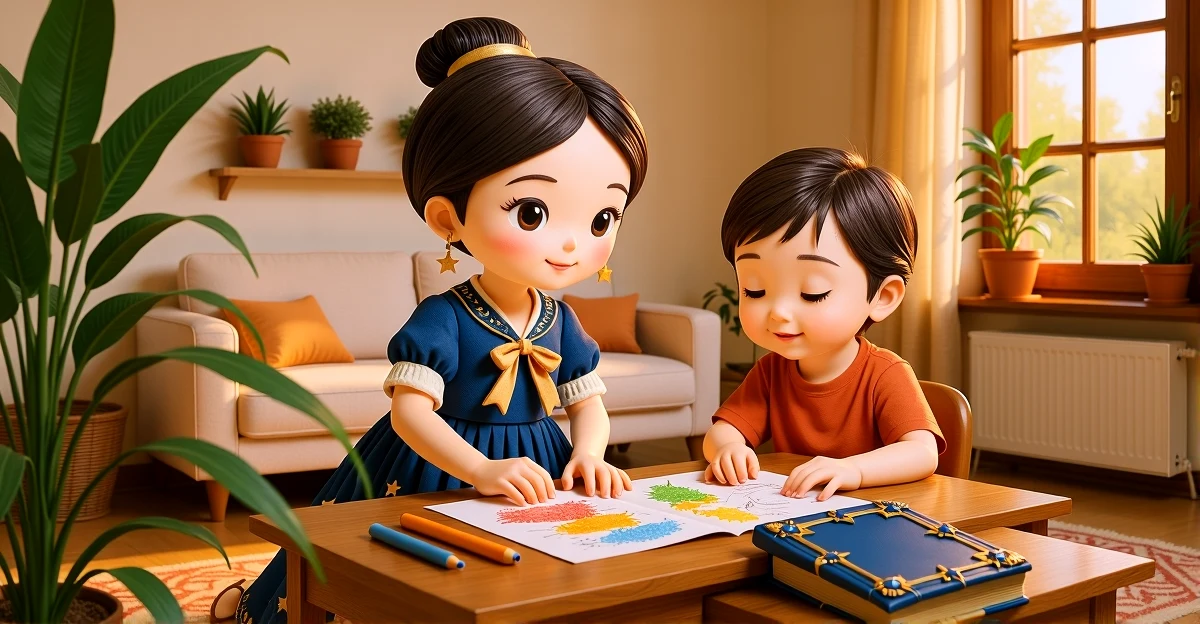
You can even draw this garden together. Let your child color the different emotion flowers. Talk about what each feeling needs. This teaches your child that all emotions deserve respect and understanding. Nothing is bad or wrong. Everything is part of being beautifully human.
My wonderful friend, I know this journey feels overwhelming right now. But please hear this. With patient, empathetic support and evidence-based strategies, children can develop the self-love and emotional regulation skills needed for healthy development. The experts promise this. The research shows this. And the Magic Book whispers this truth across the cosmos.
Your child is not broken. Your child is learning. And learning takes time. It takes patience. It takes gentle guidance. And it takes a parent who shows up with love, even when things are hard. That is exactly what you are doing right now by watching this video and seeking answers.
Please do not walk this path alone. Reach out to your pediatrician. Connect with a child therapist who specializes in emotional regulation. Join support groups with other parents who understand what you are going through. Let yourself be held by a community of care.
You need support too. Parenting a child who is struggling with emotional pain is exhausting and heartbreaking. Make sure you have people you can talk to, whether that is a therapist, a trusted friend, or a support group. You cannot pour from an empty cup.
And remember, every single day, to tell your child, You are loved. You are safe. You are learning. And I am here with you, always.
These words are like seeds you are planting in their heart. They might not bloom today or tomorrow, but with time and repetition, they will grow into a garden of self-love and resilience.
The Magic Book and I believe in you. We believe in your precious child. And we are sending you both so much love and starlight.
You are doing beautifully, my wonderful friend. Keep going. Keep loving. Keep showing up. That is what matters most.
Until our next time together, sweet dreams, my wonderful friend.